Table of Contents >> Show >> Hide
- Why the “I Did It for My Dog” Challenge Blew Up
- 31 of the Coolest Things Dog Owners Did for Their Dogs
- What These Posts Really Say About Modern Dog Ownership
- The Difference Between Cute and Actually Useful
- Why People Couldn’t Stop Looking at These Posts
- More Experiences Inspired by the Challenge
- Conclusion
If you ever needed proof that dog people are gloriously, unapologetically extra, the “I Did It for My Dog” challenge on Facebook delivered it with a wag, a bark, and probably a custom-built dog room under the stairs. The viral challenge invited owners to post the special, clever, sweet, and occasionally over-the-top things they had done for their dogs. The result was a parade of dog-parent devotion: upgraded cars, handmade beds, custom kennels, backyard playgrounds, and homes redesigned around one extremely important resident who does not pay rent.
And honestly? It was magnificent. Some of the posts were funny. Some were deeply practical. Some made you wonder whether the dog in question has a better real estate portfolio than most humans. But underneath the humor was something real: modern dog owners are increasingly treating their pets like family members with emotional, physical, and environmental needs worth planning for. That means more enrichment, more safety upgrades, more mobility support, and more “yes, I absolutely bought this house because my dog hated stairs” energy.
This article explores why the challenge struck such a nerve, the kinds of ideas that stood out most, and what these viral posts say about the way people care for dogs today. Spoiler alert: the coolest thing was not the fancy dog furniture. It was the thought behind it.
Why the “I Did It for My Dog” Challenge Blew Up
The challenge worked because it hit the sweet spot between comedy and kindness. It was not just about showing off money or style. It was about effort. People were proud of the ramps they built, the spaces they adapted, the routines they changed, and the weirdly specific purchases they made because their dog was anxious, aging, injured, energetic, spoiled, or all of the above before breakfast.
That is also why the posts felt relatable. Plenty of dog owners have rearranged a living room to make zoomies safer, bought a bigger car for easier road trips, installed washable rugs after one muddy season too many, or turned a corner of the home into a canine command center. The challenge simply took those everyday acts of devotion and put them on parade.
In a way, it was peak modern pet culture: equal parts love letter, home-improvement project, and public confession that the dog definitely won the household power struggle. Nobody was mad about it.
31 of the Coolest Things Dog Owners Did for Their Dogs
The upgrades that made dog lovers everywhere nod and say, “Yep, I get it.”
- Buying a bigger vehicle just so the dog could ride more comfortably on trips.
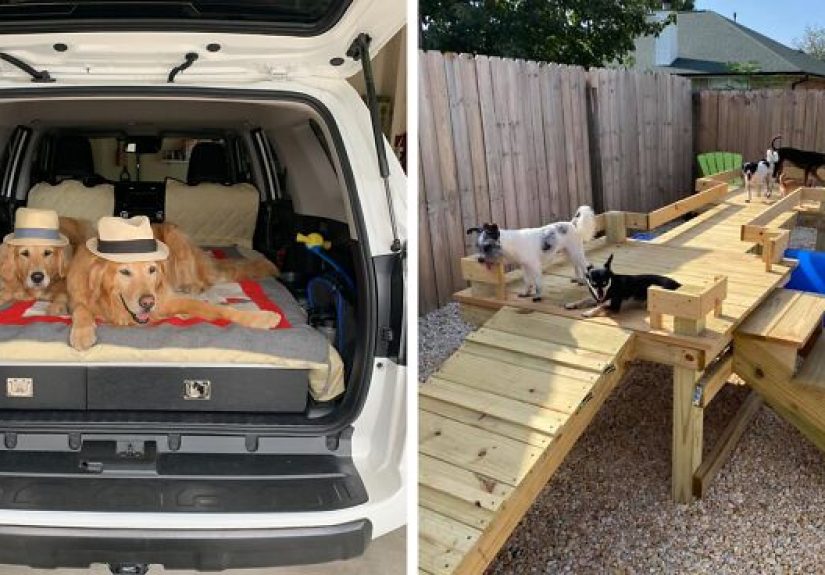
- Removing a back seat and building a padded platform to create a road-trip lounge for large dogs.
- Adding mattresses, rugs, and storage platforms to turn the cargo area into a canine suite on wheels.
- Building a custom kennel with weather protection, airflow, and plenty of room for safe downtime.
- Installing a fan for summer because apparently somebody in the house deserves better climate control.
- Adding winter panels to keep a dog’s outdoor space warmer and more comfortable.
- Using a camera monitor so owners could check in while they were away at work.
- Creating a full dog room with beds, blankets, and enough personality to make human guest rooms jealous.
- Building a dog nook under the stairs with direct access to the backyard.
- Choosing a house with fewer stairs because an older dog’s comfort mattered more than resale buzzwords.
- Installing ramps to help senior dogs get in and out of the house or car more easily.
- Adding non-slip surfaces so aging dogs could walk with more confidence indoors.
- Using a stroller so a senior or injured dog could still enjoy sights, sounds, and neighborhood adventures.
- Building a dog loft because apparently some pups prefer real estate with vertical ambition.
- Making a custom bed from scratch to match a dog’s size, sleep style, or very dramatic aesthetic.
- Giving a dog an upgraded dog house as a genuine gift, not an afterthought.
- Creating a backyard play zone where the dog could run, climb, sniff, and patrol like a tiny fuzzy landlord.
- Designing an agility-inspired area to turn exercise into fun instead of choreographed chaos.
- Making a sensory-friendly outdoor setup with space to explore smells, textures, and movement.
- Adding a dog door so potty breaks could happen on the dog’s schedule, not just the human’s.
- Building a fence-viewing window for a curious dog who wanted neighborhood gossip in real time.
- Creating a safer car setup with harnesses, barriers, and a dedicated backseat zone.
- Stocking puzzle toys and food games to keep busy brains from inventing destructive hobbies.
- Setting up a quiet recovery area for a dog healing from surgery or illness.
- Turning mealtime into enrichment with snuffle mats, slow feeders, and treat-dispensing toys.
- Building a cooling corner for hot-weather relief with shade, airflow, and comfort.
- Creating a cozy winter retreat for dogs who hated cold floors and windchill with a personal grudge.
- Planning dog-friendly day trips and road adventures instead of leaving the dog behind.
- Organizing a dog photo shoot because some pets are not merely dogs; they are public figures.
- Cooking or plating a special dog-safe dinner for birthdays, gotcha days, or plain old Tuesday joy.
- Rearranging an entire lifestyle around what made one dog calmer, safer, healthier, and happier.
What These Posts Really Say About Modern Dog Ownership
The viral challenge was not just a cute internet moment. It reflected how dog care has evolved. More owners now think beyond food, water, and a daily walk. They think about enrichment, mobility, stress reduction, safety, sensory experiences, and the emotional value of routine. In other words, dogs are no longer treated like backyard accessories. They are household decision-makers with fur.
That may sound like a joke, but there is substance behind it. A dog that gets mental stimulation is often calmer and less likely to turn your throw pillows into confetti. A senior dog with a ramp and better traction can stay active and comfortable longer. A nervous dog with a safe, predictable space may settle more easily. A properly secured dog in the car is safer for everyone. Suddenly the “extra” stuff does not look so extra. It looks smart.
That is part of what made the best challenge posts so satisfying. The coolest setups were not always the most expensive. Some were, sure. But many were just thoughtful. A camera in the kennel. A lower-stair home for an older dog. A stroller that let a beloved companion keep enjoying walks after age or injury changed the rules. These ideas land because they combine affection with problem-solving.
There is also a deeper emotional layer here. Dogs change how people live. They pull us outdoors, structure our routines, and quietly become woven into the architecture of everyday life. So when owners redesign a room, buy a different car, or build a special resting place, they are not just showing off a project. They are saying, “This little creature matters enough to shape my world.” That message travels fast online because nearly every dog lover understands it instantly.
The Difference Between Cute and Actually Useful
When the splurge is worth it
Some of the most memorable dog-owner upgrades are worth celebrating because they are both adorable and practical. Ramps help older dogs with mobility. Puzzle toys can slow down fast eaters and reduce boredom. Dedicated quiet spaces can help anxious dogs decompress. Travel setups with harnesses, carriers, or barriers make car rides safer. Even dog strollers, which some people love to mock, can be helpful for seniors, small dogs, or pets recovering from injury who still benefit from getting out and experiencing the world.
When caution matters
That said, not every DIY idea is automatically a good one. A stylish project still needs to be safe. Homemade enrichment toys should be supervised if there is any chance of chewing and swallowing. Outdoor setups need proper ventilation, weather protection, and escape-proof construction. Fancy treats and special dinners should still be dog-safe. Home upgrades should avoid choking hazards, unsafe materials, and loose objects that can become trouble at top speed, which is the speed many dogs consider ideal.
The most lovable thing about the challenge was that the best posts did not just scream “spoiled dog.” They whispered something even better: “I paid attention.” That is the secret ingredient. Good dog care is not really about luxury. It is about observation. What stresses your dog out? What helps them rest? What makes travel easier? What supports aging joints? What keeps a bright dog from getting bored? The smartest owners in the challenge were not just spending money. They were noticing details.
Why People Couldn’t Stop Looking at These Posts
Because they are funny, yes. But also because they feel hopeful. In an internet full of arguments, doomscrolling, and suspiciously aggressive comment sections about things nobody should be yelling about, a post that says, “I remodeled part of my house because my rescue dog deserved peace,” feels like emotional air conditioning.
These stories also tap into something many dog owners know but do not always say out loud: caring for a dog changes your standards. Suddenly you are comparing flooring by traction. You are evaluating cars by cargo space and rear ventilation. You are choosing vacation stops by whether there is grass nearby and whether your dog will personally judge the hotel bed. The challenge made those quiet calculations visible, and people loved seeing how far others had gone.
And maybe that is why the whole thing worked so well. It was not really a competition. It was a giant public nod of recognition among dog people. One owner built a custom kennel. Another bought a senior-friendly home. Another made a handcrafted bed that looked like it belonged in a boutique. Different budgets, different dogs, same message: love often shows up as adaptation.
More Experiences Inspired by the Challenge
If you have ever lived with a dog, you probably have your own version of “I did it for my dog,” even if nobody on Facebook ever saw it. Maybe it was the day you gave up on cream-colored furniture and embraced the washable-cover lifestyle. Maybe it was the weekend you spent crawling around the floor to identify every possible chew target in the living room like a very stressed home inspector. Maybe it was the moment you realized your dog preferred sleeping near a vent, so now there is a suspiciously luxurious blanket stationed there year-round like a reserved parking spot.
Some of the most meaningful experiences tied to this topic are not flashy at all. They are the small adjustments people make after learning their dog’s preferences. One owner might notice that their anxious rescue relaxes only in dim, quiet spaces, so they turn a corner of the house into a low-stimulation retreat. Another might discover that their dog, once wild on walks, becomes calmer when sniffing games are added before leaving the house. Somebody else might start freezing dog-safe broth in puzzle toys during recovery after surgery because boredom was clearly becoming the household’s most dangerous roommate.
Senior-dog care especially brings out this kind of creativity. Owners begin adding rugs so paws do not slide on hardwood. They place water bowls in more than one room. They lift dogs in and out of cars until a ramp finally makes the whole thing easier on everyone’s spine, including the human’s. Walks become slower, but somehow sweeter. The pace changes, but the ritual stays. And that, too, is something many people recognized in the challenge: not every special thing is glamorous, but a lot of it is deeply loving.
There are also the social experiences. People who once planned weekends around brunch reservations now plan them around dog-friendly trails, pet stores, shaded patios, and whether the destination has enough open space for sniffing. A road trip becomes less about speed and more about comfort. Stops are chosen carefully. The backseat gets upgraded. Water, wipes, treats, and backup towels become standard gear. You do not fully understand operational logistics until one muddy dog teaches you that preparedness is not a personality trait; it is survival.
Then there is the emotional side: the fact that many people simply want their dogs included. Not because it is trendy, but because the dog is part of the family story. The challenge captured that beautifully. Behind every custom nook, kennel fan, stroller ride, and backyard project was the same quiet sentiment: “You belong here. I thought about you when I made this choice.” It is hard not to be moved by that, even if the dog in question is currently using a handcrafted orthopedic bed just to store contraband tennis balls.
In the end, the best experiences connected to this challenge are about attention, humor, and devotion. Dog owners are observant in weirdly tender ways. They notice the favorite sunny patch on the floor. They remember the exact sound of the treat drawer. They learn which toy is bedtime toy and which toy is 5 a.m. toy, and yes, apparently those are different departments. They build lives around those details because love often looks like customization. That is what made the “I Did It for My Dog” challenge so irresistible then, and why it still feels charming now. It was never just about spoilage. It was about seeing a dog clearly and then doing something about it.
Conclusion
The “I Did It for My Dog” challenge on Facebook was funny on the surface, but its staying power came from something more meaningful. It showed that the best dog owners are not just affectionate; they are attentive. They notice when a dog needs more room, more support, more stimulation, less stress, safer travel, easier access, or a softer place to land. Sometimes that becomes a custom car setup. Sometimes it becomes a ramp, a dog door, a puzzle toy, or a quiet room under the stairs. Whatever the form, the message is the same: life gets redesigned around love.
And maybe that is why these 31 examples landed so well with dog lovers everywhere. The coolest thing any owner did was not building the fanciest setup. It was deciding that their dog’s comfort and happiness were important enough to deserve creativity, effort, and follow-through. Also, yes, some of those dogs are absolutely living better than half the internet.