Table of Contents >> Show >> Hide
- Introduction: What Are Love Lines in Palmistry?
- First, Understand the Main Love Line: The Heart Line
- How to Analyze Your Heart Line Step by Step
- The Second Set of Love Lines: Relationship or Marriage Lines
- Do Love Lines Predict Your Romantic Future?
- How to Read Love Lines Without Fooling Yourself
- Specific Examples of Love Line Readings
- Common Mistakes Beginners Make When Reading Love Lines
- Experiences Related to Finding and Analyzing Love Lines
- Conclusion: Your Love Lines Are a Mirror, Not a Manual
Note: Palmistry, also called palm reading or chiromancy, is best enjoyed as a symbolic, reflective, and entertaining tradition. It is not a scientifically proven method for predicting love, marriage, personality, health, or the future. Think of it as a conversation starter with your own heartplus a charming excuse to stare dramatically at your hand like you are in a mystical movie trailer.
Introduction: What Are Love Lines in Palmistry?
In palmistry, the phrase love lines usually refers to the heart line, the major line associated with emotions, affection, romance, vulnerability, and the way a person gives or receives love. Some readers also include the small horizontal marks beneath the little finger, often called relationship lines, affection lines, or marriage lines. Together, these markings create what palm readers treat as a symbolic map of emotional life.
Of course, your palm cannot text your crush for you, rescue you from a bad date, or explain why someone says “I’m just not ready” after three months of acting very ready. But palmistry can offer a playful framework for self-reflection. When you study your love lines, you are really asking: How do I love? How do I respond to closeness? Do I protect my heart, rush in, hold back, idealize, overthink, or keep a tiny emotional suitcase packed by the door?
This guide explains how to find your love lines, how palm readers traditionally analyze them, and how to use the process as a fun way to think about relationships without treating every wrinkle like a court order from destiny.
First, Understand the Main Love Line: The Heart Line
The heart line is one of the three major palmistry lines, along with the head line and life line. In traditional palm reading, it is linked to feelings, romance, compassion, emotional habits, and relationship style.
Where Is the Heart Line?
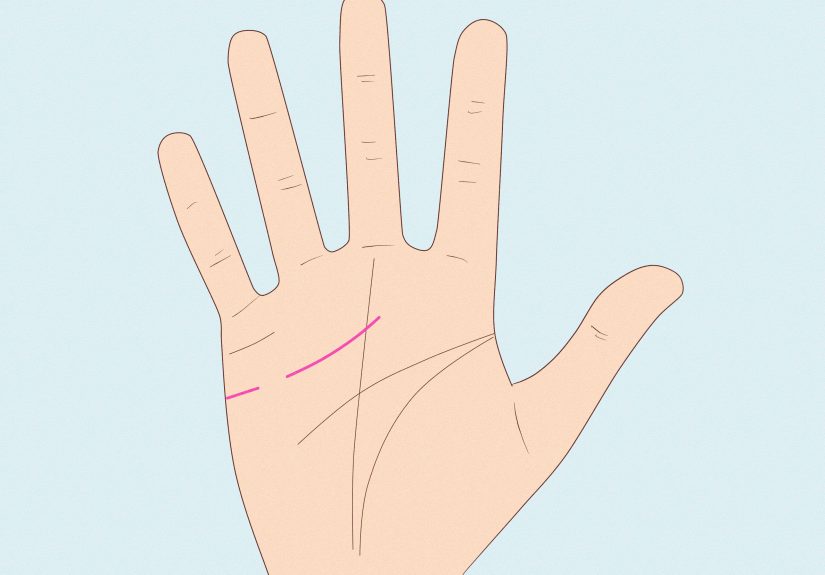
Open your palm and relax your hand. Look for the uppermost major horizontal line running across the palm just below the fingers. It usually begins on the outer edge of the palm beneath the little finger and travels toward the area beneath the index finger, middle finger, or the space between them.
If you are new to palmistry, do not panic if your hand looks less like a clean diagram and more like a tiny road map after a thunderstorm. Real palms have creases, branches, tiny breaks, faint marks, and lines that do not behave politely. Palmistry is interpretive, so the goal is to notice the clearest pattern, not to prosecute every little scratch.
Which Hand Should You Read?
Many modern palm readers compare both hands. A common approach is:
- Dominant hand: Your active, developed, lived experiencehow you currently express love and relationships.
- Non-dominant hand: Your natural tendencies, inherited patterns, or emotional potential.
For example, if your non-dominant hand has a soft, curved heart line but your dominant hand has a straighter, firmer one, a palm reader might say you were naturally romantic but have become more practical or guarded through experience. Translation: life happened, and your heart started reading the terms and conditions.
How to Analyze Your Heart Line Step by Step
Once you find the heart line, palmists usually study its length, depth, curve, breaks, branches, and ending point. None of these meanings should be treated as fixed truth. Instead, use them as symbolic prompts.
1. Length of the Heart Line
A long heart line is traditionally associated with emotional expressiveness, strong affection, and a deep need for meaningful connection. Someone with a long, clear line may be seen as loyal, romantic, and invested in long-term bonds.
A short heart line may suggest independence, emotional reserve, or a practical approach to love. This does not mean “bad at relationships.” It may simply point to someone who values space, actions over dramatic declarations, or love that does not require a violin section.
2. Depth and Clarity
A deep, clear heart line is often read as a sign of emotional intensity, sincerity, and strong attachment. A person with this type of line may feel deeply and remember romantic details with impressive accuracy, including what someone wore on a date in 2018.
A faint heart line can be interpreted as sensitivity, emotional caution, or a more private inner life. These individuals may care deeply but reveal their feelings slowly. They are not cold; they are simply emotionally password-protected.
3. Curved or Straight Shape
A curved heart line is usually linked with warmth, openness, affection, and emotional responsiveness. It may suggest someone who expresses love through touch, words, reassurance, or romantic gestures.
A straight heart line is often connected with emotional control, rational love, and a preference for stability. People with straighter lines may not enjoy messy emotional theatrics. They may show love by solving problems, remembering oil changes, or bringing soup when you are sick. Not glamorous, but extremely underrated.
4. Ending Point of the Heart Line
If the heart line ends beneath the index finger, traditional palmistry may interpret this as idealism in love, high standards, and a desire for meaningful partnership. This person may want romance with purpose, not a relationship held together by shared streaming passwords.
If it ends beneath the middle finger, palm readers may see a more self-protective or practical emotional style. The person may be passionate but careful about commitment.
If the line ends between the index and middle fingers, it is often considered a balanced sign: affectionate but realistic, romantic but not completely allergic to common sense.
5. Breaks in the Heart Line
A broken heart line is traditionally associated with emotional disruption, heartbreak, major relationship changes, or periods of emotional growth. It does not mean you are doomed to romantic chaos. In a reflective reading, it can symbolize moments when love changed your expectations or forced you to rebuild your emotional boundaries.
For example, someone with a break near the center of the palm might use it as a prompt to ask: “Was there a period when my view of love shifted?” That question is more useful than assuming the universe engraved your dating history like a receipt.
6. Forks and Branches
A forked heart line at the end is often read as emotional complexity. One branch may point toward romantic idealism, while another suggests reason or independence. In practical terms, this may describe someone who wants deep love but also needs personal freedom.
Small upward branches are traditionally seen as positive signs of hope, growth, or affection. Downward branches may be interpreted as emotional disappointment, self-doubt, or lessons learned through difficult relationships.
7. Chained or Feathered Heart Line
A heart line that looks chained, with many small loops or linked marks, may suggest sensitivity, emotional complexity, or romantic nervousness. This is the palmistry version of “my heart has 47 browser tabs open.”
A feathery heart line with many tiny offshoots can indicate a person who feels many emotional influences at once. In self-reflection terms, this may point to someone who absorbs the moods of partners, family, and friends and then wonders why they are exhausted by Tuesday.
The Second Set of Love Lines: Relationship or Marriage Lines
Beyond the heart line, palmistry often looks at the small horizontal lines located on the outer edge of the palm below the little finger and above the heart line. These are commonly called relationship lines, affection lines, or marriage lines.
How to Find Relationship Lines
Turn your palm slightly sideways. Look at the edge of the hand under the little finger. You may see one or more short horizontal marks. These are the lines palm readers associate with significant emotional bonds, long-term relationships, or major romantic attachments.
Despite the old-fashioned name “marriage lines,” modern readers often avoid taking the term literally. A line may symbolize a meaningful relationship, not necessarily a legal marriage, wedding registry, or argument about centerpieces.
One Clear Relationship Line
One strong, clear line is traditionally interpreted as focus and seriousness in love. It may suggest a person who values deep commitment and prefers quality over quantity in romantic life.
Multiple Relationship Lines
Several small lines may be read as multiple meaningful attachments, emotional chapters, or complex relationship experiences. This does not automatically mean multiple marriages. Sometimes it simply means the person’s emotional life has had several important “plot points.”
Faint Relationship Lines
Faint lines may suggest relationships that were meaningful but not fully developed, private feelings, or emotional experiences that shaped someone quietly. Not every love story arrives with fireworks. Some arrive like a soft notification you almost miss.
Broken or Forked Relationship Lines
A broken line may be interpreted as separation, interruption, or emotional distance. A fork can suggest diverging paths or a relationship that requires choices. Again, this should be viewed symbolically. The healthiest question is not “Does this mean breakup?” but “Where do I need clearer communication, boundaries, or honesty?”
Do Love Lines Predict Your Romantic Future?
No reliable scientific evidence shows that palm lines can predict your romantic future. Palmistry remains a cultural and spiritual tradition rather than a verified science. The lines on your hands can change over time because of movement, skin texture, age, work, and natural creasing. They are real physical features, but their romantic meanings come from interpretation, not laboratory proof.
That does not make palmistry useless. It simply means the most valuable reading may be psychological rather than predictive. When you study your love lines, you may notice patterns in how you talk about love: Are you hopeful? Anxious? Cynical? Curious? Are you using palmistry to explore yourself, or secretly hoping your hand will tell you whether your ex will return with emotional maturity and a proper apology?
How to Read Love Lines Without Fooling Yourself
Palmistry becomes more meaningful when you use it with common sense. Here are a few grounded rules:
- Do not make major life decisions based only on palm lines. Your hand is not a licensed relationship counselor.
- Compare both hands. Differences can make the reading more reflective and nuanced.
- Look at the whole palm. Palmists read lines, mounts, hand shape, and texture together.
- Use questions, not verdicts. Ask “What does this make me think about?” instead of “What will happen?”
- Respect free will. A healthy relationship depends on communication, kindness, timing, effort, and emotional maturitynot one tiny crease under your pinky.
Specific Examples of Love Line Readings
Example 1: The Deep Curved Heart Line
Imagine someone has a long, curved, deep heart line ending beneath the index finger. A traditional palm reader might describe this person as affectionate, loyal, romantic, and idealistic. In real life, that person may love grand gestures, thoughtful messages, anniversaries, and emotional closeness. Their challenge may be expecting partners to meet very high emotional standards without clearly explaining them.
Example 2: The Straight Faint Heart Line
Now imagine a straight, faint heart line that ends under the middle finger. A symbolic reading might suggest emotional caution, independence, or a private way of loving. This person may show affection through reliability rather than poetry. Their challenge may be allowing vulnerability before a partner starts wondering whether they are dating a person or a very polite filing cabinet.
Example 3: The Broken Heart Line with Upward Branches
A broken heart line with small upward branches can be interpreted as emotional hardship followed by growth. In reflective terms, it may describe someone who has been hurt but remains hopeful. This is a powerful reminder that heartbreak does not have to make a person hard; sometimes it makes them wiser, softer, and better at choosing people who do not treat love like a group project they forgot to attend.
Common Mistakes Beginners Make When Reading Love Lines
The first mistake is reading every tiny mark as a dramatic prophecy. Palms are full of natural creases. A small scratch does not mean your soulmate missed a bus in Ohio.
The second mistake is focusing only on marriage lines. The heart line gives broader emotional context, while relationship lines are smaller details. Reading one without the other is like judging an entire movie from the popcorn bucket.
The third mistake is treating palmistry as fixed destiny. A better approach is to see it as symbolic journaling. Your palm gives you images; your life gives them meaning.
Experiences Related to Finding and Analyzing Love Lines
The most memorable palmistry experiences often happen in ordinary places: a kitchen table, a sleepover, a road trip, a cozy party where someone suddenly announces, “Wait, I know how to read palms,” and everyone immediately offers their hands like applicants at a magical job interview.
One common experience is the surprise of noticing how different two people’s heart lines can be. A friend with a bold, sweeping heart line may laugh and say, “That tracksI fall in love with people, cities, songs, and sometimes sandwiches.” Another person may have a straighter, quieter line and admit that they need time before trusting someone. The reading becomes less about prediction and more about language. It gives people a playful way to say things they already feel but rarely explain.
Couples sometimes use love line readings as a lighthearted date-night activity. One partner may have a curved heart line and enjoy verbal affection, while the other has a straighter line and shows love through practical support. Suddenly, the old argument“You never say romantic things” versus “I fixed your laptop and made dinner”turns into a more generous conversation. The palm does not solve the relationship, but it opens a door. And honestly, some relationships need fewer locked doors and more snacks.
Another experience involves reading your own hand after a breakup. This can be oddly comforting when done gently. A broken or chained heart line might inspire reflection: Where did I ignore my needs? Did I confuse intensity with intimacy? Did I accept crumbs and call it a bakery? Instead of treating the line as proof of future sadness, you can treat it as a reminder that emotional patterns can be noticed, named, and changed.
Many beginners also discover that palmistry works best when paired with journaling. After studying your love line, write down three questions: How do I usually act when I like someone? What makes me feel emotionally safe? What pattern am I ready to stop repeating? These questions turn a mystical activity into practical self-awareness. The palm becomes a mirror, not a judge.
Some people enjoy comparing their dominant and non-dominant hands over time. They may feel that one hand shows who they were before major relationships, while the other reflects who they became after them. Whether or not you believe palmistry caused or recorded anything, the exercise can be meaningful. It encourages you to recognize growth. You are not the same person you were during your first crush, your worst heartbreak, or the situationship you survived with three friends, six voice notes, and one emergency playlist.
The best experience with palmistry love lines is not hearing a fortune. It is having a thoughtful conversationwith yourself or someone elseabout love, vulnerability, hope, boundaries, and choice. If the reading makes you kinder, clearer, braver, or more honest, then it has already done something useful.
Conclusion: Your Love Lines Are a Mirror, Not a Manual
Palmistry love lines can be fascinating, especially when you know where to look and how to interpret the heart line, relationship lines, and small markings around them. A long line may symbolize emotional depth. A straight line may suggest practical love. A fork may point to complexity. A break may invite reflection on change and healing.
But your palm is not the boss of your love life. You are. The healthiest way to analyze your love lines is to use them as prompts for self-knowledge. Let them help you ask better questions, notice emotional habits, and start more honest conversations. Love is not written only in the hand. It is written in choices, communication, patience, repair, laughter, and the brave little moment when someone says, “Here is what I really feel.”