Table of Contents >> Show >> Hide
- What Is an Industrial Toilet Roll Holder?
- Why Industrial Toilet Roll Holders Matter
- Main Types of Industrial Toilet Roll Holders
- Best Materials for an Industrial Toilet Roll Holder
- Key Features to Look For
- Installation Tips for Commercial Restrooms
- Industrial Toilet Roll Holder for Home Bathrooms
- How to Choose the Right Industrial Toilet Roll Holder
- Common Mistakes to Avoid
- Maintenance Tips That Extend Service Life
- Real-World Experience: What Happens After You Install One
- Conclusion
- SEO Tags
An industrial toilet roll holder may not sound like the star of a restroom renovation, but give it one bad Monday morning and suddenly it becomes the most important fixture in the building. In high-traffic restrooms, the difference between a flimsy holder and a properly chosen commercial toilet paper dispenser is the difference between “everything is fine” and “someone please call maintenance before lunch.”
Unlike a decorative bathroom accessory made for a guest powder room, an industrial toilet roll holder is built for volume, durability, security, and easy refilling. It is commonly used in offices, factories, schools, hospitals, airports, warehouses, restaurants, stadiums, public parks, and other facilities where the restroom sees more action than the breakroom coffee machine.
This guide explains what an industrial toilet roll holder is, how to choose the right type, which materials matter, what installation details to watch, and how a smart dispenser choice can reduce maintenance time, waste, complaints, and the mysterious disappearance of toilet paper rolls.
What Is an Industrial Toilet Roll Holder?
An industrial toilet roll holder is a heavy-duty toilet paper holder or dispenser designed for commercial and public restroom use. It is usually larger, stronger, and more secure than a standard residential holder. Many models are enclosed, lockable, wall-mounted, and compatible with jumbo toilet paper rolls or multi-roll systems.
The term “industrial” can mean two slightly different things. In commercial facilities, it usually refers to a durable restroom accessory made for repeated daily use. In home design, it may describe the rugged aesthetic of black metal pipes, exposed hardware, brushed steel, or rustic finishes. Both meanings are popular, but they serve different needs. A restaurant restroom wants reliability; a farmhouse bathroom wants charm. A factory restroom wants both reliability and the ability to survive a very determined elbow.
Why Industrial Toilet Roll Holders Matter
Toilet paper holders are small, but their impact is surprisingly large. A poorly chosen dispenser can create frequent refills, messy stalls, wasted tissue, broken parts, and unhappy users. In a busy restroom, the holder must do more than hold paper. It must control access, protect the roll, dispense smoothly, fit the wall layout, and keep the paper available until the next service round.
For facility managers, that means choosing a holder based on real traffic patterns rather than looks alone. A boutique office with ten employees may be fine with a double-roll holder. A stadium, school, transit station, or manufacturing plant usually needs jumbo roll capacity or a multi-roll system. When the roll runs out too often, the problem is rarely the paper. It is usually a capacity mismatch.
Main Types of Industrial Toilet Roll Holders
1. Jumbo Roll Toilet Paper Holder
A jumbo roll toilet paper holder is one of the most common choices for high-traffic commercial restrooms. It holds a large roll, often around 9 to 10 inches in diameter, depending on the dispenser. The obvious benefit is capacity. A jumbo roll lasts longer than a standard roll, which means fewer refill trips and fewer awkward moments for restroom users.
Jumbo roll dispensers are commonly found in airports, schools, malls, factories, and large office buildings. Many include a viewing slot so maintenance staff can quickly check the paper level without unlocking the unit. That tiny slot is humble, but it saves time, especially when one person is checking twenty stalls before the lunch rush.
2. Twin Jumbo Roll Dispenser
A twin jumbo roll holder carries two large rolls. Some designs expose one roll at a time and allow a sliding panel or internal mechanism to move to the reserve roll when the first one is depleted. This setup is excellent for restrooms that cannot be checked constantly. It gives the facility a backup supply without leaving loose spare rolls on the tank, floor, or windowsill, where they will collect dust, moisture, or someone’s questionable creativity.
3. Multi-Roll Commercial Holder
A multi-roll toilet paper holder usually stores two or more standard rolls inside a locked or semi-enclosed unit. This type is useful when a facility prefers standard rolls but still wants extra capacity. Some models automatically drop the spare roll into place when the lower roll is empty. Multi-roll holders are popular in offices, retail spaces, restaurants, and smaller commercial restrooms.
4. Coreless Toilet Paper Dispenser
Coreless dispensers use toilet paper rolls without the cardboard tube in the center. The main advantage is less cardboard waste and more usable tissue per roll. However, coreless systems can be proprietary, meaning the dispenser may require specific compatible paper. That can be efficient, but it also locks purchasing into a narrower supply chain. Before choosing coreless, check availability, cost per case, and whether your janitorial supplier can keep it stocked consistently.
5. Recessed Toilet Paper Dispenser
A recessed toilet paper dispenser is built into the wall or partition. It projects less into the stall, which can improve clearance and reduce the chance of bumps, snags, and broken covers. Recessed models look cleaner and are often easier to coordinate with accessibility layouts, but they require more planning during construction or renovation. Retrofitting one into an existing wall can be more expensive than installing a surface-mounted model.
6. Surface-Mounted Toilet Roll Holder
Surface-mounted holders attach directly to the wall or toilet partition. They are easier to install and replace, making them a practical choice for existing restrooms. The trade-off is projection. A bulky surface-mounted dispenser can interfere with grab bars, user movement, or narrow stall space if installed without planning.
Best Materials for an Industrial Toilet Roll Holder
Stainless Steel
Stainless steel is the classic choice for commercial restroom accessories because it resists corrosion, handles frequent cleaning, and looks professional. Satin stainless finishes are especially common because they hide fingerprints better than mirror-polished surfaces. In busy restrooms, that matters. Nobody wants a dispenser that looks like it spent the day shaking hands with everyone in the building.
Type 304 stainless steel is widely used in quality commercial washroom accessories. It offers good corrosion resistance for typical indoor restroom conditions. For harsher environments, such as coastal facilities, pool areas, or heavy industrial settings with chemical exposure, higher-grade materials or special finishes may be worth discussing with a supplier.
Powder-Coated Steel
Powder-coated steel provides a durable finish and is often used for black, white, or colored dispensers. It can be a cost-effective option, especially in modern restrooms where the design calls for dark hardware. The coating must be intact to protect the metal underneath, so chips and scratches should be monitored.
High-Impact Plastic
Plastic commercial dispensers are common in branded paper systems. They are lightweight, affordable, and often designed for quick refilling. Good-quality plastic can perform well in offices, restaurants, and retail settings. However, in vandal-prone or rough-use environments, stainless steel or heavy-gauge metal is usually the safer long-term bet.
Key Features to Look For
Lockable Cover
A lockable toilet paper holder helps prevent theft, tampering, and roll removal. It also keeps the roll protected from splashes and accidental contamination. In public restrooms, a lock is not a luxury; it is self-defense for the supply closet.
Easy Refill Access
Maintenance staff should be able to unlock, open, refill, and close the dispenser quickly. Hinged covers, simple spindles, and clear loading paths save labor. If refilling requires a wrestling match, the dispenser will be hated forever, no matter how shiny it looked in the catalog.
Viewing Window or Supply Indicator
A viewing slot lets staff see how much paper remains. This small feature helps prevent both stockouts and unnecessary opening of dispensers. It is especially valuable in restrooms with many stalls.
Durable Spindle
The spindle should hold the roll securely and turn smoothly. Heavy-duty spindles, theft-resistant designs, or convertible core adapters can make the unit more flexible and reliable. Always match the spindle to the roll core size used by your paper supplier.
Smooth Tear Edge
A good tear edge allows users to pull and tear tissue without shredding half the roll. Serrated edges should be effective but not sharp enough to be hazardous. The best designs are boring in the best possible way: pull, tear, done.
ADA-Aware Design
In accessible stalls, dispenser placement is critical. The holder should be within reach, should not block grab bars, and should allow continuous paper flow. Large dispensers can create clearance problems if placed carelessly, so always coordinate the dispenser size with the stall layout before drilling holes.
Installation Tips for Commercial Restrooms
Before installing an industrial toilet roll holder, measure the stall, wall, toilet position, grab bars, and door swing. Do not guess. Guessing is how a perfectly good dispenser ends up exactly where someone’s knee, wheelchair, or grab-bar clearance needs to be.
For accessible restrooms, follow applicable ADA Standards, local code, and project specifications. In general, toilet paper dispensers should be placed in front of the water closet, within required reach ranges, with the outlet at an accessible height, and not behind grab bars. Dispensers should also allow continuous paper flow rather than controlling delivery in a way that makes use difficult.
Use proper anchors for the wall or partition material. A dispenser mounted into weak drywall without backing may survive the first week but not the first busy month. For metal partitions, use appropriate machine screws, through-bolts, or manufacturer-recommended hardware. For masonry walls, use anchors designed for the substrate. The goal is simple: the dispenser should stay attached even when someone treats it like a handrail, which they absolutely should not do, but sometimes will.
Industrial Toilet Roll Holder for Home Bathrooms
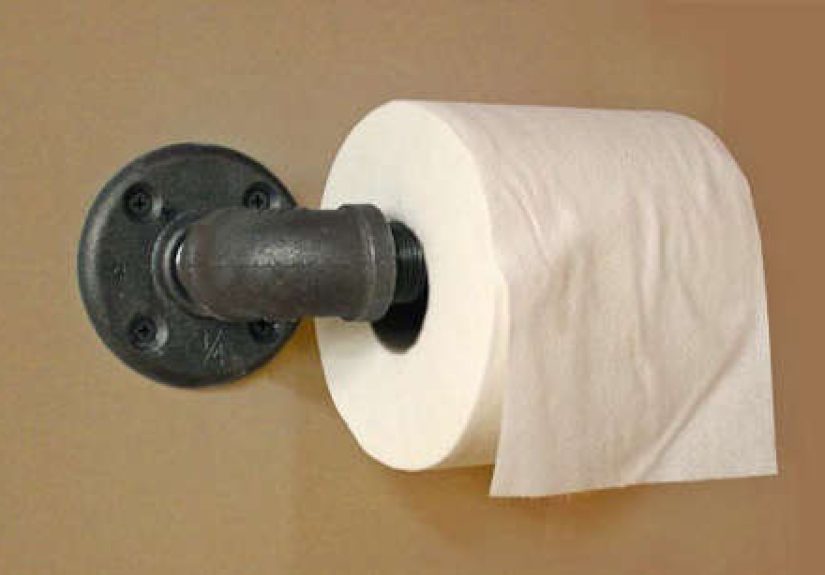
Not every industrial toilet roll holder belongs in a warehouse. The industrial style has become popular in home bathrooms, especially in rustic, farmhouse, loft, and modern spaces. Residential industrial holders often use black iron pipe, matte black brackets, reclaimed wood, brushed nickel, or exposed screws.
For home use, comfort and scale matter. A giant jumbo roll dispenser in a small powder room may be practical, but it can also make the bathroom feel like a truck stop with scented candles. Instead, homeowners usually choose industrial-style holders that fit standard rolls while delivering the rugged look. Wall-mounted pipe holders, shelf-and-roll combinations, and freestanding metal stands are popular options.
If you want the industrial look at home, choose a finish that matches your faucet, towel bar, cabinet pulls, or shower frame. Matte black works well in modern bathrooms. Brushed stainless steel fits minimalist designs. Oil-rubbed bronze adds warmth to rustic spaces. The holder should look intentional, not like leftover hardware from a garage shelf project.
How to Choose the Right Industrial Toilet Roll Holder
Match Capacity to Traffic
Start with restroom traffic. How many people use the restroom each day? How often can staff check it? Are stockouts common? A low-traffic office may only need a double-roll holder. A school, gym, or manufacturing facility may need jumbo or twin jumbo dispensers.
Check Paper Compatibility
Dispenser compatibility matters. Confirm roll diameter, roll width, core diameter, and whether the system uses standard, jumbo, coreless, or proprietary paper. A beautiful dispenser is not useful if your supplier cannot provide the correct tissue.
Consider Security Level
For public, unsupervised, or vandal-prone restrooms, choose a lockable, enclosed, vandal-resistant model. For staff-only restrooms, a simpler model may be enough. Match the security level to the actual risk.
Think About Cleaning
Restroom fixtures should be easy to wipe down. Smooth covers, rounded edges, and corrosion-resistant finishes make cleaning faster. Avoid overly decorative grooves or exposed crevices in commercial settings because grime treats those like vacation homes.
Coordinate with the Restroom Design
In a polished commercial restroom, the toilet paper dispenser should coordinate with other accessories such as soap dispensers, paper towel dispensers, grab bars, waste receptacles, and partition hardware. Matching finishes create a cleaner, more professional appearance.
Common Mistakes to Avoid
The first mistake is buying only by price. Cheap holders can become expensive when they break, rust, jam, or require constant refilling. The second mistake is ignoring roll compatibility. Always confirm paper dimensions before purchasing. The third mistake is installing the dispenser too far back, too high, behind the grab bar, or in a place that blocks user movement.
Another common mistake is using residential accessories in commercial spaces. A small decorative holder may look nice on day one, but commercial restrooms punish weak hardware. If the restroom is used by customers, students, employees, patients, or the general public, choose a product designed for that environment.
Maintenance Tips That Extend Service Life
Industrial toilet roll holders need simple but consistent maintenance. Wipe the exterior regularly with compatible cleaners. Avoid harsh chemicals that can damage finishes. Check locks, hinges, and spindles during refill rounds. Replace bent spindles or broken keys before they create bigger problems. Keep a small inventory of replacement parts if the facility uses the same dispenser model across many restrooms.
Train staff to load rolls correctly. It sounds obvious, but backward rolls, jammed cores, and forced covers are real-world issues. Clear refill instructions can reduce damage and speed up service. If a dispenser repeatedly jams, do not blame the staff first. Check whether the tissue is compatible, the spindle is aligned, or the unit has been bent from impact.
Real-World Experience: What Happens After You Install One
The true test of an industrial toilet roll holder does not happen in the product photo. It happens three months later, after thousands of users, hundreds of refills, and at least one person who believes every restroom fixture is secretly a strength-testing machine.
In real facilities, the best holders are the ones nobody talks about. That is a compliment. A well-chosen dispenser disappears into the daily rhythm of the building. Users find paper where they expect it. Custodians refill it quickly. Managers stop hearing complaints. The restroom looks orderly. Nothing rattles. Nothing hangs loose. Nobody is carrying spare rolls down the hall like emergency supplies in a disaster movie.
One of the most common lessons from commercial restroom maintenance is that capacity saves labor. A standard roll holder may seem cheaper at purchase, but if staff must refill it multiple times a day, the labor cost quietly piles up. Jumbo roll and twin-roll systems reduce service frequency, especially in high-traffic spaces such as schools, warehouses, event venues, and transportation facilities. The holder may cost more upfront, but fewer refill trips can make the decision look very smart over time.
Another experience-based lesson is that locks matter. In private offices, unlocked holders may be fine. In public restrooms, loose rolls often vanish, get dropped, become wet, or end up used for purposes no manufacturer wants to imagine. A lockable cover protects the supply and keeps the stall neater. It also creates a more controlled, professional restroom experience.
Installation location is another lesson learned the hard way. A dispenser mounted just a few inches wrong can become annoying every single day. Too far behind the toilet, and users twist awkwardly. Too close to the front, and it may interfere with movement. Too high, and it becomes difficult to reach. Too bulky near a grab bar, and it can create accessibility problems. The smartest installers measure first, check the clearance, then mount. The fastest installers sometimes mount first and apologize later.
Material choice also reveals itself over time. Stainless steel tends to age gracefully when cleaned properly. Lower-quality finishes may scratch, chip, or discolor in demanding environments. Plastic dispensers can perform well where abuse is low, but in rougher locations, metal usually earns its keep. The right choice depends on the building, the users, the cleaning routine, and the level of supervision.
Finally, consistency across a facility makes life easier. Using the same model in multiple restrooms simplifies keys, replacement parts, staff training, and paper ordering. A building filled with five different dispenser types can turn refill rounds into a scavenger hunt. A standardized system is less glamorous, but it is exactly the kind of boring efficiency that makes facility teams quietly happy.
Conclusion
An industrial toilet roll holder is a small fixture with a big job. Whether you are outfitting a factory restroom, upgrading a restaurant bathroom, managing a school facility, or adding industrial style to a home, the right holder should balance capacity, durability, accessibility, paper compatibility, security, and design.
For commercial spaces, prioritize heavy-duty construction, lockable covers, easy refilling, correct mounting, and long-term maintenance efficiency. For residential spaces, focus on style, scale, and finish. Either way, the best toilet roll holder is the one that works every day without drama. In restroom design, drama belongs in the wallpaper, not the paper supply.