Table of Contents >> Show >> Hide
- The Night of the Hug: What Actually Happened (And Why People Felt It)
- How One Photo Became a Template
- The Photoshop Battle Heard Around the Timeline
- Are They Trolls… or Just the Internet Being the Internet?
- Why Political Wholesomeness Is a Magnet for Mockery
- The Bigger Pattern: Memes, Harassment, and Political Exhaustion
- What the Hug Still Represents (Even After the Memes)
- How to Enjoy Viral Political Moments Without Feeding the Worst Parts of the Internet
- Shared Experiences: Watching a “Perfect” Moment Get Meme-ified
There are political moments that arrive pre-packaged for history books: the big speech, the swelling music,
the crowd that sounds like it’s trying to clap a hole through the floor. And thenbecause the internet is the internet
there are political moments that arrive pre-packaged for Photoshop.
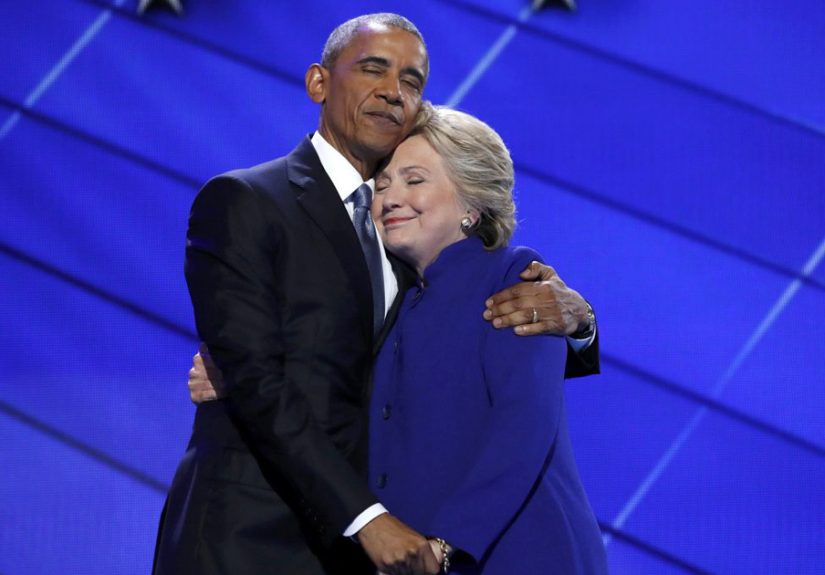
When President Barack Obama wrapped Hillary Clinton in a warm, almost movie-scene hug at the 2016 Democratic National Convention,
it landed like a visual mic drop. It looked like unity. It looked like momentum. It looked like the kind of gesture that says,
“We’ve been through the primary wars, we’ve done the awkward debates, and now we’re on the same team.”
Then, within minutes, the online remix machine woke upstretching, cracking its knuckles, and whispering,
“Cute. Now let’s put them on the Titanic.”
The Night of the Hug: What Actually Happened (And Why People Felt It)
The hug happened on the third night of the 2016 Democratic National Convention in Philadelphia, right after Obama’s
primetime speech endorsing Clinton. The symbolism was heavy in the best way: a sitting president publicly handing off the baton
to his former Secretary of Statenow the first woman nominated for president by a major political party.
The choreography mattered. The music mattered. Even the camera angle mattered.
As Obama finished, Clinton came out to meet him on stage. They shared a close, affectionate embrace thatat least for a second
felt bigger than campaign messaging. It read as human.
If you watched it live, you probably recognized the emotional recipe:
a long speech about values and character, a crowd already primed for catharsis, and then a physical gesture to seal the message.
Politicians talk in paragraphs; they hug in headlines.
The Hug as a Shortcut to Meaning
Politics is complicated, and complicated doesn’t trend. A hug trends because it’s a shortcut:
it compresses an entire relationship arc into one frame.
Rivals-to-allies. Colleagues-to-friends. Leadership-to-legacy.
That’s why people reacted so strongly. The embrace didn’t just say “endorsement.” It said “trust.”
And in an election season defined by suspicion, trust is basically a rare Pokémon.
How One Photo Became a Template
Here’s the thing about the internet: it doesn’t see “a hug.” It sees “a format.”
Two recognizable faces. Clear body language. Lots of empty space around them.
High emotional clarity. High meme potential.
The best meme images are like good clip art: simple shapes that can be repurposed endlessly.
This hug had everything:
Obama’s tall frame and protective posture, Clinton leaning in, the closeness of the moment, and the cinematic vibe that makes
people think, “I could swap the background and this would still make sense.”
Context Collapse: From Convention Hall to Everyone’s Group Chat
Offline, a hug means one thing in one place at one time.
Online, the same hug can mean fifty things across fifty timelines.
It can be sincere, ironic, romantic, awkward, triumphant, suspicious, or “Why does this look like the poster for a rom-com?”
That’s context collapse: a single moment ripped from its original environment and dropped into a new one,
where millions of people project their own assumptions, jokes, and grudges onto it.
It’s not always malicious. But it’s rarely neutral.
The Photoshop Battle Heard Around the Timeline
Soon after the hug, images started appearing across social media and humor sites: the same embrace,
but now set in famously dramatic or ridiculous scenes. The edits weren’t subtleand they weren’t trying to be.
The internet wasn’t aiming for documentary truth. It was aiming for the laugh you make when you’re not sure whether
you should be laughing.
Some versions were pure pop culture: a Titanic-style pose, a high school dance moment, a Woodstock blanket-sharing vibe.
Others leaned into international politics, awkward romance tropes, or “how much can we ruin this before it becomes art.”
In other words: a classic Photoshop battle.
Why Photoshop Battles Spread So Fast
Photoshop battles move at meme speed because they reward participation.
They’re not just contentyou’re invited to compete.
The barrier to entry is low (you can edit, repost, or simply react), and the payoff is instant:
likes, laughs, retweets, and the tiny dopamine sparkle of “I contributed.”
Plus, the humor is modular. You don’t need to understand the whole election.
You only need to understand “hug” + “unexpected background” = joke.
Are They Trolls… or Just the Internet Being the Internet?
The word “troll” gets thrown around like confettisometimes accurately, sometimes lazily.
In the Obama-Clinton hug saga, the online reaction included a range of behaviors:
playful edits, harmless parody, cheap shots, and some attempts to sexualize or demean the moment.
That range matters, because “internet humor” isn’t one thing.
It’s a crowded party with different rooms: one room is silly, one is cynical, one is mean,
and one is a guy explaining why your joke is “problematic” using 47 tweets and no punctuation.
Harmless Remix Culture: When the Joke Is the Point
A lot of the edits were basically digital late-night TV: satire without teeth.
They didn’t argue that the hug was fake or sinister. They just treated it as a fun prop.
The underlying message was, “This image is famous nowlet’s play with it.”
There’s a long tradition of political parody in America, and meme culture is just the modern,
aggressively caffeinated version. Sometimes it even humanizes leaders by pulling them into the same cultural sandbox
as everyone else.
When It Turns Ugly: The “Ruin Everything” Energy
But the internet also has a talent for taking a warm moment and stuffing it into a darker narrative:
“It’s staged.” “It’s creepy.” “It’s evidence of something.”
That’s where trolling can shift from playful to corrosivewhen the goal isn’t a laugh, but a smear.
And politics is a perfect target because it already runs on suspicion.
If you want to drain joy from a public moment, you don’t have to invent a scandal.
You just have to imply one and let comment sections do the rest.
Why Political Wholesomeness Is a Magnet for Mockery
Public affection in politics is risky. Too brief and it looks performative.
Too long and people squint like they’re watching a workplace training video gone wrong.
Add a camera, an arena crowd, and high-stakes stakes, and you get a moment that’s both powerful and precarious.
The hug worked because it felt unusually natural for a highly produced eventexactly the kind of sincerity that
can’t stay uncontested online. A certain corner of the internet treats sincerity like a weakness,
the way middle schoolers treat a heartfelt poem.
The Attention Economy Rewards the Sharpest Take
Social platforms don’t reward nuance. They reward reaction.
A calm post like “This hug is a nice symbol of party unity” is fine,
but it’s not going to outrun a post that says “THIS IS THE CRINGIEST THING I’VE EVER SEEN” in all caps.
When algorithms are tuned for engagement, and engagement is often fueled by emotion,
the loudest interpretations rise fastespecially the negative, sarcastic, or suspicious ones.
That’s not because most people are cruel, but because the systems amplify what keeps people scrolling.
The Bigger Pattern: Memes, Harassment, and Political Exhaustion
The hug-turned-meme is funny on the surface, but it’s also a small case study in a larger American habit:
turning politics into an always-on social media sport.
People don’t just watch political momentsthey perform their reactions to them.
Over time, that constant performance can turn sour.
Surveys have found that many Americans feel worn out by the volume of political content on social media,
and a significant share report experiencing online harassmentoften tied to political views.
In that environment, even a wholesome moment can become a spark for snark, dogpiles, or bad-faith commentary.
So… Did Trolls “Ruin Everything”?
If you loved the hug as a symbol, the meme storm probably felt like someone yelling punchlines during your favorite movie.
If you loved the memes, the hug was basically a gift basket delivered to the internet’s front porch.
Both reactions can be true at the same time:
the embrace can be meaningful, and the edits can be funny,
and some of the commentary can still be gross, cynical, or deliberately corrosive.
What the Hug Still Represents (Even After the Memes)
Here’s the quiet win for reality: the original moment hasn’t disappeared.
The hug still exists as the thing it was in the rooman endorsement, a sign of party unity,
and a public gesture that tried to translate policy and legacy into something human.
In a campaign season where authenticity is always on trial, that matters.
The internet can remix an image, but it can’t undo the fact that millions of people felt something when they saw it live.
Memes can cover a moment like graffiti, but the wall is still there.
How to Enjoy Viral Political Moments Without Feeding the Worst Parts of the Internet
You don’t have to become a joyless monk to survive online culture. You can laugh and still be thoughtful.
A few simple rules can help:
1) Laugh at the edit, not at the person’s humanity
The funniest memes usually punch sidewaysat pop culture, at the absurdity of politics, at the situation.
The ugliest ones punch down into someone’s body, identity, or dignity. If you feel the joke tilting that way,
you’re not “too sensitive.” You’re paying attention.
2) Don’t reward the “gross” version with your attention
Outrage is a booster rocket. If someone is trying to sexualize a moment or provoke a fight,
responding may be exactly what they want. Sometimes the best move is to starve the troll:
don’t share it, don’t quote-tweet it, don’t turn it into a bigger stage.
3) Remember that a meme is not the whole story
Political images can be powerful and shallow at the same time.
A hug doesn’t replace policy, and a joke doesn’t replace the real stakes of an election.
Keep the meme in its lane, and keep your perspective in yours.
Shared Experiences: Watching a “Perfect” Moment Get Meme-ified
If you’ve ever watched a wholesome public moment unfoldwhether it’s a heartfelt sports embrace, a tearful award speech,
or a politician doing something that looks genuinely humanyou already know the emotional whiplash that comes next.
First, there’s the sincere reaction: “That was actually kind of nice.” Then comes the second wave: the screenshot.
Then the caption. Then the quote-tweet. Then the remix. Then, before you’ve even finished processing what you felt,
your feed is a parade of jokes wearing the original moment like a costume.
A lot of people experienced the Obama-Clinton hug that way. One minute it’s a symbolic gesture
a visual “we’re united” message that lands because it’s simple and physical. The next minute,
you’re seeing the same embrace pasted into a dozen different scenes that range from clever to chaotic.
And your reaction changes depending on which version shows up first.
If the first edit you see is a harmless pop-culture reference, you might laugh and move on.
If the first edit is mean-spirited or sexualized, the whole moment can feel contaminated, like someone spilled soda on a fresh shirt.
What’s interesting is how universal the pattern is. The internet doesn’t really care what the moment “means.”
It cares what the moment can become. That’s why this hug didn’t stay a hugit became a template.
People who had no strong feelings about either Obama or Clinton could still participate, because participation isn’t about ideology;
it’s about being in on the joke. The meme becomes a social handshake: “I saw this too.”
And in a crowded online world, being seen is the whole game.
At the same time, many people recognize the darker side from experience: the way a playful remix culture can attract the kind of attention
that’s less about humor and more about dominance. You’ve probably seen this in comment sections:
someone posts a mild joke, someone else escalates it into cruelty, and suddenly the thread becomes a contest to see who can be the most dismissive.
That escalation can make you hesitate to engage at alleven when you like the original momentbecause you don’t want to step into a fight you didn’t start.
For some people, that’s when “funny internet” stops feeling fun and starts feeling exhausting.
There’s also the “group chat effect,” where a meme takes on a life of its own and you’re surrounded by it.
A friend texts it. Another posts it. A relative shares it with a caption that makes you question everything.
At that point, the hug isn’t just a political momentit’s a cultural object everyone is using to signal something:
humor, cynicism, fandom, dislike, superiority, or just “I was online today.”
And you can feel the conversation shifting from the moment itself to the performance around it,
which can be disappointing if you were hoping for a rare, sincere pause in the noise.
Still, there’s a small upside people often report: memes can also act as pressure valves.
In tense times, a harmless remix can briefly lower the temperature. The best edits don’t deny the meaning of the hug;
they simply let people breathe. The tricklearned the hard way by basically anyone who’s spent more than a week on the internet
is separating the silly from the toxic. Enjoy the clever edits, ignore the bait, and remember that a public moment can be both meaningful
and meme-able without losing its core. The internet can repaint the frame, but it doesn’t get to rewrite what you felt when you first saw it.