Table of Contents >> Show >> Hide
- What Did NASA Actually Announce?
- How Kepler Found Planets Without Visiting Them
- Why the 1,284-Planet Announcement Was a Big Deal
- The Role of Statistical Validation
- Nine New Worlds in the Habitable Zone
- Nearly 550 Could Be Rocky Planets
- Kepler’s Mission: Small Dips, Huge Discoveries
- Why “Another Earth” Is Complicated
- How This Discovery Changed the Search for Life
- Why This News Still Matters Today
- Specific Examples of What Kepler Taught Us
- Common Misunderstandings About the Announcement
- Experiences: What the 1,284-Planet News Feels Like From Earth
- Conclusion
Imagine waking up, pouring your morning coffee, opening the news, and discovering that the universe has casually added 1,284 planets to humanity’s confirmed address book. That is not the kind of update you can file next to “new phone model released” or “celebrity bought a confusing mansion.” This is cosmic real estate on a scale that makes Earth feel like a charming studio apartment in a very, very large neighborhood.
NASA’s Kepler mission announced the verification of 1,284 new planets on May 10, 2016, marking the largest single collection of planets ever confirmed at that time. The news did not mean a telescope suddenly snapped 1,284 postcard-perfect pictures of alien beaches, blue sunsets, or space llamas. Instead, it represented something even more powerful: a massive leap in how scientists use data, probability, and patient observation to understand how common planets are beyond our solar system.
The announcement more than doubled the number of confirmed planets discovered by Kepler. More importantly, it strengthened one of modern astronomy’s most thrilling ideas: planets are not rare cosmic accidents. They may be everywhere. Around many stars, there may be worlds large and small, hot and cold, rocky and gaseous, lonely and crowded into planetary systems that make our own solar system look almost modest.
What Did NASA Actually Announce?
NASA announced that 1,284 planet candidates observed by the Kepler space telescope had been statistically validated as real planets. These planets orbit stars outside our solar system, which makes them exoplanets. An exoplanet is simply a planet that circles a star other than the Sun. The name sounds fancy, but the concept is wonderfully simple: other suns may have their own worlds.
The discovery came from Kepler’s July 2015 planet candidate catalog, which included 4,302 potential planets. Researchers analyzed those candidates and determined that 1,284 had a greater than 99 percent probability of being genuine planets. That 99 percent mark was the standard needed to move a candidate from the “maybe” pile into the “planet” club.
Another 1,327 candidates were considered more likely than not to be planets, but they did not reach the 99 percent confidence threshold. Meanwhile, 707 signals were more likely to be caused by something else, such as other astrophysical phenomena. Space, it turns out, is full of impostors. Sometimes a dip in starlight means a planet passed in front of a star. Sometimes it means another star, a blended signal, or some other cosmic trickery is photobombing the data.
How Kepler Found Planets Without Visiting Them
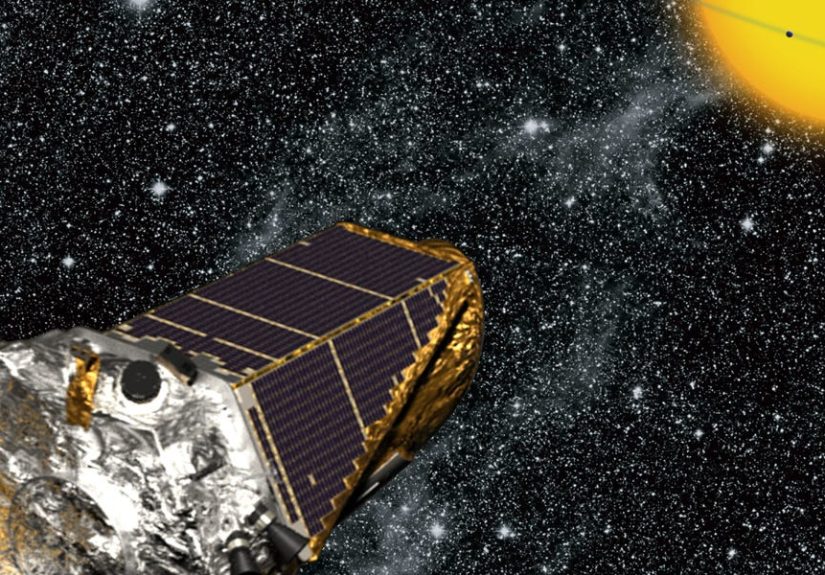
Kepler did not discover these planets by flying past them. It was not cruising through the galaxy with a camera out the window like a tourist on the most expensive road trip ever. Instead, Kepler used the transit method, one of the most successful planet-hunting techniques in astronomy.
The transit method works by watching stars very carefully. When a planet passes in front of its star from our point of view, the star’s light dims by a tiny amount. Kepler measured those tiny dips in brightness. If the dip repeated on a regular schedule, scientists could infer that an object was orbiting the star. With enough data, they could estimate the planet’s size and orbital period.
Think of it like noticing a fruit fly passing in front of a porch light from across the street, except the porch light is hundreds or thousands of light-years away, the fruit fly is a planet, and your measuring tool has to be ridiculously precise. Kepler was built for exactly that kind of cosmic patience.
Why the 1,284-Planet Announcement Was a Big Deal
Before Kepler, astronomers knew exoplanets existed, but the overall picture was still blurry. Were planets common? Were Earth-size planets unusual? Did most stars have planetary systems, or was our solar system a lucky oddball? Kepler helped transform those questions from speculation into statistics.
NASA’s announcement showed that planets are not merely scattered here and there like rare collector’s items. The data suggested they are abundant. Kepler’s legacy helped support the now-famous idea that there may be more planets than stars in the Milky Way. That is the sort of sentence that sounds like science fiction until you realize it came from years of careful measurement.
The announcement also mattered because of its scale. Before large-scale statistical validation, confirming exoplanets was often slow and individual. Scientists needed follow-up observations, detailed modeling, and careful elimination of false positives. That work remains essential, but Kepler produced so much data that the traditional one-at-a-time approach could not keep up. Astronomy had entered the big-data era.
The Role of Statistical Validation
The 1,284 planets were validated using an automated statistical method associated with the Vespa software package, developed to calculate false positive probabilities for Kepler Objects of Interest. In plain English, the software helped scientists ask: “How likely is this signal to be a planet, and how likely is it to be something pretending to be a planet?”
This mattered because Kepler had detected thousands of possible signals. Some were planets. Some were eclipsing binary stars. Some came from background objects or blended light. Vespa allowed researchers to evaluate thousands of candidates efficiently and consistently. It was not a magic wand; it was a rigorous probability tool. But when you are staring at more than 7,000 signals, a rigorous probability tool is about as close to a magic wand as science responsibly allows.
By applying a confidence threshold, researchers could validate large groups of planets without pretending certainty where certainty did not exist. That is an important lesson for science writing: “confirmed” does not mean scientists guessed confidently while wearing lab coats. It means the evidence passed a defined standard.
Nine New Worlds in the Habitable Zone
Among the newly validated planets, nine were especially exciting because they orbited in their stars’ habitable zones. The habitable zone is often nicknamed the “Goldilocks zone,” where conditions may be not too hot and not too cold for liquid water to exist on a planet’s surface. Water matters because, on Earth, life depends on it.
However, the habitable zone is not a guarantee of habitability. A planet can sit in the right orbital neighborhood and still be a terrible vacation spot. It might have no atmosphere, a crushing atmosphere, intense radiation, violent stellar activity, or surface conditions that would make even the toughest camping enthusiast politely decline.
Still, the nine habitable-zone planets added to a growing list of worlds worth studying. They helped expand the search for planets that may be rocky, temperate, and potentially suitable for future atmospheric observations. In the search for life beyond Earth, scientists do not need one dramatic answer overnight. They need a better target list. Kepler delivered exactly that.
Nearly 550 Could Be Rocky Planets
Based on size estimates, nearly 550 of the newly validated planets could be rocky like Earth. That does not mean they are Earth twins. Some may be scorched, frozen, airless, or chemically strange. “Rocky” simply means their size suggests they may be made mostly of rock rather than gas.
This distinction matters. A giant gas planet can be fascinating, but if scientists are searching for environments that might support life as we know it, rocky planets are especially interesting. Earth, Mars, Venus, and Mercury are rocky planets. They prove that solid worlds can have wildly different personalities. Earth has oceans and breathable air. Venus has a runaway greenhouse atmosphere. Mars is cold and dry. Mercury is basically the solar system’s roasted skipping stone.
The Kepler announcement showed that rocky planets are not limited to our solar system. They appear throughout the galaxy, orbiting distant stars and expanding the range of places where scientists can ask deeper questions about chemistry, atmospheres, and planetary evolution.
Kepler’s Mission: Small Dips, Huge Discoveries
Kepler launched in March 2009 as NASA’s first mission designed specifically to search for Earth-size planets around other stars. It stared at a rich field of stars in the constellations Cygnus and Lyra, monitoring about 150,000 stars during its primary mission. Its job was not glamorous in the action-movie sense. Kepler stared. And stared. And stared some more.
That relentless staring changed astronomy. By watching the same stars over long periods, Kepler could detect repeated transit signals. Those signals revealed planets of many sizes, from giant worlds larger than Jupiter to smaller planets closer to Earth’s scale.
Kepler also taught scientists that planetary systems can be very different from ours. Some planets orbit extremely close to their stars, completing a year in just days. Some systems are packed with multiple planets in tight orbits. Some planets are larger than Earth but smaller than Neptune, a category not represented in our solar system but common elsewhere.
Why “Another Earth” Is Complicated
Whenever NASA announces potentially habitable planets, headlines tend to sprint toward the phrase “another Earth.” It is an irresistible phrase. It is also a little slippery. Earth is not just a rocky planet in the habitable zone. Earth has a stable atmosphere, plate tectonics, a magnetic field, liquid water, a large moon, complex chemistry, and a long biological history. That is a lot to pack into one phrase.
The 1,284-planet announcement did not prove that any of these planets host life. It did not even prove that the nine habitable-zone planets are truly habitable. What it did prove is that the galaxy contains many more promising places to investigate. In science, that is a spectacular result.
A good way to think about it is this: Kepler did not find Earth 2.0 with a welcome mat. It found a much larger map. And when you are searching the galaxy, a better map is priceless.
How This Discovery Changed the Search for Life
The search for life beyond Earth is not only about finding planets. It is about finding the right planets for the next generation of telescopes to study. Kepler’s discoveries helped scientists estimate how common different types of planets are. That information shapes mission planning, telescope design, and research priorities.
Later missions such as TESS built on Kepler’s foundation by searching for planets around brighter, closer stars. The James Webb Space Telescope and future observatories can study some exoplanet atmospheres, searching for clues about temperature, chemistry, clouds, and possible biosignatures. Kepler’s statistical revolution helped decide where those precious observing hours should go.
In other words, Kepler was not just a planet finder. It was a cosmic surveyor. It helped answer the question, “Where should we look next?”
Why This News Still Matters Today
Even years after the announcement, the discovery remains important because it marked a turning point in how people understood the galaxy. Today, NASA’s exoplanet catalog includes more than 6,000 confirmed exoplanets, and the number keeps growing as new missions and research teams add fresh discoveries.
The 1,284-planet announcement was one of the moments that made the modern exoplanet era feel real to the public. It was not just one weird planet orbiting one distant star. It was a crowd. A population. A statistical wave of worlds.
That is why the headline still works. “NASA Just Announced 1,284 New Planets” captures the emotional punch of the discovery. It reminds readers that the universe is not empty, quiet, and finished. It is crowded with possibilities.
Specific Examples of What Kepler Taught Us
Planetary Systems Can Be Crowded
Kepler revealed many multi-planet systems where several planets orbit the same star. Some are arranged in compact configurations that would look strange compared with our solar system. These systems help scientists understand how planets form, migrate, and settle into stable or unstable orbits.
Small Planets Are Common
One of Kepler’s biggest contributions was showing that smaller planets are common in the galaxy. Before Kepler, many known exoplanets were giant planets because large planets are easier to detect. Kepler gave scientists a better view of smaller worlds, including Earth-size and super-Earth planets.
The Galaxy Has More Variety Than Expected
Kepler found hot Jupiters, mini-Neptunes, super-Earths, compact systems, and planets orbiting stars very different from the Sun. The universe did not read our solar system textbook before building other planetary systems. Apparently, it preferred improvisation.
Common Misunderstandings About the Announcement
NASA Did Not Find 1,284 Earths
The newly validated planets included many different sizes and orbital conditions. Some may be rocky, but many are not Earth-like in the full sense. A planet can be exciting without being a comfortable place to build a backyard deck.
“Habitable Zone” Does Not Mean “Inhabited”
The habitable zone means liquid water could potentially exist under the right atmospheric conditions. It does not mean life is present. It does not even guarantee oceans. It simply means the planet is interesting enough to deserve more attention.
Statistical Validation Is Real Science
Some readers may wonder how a planet can be confirmed without a direct image. The answer is that astronomy often works through indirect evidence. Scientists infer planets from repeated, measurable effects on starlight. When the probability is strong enough and false-positive scenarios are ruled out, statistical validation becomes a powerful tool.
Experiences: What the 1,284-Planet News Feels Like From Earth
Reading about NASA’s 1,284-planet announcement can feel oddly personal, even though the planets are unimaginably far away. There is something humbling about realizing that the night sky is not just a decorative ceiling. It is a field of suns, and around many of those suns are worlds. Some may be giant storms of gas. Some may be frozen marbles. Some may be rocky places with mountains no human eye has seen. A few may sit in quiet orbits where water could exist, waiting for future telescopes to tell us more.
For many people, this kind of news brings back the first time they looked through a telescope. Maybe it was at the Moon, with its craters sharp enough to feel touchable. Maybe it was Saturn, looking so unreal that it seemed like a sticker placed on the lens. The Kepler announcement creates that same feeling, but on a grander scale. It invites readers to look up and understand that the stars are not just points of light. They are possible solar systems.
The most exciting part is not that NASA “found aliens,” because it did not. The exciting part is that the search became more realistic. Before discoveries like this, the question “Are we alone?” could feel almost philosophical. After Kepler, it became more measurable. Scientists could talk about planet populations, occurrence rates, candidate validation, and habitable-zone statistics. The mystery remained, but the tools got sharper.
There is also a strangely comforting side to the announcement. Human problems often feel enormous from ground level: traffic, bills, deadlines, group chats that should have ended three days ago. Then NASA announces 1,284 planets, and suddenly the universe feels bigger than our inboxes. That does not make everyday life less important, but it does add perspective. We live on one planet among many, orbiting one star among hundreds of billions.
For students, writers, science fans, and casual sky-watchers, this discovery is a reminder that curiosity still pays off. Kepler spent years watching tiny changes in starlight. Tiny changes. That is the part worth remembering. Big discoveries often begin as small signals noticed by patient people. A slight dimming. A repeated pattern. A question that refuses to go away.
The 1,284 new planets are not places we can visit, at least not with today’s technology. But they are places we can think about, model, study, and use to refine our understanding of the cosmos. They turn the galaxy from scenery into geography. They make the universe feel less like an empty stage and more like a vast archipelago of worlds.
Conclusion
NASA’s announcement of 1,284 newly validated planets was one of the defining moments of the Kepler mission and a landmark in exoplanet science. It showed that planets are common, small worlds are abundant, and the search for potentially habitable environments is no longer a dream floating somewhere in science fiction. It is a structured scientific effort powered by telescopes, statistics, and a healthy amount of cosmic patience.
The discovery did not answer every question. It did not prove life exists beyond Earth. It did not hand us a second home among the stars. But it did something just as important: it expanded the search area dramatically. It gave scientists more worlds to study, more patterns to analyze, and more reasons to believe that our galaxy is rich with planetary systems.
In the end, the most thrilling part of the 1,284-planet announcement is not the number itself, although the number is certainly impressive. The real thrill is what the number represents. The universe is full of worlds, and humanity has only begun learning how to find them.
Note: This article is based on NASA’s Kepler 2016 planet validation announcement and related public exoplanet mission information. It is written as original web content for educational and SEO publishing purposes.