Table of Contents >> Show >> Hide
- Why NASA’s Astronaut Announcements Are a Big Deal
- Meet the “Commercial Crew Nine”: The First Astronauts Assigned (2018)
- SpaceX Crew Dragon: From “Test Flight” to ISS Workhorse
- Boeing Starliner: Why NASA Still Wants a Second U.S. Crew Vehicle
- How NASA Decides Which Astronauts Fly on SpaceX vs. Boeing
- What These Announcements Mean for the ISS (and Beyond)
- Real-World Experiences: What Training for Dragon and Starliner Feels Like (and Why Astronauts Love Checklists)
- Conclusion
Picture this: NASA is standing at the cosmic curb, holding up two fingers like it’s ordering a rideshareexcept the destination is the International Space Station (ISS), and the “cars” are brand-new American spacecraft built by SpaceX and Boeing. When NASA announces astronaut assignments for these vehicles, it’s not just a roll call of very calm people with excellent haircuts. It’s a signal flare that says: the U.S. is serious about getting to orbit safely, reliably, and oftenwithout putting all its eggs in one spacecraft-shaped basket.
This story has a big headline momentNASA unveiling the first astronauts assigned to fly on SpaceX’s Crew Dragon and Boeing’s CST-100 Starlinerplus a longer plotline full of engineering, schedule chess, and the kind of contingency planning that makes “backup plan” feel wildly underqualified as a phrase. Let’s break down what NASA announced, who those astronauts were (and why that matters), how SpaceX and Boeing approach human spaceflight differently, and what these assignments tell us about the future of ISS missions and America’s orbit-bound game plan.
Why NASA’s Astronaut Announcements Are a Big Deal
After the Space Shuttle retired, NASA still had a space station to run, science to do, and a permanent crew to maintain. But without the Shuttle, NASA needed a new way to move astronauts to and from low-Earth orbit. The agency’s answer became the Commercial Crew Programa partnership model where NASA works with private industry to provide safe, reliable astronaut transportation from U.S. soil.
And here’s the key: NASA didn’t want one solution. It wanted two independent, American crew transportation systems. Redundancy isn’t just a fancy engineering buzzword; it’s how you keep a space station staffed when something unexpected happens. If one spacecraft hits delays or needs upgrades, NASA still has another way to rotate crews and keep ISS operations humming.
So when NASA announces astronauts to fly on SpaceX and Boeing spacecraft, it’s more than hypeit’s NASA putting real human beings at the center of the certification and operations plan. Astronaut assignments are how test flights become regular flights, and how prototypes become trusted vehicles.
Meet the “Commercial Crew Nine”: The First Astronauts Assigned (2018)
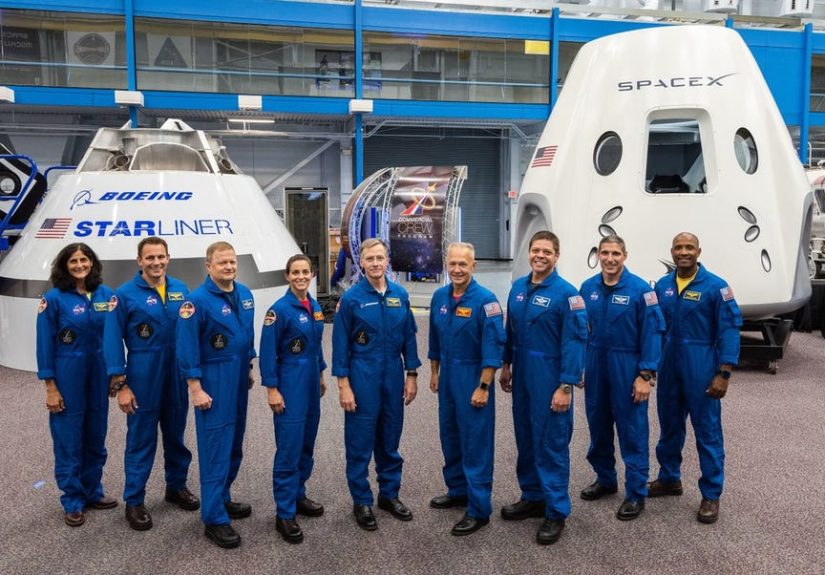
In a landmark announcement, NASA introduced the first group of astronauts assigned to fly on the initial test flights and early missions for both Boeing’s Starliner and SpaceX’s Crew Dragon. The group became informally known as the Commercial Crew Ninenine astronauts selected to help usher in a new era of human spaceflight from the United States.
The Nine Astronauts NASA Introduced
- Sunita “Suni” Williams
- Josh Cassada
- Eric Boe
- Nicole Aunapu Mann
- Christopher Ferguson (Boeing commercial astronaut; former NASA astronaut)
- Douglas “Doug” Hurley
- Robert “Bob” Behnken
- Michael Hopkins
- Victor Glover
NASA didn’t just list names. It also mapped these astronauts to specific early flightstest flights and first operational missionseffectively turning concept art into a real schedule with real stakes.
Who Was Assigned to Fly What (As Announced)
Boeing Starliner – Crewed Test Flight (initial assignment):
- Eric Boe
- Christopher Ferguson
- Nicole Aunapu Mann
SpaceX Crew Dragon – Crewed Test Flight:
- Bob Behnken
- Doug Hurley
Boeing Starliner – First Mission (initial assignment):
- Josh Cassada
- Suni Williams
SpaceX Crew Dragon – First Mission (initial assignment):
- Victor Glover
- Michael Hopkins
NASA also noted that international partners would assign additional crew members later, reflecting the ISS reality: it’s a global lab, and the crew roster usually includes astronauts and cosmonauts from multiple agencies.
SpaceX Crew Dragon: From “Test Flight” to ISS Workhorse
If Boeing’s Starliner is the careful, traditional engineering student who color-codes every binder, SpaceX’s Crew Dragon is the bold kid who shows up with a laptop, a touchscreen interface, and the confidence of someone who has already refactored the group project before anyone else logged in.
NASA’s early SpaceX assignments became reality with historic impact. The Crew Dragon test flight crewBehnken and Hurleyultimately launched on a mission that marked the first crewed orbital launch from U.S. soil since the end of the Shuttle era. That flight helped validate not just hardware, but also operations: training flow, launch processing, docking procedures, and recovery.
What Crew Dragon Missions Look Like Today
As the program matured, NASA’s SpaceX flights shifted into a steady rhythm: long-duration ISS crew rotation missions that bring up a four-person crew and return another crew months later. NASA continues announcing assignments well in advance so astronauts can train for spacecraft-specific procedures, station operations, and mission tasks.
For example, NASA announced the SpaceX Crew-10 crew lineup with a commander, pilot, and international partnersa pattern now familiar to ISS watchers. That crew included NASA astronauts Anne McClain and Nichole Ayers, JAXA astronaut Takuya Onishi, and Roscosmos cosmonaut Kirill Peskov, targeted for an ISS mission timeframe no earlier than early 2025.
NASA also announced the SpaceX Crew-11 assignments: NASA astronauts Zena Cardman (commander) and Mike Fincke (pilot), JAXA astronaut Kimiya Yui, and Roscosmos cosmonaut Oleg Platonov. NASA specifically noted how reassignments can happen to support station needsbecause spaceflight planning is equal parts precision and “okay, everyone breathe, now pivot.”
Even after launch, NASA still makes operational calls based on real-time realities. In early 2026, NASA publicly stated it adjusted a SpaceX crew mission’s return timing while monitoring a medical concern, while respecting astronaut medical privacy. That kind of transparent, safety-first decision-making is a hallmark of modern commercial crew operations: the transportation system is commercial, but the responsibility for crew safety is deeply NASA.
Boeing Starliner: Why NASA Still Wants a Second U.S. Crew Vehicle
NASA’s partnership with Boeing for Starliner exists for the same reason you bring a spare key on a road trip: you don’t plan to lose the first one, but you also don’t want to be stranded if something goes sideways.
Starliner is designed to carry astronauts to the ISS and return them to Earth with a land landing (as opposed to the ocean splashdowns used by Crew Dragon). It launches on an Atlas V rocket and was built to meet NASA’s requirements for human spaceflight. In other words: it’s meant to be a fully capable alternative to Crew Dragon.
The Starliner Crewed Flight Test and NASA’s Safety Calls
In June 2024, NASA launched its Boeing Crew Flight Test with astronauts Butch Wilmore and Suni Williams aboard Starliner on an end-to-end test of the system. During the mission, NASA and Boeing teams tracked propulsion-related issues, including helium leaks and reaction control thruster performance as Starliner approached the space station. Later, NASA made the high-stakes decision to bring Starliner back to Earth without its crew and to return the astronauts on a SpaceX mission insteadspecifically citing safety and the need to avoid unnecessary risk.
That decision is important context for the article’s headline topic. NASA’s astronaut announcements are not just ceremonialthey come with accountability. When issues surface, NASA has to protect the crew first, even if it means changing the plan in a very public way.
Starliner’s Next Step: Uncrewed Flight Before Regular Crew Rotations
By late 2025, NASA and Boeing adjusted Starliner’s near-term plans. NASA stated that the next Starliner flightreferred to as Starliner-1would fly uncrewed and deliver cargo to the ISS while validating upgrades made after the 2024 Crew Flight Test. NASA also targeted no earlier than April 2026 for that uncrewed mission, tying it to rigorous testing, certification, and readiness milestones.
Boeing has also publicly described Starliner-1 as an upcoming launch window and emphasized additional demonstration work to prove the system’s readiness. The message from both NASA and Boeing is consistent: the spacecraft must earn its next crewed flight through testing and verified performance, not optimism.
How NASA Decides Which Astronauts Fly on SpaceX vs. Boeing
NASA crew assignments look simple on a poster (“Commander, Pilot, Mission Specialists”), but behind the scenes they’re a strategic blend of experience, skill sets, and mission needs.
What NASA Weighs in an Assignment
- Experience balance: pairing veterans with first-time flyers to build the next generation of ISS operators
- Spacecraft-specific training: each vehicle has unique systems, displays, emergency procedures, and performance quirks
- Station expertise: long-duration missions require strong ISS operations capability, not just launch-and-land skills
- International partner coordination: seats are planned across NASA, Roscosmos, JAXA, ESA, and others depending on agreements
- Schedule reality: readiness drives assignments; sometimes astronauts are reassigned to meet station needs
In practice, this is why NASA may cross-train astronauts on multiple spacecraft (yes, even the ones that belong to “the other team”) and why announcements can evolve over time. The goal isn’t brand loyaltyit’s ISS continuity.
What These Announcements Mean for the ISS (and Beyond)
When NASA announces astronauts for SpaceX and Boeing spacecraft, it’s reinforcing a long-term operational philosophy: two providers, one missionkeep the ISS staffed and science moving.
That matters because the ISS isn’t just a destination; it’s a platform. Commercial crew missions enable research in human health, materials science, Earth observation, and technology demonstrations that support future exploration. And every additional day of uninterrupted station operations is a win for both science and international cooperation.
It also matters for NASA’s broader future. Reliable crew transportation to low-Earth orbit frees NASA to focus more of its energy on deep-space objectiveswhile still maintaining a stable pipeline of astronaut experience and operational learning.
Real-World Experiences: What Training for Dragon and Starliner Feels Like (and Why Astronauts Love Checklists)
Let’s talk about the human sidebecause “NASA announces astronauts” sounds like a press conference, but for the astronauts it’s more like getting invited to the world’s most intense group project… where the final presentation is delivered at 17,500 miles per hour.
First comes the mental gear shift. An astronaut assignment isn’t just “Congrats, you’re going to space!” It’s “Congrats, your calendar now belongs to simulators.” Training ramps up with endless run-throughs: nominal launches, off-nominal launches, “everything is fine,” and “everything is on fire but calmly, professionally.” Astronauts practice the same scenarios until their reactions become muscle memorybecause in spaceflight, surprise is not a cute personality trait.
Then there’s vehicle personality. Crew Dragon and Starliner are both designed for humans, but they feel different. Dragon leans moderntouchscreen-heavy, highly automated, with astronauts trained to monitor, verify, and step in if needed. Starliner, built with a different design philosophy, has its own interface approach and procedures, plus a distinct mission profile including land-based returns. Astronauts train for the specifics: how displays present data, how manual control behaves, and what the vehicle “sounds like” in telemetry when it’s healthy versus when it’s trying to quietly start drama.
Suit time is real time. You don’t just wear a suit; you learn to live in it. Fit checks, mobility tests, comm checks, pressure checksrepeat. Astronauts practice climbing into seats, reaching controls, and handling emergency procedures while suited up. If you’ve ever tried to tie your shoes wearing winter gloves, imagine doing that while strapped into a spacecraft and pretending you’re not sweating.
Emergency training gets weirdly specific. There’s survival training for after landing, because coming home is still an “operation,” not a vacation. Crew Dragon crews prepare for ocean recovery logistics. Starliner crews train around land landing concepts. Either way, astronauts rehearse how to egress safely, how to communicate with recovery teams, and how to manage the fact that gravity suddenly feels rude after months in microgravity.
And yes, astronauts bond with the spacecraft. Not in a sci-fi “the ship is alive” way (usually), but in a practical sense: they learn every quirk, every step, every checklist line. They know where they’re most likely to make a mistake and how to prevent it. They learn what “normal” looks like so they can recognize “not normal” fast.
By the time launch day arrives, astronauts aren’t relying on courage. They’re relying on repetition, teamwork, and procedure. The humor you hear in interviewsthose calm jokes about snacks, sleeping bags, or how the suit isn’t exactly “breathable chic”isn’t because they aren’t taking it seriously. It’s because they’ve trained so hard that the only healthy response left is: laugh a little, then run the checklist again.
Conclusion
NASA’s astronaut announcements for SpaceX and Boeing spacecraft are a snapshot of strategy in motion: build redundancy, maintain ISS operations, and keep U.S. human spaceflight resilient even when programs hit turbulence. SpaceX’s Crew Dragon has become a steady ride to orbit, while Boeing’s Starliner remains a critical second capability that NASA continues to push toward certificationcarefully, methodically, and with safety as the deciding vote. The names NASA announces today shape the missions NASA can fly tomorrow.