Table of Contents >> Show >> Hide
- A Classroom Incident That Shocked Syracuse
- What Reportedly Happened At Lincoln Middle School
- The Arrest, Charges, Plea, And Sentencing
- Why The Incident Hit A Nerve
- The School Security Question
- Teacher Safety Is Student Safety
- What Parents Should Do When They Believe A School Failed Their Child
- What Schools Can Learn From The Case
- The Human Cost Behind The Viral Headline
- Experience-Based Reflections: What This Story Teaches About Conflict, Schools, And Self-Control
- Conclusion
Editorial note: This article is based on publicly reported information from court updates, local news coverage, school-safety reporting, and national education-safety research. It uses standard American English, avoids unnecessary speculation, and treats the incident as both a criminal case and a wider school-safety lesson.
A Classroom Incident That Shocked Syracuse
A school day is supposed to come with predictable drama: forgotten homework, squeaky sneakers, mysterious cafeteria smells, and at least one student asking, “Did we do anything important yesterday?” What it should not include is a parent entering a classroom and allegedly beating a teacher in front of a room full of children.
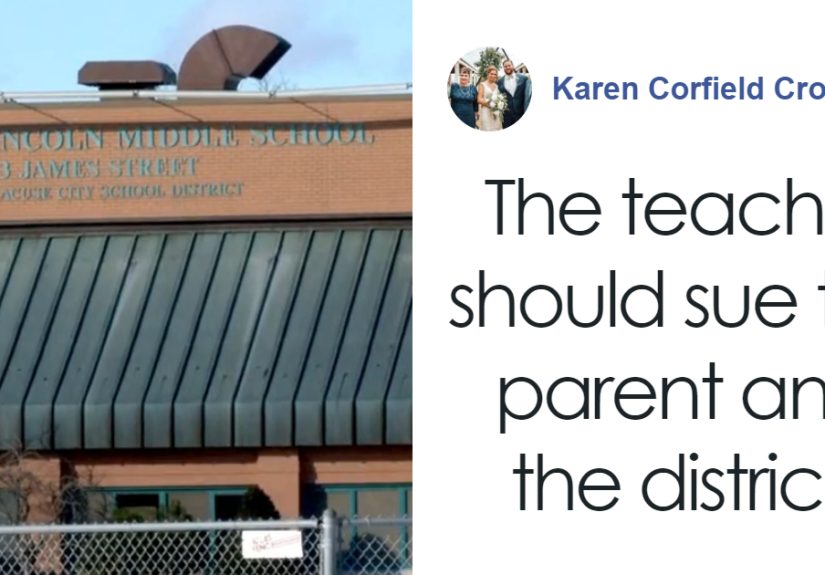
That is the disturbing story that unfolded at Lincoln Middle School in Syracuse, New York, where a mother was arrested after a violent confrontation left her daughter’s teacher with serious facial injuries. The case became widely discussed because of the brutality of the assault, the number of children who reportedly witnessed it, and the obvious question that followed: how did an adult get far enough inside a school building to reach a teacher’s classroom?
The mother, identified in public reports as Lynzina Sutton, was accused of entering the school on February 16, 2024, locating a teacher, and repeatedly punching her in the face. The teacher, later identified in sentencing coverage as Meghan Reno, suffered a concussion and broken facial bones, including injuries around the nose. Reports described the attack as happening in front of roughly 25 students, with some school-safety coverage placing the number at 25 to 30.
The headline is shocking, but the story is bigger than one moment of violence. It raises difficult questions about parent-teacher conflict, school security, bullying complaints, emotional escalation, workplace safety for educators, and the trauma children can experience when adults turn a learning space into a battleground.
What Reportedly Happened At Lincoln Middle School
According to public reporting, the conflict began after an issue involving Sutton’s daughter at school. Reports said the student had been questioned or disciplined after allegedly lying about her whereabouts during the school day. A teacher had reportedly made a complaint or referral related to the student’s behavior, and the situation escalated quickly.
The next day, Sutton and her mother reportedly went to Lincoln Middle School. School officials later said Sutton was able to get past security during the morning arrival period. One reason the incident drew so much attention was the way she allegedly entered: she was described as short, wearing a hood, and able to blend in with students during drop-off. That detail sounds almost absurd on the surface, but for school security teams, it is exactly the kind of real-world complication that turns a policy manual into a stress test.
Once inside, Sutton allegedly searched for the teacher’s classroom. When she found the teacher, authorities said she attacked her with repeated punches to the face. The injuries were severe enough that the teacher was taken to the hospital. Reports attributed to prosecutors described broken nasal and facial bones, a concussion, and long-term concerns related to the teacher’s recovery.
The attack reportedly happened in front of a classroom of children. That detail matters. A violent incident in a hallway is frightening. A violent incident inside a classroom, where children are sitting at desks expecting instruction, is something else entirely. The classroom is supposed to be the safest room in a school. For students, it is where they are asked to concentrate, participate, and trust the adults around them. Seeing a teacher attacked in that space can shake that trust in a way no fire drill can prepare them for.
The Arrest, Charges, Plea, And Sentencing
After the assault, Sutton was arrested and initially faced serious charges, including assault and burglary. Later reporting said she was also charged with harassment and multiple counts related to endangering the welfare of children because students were present during the attack.
The case continued through the courts. In January 2025, Sutton pleaded guilty to second-degree assault. In March 2025, she was sentenced to two years in prison followed by two years of post-release supervision. Other charges were dismissed as part of the plea agreement.
At sentencing, Reno described the emotional and physical impact of the attack. She told the court that her classroom had been violated as a safe space for both herself and her students. Reports said she suffered a broken nose and concussion, had to take medical leave, and continued to deal with the consequences after the incident.
The sentencing update changed the story from “mother accused” to “mother convicted by plea.” That distinction matters for accuracy. At the time of the initial reports, Sutton was an accused defendant. After her guilty plea, the legal record showed she accepted responsibility for second-degree assault. For readers, that means the case is not just an viral headline; it is a completed criminal proceeding with a prison sentence.
Why The Incident Hit A Nerve
Stories about school violence often focus on students. This one struck a different nerve because the alleged aggressor was a parent. Teachers expect to manage student behavior. They expect difficult meetings, emotional conferences, and tense phone calls. What they should never have to expect is being physically assaulted by a parent inside their own classroom.
That is why the incident triggered a strong response from educators in Syracuse. Teachers and staff later spoke publicly about safety, respect, and the need for better protection. Their message was not complicated: students cannot learn well when teachers feel unsafe, and teachers cannot teach well when the adults in the community treat school staff like punching bags with lesson plans.
The case also touched a sensitive issue: parent frustration. Sutton’s family claimed there had been unresolved bullying concerns involving her daughter. Bullying complaints should always be taken seriously. Parents deserve clear communication, timely follow-up, and a process that does not make them feel ignored. But there is a giant Grand Canyon-sized difference between demanding answers and assaulting a teacher.
A school can fail to communicate. A parent can feel dismissed. A child can be hurt. None of those realities create a license for violence. In fact, violence usually makes the original problem harder to solve. Instead of focusing on the child’s complaint, everyone is forced to focus on criminal charges, injuries, trauma, and school security failures.
The School Security Question
One of the most uncomfortable parts of this case is the security breakdown. Lincoln Middle School reportedly had entry procedures, but Sutton allegedly got past them during a busy drop-off period. That is not just a Syracuse issue. Schools across the country face the same problem every morning: hundreds of students enter at once, staff try to keep the flow moving, and any adult who appears to blend into the crowd can create a vulnerability.
Good school security is not simply about locked doors or badges. It is about layered systems. A visitor policy helps. Trained staff help. Clear sightlines help. Working cameras help. Communication between the front office, security staff, and administrators helps. But every system has weak points, especially during transition times such as arrival, dismissal, lunch, assemblies, and class changes.
After an event like this, the goal should not be panic. Schools do not need to turn into airports with algebra. But they do need practical reviews. Who checks visitors? How are adults identified? What happens if a parent is angry? How fast can staff call for help? Are classroom doors secured? Are substitute teachers trained on emergency procedures? Do students know what to do if a fight or assault occurs?
The best safety plans are boring when they work. Nobody writes headlines about a visitor being politely redirected to the main office. But boring prevention is exactly what keeps schools from becoming national news.
Teacher Safety Is Student Safety
It is tempting to treat teacher safety as an employment issue only. It is not. Teacher safety is student safety. When a teacher is attacked, students are not just bystanders; they are witnesses to violence in the place where they are supposed to feel protected.
National education organizations have warned that violence and aggression toward educators can affect retention, stress, morale, and school climate. The National Education Association has pointed to research showing that educator safety requires a whole-school effort involving staff, students, families, administrators, and unions. The Centers for Disease Control and Prevention also emphasizes that school violence disrupts learning and affects students, schools, and communities.
Children who watched the Lincoln Middle School assault did not simply see “an incident.” They saw an adult attack another adult. Some may have felt helpless. Some may have felt scared. Some may have replayed the moment later at home. Others may have wondered whether their own teachers could protect them if adults can suddenly storm into classrooms.
That is why support after a school assault matters. Students may need counseling, reassurance, and age-appropriate explanations. Staff may need debriefing and mental health support. Parents need honest communication without rumor-fueled chaos. Silence after a traumatic incident can make fear grow faster than a middle school group chat.
What Parents Should Do When They Believe A School Failed Their Child
Parents sometimes reach a boiling point because they believe their child has been bullied, ignored, mislabeled, or unfairly disciplined. Those concerns can be real. Schools are run by humans, and humans occasionally miscommunicate, delay, minimize, or make mistakes. But the response still matters.
The first step is documentation. Write down dates, names, incidents, screenshots, emails, and the exact concern. A clear record is more powerful than a furious speech at the front desk. The second step is escalation through proper channels: teacher, counselor, assistant principal, principal, district office, and, if necessary, outside agencies. The third step is keeping every conversation focused on the child’s safety and needs.
A parent walking into school angry may feel justified in the moment, but anger is a terrible lawyer, a terrible security badge, and an even worse conflict-resolution strategy. Once a parent threatens or assaults staff, the original complaint gets buried under criminal behavior. The child at the center of the concern may end up more embarrassed, more isolated, and less supported.
Parents can be fierce advocates without becoming threats. The strongest parent in the room is not the loudest one. It is the one who can stay organized, firm, and calm long enough to get results.
What Schools Can Learn From The Case
For schools, the Lincoln Middle School assault is a reminder that safety planning must include adult behavior, not just student behavior. Parent conflict can escalate quickly, especially when bullying, discipline, attendance, or child-protection concerns are involved.
Schools should have clear protocols for angry visitors. Staff should know when to move a meeting to a secure area, when to involve an administrator, when to call security, and when to end a conversation. Teachers should not be left alone to handle hostile adults. Front-office teams need training because they are often the first line of defense and the first people to absorb parent frustration.
Communication also matters. If a parent has repeatedly reported bullying and feels ignored, the school should be able to show what was reported, what was investigated, what was found, what actions were taken, and what follow-up occurred. Even when a parent dislikes the answer, a documented process can reduce the feeling that nobody listened.
Schools should also avoid treating safety and relationship-building as opposites. A welcoming school can still have firm visitor procedures. A caring principal can still say, “You cannot enter this hallway without signing in.” A teacher can care deeply about a student and still report misconduct. Boundaries are not disrespect. Boundaries are how schools remain functional.
The Human Cost Behind The Viral Headline
The title of this story is dramatic because the incident was dramatic. But behind the headline are real people dealing with lasting consequences.
There is a teacher who went to work expecting a normal Friday and left with serious injuries. There are students who watched violence unfold inches or feet away from where they were supposed to be learning. There is a mother who turned anger into a criminal act and received a prison sentence. There are children in her own family who must live with the consequences of that decision. There is a school community that had to ask whether its safety systems were strong enough.
That is the part that makes the case so troubling. One adult’s loss of control can ripple outward for months or years. A few minutes of violence can create medical appointments, court hearings, staff meetings, student counseling sessions, policy reviews, and lasting anxiety.
The lesson is not that parents are the enemy. Most parents want the same thing teachers want: safe children, fair treatment, and a school that responds when something is wrong. The lesson is that schools need strong systems for conflict before conflict becomes crisis.
Experience-Based Reflections: What This Story Teaches About Conflict, Schools, And Self-Control
Anyone who has spent time around schools knows that emotions can run hot. Parents are not discussing abstract policy when they talk about their children. They are talking about the small human beings they love most in the world. A parent who believes their child has been bullied or mistreated can feel fear, shame, anger, and helplessness all at once. That emotional cocktail is strong enough to make even reasonable adults say things they later wish they could delete from the universe.
But experience also teaches something else: the moment a parent becomes threatening, the conversation changes. A teacher may have been ready to listen. A principal may have been ready to investigate. A counselor may have been ready to help. But once violence enters the room, the school has to respond to the immediate danger first. The original issue becomes secondary, not because it does not matter, but because safety has been shattered.
In many school conflicts, the best results come from parents who treat the process like a serious case file rather than a shouting contest. They collect emails. They write timelines. They ask specific questions. They request meetings with the right people. They follow up in writing. They stay persistent without becoming abusive. That approach may not feel as satisfying as storming in and “handling it,” but it is far more likely to protect the child and produce a real solution.
Teachers, meanwhile, often live in the middle of everyone’s frustration. Students are frustrated. Parents are frustrated. Administrators are overwhelmed. Districts are under pressure. Teachers are expected to be educators, counselors, conflict mediators, record keepers, technology troubleshooters, and occasionally amateur detectives of who threw the pencil. When a parent turns violent, it confirms a fear many educators already carry quietly: that the job can become unsafe without warning.
One practical lesson from this case is that every school should take parent communication seriously before anger hardens into confrontation. When parents report bullying, they need more than a vague “we’ll look into it.” They need a process, a timeline, and a follow-up. Even if privacy rules limit what the school can reveal, staff can still explain the steps being taken. People are less likely to explode when they understand where their concern is in the system.
Another lesson is that children learn from how adults handle conflict. If a child sees a parent respond to school discipline with violence, the child learns that force is a possible answer to embarrassment or anger. If a child sees a parent stay firm, document concerns, and demand accountability without threats, the child learns something more useful: self-control is not weakness. It is power with steering.
Schools should also practice what happens after a traumatic event. Students who witness violence may not all react the same way. One child may cry. Another may joke. Another may act as if nothing happened and then struggle to sleep later. Teachers and counselors should be ready for delayed reactions. A simple classroom conversation, a counseling referral, or a message to families can help students understand that what they saw was not normal and not their fault.
For teachers, this story is a reminder to report threats early and in writing. If a student says a parent is going to “handle” a teacher, that comment should move quickly through the school’s safety channels. Not every threat becomes real, but every threat deserves a documented response. Schools should make it easy for teachers to report concerns without feeling dramatic or unsupported.
For parents, the takeaway is equally clear: advocate hard, but do not lose the plot. The goal is to help your child, not to create a second emergency. Ask for meetings. Bring notes. Request written responses. Involve district staff when needed. Seek outside help if the issue involves safety, discrimination, disability rights, or repeated bullying. But never let anger make you the reason the police are called.
The Lincoln Middle School case is painful because it was preventable. A complaint could have become a meeting. A meeting could have become an investigation. An investigation could have become a plan. Instead, the situation became an assault, a prison sentence, and a classroom full of children with a memory they never asked for. That is the final lesson: in schools, adult behavior is part of the curriculum, whether adults realize it or not.
Conclusion
The case of the mom arrested after breaking several bones of her daughter’s teacher in front of children is not just another shocking internet story. It is a serious example of what happens when anger overwhelms judgment, when school security is tested, and when unresolved conflict reaches the worst possible setting: a classroom full of students.
The teacher’s injuries, the students’ exposure to violence, the parent’s prison sentence, and the school community’s demand for safer conditions all point to the same conclusion. Schools need strong safety systems, parents need reliable communication channels, and everyone involved needs to remember that children are watching. When adults handle conflict responsibly, students learn trust. When adults turn conflict into violence, everyone pays.