Table of Contents >> Show >> Hide
- The Search Box Is Escaping the Browser
- What Microsoft Actually Built
- Why It Is Incredible
- Why It Is Horrifying
- The Recall Shadow
- Real-World Examples: Helpful, Weird, and Risky
- How Microsoft Can Make This Less Creepy
- Experience Notes: Living With a Search Engine That Looks Back
- Conclusion: The Future of Search Has Eyes
- SEO Tags
Microsoft is quietly turning search into something much bigger than typing words into a box. With Copilot Vision, Edge Copilot Mode, and AI that can look at screens, apps, tabs, photos, and camera feeds, the company is building a new kind of search experience: one that understands what you are seeing. That is amazing. It is also the kind of thing that makes your privacy antenna stand up like a startled cat.
The Search Box Is Escaping the Browser
For decades, search was simple. You opened a browser, typed a few words, skimmed ten blue links, ignored three suspicious ads, and somehow ended up reading a forum post from 2011 written by a person named “ToasterWizard.” That was the internet. Messy, weird, and oddly beautiful.
Microsoft’s latest AI direction changes that relationship. Copilot Vision is not a traditional search engine in the old Bing-versus-Google sense. It is better understood as a real-world search layer. Instead of searching only text on web pages, it can interpret what appears on your screen or through your phone camera and respond in conversation. Microsoft describes it as a “second set of eyes,” which is both a helpful product pitch and an excellent opening line for a techno-thriller.
The idea is simple: if Copilot can see what you see, it can help you search without you having to translate the world into keywords. Point your phone at a wilting plant and ask what might be wrong. Share a browser window and ask which product best fits your needs. Open a confusing app and ask where to click next. Look at a travel itinerary and ask whether your packing list makes sense. In other words, Microsoft wants search to move from “What should I type?” to “What am I looking at?”
What Microsoft Actually Built
Copilot Vision began as an Edge-focused feature that could analyze web pages while users browsed. Microsoft later expanded the idea to mobile and Windows, allowing Copilot to interpret phone camera feeds, photos, browser windows, and selected apps. On Windows, Copilot Vision with Highlights can guide users by showing where to click or what to do inside an app. It does not simply answer questions; it can become a visual guide sitting beside the user.
That distinction matters. Traditional search engines index public information. Copilot Vision can work with private context that is not indexed anywhere: your open tabs, your spreadsheet, your messy desktop, your plant, your living room wall, your shopping cart, your photo library, or your “I swear I had a system” pile of open windows. It is search for the immediate environment.
Microsoft is also pushing Edge toward an AI browser model through Copilot Mode. The browser can combine chat, search, navigation, voice commands, tab comparison, and contextual help. Microsoft has discussed future scenarios where, with permission, Copilot could use additional browser context such as history and credentials to complete tasks like booking reservations or managing errands. That is a major leap from finding a page to acting on your behalf.
So when people call this a “real-world search engine,” they are not being dramatic. They are describing a shift from search as retrieval to search as interpretation. Microsoft is not only trying to answer what is on the internet. It is trying to answer what is in front of you.
Why It Is Incredible
1. It Removes the Keyword Problem
Most people are not bad at searching because they lack intelligence. They are bad at searching because the internet often asks them to become tiny librarians. You need the right terms, the right filters, the right synonyms, and sometimes the right amount of desperation. Visual AI changes that. If you do not know the name of a cable, appliance part, plant disease, interface setting, painting style, or hotel fee, you can show it instead of describing it.
This is especially powerful for everyday tasks. Imagine trying to fix a sink leak. Instead of typing “silver twisty thing under sink dripping small pipe help,” you show Copilot the pipe and ask, “What is this part called, and what should I check first?” That does not replace a plumber, but it may save you from buying the wrong wrench and pretending you meant to do that.
2. It Could Make Software Less Frustrating
Software has a funny habit of hiding important features behind icons that look like they were designed during a committee argument. Copilot Vision with Highlights aims to solve that by guiding users through apps visually. If you are editing a photo, formatting a document, comparing files, or trying to find a buried setting, an AI assistant that can see the interface can explain the next step in context.
This could be a huge win for accessibility, digital literacy, and productivity. New users could learn unfamiliar apps faster. Older adults could get help without calling the most tech-savvy relative in the family. Students could ask for explanations of diagrams, charts, or dense web pages. Workers could compare information across tabs without constantly copying and pasting. The best version of this technology feels like having a patient expert nearby who does not sigh when you ask the same question twice.
3. It Connects Online Search With Physical Life
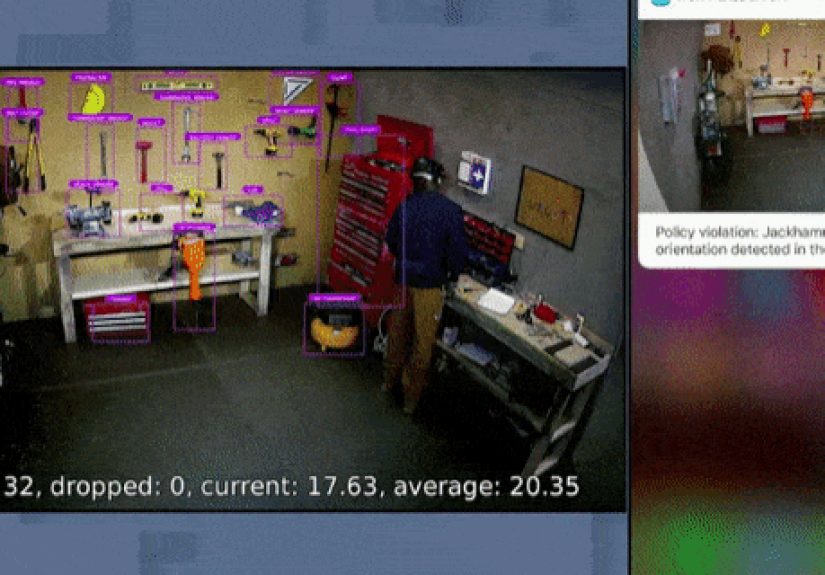
The most exciting part is the mobile camera experience. A phone camera plus AI assistant turns the world into a query. Your garden, pantry, bookshelf, closet, classroom, workshop, and office can all become searchable surfaces. This is where Microsoft’s idea starts to compete not only with Google Lens but also with the broader dream of ambient computing.
For example, you could point the camera at ingredients on a counter and ask for dinner ideas. You could scan a hotel room and ask where to place a travel router. You could show Copilot a stain on a shirt and ask how to treat it without turning the shirt into a tragic modern art project. You could point at a confusing parking sign and ask for a plain-English explanation, though you should still trust local law over an AI that may confidently misread “except Sundays.”
Why It Is Horrifying
1. The Query Is No Longer Just Words
The scary part is not that AI can answer questions. The scary part is that the question may now include your surroundings. A written search query is limited: “best standing desk,” “how to repot basil,” “cheap flights to Seattle.” A visual query can include your home, face, family photos, browser tabs, email previews, work documents, open apps, shopping habits, and the embarrassing number of tabs titled “final_final_really_final.”
Microsoft says Copilot Vision is opt-in, that users choose what to share, and that visual session data is not used to train models. Those are important safeguards. But public trust is not built only on policy pages. It is built on repeated experience, clear controls, and the feeling that a product is not quietly moving the privacy goalposts. With AI, people are especially sensitive because the technology feels less like a tool and more like a witness.
2. Screens Are Full of Accidental Secrets
A computer screen is not a clean workspace. It is a digital junk drawer. Even when you intend to share one thing, nearby information may appear: a Slack notification, a bank tab, a medical portal, a client name, a private photo thumbnail, or a password manager prompt. Any AI system that can see a screen must handle accidental exposure carefully.
This is why visual indicators, session boundaries, delete controls, and narrow sharing options matter. Users should always know when Copilot Vision is active, what it can see, and how to stop it. The ideal version behaves like a respectful guest: invited in, useful while present, and gone when asked to leave. The nightmare version behaves like a roommate who stands behind your chair reading your tabs out loud.
3. AI Can Misread the World
Visual AI is impressive, but it is not magic. It can misidentify objects, misunderstand context, overlook important details, and produce confident but wrong answers. That is funny when it mistakes a decorative squash for a rare melon. It is less funny when someone uses it for medicine, legal interpretation, financial decisions, safety repairs, or anything involving electricity, ladders, or suspicious mushrooms.
Microsoft’s own support language acknowledges that AI features can make mistakes. That should be printed on the mental label of every AI assistant. Copilot Vision may be great for brainstorming room decor or explaining a chart. It should not be treated as a certified electrician, doctor, lawyer, mechanic, therapist, or mushroom sommelier.
4. The Business Incentive Is Complicated
AI assistants are expensive to build and run. Companies do not spend billions merely because they love helping you compare air fryers. The business incentive is to make AI more central to browsing, shopping, productivity, advertising, subscriptions, and operating systems. Once an assistant can understand what you are doing, it can shape what you do next.
That does not mean Copilot Vision is secretly evil. It means the incentives deserve scrutiny. A helpful suggestion can become a commercial nudge. A productivity feature can become a data dependency. A convenience tool can become a default layer between the user and the web. The more useful the assistant becomes, the more power it gains over attention and choice.
The Recall Shadow
Microsoft’s AI ambitions also arrive with baggage. The company’s Recall feature for Copilot+ PCs triggered major privacy criticism because it was designed to help users search past computer activity through periodic snapshots. Microsoft emphasized local storage and user controls, but the backlash showed how uncomfortable people become when AI and screen capture appear in the same sentence.
Copilot Vision is different from Recall. It is more like an active screen-sharing session than an automatic memory feature. Users initiate it, share selected content, and end the session. Still, the comparison will follow Microsoft because both products touch the same raw nerve: the fear that our devices are becoming too observant.
The real challenge for Microsoft is not only technical. It is emotional. People need to believe that the assistant is looking only when invited, forgetting what it should forget, and staying out of sensitive spaces. Without that trust, even the smartest AI tool starts to feel like a very polite surveillance camera.
Real-World Examples: Helpful, Weird, and Risky
Helpful: The Confusing App
You are editing a photo and cannot find the lighting controls. Copilot Vision can see the app window and point out where to click. This is the feature at its best: practical, narrow, and user-controlled. Nobody wants to watch a 14-minute tutorial just to find one button hiding under a sparkle icon.
Helpful: The Sick Plant
You show Copilot your plant and ask why the leaves are yellow. It might suggest overwatering, poor drainage, pests, or lack of sunlight. You still need common sense, but the assistant can give you a starting point. For plant owners, this is emotionally important. Nobody wants to admit they murdered basil again.
Weird: The Living Room Consultant
You scan your room and ask for decorating ideas. Copilot may suggest moving a lamp, adding warm lighting, or choosing a rug. Useful? Absolutely. Strange? Also yes. A room is personal. Letting AI inspect it feels different from asking for “small apartment decor ideas.” The advice may be good, but the intimacy is new.
Risky: The Private Workspace
You share a screen at work and forget that a confidential spreadsheet is open in another window. Even if the AI does not store images after the session, accidental disclosure remains a human problem. The safest AI design cannot fully protect users from careless sharing. Organizations will need policies, training, and admin controls before visual AI becomes normal in workplaces.
How Microsoft Can Make This Less Creepy
Copilot Vision does not have to become a privacy horror story. The path forward is clear, but it requires discipline. First, keep it opt-in forever. Not “technically opt-in but aggressively suggested every Tuesday.” Truly opt-in. Second, show obvious visual indicators whenever Vision is active. If an AI can see the screen, the user should never have to guess.
Third, offer precise controls. Let users share one window, one tab, one photo, or one camera session. Do not make “share everything” the easiest path. Fourth, provide fast deletion tools for transcripts and interaction history. Fifth, build special protections for children, classrooms, medical contexts, legal work, banking, and enterprise environments. Sixth, explain limitations in plain English. People should know when Copilot is guessing.
Finally, Microsoft should make privacy a product feature, not a legal footnote. The winning AI assistant will not only be the smartest. It will be the one people trust enough to actually use.
Experience Notes: Living With a Search Engine That Looks Back
The first experience that comes to mind with Microsoft’s real-world search idea is convenience. Imagine sitting at a desk with three browser tabs open, a PDF full of tiny text, a half-finished spreadsheet, and a cup of coffee that is dangerously close to becoming part of the keyboard. Instead of switching between windows, copying details, and typing a search query that sounds like a robot wrote it, you ask Copilot, “What am I missing here?” If it can see the relevant windows, summarize the comparison, and point out the next step, the feeling is not just faster search. It feels like friction disappearing.
That is the incredible side. A visual AI assistant could help people who struggle with complicated interfaces. It could turn “I have no idea what this error message means” into “Here are the two likely causes.” It could help a student understand a chart, a traveler organize documents, a shopper compare confusing product specs, or a parent troubleshoot a school portal that appears to have been designed by a committee of raccoons. The best moments would feel calm, practical, and almost invisible. You ask, it sees the context, and it helps.
But the second experience is discomfort. The moment an assistant can see your screen or camera feed, you become aware of everything in the frame. The family photo on the desk. The email notification sliding into view. The document title you forgot was visible. The reflection in the window. Even when a company says the feature is opt-in and temporary, the human brain still whispers, “Yes, but what exactly did it see?” That whisper matters.
Using this kind of tool would probably create a new habit: cleaning the digital room before inviting AI inside. Close private tabs. Hide notifications. Choose one window instead of the whole desktop. Think twice before pointing the camera around other people. In the old search era, privacy meant choosing careful words. In the visual search era, privacy means managing scenes.
The most realistic experience is a mix of delight and caution. You would use Copilot Vision for low-risk tasks first: shopping, recipes, app guidance, plant care, travel planning, and basic explanations. Then, if it worked well and behaved transparently, you might trust it with more complex work. Trust would grow session by session. One creepy surprise, though, and that trust could vanish faster than a laptop battery during a video call.
That is why Microsoft’s new real-world search engine is both incredible and horrifying. It promises a future where computers understand context instead of waiting for perfect keywords. It also asks users to let AI look over their shoulder. The future may be useful, brilliant, and even delightful. But it needs boundaries. Otherwise, the “second set of eyes” becomes the one pair too many.
Conclusion: The Future of Search Has Eyes
Microsoft’s Copilot Vision and AI-powered browsing strategy point toward the next phase of search: visual, contextual, conversational, and increasingly agentic. Instead of searching only the web, users will search their screens, apps, photos, tabs, and physical surroundings. That could make technology easier for millions of people. It could also create new privacy risks, new trust problems, and new ways for companies to shape user behavior.
The right reaction is not panic, and it is definitely not blind excitement. The right reaction is informed caution. Copilot Vision is a glimpse of a world where computers do not just wait for commands; they observe, interpret, and guide. If Microsoft gets consent, transparency, deletion, security, and user control right, this could become one of the most useful AI tools in everyday computing. If it gets those wrong, people may remember it less as the future of search and more as the moment their laptop started staring back.