Table of Contents >> Show >> Hide
- What Massage Can and Cannot Do for MS
- Types of Massage for Multiple Sclerosis
- Potential Benefits of Massage for MS
- Safety: When Massage Makes Sense and When to Be Careful
- How to Choose the Right Massage Therapist
- How to Get the Most Benefit from a Session
- Experiences People with MS Commonly Report with Massage
- Conclusion
When you live with multiple sclerosis, your body can feel like it’s running its own group chat without your permission. One day it’s stiffness, the next day it’s fatigue, and then pain decides to join the meeting too. That’s why massage for multiple sclerosis has become a popular complementary therapy: it offers a hands-on way to calm muscle tension, reduce stress, and create a little more comfort in a body that doesn’t always play fair.
Still, let’s clear one thing up right away: massage is not a cure for MS, and it does not replace disease-modifying therapy, relapse treatment, physical therapy, or guidance from your neurologist. What it can do is help manage symptoms for some people. The best evidence points to possible benefits for stress, pain, fatigue, mood, and sometimes spasticity. The catch is that not every massage style fits every person, and “deeper” is not always “better.” In fact, for some people with MS, too much pressure can turn a relaxing session into a very expensive regret.
This guide explains the main types of massage used by people with MS, what benefits are realistic, what safety issues matter most, and how to make a session more comfortable from the first minute to the final awkward search for your shoes.
What Massage Can and Cannot Do for MS
Massage therapy is generally used as a complementary approach, meaning it works alongside conventional care rather than instead of it. In MS, the goal is symptom support. Research suggests massage may help reduce fatigue and pain in the short term, support relaxation, improve mood, and ease some muscle tightness. Some studies also suggest benefits for spasticity and quality of life, though the overall research base is still relatively small.
That last part matters. Massage is promising, but it is not magic. It won’t stop demyelination, prevent relapses, or reverse nerve damage. Think of it less as a mechanic replacing the engine and more as a really skilled tune-up for how your body feels in the moment. For many people with MS, that still makes it worth considering.
Types of Massage for Multiple Sclerosis
Swedish Massage
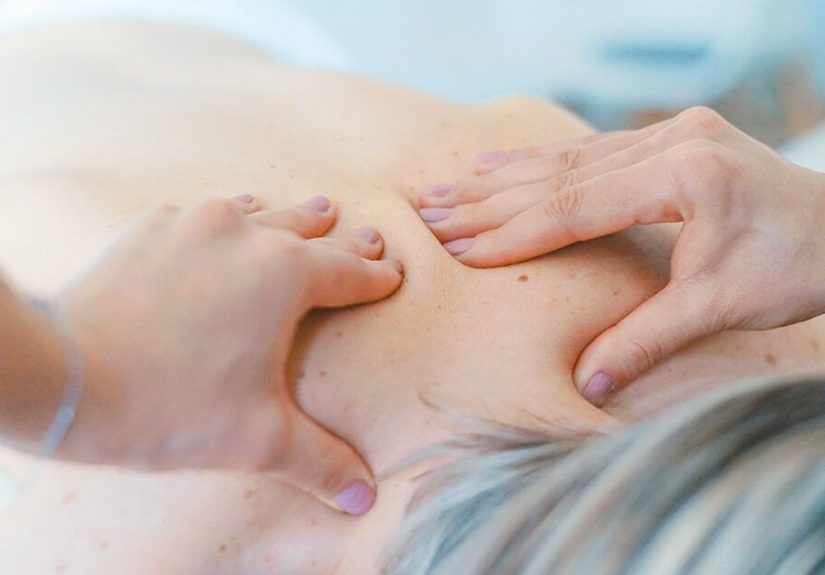
Swedish massage is usually the best-known and most approachable option. It uses long, gliding strokes, gentle kneading, and light-to-moderate pressure. For people with MS, this style is often a good starting point because it focuses on relaxation without feeling like someone is trying to negotiate with your muscles using brute force.
It may be especially helpful when stress, general body tension, and mild pain are big issues. If you are new to massage, sensitive to pressure, or prone to flare-ups when your body is overstimulated, Swedish massage is often the safest entry point.
Therapeutic or Medical Massage
This is a more customized style designed around specific symptoms. Instead of giving your whole body the same treatment, the therapist works around your actual concerns: shoulder tightness from using mobility aids, leg discomfort from altered gait, or back pain from compensating for weakness and balance changes.
The benefit of therapeutic massage is that it can be tailored to your day-to-day reality. The downside is that customization only works if the therapist listens well. A therapist who understands MS will not treat every tight muscle as if it simply needs stronger pressure.
Myofascial Techniques
Myofascial work targets fascia, the connective tissue that surrounds muscles and other structures. This style often uses slower, more sustained pressure and stretching rather than fast rubbing. Some people with MS find it useful when they feel restricted, stiff, or “stuck” in certain movement patterns.
That said, myofascial work should still be adjusted for sensitivity, pain, and fatigue. Done skillfully, it may feel relieving. Done too aggressively, it can feel like your body has been personally offended.
Reflexology
Reflexology focuses pressure on specific points, usually on the feet and sometimes the hands. Technically, some practitioners separate reflexology from massage, but it often gets discussed in the same conversation because many people with MS use it as bodywork for symptom relief.
Research in MS has suggested that reflexology may help with fatigue, pain, anxiety, depression, and quality of life for some individuals. It may also appeal to people who do not want a full-body session or who have mobility limitations that make standard table massage less practical.
Chair Massage or Focused Seated Massage
Not everyone with MS wants, or can comfortably manage, a traditional massage table. Chair massage can be a practical option when transfers are difficult, lying flat is uncomfortable, or you want a shorter session that targets the neck, shoulders, upper back, and arms.
For someone dealing with fatigue, chair massage may offer the sweet spot: enough relief to feel better, but not so much stimulation that the session becomes exhausting.
Deep Tissue Massage
Deep tissue massage deserves its own section because it is often misunderstood. Some people assume deeper pressure automatically means better results. Not necessarily. In MS, especially when spasticity, nerve pain, allodynia, weakness, osteoporosis, or body sensitivity are involved, aggressive work can backfire.
Deep tissue massage is not automatically off-limits, but it should be approached cautiously, selectively, and only with a therapist who understands your symptoms. Deep tissue is a tool, not a trophy.
Potential Benefits of Massage for MS
1. Relief from Stress and Anxiety
Living with a chronic neurological condition is stressful in ways that do not always show up on the outside. There is the obvious stress of symptoms, plus the invisible mental load of planning around fatigue, heat, pain, mobility, appointments, and uncertainty. Massage may help lower that stress response by promoting relaxation and giving the nervous system a chance to downshift.
For some people, the biggest benefit of massage is not what happens to the muscles. It is the feeling that the body stops bracing for impact, at least for a little while.
2. Help with Pain and Muscle Tension
MS pain is complicated. Some pain is directly related to the nervous system, while some comes from secondary issues like poor posture, compensating for weakness, altered walking patterns, or muscles working overtime. Massage is more likely to help with the musculoskeletal part of that picture than the nerve-generated part, although many people experience a general decrease in discomfort either way.
If your shoulders are constantly clenched, your calves feel like guitar strings, or your lower back is protesting every transfer and twist, massage may help reduce the extra tension layered on top of MS symptoms.
3. Possible Improvement in Fatigue
Fatigue is one of the most common and frustrating MS symptoms. It is also one of the hardest to explain to people who think “tired” and “MS fatigue” are the same thing. They are not. One is a long day. The other can feel like your battery and charger both disappeared.
Massage will not solve fatigue for everyone, but some studies and patient reports suggest it may reduce fatigue levels, especially when pain, stress, poor sleep, and muscle tension are contributing factors. When the body hurts less and the mind feels calmer, energy sometimes stretches a little farther.
4. Support for Spasticity and Stiffness
Spasticity in MS can range from annoying tightness to painful stiffness and spasms that interfere with walking, sleep, or everyday tasks. Massage may help some people relax tight muscles and improve comfort and range of motion, especially when used together with stretching, exercise, or physical therapy.
But this is also where nuance matters. Spasticity is not simply “tight muscles” in the ordinary sense. It involves disrupted nerve signaling, which means massage may help symptoms without fixing the underlying mechanism. A well-planned session can be useful. A rough one can make the body guard harder.
5. Better Sleep and Overall Well-Being
Many people with MS say the best massage benefit shows up later: they sleep better, move a little easier, or feel more emotionally settled afterward. These are not flashy outcomes, but they matter. Quality of life is built from small daily wins, and “I slept without wrestling my legs all night” absolutely counts as a win.
Safety: When Massage Makes Sense and When to Be Careful
Massage is generally considered low-risk when done appropriately, but low-risk does not mean no-risk. People with MS often have additional factors that change the equation, including mobility limits, pressure sensitivity, nerve pain, heat intolerance, osteoporosis, balance problems, and medication-related issues.
You should speak with your healthcare team before starting massage if you have any of the following:
- Blood clots or a history of deep vein thrombosis
- Open wounds, skin breakdown, pressure injuries, burns, or active rashes
- Recent fractures, severe osteoporosis, or very fragile bones
- Use of blood thinners or bleeding disorders
- Active infection or fever
- Uncontrolled blood pressure or serious heart disease
- Severe pain, unexplained swelling, or a recent injury
- Extreme heat sensitivity or symptoms that worsen quickly when you overheat
Even if massage is appropriate for you, the session may need modifications. A cool room may be better than a warm spa-like setting if heat worsens your symptoms. Side-lying or seated positions may be more comfortable than lying flat. Lighter pressure may be safer on numb, painful, or spastic areas. And shorter sessions can be smarter than marathon appointments, especially if fatigue is a major issue.
It is also important to tell the therapist exactly what is happening in your body that day. MS symptoms can change from week to week or even hour to hour. A therapist does not need your full medical autobiography, but they do need the useful headlines: “My right leg spasms when it is stretched too far,” “My left foot is numb,” “I overheat easily,” or “Please do not use deep pressure on my calves.” Clear communication is not being difficult. It is being smart.
How to Choose the Right Massage Therapist
The best massage for MS is usually the one that respects your symptoms instead of trying to overpower them. Look for a licensed massage therapist who is comfortable working with chronic illness, neurological conditions, disability, or rehabilitation clients.
Ask practical questions before booking:
- Have you worked with clients who have multiple sclerosis or mobility limitations?
- Can you adjust pressure throughout the session?
- Can you provide side-lying, reclined, or seated options?
- Are you comfortable stopping or changing techniques if symptoms increase?
- Is the room temperature adjustable?
If the answers sound dismissive, overly confident, or suspiciously one-size-fits-all, keep looking. MS is individualized. Your massage should be too.
How to Get the Most Benefit from a Session
A little preparation can turn a decent massage into a much better one. Try to schedule your session at a time of day when your energy is usually better. Avoid arriving overheated, rushed, hungry, or dehydrated. Use the bathroom beforehand because nothing ruins peak relaxation quite like suddenly realizing your bladder had other plans.
After the session, pay attention to how your body responds over the next 24 hours. Do you feel looser, calmer, and less fatigued? Or do you feel wiped out, sore, overheated, or more symptomatic? Those answers help determine whether massage is helping and what changes are needed next time.
Massage may work best as part of a bigger symptom-management strategy that includes medical care, physical therapy, stretching, exercise, sleep support, and stress reduction. It is one helpful tool in a toolbox, not the entire toolbox.
Experiences People with MS Commonly Report with Massage
In real life, the experience of massage for MS is rarely dramatic in a movie-trailer sort of way. It is usually more subtle, more personal, and much more practical. A person might walk into a session hoping for less calf tightness and walk out realizing the biggest change was that their shoulders finally stopped living somewhere near their ears. Another person may not notice much during the massage itself, then realize later that evening they were able to stretch more comfortably, sleep more soundly, or get through the next morning with a little less stiffness.
Many people with MS describe the emotional side of massage as just as important as the physical side. Chronic illness can make the body feel like a problem to solve all day long. Massage, when done respectfully, can briefly shift that feeling. Instead of “What is wrong now?” the experience becomes “What feels better right now?” That mental reset matters. It does not cure anything, but it can make the day feel less dominated by symptoms.
There are also people who discover that the first massage style they try is not the right one. Someone with spasticity may assume they need the strongest pressure available, only to find that deep work leaves them sorer and more guarded afterward. Then they switch to gentler Swedish massage or shorter targeted sessions and get much better results. That is a common pattern: success often comes from adjusting pressure, positioning, timing, and technique rather than forcing the body to tolerate more.
For people with fatigue, experiences can be mixed in a useful way. Some say massage helps them feel restored, lighter, and calmer. Others say a long session can leave them feeling drained, especially if getting to the appointment already took a lot of energy. In those cases, shorter sessions, chair massage, or focusing on one or two trouble spots may work better than a full-body treatment. Sometimes the most therapeutic move is not “more massage,” but “less, and smarter.”
Mobility also shapes the experience. Someone who uses a cane, walker, or wheelchair may need extra time for transfers and positioning. A good therapist treats this as normal, not as an inconvenience. Pillows, bolsters, side-lying support, and careful pacing can make the difference between feeling safe and feeling strained. Clients often remember those practical details just as much as the hands-on work because comfort starts before the first stroke of massage.
Another common experience is learning that communication changes everything. People with MS often report better outcomes when they tell the therapist exactly what they need: lighter pressure on numb areas, no stretching on spastic limbs, cooler room temperature, or frequent check-ins. The best sessions usually involve teamwork rather than silent endurance. No one gets bonus points for pretending a technique feels good when it clearly does not.
And yes, sometimes the result is wonderfully ordinary. Less pain during dinner. Easier transfers into bed. Fewer muscle complaints while brushing teeth. A better mood. A nap that feels glorious instead of mandatory. These are not small things when you are living with MS. They are the kinds of everyday improvements that make symptom management feel worthwhile.
The bottom line from these lived experiences is simple: massage tends to help most when it is individualized, gentle enough to respect a sensitive nervous system, and integrated into the person’s broader MS care plan. The goal is not to chase a miracle. It is to create more comfort, more control, and a few more good hours in the week. Honestly, that is a pretty solid return on investment for a bottle of massage oil and a well-trained pair of hands.
Conclusion
Massage for multiple sclerosis can be a valuable complementary therapy for the right person, the right symptoms, and the right style of care. The strongest potential benefits appear to be reduced stress, better relaxation, less musculoskeletal pain, improved comfort, and possible relief of fatigue and spasticity for some people. But it works best when expectations are realistic and safety comes first.
If you have MS and are considering massage, think customization, not intensity. Start with a therapist who listens, begin with lighter pressure, and pay close attention to how your body responds. A good massage should leave you feeling supported, not steamrolled. In the world of MS symptom management, that is more than nice. It is useful.