Table of Contents >> Show >> Hide
- What Is a Flettner Rotor Boat?
- How the Magnus Effect Moves a Boat
- The Small RC Boat: A Clever Demonstration With Big Lessons
- From Hobby Boat to Commercial Ship
- Real-World Rotor Sail Performance
- Why Flettner Rotors Are Back
- The Engineering Challenges Nobody Should Ignore
- Why the Magnus Effect Is So Satisfying
- Could a Flettner Rotor Boat Be Practical for Hobbyists?
- Lessons From the Project
- Experience Notes: Building, Testing, and Understanding a Magnus Effect Flettner Rotor Boat
- Conclusion
At first glance, a Flettner rotor boat looks like somebody glued a chimney to a toy catamaran and dared physics to make it useful. Then the cylinder starts spinning, the wind shows up, and suddenly the little boat moves forward without a traditional sail flapping around like laundry in a hurricane. That is the magic trick of the Magnus effect: a spinning object in a moving fluid can create a force at right angles to the flow. In plain English, spin plus wind equals sideways liftand on a boat, that lift can be aimed into forward thrust.
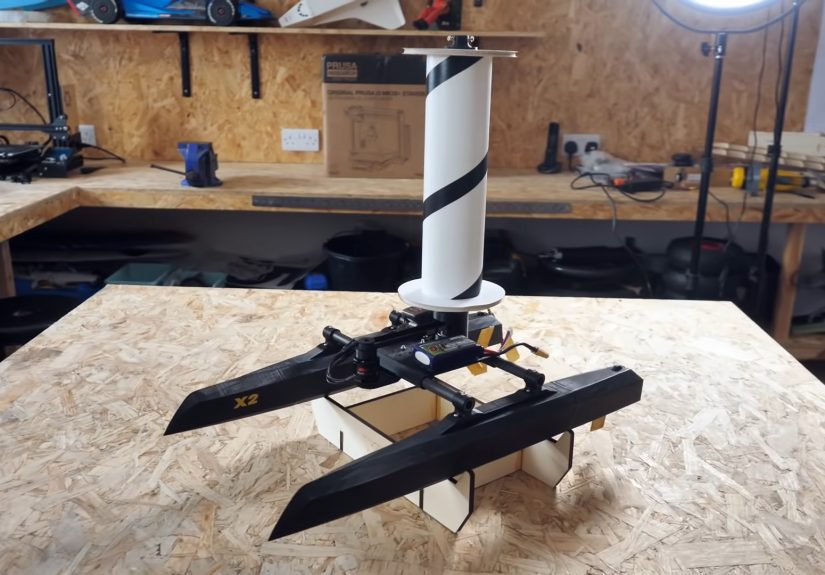
The project that inspired this topic used a small radio-controlled boat with a 3D-printed hull, a tall rotating cylinder in the middle, a brushless motor to spin the rotor, and a rudder for steering. It was not a polished yacht ready to win an America’s Cup side quest. It leaked, needed sealing, and had a dramatic relationship with strong wind. But it worked. The spinning cylinder generated usable propulsion, proving on a tabletop-friendly scale what engineers have been exploring for more than a century: wind power does not always need canvas sails.
Flettner rotors are not science fiction. They are real mechanical sails used on modern cargo ships, tankers, ferries, and experimental vessels. Their comeback is being driven by fuel costs, emissions pressure, better materials, smarter controls, and the shipping industry’s hunt for efficiency gains that do not require ripping every ship apart and starting over. The humble spinning cylinder is having a very nerdy second actand honestly, good for it.
What Is a Flettner Rotor Boat?
A Flettner rotor boat is a vessel that uses one or more vertical rotating cylinders to capture wind energy and help propel the hull. Instead of a conventional sail, which presents a surface to the wind, the Flettner rotor spins under power. As air flows past the spinning cylinder, pressure changes form around it. One side of the cylinder speeds the airflow; the other slows it down. That pressure difference creates lift, and with the rotor placed correctly, some of that lift becomes forward thrust.
The concept is named after Anton Flettner, a German engineer who developed rotor ships in the 1920s. His famous rotor ship, the Buckau, replaced traditional sailcloth with two spinning cylinders. It crossed the Atlantic and proved the idea could work, but cheap diesel fuel, improving engines, and economic chaos pushed the technology into the “interesting but inconvenient” drawer for decades. Today, that drawer has been reopened, dusted off, and upgraded with sensors, composite materials, electric motors, and software controls.
How the Magnus Effect Moves a Boat
The Magnus effect is easier to recognize in sports than in ship design. A curveball bends. A soccer ball curls. A tennis shot dips. In each case, a spinning object interacts with air and creates uneven pressure around itself. The object is pushed toward the lower-pressure side. Replace the ball with a tall cylinder and place it on a boat, and the same principle can be used for propulsion.
Here is the basic chain of events:
- The rotor is spun by a motor.
- Wind flows across the spinning cylinder.
- Air moves faster on one side and slower on the other.
- A pressure difference forms.
- The resulting aerodynamic force can be angled to push the boat forward.
The important detail is that the wind does not usually spin the rotor by itself. That is a common misconception. A motor rotates the cylinder, and the wind supplies the energy that becomes useful thrust. The motor is more like a key that unlocks the wind’s power, not the main source of propulsion. In well-designed systems, the energy used to spin the rotor is much smaller than the propulsive benefit gained from the wind.
The Small RC Boat: A Clever Demonstration With Big Lessons
The small Flettner rotor boat that caught attention used a catamaran-style hull, which is a smart choice because two narrow hulls can provide more stability than a single narrow body. The builder used 3D printing for the structure, then sealed the hull to keep water from turning the experiment into a tiny submarine. The rotor sat in the center, belt-driven by a brushless motor. Steering came from a simple rudder, proving that the overall system does not need to be visually complicated to be mechanically interesting.
When the rotor spun and the wind crossed it, the boat moved. That alone makes the experiment a success. But the project also showed the messy side of real engineering. Strong winds caused stability problems and capsizing. The obvious solution was to add better keels or underwater fins to resist sideways force and reduce tipping. That is a perfect reminder that propulsion is only one part of boat design. A vessel also has to stay upright, steer predictably, resist drag, and survive the glorious abuse of real water.
Why the Catamaran Design Matters
A catamaran gives a rotor boat a wider stance, which helps resist rolling. Because a Flettner rotor creates a sideways aerodynamic force that is redirected into forward motion, the hull still has to manage lateral loads. On a small model, those loads can quickly become dramatic. A gust of wind can tip the boat before the operator has time to say, “Well, that escalated.” On larger vessels, naval architects account for these forces through hull form, ballast, structural reinforcement, stability calculations, and control systems.
Why Keels and Rudders Still Matter
A rotor does not eliminate the need for underwater control surfaces. Keels, fins, and rudders help convert aerodynamic forces into stable motion. A conventional sailboat uses a keel to resist sideways drift, allowing the sail’s force to drive the boat forward. A Flettner rotor boat faces a similar challenge. Without enough underwater resistance, the boat may slide sideways, heel excessively, or become difficult to steer. The rotor may be the star of the show, but the keel is the stage manager keeping everyone from falling into the orchestra pit.
From Hobby Boat to Commercial Ship
The small RC rotor boat is fun because it makes the physics visible. Full-scale rotor ships are exciting because they can reduce fuel use on working vessels. Modern rotor sails are now being installed or tested on tankers, bulk carriers, ferries, RoRo ships, and other commercial vessels. They are not meant to replace engines completely in most cases. Instead, they provide wind-assisted propulsion, allowing the main engine to throttle back while maintaining speed.
That distinction matters. A modern cargo ship must keep schedules, enter ports safely, maneuver in crowded channels, and operate in variable weather. Pure sailing is not always practical for commercial logistics. Rotor sails offer a compromise: keep the engine, add wind assistance, and use automation to capture savings when conditions are favorable. It is less “pirate ship comeback” and more “efficiency upgrade with a spinning hat.”
Real-World Rotor Sail Performance
Fuel savings from rotor sails vary widely. Vessel type, route, wind angle, ship speed, rotor size, deck placement, and operating profile all matter. In favorable conditions, rotor sails can deliver meaningful fuel and emissions reductions. Some commercial projects have reported savings in the single digits, while others have claimed higher results under specific conditions. The Maersk Pelican project, for example, reported 8.2% fuel and associated carbon dioxide savings over a one-year trial after two rotor sails were installed.
Other maritime sources describe rotor sails as one of the more mature wind-assisted propulsion systems available today. Classification societies and engineering firms now study how these systems interact with ship stability, safety, crew operations, bridge visibility, cargo handling, and port infrastructure. In other words, the technology has moved beyond “look, it spins!” and into the less glamorous but crucial world of approvals, return-on-investment modeling, and maintenance schedules.
Why Flettner Rotors Are Back
The return of rotor sails is not just about nostalgia. Several forces are pushing the technology forward:
- Fuel prices: Even modest percentage savings matter when a large vessel burns huge amounts of fuel.
- Emissions rules: Shipping companies face increasing pressure to reduce greenhouse gas emissions and improve efficiency ratings.
- Better materials: Composite construction can make modern rotors lighter and more practical than early steel versions.
- Automation: Sensors and control software can adjust rotor speed for changing wind conditions.
- Retrofit potential: Some vessels can add rotor sails without being completely redesigned.
The key advantage is that wind is free at the point of use. It does not need a bunker tank, a charging station, or a new global fuel supply chain. Of course, wind is also moody. It comes from inconvenient directions, disappears without apology, and occasionally arrives with too much enthusiasm. That is why rotor sails work best as part of a broader efficiency strategy, not as a magic wand.
The Engineering Challenges Nobody Should Ignore
Rotor sails are impressive, but they are not perfect. A vessel sailing mostly into headwinds may see limited benefit. A container ship stacked high with boxes may not have clean airflow or convenient deck space. Bridges, cranes, port operations, and cargo gear can also complicate installation. Some systems use tilting or folding foundations so rotors can be lowered when air draft is a problem.
There is also the matter of structural loading. A spinning rotor can generate large forces, and those forces must go somewhere. The deck, foundations, bearings, electrical systems, and control hardware all need to be designed for long-term marine use. Saltwater is not kind. Vibration is not shy. Maintenance access matters. A rotor sail may look simple from the dock, but making it reliable at sea requires serious engineering.
Why the Magnus Effect Is So Satisfying
The Magnus effect has a special kind of charm because it feels like a loophole in everyday intuition. We expect sails to look like sails. We expect propellers to look like propellers. Then a plain cylinder spins in the wind and produces useful force. It is like watching a soup can become an aerodynamic device after attending night school.
That visual surprise is why small projects like RC Flettner rotor boats are so valuable. They make a hidden principle visible. You can see the rotor spin, watch the boat respond, and connect the motion to the same physics that bends a baseball or curves a soccer shot. For students, makers, and curious engineers, the model boat becomes a floating classroom.
Could a Flettner Rotor Boat Be Practical for Hobbyists?
Yes, with realistic expectations. A small Flettner rotor boat is an excellent educational build, especially for learning about aerodynamics, stability, 3D printing, waterproofing, motors, belts, batteries, and radio control. It is not the easiest way to make a model boat move. A standard propeller would be simpler, cheaper, and less likely to perform an accidental barrel roll in a gust. But that is not the point.
The value of a hobby rotor boat is experimentation. Builders can test rotor height, diameter, spin speed, hull width, keel depth, rudder size, and wind angle. They can compare performance in light wind versus stronger wind. They can measure battery use and speed. They can discover that “just add more power” is not an engineering philosophy so much as a way to meet the bottom of a pond.
Lessons From the Project
The biggest lesson is that the Magnus effect works, but design context matters. A spinning cylinder can create thrust, yet the boat must be stable enough to use it. Rotor placement affects balance. Hull shape affects drag. Keels affect tracking. Wind angle affects performance. Motor speed affects lift. Every piece influences every other piece, which is why engineering projects are basically group projects where all the teammates are made of physics.
The second lesson is that old ideas can become new again when the surrounding technology changes. Flettner rotors were mechanically possible a century ago, but economics and materials were not on their side. Today, with decarbonization pressure and advanced controls, the same concept looks far more attractive. Sometimes innovation is not inventing a brand-new idea. Sometimes it is giving an old idea better shoes and asking it to run again.
Experience Notes: Building, Testing, and Understanding a Magnus Effect Flettner Rotor Boat
Working with a Magnus effect rotor boat teaches patience very quickly. On paper, the setup sounds almost suspiciously simple: print a hull, mount a cylinder, spin it with a motor, add wind, and enjoy your tiny futuristic vessel. In practice, the project becomes a checklist of small details that each matter more than expected. The hull must be watertight. The rotor must spin smoothly. The belt must stay aligned. The battery must be protected. The center of gravity must stay low. The rudder must be large enough to matter but not so large that it acts like a stubborn underwater brake.
The first experience many builders notice is that wind is not a polite laboratory assistant. It shifts, gusts, weakens, and changes angle. A rotor boat may move beautifully for a few seconds, then stall, slide, or lean as conditions change. This is not failure; it is data with a sense of humor. Each test run reveals something useful. If the boat tips too easily, widen the stance, lower the weight, or add deeper keels. If it moves sideways more than forward, improve underwater lateral resistance. If the rotor vibrates, check balance and bearing alignment. If the boat barely moves, test rotor speed, wind angle, and drag.
Another valuable experience is learning that more rotor speed is not always better. Spinning the cylinder faster can increase the aerodynamic effect, but it also consumes more battery power and may create stability problems. The sweet spot depends on wind speed, rotor size, hull design, and control response. This is where simple measurement helps. Even a basic test log with wind direction, estimated wind speed, rotor speed setting, battery voltage, and boat behavior can turn guesswork into engineering.
Testing in calm, controlled conditions is usually smarter than heading straight into strong wind. A light breeze across a pond, pool, or test tank is enough to observe the effect. Strong gusts may look exciting, but they can overpower a lightweight model. That is especially true for tall rotors, which raise the center of aerodynamic force. The boat might technically have enough thrust, but if it spends the afternoon upside down, the scientific conclusion is mostly “water remains wet.”
The most rewarding moment comes when the rotor spins up and the boat begins moving in a way that feels slightly impossible. There is no flapping sail, no visible prop wash, and no dramatic exhaust. Just a cylinder turning in the air and a hull sliding forward. That moment connects a backyard experiment to full-scale maritime innovation. The same principle behind the small model is helping engineers rethink how ships can save fuel and reduce emissions. The model may be small enough to carry under one arm, but the idea behind it is big enough to cross oceans.
Conclusion
The Flettner rotor boat is a brilliant example of physics becoming motion. By using the Magnus effect, a spinning cylinder can turn wind into useful thrust, whether on a small RC catamaran or a commercial ship crossing global trade routes. The technology is not a universal replacement for engines or traditional sails, but it is a practical and increasingly relevant form of wind-assisted propulsion. For hobbyists, it offers a hands-on way to explore aerodynamics, marine stability, and design iteration. For the shipping industry, it offers a path toward lower fuel use and reduced emissions without waiting for a perfect future fuel to arrive wearing a cape.
In the end, the Flettner rotor’s appeal is wonderfully simple: it looks strange, it sounds nerdy, and it works. That is a pretty strong résumé for a spinning tube.