Table of Contents >> Show >> Hide
- Why This Joke Landed So Hard
- James Austin Johnson’s Trump Impression Is Built for Pop-Culture Detours
- The Shia LaBeouf Question: Why Wasn’t Mutt Williams in Dial of Destiny?
- Why Indiana Jones and the Dial of Destiny Was Already Perfect Satire Material
- The Real Punchline: Nostalgia Is Messy
- How the Bit Reflects Modern Comedy
- Experience: Watching the Joke as a Movie Fan, an SNL Fan, and a Tired Franchise Survivor
- Conclusion
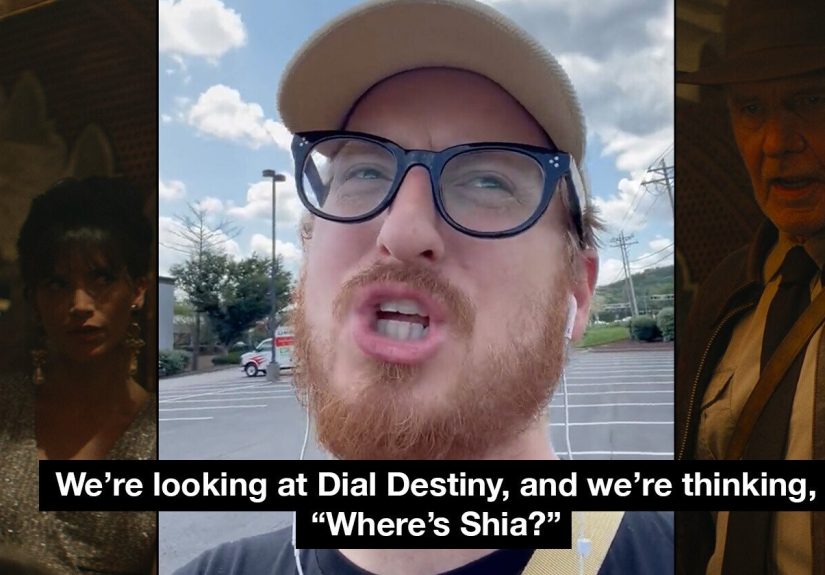
There are normal movie questions, and then there are questions that sound like they were discovered under a pile of drive-thru receipts in the glove compartment of a haunted campaign bus. “Where is Shia LaBeouf in the new Indiana Jones movie?” belongs firmly in the second category. It is a question that is both wildly specific and strangely reasonable, which is exactly why James Austin Johnson’s Donald Trump impression makes such a perfect home for it.
Johnson, best known to many viewers as one of Saturday Night Live’s sharpest modern impressionists, has built his Trump parody around a very particular comic engine: the wandering thought. Not a structured monologue. Not a clean joke setup. More like a verbal Roomba bumping into celebrities, fast food, pop culture grievances, half-remembered movie plots, and suddenly, somehow, foreign policy. His riff on Shia LaBeouf’s absence from Indiana Jones and the Dial of Destiny works because the topic itself is already a little absurd. The fifth Indy movie is serious about aging, grief, nostalgia, and time. Johnson’s Trump voice barges in and asks the question some fans were secretly thinking: wait, what happened to the guy from the last one?
Why This Joke Landed So Hard
The comedy starts with a real continuity gap. In 2008’s Indiana Jones and the Kingdom of the Crystal Skull, Shia LaBeouf played Mutt Williams, the leather-jacketed young rebel who is eventually revealed to be Indiana Jones’ son with Marion Ravenwood. The movie even toys with the idea that Mutt could be the franchise’s next-generation adventurer. At the end, the famous fedora almost drifts toward him before Harrison Ford’s Indy snatches it back. In franchise language, that was a wink big enough to require its own zip code.
Then came Indiana Jones and the Dial of Destiny, released in 2023, and Mutt was nowhere to be found. The film explains his absence with a surprisingly heavy story choice: Mutt died after enlisting to fight in the Vietnam War. That loss becomes one of the emotional reasons Indy and Marion are estranged when the new film begins. For a movie about time, regret, and the cost of a long adventurous life, the decision makes dramatic sense. For a comedian performing as Trump while ranting through pop-culture detours, it is premium-grade nonsense fuel.
That contrast is the sweet spot. Dial of Destiny wants viewers to sit with the sadness of an aging hero. Johnson’s Trump wants to know where the Transformers guy went. The collision between solemn franchise closure and chaotic celebrity recall is exactly the kind of comedy that thrives online.
James Austin Johnson’s Trump Impression Is Built for Pop-Culture Detours
What makes James Austin Johnson’s Trump impression different from many earlier versions is that it does not rely only on the obvious surface markers. Yes, there is the familiar cadence, the repetition, the sudden emphasis, and the self-congratulatory rhythm. But Johnson’s strongest weapon is structureor more accurately, the illusion that there is no structure at all.
His Trump does not simply say something ridiculous. He discovers ridiculousness in real time. A sentence begins with Indiana Jones, swerves into Shia LaBeouf, takes an exit toward Steven Spielberg, somehow notices Zendaya in the distance, then returns to the original point with the confidence of a man who believes every side road was part of the interstate. That is why a rant about Dial of Destiny can expand into comments about indie films, blockbuster culture, fast-food cups, and old Hollywood grudges without feeling random. The randomness is the bit.
Johnson first gained major attention online for his Trump impression before joining SNL in 2021. On the show, he quickly became a go-to political impersonator, also playing figures such as Joe Biden. But his offstage and online riffs often have a looser, more improvisational feel than network sketches. The parking-lot energy of the Shia LaBeouf Indiana Jones rant is part of its charm: it feels less like a polished sketch and more like accidentally overhearing a man explain the entire entertainment industry to a traffic cone.
The Shia LaBeouf Question: Why Wasn’t Mutt Williams in Dial of Destiny?
To understand why the joke has legs, you have to understand the awkward place Mutt Williams occupies in Indiana Jones history. Kingdom of the Crystal Skull was a major box-office hit, but it also became one of the internet’s favorite punching bags. Fans debated the alien mythology, the computer-generated action, and, most famously, the nuclear-fridge sequence. Mutt’s jungle-swinging scene became another easy target. For years, “Shia LaBeouf as Indy’s son” was less a universally beloved franchise development and more a pop-culture pressure point.
There was also behind-the-scenes baggage. LaBeouf publicly criticized aspects of Crystal Skull after its release, saying he felt the film had let down the legacy of the series. Harrison Ford later pushed back sharply against those comments. Years before Dial of Destiny arrived, screenwriter David Koepp had already said Mutt would not appear in the fifth movie. So by the time the new film hit theaters, LaBeouf’s absence was not exactly a surprise to entertainment watchers.
Still, the movie had to deal with Mutt somehow. Ignoring him entirely would have been odd, especially because Crystal Skull ends with Indy and Marion married and their son clearly established. Dial of Destiny chooses tragedy. Mutt’s death gives Indy a personal wound that mirrors the film’s larger theme: time takes things, and even Indiana Jones cannot punch time in the jaw and steal them back.
Why Indiana Jones and the Dial of Destiny Was Already Perfect Satire Material
Indiana Jones and the Dial of Destiny was the kind of movie that practically arrived wearing a “please discuss me forever” sign. It brought back Harrison Ford as one of cinema’s most iconic heroes, introduced Phoebe Waller-Bridge as Indy’s goddaughter Helena Shaw, used de-aging technology for an opening sequence set during World War II, and centered its plot on an ancient device connected to Archimedes and the possibility of time travel. Directed by James Mangold, the film also featured Mads Mikkelsen as Jürgen Voller, a former Nazi scientist working in the Space Race era.
That is a lot of ingredients. Some viewers enjoyed the emotional goodbye to Ford’s Indy. Others felt the movie was too expensive, too nostalgic, or too weighed down by the challenge of ending a legendary franchise. The film earned hundreds of millions worldwide but was widely discussed as a financial disappointment because of its enormous production and marketing costs. In other words, it became exactly the kind of cultural object that inspires hot takes from everyone: critics, fans, casual viewers, franchise loyalists, and yes, comedians doing Trump impressions in parking lots.
Johnson’s bit does not need to review the movie in a traditional way. It reviews the discourse around the movie. It captures the way modern audiences watch franchise films with a mental spreadsheet open: Where is the old character? Why did they kill him off? Did the hat mean something? Is this canon? Is the de-aging good? Why is Mads Mikkelsen always so calmly menacing? Should Shia LaBeouf have been there? Should anyone be swinging from vines? The joke is funny because the fan brain is already halfway to parody.
The Real Punchline: Nostalgia Is Messy
At its core, the Johnson/Trump riff is not just about Shia LaBeouf. It is about nostalgia becoming complicated. Fans often say they want franchises to honor the past, but honoring the past means making choices about what to keep, what to ignore, and what to bury in the emotional backyard. Dial of Destiny tries to give Indy a final chapter that acknowledges age and loss. But pop culture memory is stubborn. If a previous movie introduced a son, the audience remembers. If the son was played by a celebrity as recognizable as Shia LaBeouf, the audience really remembers.
That is why the question “Where is Shia?” feels silly and legitimate at the same time. On one level, the answer is simple: the story moved on without him. On another level, franchises train audiences to expect everything to matter. A hat falling near Mutt in 2008 becomes a promise. A promise not fulfilled becomes a grievance. A grievance becomes a meme. A meme becomes James Austin Johnson wandering through a stream-of-consciousness monologue like he is excavating a cursed idol from the ruins of Film Twitter.
How the Bit Reflects Modern Comedy
Modern comedy often thrives on hyper-specific references. A broad joke about Indiana Jones might get a smile. A joke about Donald Trump being confused by the absence of Shia LaBeouf’s Mutt Williams in the fifth Indiana Jones movie? That is a laser-guided missile aimed directly at people who remember 2008, watched at least one YouTube breakdown, and still have opinions about the fedora handoff that never happened.
This kind of comedy rewards cultural clutter. Johnson’s impression works because his Trump voice sounds like it has consumed every cable-news chyron, every celebrity headline, and every half-understood movie trailer at once. The result is not just impersonation; it is media overload turned into character work. He is not merely mocking one public figure. He is mocking the way all of us process entertainment now: loudly, instantly, emotionally, and with suspicious confidence after reading three headlines.
The Shia LaBeouf Indiana Jones rant also shows why online-native comedy can move faster than traditional satire. A blockbuster opens. Fans notice a missing character. Entertainment sites explain the backstory. A comedian turns the whole thing into a character rant. Suddenly, a relatively small continuity detail becomes the funniest part of the movie conversation. That is the internet’s gift and curse: no plot point is too minor to become a full cultural incident.
Experience: Watching the Joke as a Movie Fan, an SNL Fan, and a Tired Franchise Survivor
There is a very particular experience that comes with watching a joke like James Austin Johnson’s Trump wondering where Shia LaBeouf is in the new Indiana Jones movie. First, you laugh because the premise is ridiculous. Then, about three seconds later, you realize the question is not ridiculous at all. Mutt Williams was Indy’s son. He was introduced with swagger, motorcycles, switchblades, and the subtlety of a studio executive whispering, “We may need a younger version of this franchise.” Then he vanished from the next movie like someone deleted a family member from the group chat.
For longtime Indiana Jones fans, the bit hits a tender spot. Many viewers grew up with Indy as the ultimate adventure hero: the whip, the hat, the maps, the creepy temples, the John Williams score charging in like caffeine with a brass section. Seeing Ford return in Dial of Destiny is emotional because it reminds the audience that heroes age, actors age, and childhood franchises eventually become legacy properties with complicated feelings. The movie tries to say goodbye gracefully. Johnson’s Trump crashes that goodbye dinner and asks why the weird son from 2008 is not at the table.
That interruption is funny because fans do it too. We may want mature storytelling, but we also want continuity housekeeping. We want grief, but we also want footnotes. We want a moving final scene with Marion, but part of the brain is still muttering, “Okay, but explain the Shia situation again.” Johnson’s performance exaggerates that impulse until it becomes absurd. His Trump voice does not approach the movie like a critic; it approaches it like a man who saw three scenes, remembered one celebrity, and now believes he has solved Hollywood.
As an SNL fan, the pleasure is different. Johnson’s impression is not funniest when it simply repeats familiar Trump phrases. It is funniest when it finds topics that feel comically mismatched with the voice. Trump discussing election polls is expected. Trump discussing the narrative treatment of Mutt Williams is art. It creates the sensation of hearing a political impression wander into a movie podcast and refuse to leave. The more specific the references become, the funnier the bit gets, because specificity makes the nonsense feel researched.
As a tired franchise survivorsomeone who has watched studios revive, reboot, extend, conclude, unconclude, and re-conclude beloved propertiesthe joke also feels like a tiny pressure valve. Big franchise movies can become exhausting because every creative decision arrives surrounded by expectations. Bring back the old characters, but not too much. Introduce new characters, but make them instantly iconic. Respect canon, but do not be trapped by it. End the story, but leave room for streaming. In that environment, a comedian asking “Where’s Shia?” cuts through the prestige fog. It is dumb in the smartest possible way.
That is why the bit continues to feel memorable. It is not just a random celebrity impression attached to a movie headline. It captures the strange experience of modern fandom, where every viewer is part historian, part detective, part critic, and part chaos goblin. Indiana Jones and the Dial of Destiny may be about time, regret, and one last adventure, but Johnson’s Trump rant reminds us that pop culture is also about the questions nobody can stop asking in the parking lot afterward.
Conclusion
James Austin Johnson’s Trump wondering where Shia LaBeouf is in the new Indiana Jones movie is funny because it turns a real franchise loose end into a gloriously messy comic monologue. The absence of Mutt Williams in Dial of Destiny has an official story explanation, but Johnson’s impression taps into the fan reaction beneath it: confusion, nostalgia, curiosity, and a little bit of “Wait, didn’t that hat mean something?”
The result is a perfect pop-culture joke for the current age. It blends SNL-style political parody, blockbuster continuity obsession, celebrity memory, and the internet’s endless appetite for overanalyzing small details. Whether you loved Dial of Destiny, disliked it, or mostly remember wondering how much insurance costs on a time-traveling archaeology adventure, Johnson’s riff proves that sometimes the funniest review is not a review at all. Sometimes it is a confused voice in a parking lot asking the one question the franchise hoped you might forget.