Table of Contents >> Show >> Hide
- What Jennifer Coolidge Actually Said About Her LGBTQ+ Fans
- Why The Internet Loved The Moment So Much
- Jennifer Coolidge And The Making Of A Queer Icon
- The White Lotus Gave Her Queer Icon Status A Second Life
- Her GLAAD Speech Showed The Serious Side Behind The Jokes
- Why Queer Fans Connect So Strongly With Jennifer Coolidge
- The Backlash Was Predictable, But The Context Matters
- The Role Of LGBTQ+ Fandom In Modern Celebrity Culture
- Why This Viral Moment Feels Bigger Than A Quote
- Experience Section: What This Moment Teaches Us About Belonging, Humor, And Online Joy
- Conclusion
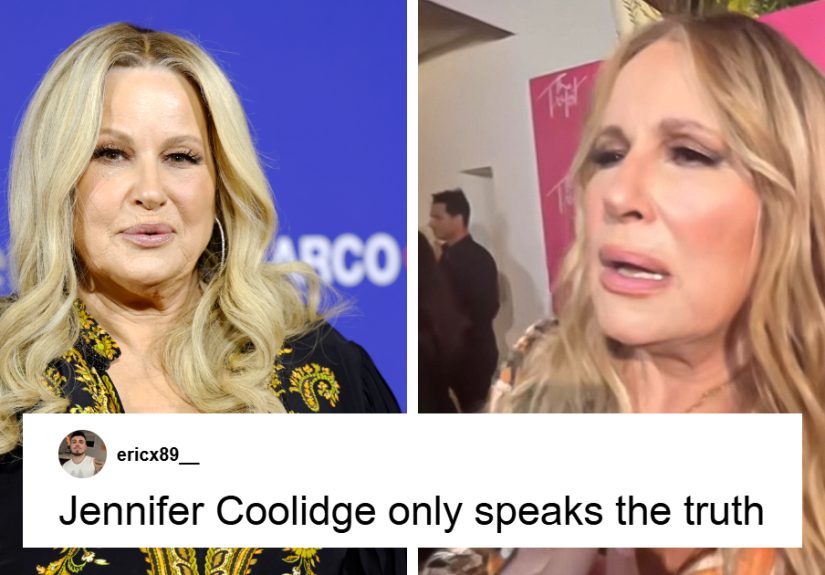
Jennifer Coolidge has done it again. With one red-carpet answer, one perfectly timed pause, and one sentence delivered with the energy of a woman who knows exactly where the party is, she reminded the internet why she remains one of Hollywood’s most beloved queer icons.
The moment happened during the grand opening celebration for The Tryst hotel in Puerto Vallarta, Mexico, a luxury boutique hotel created with LGBTQ+ travelers in mind. Coolidge, already famous for her unforgettable roles in Legally Blonde, American Pie, Best in Show, Single All the Way, and HBO’s The White Lotus, was asked why her LGBTQ+ fan base feels different from other fan groups. Her answer was not a polished publicist-approved paragraph. It was very Jennifer Coolidge: warm, odd, funny, affectionate, and somehow instantly meme-ready.
She suggested that straight people can be more self-conscious, while LGBTQ+ fans tend to let loose, have fun, and bring originality into every room. Then came the line that made social media collectively clutch its pearls and its iced coffee: she called them “a superior group of people.”
Was it exaggerated? Of course. Was it camp? Absolutely. Was the internet ready to print it on tote bags? Without question.
What Jennifer Coolidge Actually Said About Her LGBTQ+ Fans
Coolidge was not delivering a sociology lecture. She was answering a red-carpet question in the middle of a celebration, surrounded by celebrities, drag brunch energy, and a crowd that clearly knew how to enjoy itself. Her response came from admiration, not analysis. She praised LGBTQ+ fans for their freedom, humor, confidence, and originalitythe very qualities that have helped define her own public image.
The phrase “a superior group of people” quickly became the headline, but the heart of the answer was softer than the viral clip might suggest. Coolidge was describing a feeling: the ease of being around people who are not afraid to be colorful, expressive, playful, and gloriously themselves. In other words, she was not ranking humanity. She was giving a glitter-covered thank-you note.
That distinction matters. The internet often takes one quote, throws it into the digital popcorn machine, and waits to see what explodes. In this case, most fans understood the tone immediately. Coolidge was doing what she does best: saying something a little absurd, a little sincere, and completely unforgettable.
Why The Internet Loved The Moment So Much
Jennifer Coolidge’s appeal has always lived somewhere between comedy and emotional honesty. She can make a throwaway line sound like a national emergency. She can turn a pause into a punchline. She can look confused, glamorous, and deeply wise all at once, which is a rare skill unless you are a cat sitting on a velvet sofa.
Her answer about LGBTQ+ fans went viral because it felt natural. Many celebrity compliments sound like they were assembled in a conference room by people named Chad. Coolidge’s response felt like it had wandered out of her brain wearing sunglasses, carrying a tiny purse, and asking where the fun people were sitting.
Fans online praised her for saying what they felt was obvious: queer communities have long been engines of wit, style, resilience, and pop-culture invention. Others simply loved that she said it with such sincerity. Coolidge did not flatten LGBTQ+ fans into a marketing category. She treated them as a community that has supported her, inspired her, and welcomed her into the joke without making her the joke.
Jennifer Coolidge And The Making Of A Queer Icon
Some celebrities become LGBTQ+ icons through carefully managed branding. Jennifer Coolidge became one by being Jennifer Coolidge. That may sound simple, but it is not. Her career is built on characters who are exaggerated yet emotionally recognizable: women who want love, attention, dignity, a good outfit, and maybe a snack. Her comedy often comes from vulnerability, and queer audiences are famously good at recognizing vulnerability wrapped in sequins.
Think of Paulette Bonafonté in Legally Blonde. Paulette could have been written as a flat comic side character, but Coolidge made her sweet, lonely, romantic, and lovable. She gave Paulette a nervous tenderness that made audiences root for her. Then there is Jeanine Stifler from American Pie, a role that could have remained a one-note punchline but became a pop-culture landmark because Coolidge delivered it with confident absurdity.
In Christopher Guest’s mockumentary world, especially Best in Show, Coolidge leaned into deadpan strangeness with surgical precision. Her characters often seem to exist on a planet where social rules are optional and emotional truth arrives wearing lip gloss. That combinationcamp, sincerity, glamour, awkwardness, and survivalis exactly the cocktail that queer audiences have celebrated for generations.
The White Lotus Gave Her Queer Icon Status A Second Life
If Legally Blonde introduced Coolidge to one generation of fans, The White Lotus gave her a full cultural renaissance. As Tanya McQuoid, she played a wealthy, grieving, chaotic woman drifting through luxury resorts with the spiritual stability of a chandelier in an earthquake. Tanya was ridiculous, but she was also wounded. Coolidge made her hilarious and heartbreaking at the same time.
Her performance earned major awards recognition, including two Emmy wins for The White Lotus. More importantly for the internet, Tanya became endlessly quotable. Her scenes inspired memes, reaction GIFs, drag impressions, Halloween costumes, and group-chat messages sent with no context because everyone already knew exactly what they meant.
The show’s second season also deepened Coolidge’s connection with queer pop culture through Tanya’s storyline involving a group of men whose motives were, shall we say, not exactly wellness-retreat pure. When Coolidge later joked at an awards ceremony about “all the evil gays,” it became another instantly iconic moment because it referenced the show while winking lovingly at the audience that adored her.
Her GLAAD Speech Showed The Serious Side Behind The Jokes
Coolidge’s latest viral comment did not come out of nowhere. She has spoken warmly about the LGBTQ+ community many times, including during the GLAAD Media Awards in 2023. At that event, she balanced humor with a sincere message about acceptance, storytelling, and the right to love openly.
That is part of why fans give her so much grace. Her humor may be loopy, but her support is consistent. She is not suddenly discovering queer people because it is fashionable. People who have followed her career know that she has long been embraced by LGBTQ+ audiences, drag performers, comedy fans, and anyone who enjoys a woman who can make the word “bend” sound like a life philosophy.
At GLAAD, she thanked the community for being there for her and spoke about the importance of people being able to tell their stories. That sincerity gives her campy one-liners more weight. The joke lands because the affection behind it is real.
Why Queer Fans Connect So Strongly With Jennifer Coolidge
There are several reasons Jennifer Coolidge resonates with LGBTQ+ fans, and none of them require a spreadsheet, though someone on the internet has probably made one.
She Understands Camp Without Forcing It
Camp is not just being loud, glittery, or dramatic. Camp is a heightened way of seeing the world. It knows that life is ridiculous and painful, so it turns the volume up until the sadness starts dancing. Coolidge’s performances often live in that space. She can be glamorous and tragic, foolish and wise, exaggerated and emotionally precise.
She Plays Outsiders With Love
Many of Coolidge’s most memorable characters are outsiders. They want to belong, but they also cannot help being strange. Rather than mocking them, Coolidge makes them human. LGBTQ+ audiences, many of whom know what it feels like to be misunderstood, often respond to that combination of humor and tenderness.
She Feels Unmanufactured
In an entertainment world packed with perfect answers, Coolidge feels refreshingly unpredictable. She is polished enough to be a star and odd enough to feel like someone who might tell you a secret in the frozen-food aisle. That unpredictability makes her interviews feel alive.
The Backlash Was Predictable, But The Context Matters
Not everyone loved the “superior group” line. Some critics argued that calling any group superior was unnecessary, even as a joke. Others felt Hollywood praise for LGBTQ+ communities can sometimes sound performative. Those reactions are not shocking. The internet is a place where even a compliment can be escorted into court and cross-examined.
But tone matters. Coolidge was not making a literal claim about social hierarchy. She was using affectionate exaggeration in a camp setting. Her comment worked because it matched her persona and the environment: a red carpet at a queer-friendly hotel opening, surrounded by people celebrating visibility, chosen family, and joy.
In that context, her words read less like a political statement and more like a party toast. And honestly, if Jennifer Coolidge is giving a party toast, everyone should probably stop talking and protect the champagne.
The Role Of LGBTQ+ Fandom In Modern Celebrity Culture
LGBTQ+ fandom has shaped modern entertainment in enormous ways. Queer audiences often identify, elevate, remix, and preserve pop-culture moments before mainstream audiences understand their value. A forgotten line from a movie becomes a meme. A supporting character becomes a legend. A red-carpet answer becomes a headline. A dramatic pause becomes a lifestyle.
Coolidge’s career is a perfect case study. Many of her roles were not originally positioned as prestige work, yet fans turned them into cultural artifacts. Paulette’s “bend and snap” scene is not just a comedy beat; it is a shared reference. Tanya McQuoid is not just a television character; she is a mood, a warning, a Halloween costume, and a spiritual weather system.
Queer fans are especially skilled at finding emotional truth in exaggerated performance. They can spot when a celebrity is merely borrowing camp aesthetics and when a performer actually embodies the humor, longing, and theatricality that make camp meaningful. Coolidge passes that test because she does not seem to be performing “for” queer approval. She seems to be living in a frequency queer audiences naturally receive.
Why This Viral Moment Feels Bigger Than A Quote
The reason the internet fell in love with Coolidge’s response is not just that she praised LGBTQ+ fans. Plenty of celebrities do that. The difference is that Coolidge’s answer felt like part of an ongoing relationship. LGBTQ+ fans have celebrated her for years, and she appears genuinely delighted by that connection.
There is a beautiful loop here: queer audiences love Coolidge because she is funny, vulnerable, eccentric, and sincere. Coolidge loves queer audiences because they are expressive, original, joyful, and generous with their affection. Each side sees something affirming in the other. That is why the moment felt so satisfying. It was not a celebrity tossing a compliment into the crowd. It was a mutual admiration society holding its annual meeting, apparently in Puerto Vallarta, with excellent lighting.
Experience Section: What This Moment Teaches Us About Belonging, Humor, And Online Joy
One of the most relatable experiences connected to this Jennifer Coolidge moment is the feeling of being recognized by someone who does not overexplain you. That may be why so many fans reacted with such delight. Her answer was not clinical. It was not a brand statement about inclusion. It was messy, warm, funny, and human. For many LGBTQ+ fans, that kind of recognition can feel more meaningful than a perfectly polished speech.
Anyone who has spent time in queer-friendly spaces knows the atmosphere Coolidge was describing. There is often a special kind of freedom in a room where people have already survived the exhausting work of becoming themselves. The jokes are faster. The outfits are braver. The compliments are more specific. Someone will tell you your jacket is “giving divorced magician at brunch,” and somehow it will be the nicest thing you hear all week.
That energy is difficult to fake. It comes from community, resilience, and a shared understanding that joy is not shallow just because it is fun. In many LGBTQ+ spaces, celebration has a deeper meaning. Dancing, dressing up, laughing loudly, flirting with drama, and turning an ordinary evening into a production are not just entertainment. They are declarations of presence. They say: we are here, we are alive, and we brought better lighting.
Coolidge’s comment captured that feeling in her own delightfully offbeat way. She noticed the lack of self-consciousness, the originality, and the ability to have a good time. That is an experience many people recognize when they enter a queer space that feels welcoming. You may arrive guarded, but the room invites you to loosen your shoulders. You may not know anyone, but someone compliments your shoes. You may feel ordinary, but by the end of the night, you are involved in a group photo with people named Brandon, Mx. Velvet, and someone’s emotional support fan.
The online response also shows how much people crave uncomplicated joy. Social media can be harsh, cynical, and permanently allergic to nuance. Yet every so often, a moment breaks through because it feels sincerely affectionate. Jennifer Coolidge praising her LGBTQ+ fans became one of those moments. It offered a tiny cultural vacation from outrage. For a few minutes, people were not debating box office numbers or celebrity scandals. They were simply enjoying a beloved actress saying something sweet, silly, and supportive.
There is also a lesson here for brands, public figures, and anyone trying to connect with communities: authenticity beats perfection. Coolidge’s answer was not perfect in the way a press release is perfect. It was better than perfect because it sounded real. She did not flatten LGBTQ+ fans into a demographic. She described the vibe. She honored the fun. She made people feel seen without turning the moment into homework.
That is why the quote traveled. It felt like a wink from someone who gets itnot academically, not strategically, but emotionally. Jennifer Coolidge’s relationship with LGBTQ+ fans works because it is reciprocal. The community celebrates her oddness, and she celebrates their originality. In a culture that often asks people to shrink themselves into something easier to understand, that mutual celebration feels powerful. It is funny, yes. It is memeable, definitely. But underneath the comedy is a sincere reminder that being loved for your full, strange, sparkling self is still one of the best experiences a person can have.
Conclusion
Jennifer Coolidge’s response to a question about her LGBTQ+ fans became a viral hit because it combined everything people love about her: humor, sincerity, timing, vulnerability, and a touch of glamorous chaos. By praising LGBTQ+ fans for their originality and joy, she reinforced a bond that has been growing for decades through her movies, television roles, awards-show moments, and real-life allyship.
The internet loved the answer because it did not feel calculated. It felt like Jennifer Coolidge being Jennifer Coolidge. And in a world full of carefully managed celebrity moments, that remains wonderfully rare. Her LGBTQ+ fans have long understood her magic, and now the rest of the internet keeps catching up, one viral quote at a time.