Table of Contents >> Show >> Hide
- Melbourne’s Industrial Chic Obsession (And Why It Works)
- Meet The Outpost Dining Room: Laneway Dining With Backbone
- Industrial Chic, Decoded: What The Outpost Gets Right
- How The Space Shapes the Meal
- What You Can Steal From The Outpost (Legally)
- Build a Melbourne Industrial-Chic Night Out Around the Laneways
- When Industrial Chic Goes Wrong (A Short, Preventable Tragedy)
- Final Take: The Outpost as a Blueprint for Modern Industrial Dining
- Extra : A Laneway Night, The Industrial-Chic Way
Melbourne has a special talent: it can turn a gritty laneway into the kind of place you’ll happily “accidentally” stay for three hours.
The city’s dining scene thrives in spaces that look like they once stored machine parts, printed newspapers, or hosted a very loud argument between forklifts.
And somehow, that rawness makes the food taste even better. (Science? Probably.)
If you’ve ever saved “industrial dining room ideas” at 1:00 a.m. and woken up wondering why your phone is full of exposed-brick fantasies,
let me introduce you to a real-life mood board: The Outpost Dining Room in Melbourne’s South Yarra.
It’s an industrial chic restaurant interior that doesn’t just look coolit’s designed to make you linger, talk, and order “one more thing” like it’s a personality trait.
Melbourne’s Industrial Chic Obsession (And Why It Works)
Industrial style was never supposed to be glamorous. It started as a practical lookbrick, pipes, steel, concreteleft visible because hiding it felt unnecessary.
Decades later, design editors from outlets like Architectural Digest, Elle Decor, HGTV, and Better Homes & Gardens all keep circling back to the same idea:
the magic comes from balancing “raw and functional” with “warm and human.”
In other words, yes to weathered wood and metal; also yes to comfort, soft edges, and lighting that doesn’t make you feel like you’re being interrogated.
Melbourne is basically the Olympics of that balance. Its laneways are packed with cafés, bars, boutiques, and hidden dining rooms that treat design as part of the menu.
You don’t just eat hereyou inhabit the place.
And because the city’s food culture is deeply shaped by migration and cross-pollination, the spaces often mirror that creative energy:
layered, eclectic, and confident enough to mix old-world craft with contemporary cool.
Meet The Outpost Dining Room: Laneway Dining With Backbone
The Outpost Dining Room sits in South Yarra, in an area that helped pull diners into a formerly industrial-feeling pocket near the train lines.
It’s part of a laneway precinct concept off Chapel Streetthink “village high street,” but compressed into a Melbourne lane where every storefront has something to say.
The precinct approach matters: rather than one monolithic venue, the lane is designed to feel activated, social, and distinctly Melbourne.
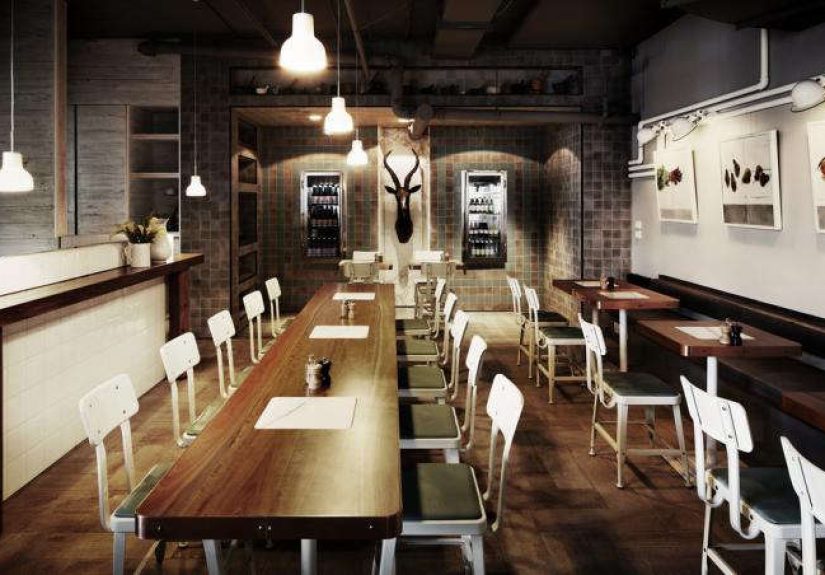
Designed by HASSELL, the Outpost Dining Room leans into a simple, warm, welcoming aesthetic while still keeping its industrial edge.
The space pairs the honest, workmanlike feel of industrial materials with details that feel collected, not staged.
It’s the difference between “warehouse aesthetic” and “warehouse aesthetic that knows how to host.”
The Signature Look in One Sentence
Limed timber, exposed electricals, iconic Jieldé lamps, and seating inspired by French industrial factory stoolsplus locally sourced artifacts like a recycled shopfront,
vintage door hardware, and an old ceramic ice sink that looks like it has stories (and maybe a mild opinion about your wine pairing).
Industrial Chic, Decoded: What The Outpost Gets Right
1) Reclaimed Wood That Doesn’t Try Too Hard
Industrial chic can go cold fastlike “your latte arrived in a metal bucket” cold.
The Outpost avoids that by using timber as a steady, calming base.
Limed wood softens the palette without turning the room into farmhouse cosplay.
U.S. design guides often call reclaimed wood the “history maker” in industrial interiors: it adds warmth, texture, and that subtle sense that life happened here before you showed up.
In The Outpost, the timber isn’t a decorative afterthoughtit’s structural to the mood.
2) Exposed Systems, But Make It Intentional
Exposed pipes and wiring are core to industrial stylewhen they’re deliberate.
When they’re accidental, it’s just… an unfinished renovation.
The Outpost uses exposed electricals as part of the design language, not a budget confession.
This is one of those “industrial restaurant design” moves that looks effortless, but only because someone sweated the details:
placement, rhythm, and how those lines guide your eyes through the room.
3) Lighting That’s Practical, Sculptural, and a Little Flirty
Industrial spaces live or die by lighting. Oversized fixtures, adjustable arms, metal shadesthese are classics for a reason.
The Outpost’s use of Jieldé lamps is a masterclass in “functional, but make it iconic.”
They’re task lights with personality: directional, mechanical, and surprisingly elegant.
U.S. interiors editors love to remind us that bold lighting is often the simplest way to deliver industrial character without rebuilding your ceiling.
Here, the lamps do more than illuminatethey punctuate the room like design exclamation points.
4) Seating Inspired by Industry, Built for Humans
Factory-stool inspiration can go wrong when it forgets one small detail: people have spines.
The Outpost takes cues from French industrial furniture but customizes the concept so the experience stays comfortable enough for long meals.
That matters because industrial chic isn’t just a visual styleit’s an invitation.
If the chair hurts, nobody stays for dessert, and that’s just tragic on a spiritual level.
5) The “Found Object” Layer That Makes It Feel Real
One of the fastest ways to spot fake industrial style is when everything looks brand-new-but-distressed, like it was bullied into having a patina.
The Outpost uses locally sourced artifactsrecycled shopfront elements, vintage door handles, an old ceramic ice sinkto build authenticity.
These pieces create visual storytelling without turning the space into a museum exhibit labeled “IRONY.”
The best industrial chic interiors feel collected over time, even if they were assembled on a deadline and fueled by espresso.
How The Space Shapes the Meal
The Outpost Dining Room was designed as a communal dining spacean environment that nudges conversation forward.
Communal layouts have been trending in hospitality because they fit how people actually like to eat now:
informally, socially, and with the freedom to graze across plates.
When you’re seated in a space that feels open and energeticbut still warmyou’re more likely to relax into the experience.
That’s not an accident; it’s spatial psychology with better lighting.
Industrial chic also pairs beautifully with “home-style” menus, because the contrast is satisfying:
comforting food in a room with a little grit.
The industrial setting keeps things from feeling precious.
The warmth keeps it from feeling sterile.
It’s the Goldilocks zone: not too fancy, not too rough, just right for a long dinner that turns into “let’s order another bottle and solve the world.”
What You Can Steal From The Outpost (Legally)
If you’re designing a dining roomat home or for a venueand you want that Melbourne industrial chic vibe without accidentally creating a space that feels like an aircraft hangar,
borrow these moves:
- Choose one “honest” material as your anchor: reclaimed wood, concrete, brick, or steelthen keep the palette restrained.
- Use metal as an accent, not a takeover: blackened steel frames, iron hardware, or a single statement light can do the job.
- Add warmth through texture: wood grain, leather, textiles, rugs, or even art that isn’t afraid of color.
- Make lighting adjustable: swing-arm sconces or directional pendants are industrial staples for a reasoncontrol equals comfort.
- Mix in a few real “found” pieces: vintage hardware, salvaged fixtures, or an object with a past (not a “manufactured past”).
The common thread in U.S. design advice is consistent: balance.
Industrial design is form and function, but it shouldn’t feel like you’re dining inside a toolbox.
The Outpost shows how to keep the edges while still making people want to stay.
Build a Melbourne Industrial-Chic Night Out Around the Laneways
If you’re traveling, Melbourne rewards a specific kind of curiosity: the willingness to turn down a narrow lane because you saw a warm glow and heard laughter.
Major travel publications call out the city’s laneways as the heartbeat of its café and bar cultureequal parts street art gallery and snack-driven treasure hunt.
Start with a stroll through the CBD’s laneway grid, then aim for neighborhoods that mix design, dining, and a little gritSouth Yarra, Fitzroy, Carlton, and beyond.
A simple plan:
- Late afternoon: coffee in a small, design-forward spot (Melbourne takes coffee seriously, and yes, you will become picky afterward).
- Early evening: laneway wanderingstreet art, boutiques, hidden doors, and the pleasant feeling of being “in on it.”
- Dinner: pick a venue with a strong interior identityindustrial chic works especially well for shared plates and long conversations.
- After: finish with a tucked-away bar or dessert stop, because Melbourne is very good at giving you “one more reason” to stay out.
When Industrial Chic Goes Wrong (A Short, Preventable Tragedy)
Let’s save you from the three most common industrial-style disasters:
The “Steel Box” Problem
Too much metal, too little warmth. If the room feels like it could be pressure-washed without consequences, add wood, textiles, and softer lighting.
Industrial style should feel relaxed, not punitive.
The “Everything Is Vintage” Costume
Industrial chic is not an antique shop exploding. Pick a few meaningful aged pieces and let them breathe.
The Outpost does this well: artifacts are accents, not clutter.
The “Pinterest Copy-Paste” Look
Industrial style needs context. The best spaces respond to their architecture and neighborhood.
Melbourne’s industrial chic works because it’s tied to laneways, adaptive reuse, and a city culture that treats dining as an experiencenot just a transaction.
Final Take: The Outpost as a Blueprint for Modern Industrial Dining
The Outpost Dining Room is a great example of why industrial chic has staying power.
It respects the raw language of utilitarian designexposed elements, metal, workwear lightingthen softens it with timber, warmth, and human-scale comfort.
It also fits perfectly into Melbourne’s laneway DNA: design-driven, social, a little edgy, and quietly inviting.
If you want a mental shortcut for “industrial chic in Melbourne,” picture this: a communal table, the glow of articulated lamps, textures that feel honest,
and just enough patina to suggest the building has lived a full lifebefore it became your favorite place to eat.
Extra : A Laneway Night, The Industrial-Chic Way
Imagine you’re headed to The Outpost Dining Room on a Friday night. Not in a rushed wayMelbourne doesn’t reward rushing. You step off near South Yarra,
and the air has that crisp edge that makes you grateful for a jacket and a good plan. The streets feel polished, but the lane you’re aiming for feels slightly secret,
like the city is testing whether you’re paying attention.
You turn into the laneway and the mood shifts. The noise changesless traffic, more conversation. There’s a warm spill of light ahead, bouncing off glass and timber,
catching on metal edges the way stage lights hit a guitar before a show. You spot the kind of storefront that looks repurposed on purpose: industrial, but not cold.
Not trying to be “cute,” just confidently itself.
Inside, the first thing you notice is texture. The timber has a pale, limed finish that softens the room like a good filterexcept it’s real life.
The lighting is doing actual work, too: those articulated Jieldé lamps feel like they could swing into action at any moment, illuminating a plate like it’s an art exhibit.
The exposed electricals and hardware aren’t hidden, and somehow that honesty makes everything feel more grounded. You’re not in a fantasy dining room.
You’re in a place that knows how it’s built.
Then the best part: the room makes it easy to settle in. A communal table doesn’t feel awkward hereit feels inevitable, like the space is quietly saying,
“Relax. You’re among fellow snack enthusiasts.” You overhear someone debating dumplings as if it’s a high-stakes sport (very Melbourne), and another group
is taking turns describing the “one place” they swear has the best coffee. You don’t know these people, but the room is designed so you don’t feel like you’re crashing anything.
It’s social without being pushylike the friend who introduces you to everyone but doesn’t make you play icebreakers.
The industrial chic details keep revealing themselves. A vintage handle here. A salvaged element there. Something that looks like it used to belong in another life,
now living comfortably in this one. It’s the kind of design that rewards looking around between bites. And it never feels like a showroom, because nothing is too perfect.
A little patina, a little wear, a little proof that life happens in this room.
By the time plates start arriving, you realize the design is doing what great hospitality design should do: it’s making the meal feel like an event without making it feel formal.
Comfort food tastes more comforting when the room feels warm. Conversation flows better when the lighting flatters everyone at the table. And when the space has a backbone
that industrial edgeyou’re less self-conscious about laughing too loudly, ordering dessert, or staying longer than planned.
You leave with the kind of satisfaction that’s part full stomach, part design inspiration, and part “I need to come back and bring friends.”