Table of Contents >> Show >> Hide
- Why Independent Bookstores Still Matter
- The Design Problem That Turned Into a Signature Feature
- Why a Recycled Book Arch Works So Well
- How to Build Beauty Without Building Nonsense
- Sustainability Is More Than a Buzzword in a Bookstore
- What Customers Actually Respond To
- Lessons for Anyone Dreaming of a Literary Space
- The Unexpected Poetry of Old Books
- Extended Reflections: 500 More Words on the Experience
- Conclusion
Opening an independent bookstore is a little like deciding to adopt a dragon. It is magical, expensive, dramatic, and somehow always hungry. You imagine soft lamplight, curated shelves, loyal regulars, and the gentle soundtrack of pages turning. Then reality taps you on the shoulder with rent, inventory, fixtures, permits, and one deeply humbling question: where, exactly, are you going to put all the books that are too worn to sell but too charming to throw away?
That question led to the most memorable design choice in my shop: a beautiful arch made out of recycled books. What began as a practical effort to reuse unsellable copies turned into the visual heart of the store. Customers stop under it to take photos. Kids point at it like they have discovered a portal to Narnia. Adults do that thing where they pretend they are not impressed and then immediately pull out their phones. In a bookstore, that counts as a standing ovation.
This is the story of why the arch works, what it says about modern bookstore culture, and why recycled book décor can turn a retail space into something warmer, smarter, and far more unforgettable than a room full of plain white shelves ever could.
Why Independent Bookstores Still Matter
The best independent bookstores do not survive by acting like warehouses with cash registers. They thrive by becoming gathering places. People come for recommendations, yes, but they also come for atmosphere, conversation, events, surprise discoveries, and the comforting feeling that somebody in the room believes books are still worth getting excited about. A bookstore is retail, but it is also theater, hospitality, and community design wearing sensible shoes.
That is why physical space matters so much. When readers walk into a good bookstore, they want more than inventory. They want cues that this place has personality. They want to feel like the store has a point of view. Maybe it is cozy and creaky. Maybe it is bright and minimal. Maybe it smells like espresso and paperback glue, which, to a certain kind of person, is basically aromatherapy.
In recent years, independent bookstores have benefited from something algorithms cannot fully replicate: human curation. Online stores are efficient, but they rarely feel intimate. A neighborhood bookshop can. It can remember what a customer bought last month. It can host a reading group on Tuesday, a children’s story hour on Saturday, and a spirited debate about whether the movie was better than the book every day in between. Design supports that mission. Every shelf, table, and display tells visitors whether the store is transactional or memorable.
The Design Problem That Turned Into a Signature Feature
When I was setting up the bookstore, I wanted one dramatic focal point. Not dramatic in the “museum security may be required” sense, but dramatic enough that customers would instantly understand the store’s personality. I did not want generic décor shipped in flat boxes from somewhere that also sells office chairs. I wanted something literary, playful, sustainable, and just a little bit ridiculous in the best possible way.
At the same time, I had a growing stack of books that were no longer right for the sales floor. Some had torn dust jackets. Some were outdated editions. Some had cosmetic damage that made them poor candidates for retail but perfectly suitable for a second life. Reuse came first. Donation came first whenever possible. But for books that could not reasonably return to circulation, I started wondering whether they could become architecture instead of waste.
That is how the recycled book arch was born. Not from a branding brainstorm, but from a bookseller’s classic habit of looking at a pile of old books and saying, “You know what this needs? Structural ambition.”
Why a Recycled Book Arch Works So Well
It turns the store into an experience
An arch creates transition. It signals that a visitor is entering a distinct world. In a bookstore, that matters. Crossing beneath an arch made from old books feels symbolic, even if customers cannot quite explain why. They are walking into a place built by stories and literally framed by them. It is visual storytelling before anyone opens a single cover.
It gives damaged books a meaningful second life
Recycled book décor works best when it is thoughtful rather than wasteful. The goal is not to destroy usable books for aesthetics. The goal is to honor materials that have already had one reading life and cannot easily continue in their original form. In that sense, the arch becomes a statement about stewardship. Books that cannot be sold still matter. Their physical presence can continue to create value, wonder, and conversation.
It creates instant brand identity
Independent bookstores need memorable details. A great logo helps, but a distinctive in-store feature helps even more. The arch became ours. It appears in customer photos, event promotions, and word-of-mouth descriptions. People do not just say, “I went to that bookstore on the corner.” They say, “I went to the bookstore with the amazing arch made from old books.” That is marketing with a spine. Several thousand spines, actually.
How to Build Beauty Without Building Nonsense
There is a fine line between charming bookstore installation and “someone let a craft project get too confident.” The difference is intentional design. A recycled book feature should feel integrated into the store, not dropped into it like a dare.
The best approach starts with structure. Even when the final result looks whimsical, the base must be stable, safe, and engineered with common sense. Books are decorative in the visual layer, but the supporting frame does the hard work. That allows the installation to feel magical without becoming a safety memo. Proportion matters too. An arch should frame movement naturally, not crowd it. Customers need enough space to browse, gather, and carry dangerously tall stacks of novels without clipping the scenery.
Color also plays a huge role. Recycled book décor can be arranged by spine tone, paper color, genre, or texture. A rainbow effect feels joyful and social-media-friendly. Neutral palettes feel elegant and sculptural. I leaned into visual variation because bookstores should not look timid. Books are already one of the most colorful objects in daily life. Let them show off a little.
Lighting finished the effect. Warm overhead light brought out the cream tones of aging pages and made the arch glow at night from the front windows. During events, it looked less like a display and more like a ceremonial gateway for readers. Which is exactly the sort of overblown language bookstore owners secretly enjoy.
Sustainability Is More Than a Buzzword in a Bookstore
Readers tend to appreciate sustainability, but they also appreciate honesty. Recycled-book design should not be treated as a trendy gimmick. It works best when it reflects a larger philosophy: reduce what you can, reuse what still has value, and recycle only when reuse is no longer practical. That hierarchy makes sense environmentally and aesthetically.
In a bookstore, sustainability can show up in dozens of ways: secondhand fixtures, reclaimed wood shelving, efficient lighting, reusable shipping materials, and careful handling of overstock and damaged inventory. The recycled arch fit naturally into that mindset. It was decorative, yes, but it also reflected a broader belief that materials deserve imagination before disposal.
There is also something fitting about using old books to shape a new literary space. Books are cultural objects, but they are also crafted materials: paper, board, cloth, ink, glue, and design. Libraries, museums, and exhibitions have long treated books as physical artifacts worthy of display in their own right. Bringing that spirit into a small retail setting creates a bridge between everyday browsing and the larger art of the book.
What Customers Actually Respond To
I expected people to notice the arch. I did not expect them to form a relationship with it. But that is what happened. Customers began using it as a meeting spot. Parents took holiday photos there. Visiting authors asked to stand beneath it before events. Some shoppers asked whether the books had stories of their own. Others wanted to know if the arch had a hidden pattern. One person spent ten minutes inspecting the spines like an archaeologist of paperback civilization.
The strongest response, though, was emotional. The arch made people smile before they even started browsing. That matters in retail. Joy lowers the barrier to engagement. A customer who feels delighted is more likely to linger, explore, ask questions, and return. The installation became a conversation starter, and conversation is one of the most valuable currencies an independent bookstore has.
It also changed the pace of the room. Good bookstores encourage wandering. The arch slowed people down in a pleasant way. It invited them to look up, look closely, and notice the store as a designed experience rather than a simple point of sale. In an age of speed, that pause feels luxurious.
Lessons for Anyone Dreaming of a Literary Space
Start with your values, not just your budget
A memorable bookstore is not built from expensive décor alone. It is built from decisions that reflect what the shop stands for. If you care about community, create places to gather. If you care about sustainability, let reuse show up visibly. If you care about discovery, make the space rewarding to explore.
Design for story, not just storage
Shelves hold books, but design gives them context. A store should communicate mood and identity within seconds. That does not require extravagance. It requires coherence. Every visual choice should support the kind of reading life you want customers to imagine for themselves.
Let imperfections work for you
Bookstores are wonderfully unslick places. They benefit from texture, age, and evidence of human hands. Recycled materials can add soul when they are used thoughtfully. A perfect store can feel sterile. A beautiful store with character feels alive.
The Unexpected Poetry of Old Books
There is something undeniably poetic about an arch made from books that were nearly forgotten. Once, they sat on shelves waiting to be chosen. Now they frame new discoveries for other readers. Their role changed, but their purpose did not disappear. They still usher people toward ideas, imagination, and possibility. They still help create a place where stories matter.
That is probably why the arch resonates. It is not just decorative. It represents continuity. It says that even worn things can become beautiful again, that damaged objects can still hold meaning, and that a bookstore is not only a place where books are sold. It is a place where books keep working on us in ways we do not always expect.
So yes, I opened my own bookstore, and I created a beautiful arch out of recycled books. It started as a practical solution and became the soul of the shop. If that sounds sentimental, welcome to bookselling. We are, by professional necessity, highly trained in sentiment. But in this case, the feeling is earned. The arch is beautiful because it is more than pretty. It is useful, sustainable, memorable, and full of story. Much like the best bookstores themselves.
Extended Reflections: 500 More Words on the Experience
What surprised me most about building the bookstore was how emotional the physical setup became. I expected logistics. I expected invoices, delayed deliveries, aching feet, and the strange realization that you can discuss shelving brackets for forty minutes without once feeling glamorous. What I did not expect was how quickly the space would begin to talk back.
When the books first arrived in boxes, the store felt less like a business and more like a promise under construction. Every stack represented a future conversation. This novel would become a birthday gift. That essay collection would be recommended during a rainy afternoon. A children’s picture book would be carried home under one small arm and demanded again at bedtime. Books are merchandise, but they never behave like ordinary merchandise. They are too personal for that. They carry memory before they even leave the shelf.
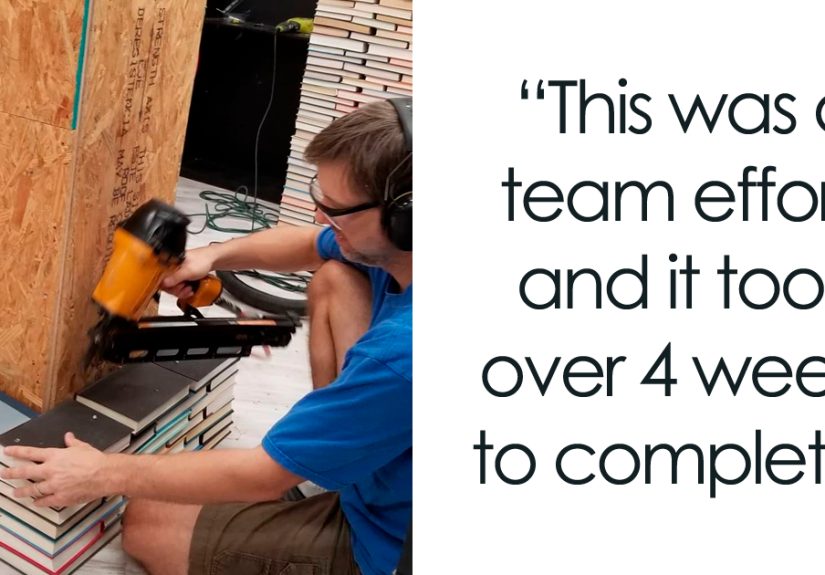
The arch intensified that feeling. During the build, it was chaotic. There were moments when it looked less like a graceful installation and more like literature had lost a bet. Dust everywhere. Measuring tape everywhere. Paperback fragments clinging to clothing like judgment. Still, there was an odd satisfaction in shaping something beautiful from materials that might otherwise have been overlooked. It felt like the bookstore was teaching me its philosophy before we had even opened the doors: pay attention, use what you have, and trust transformation.
Once customers arrived, the arch became a kind of social bridge. People who came in shy suddenly had something easy to mention. “Did you make that?” led to conversations about favorite authors, about old library sales, about the smell of used bookstores, about the books people could never bring themselves to donate. It gave strangers a shared starting point. In an independent bookstore, that is gold.
There were funny moments too. One customer asked whether the arch was load-bearing, which is a very specific kind of bookstore humor and exactly my kind of nonsense. Another asked whether the books were organized by genre, as if the arch might contain a thriller district and a poetry wing. A child asked whether the books still worked. Honestly, that may have been the smartest question of all. Yes, they did still work. They were still doing what books do best: creating wonder.
Owning a bookstore has made me more aware of how hungry people are for places that feel real. Not optimized. Not frictionless. Not endlessly personalized by invisible software. Real. A place with creaky floors, human opinions, uneven stacks, handwritten recommendations, and an arch made from retired books that reminds visitors that beauty is often built from what others discard too quickly.
If I have learned anything, it is this: readers are not only looking for books. They are looking for belonging. A thoughtfully designed bookstore can offer that in quiet, powerful ways. Sometimes it happens through a recommendation at the register. Sometimes it happens at a packed author event. And sometimes it happens the moment someone steps under an arch made of recycled books and understands, without needing it explained, that this place was built by people who love stories enough to shape a whole room around them.
Conclusion
A bookstore succeeds when it gives people a reason to come in, a reason to stay, and a reason to come back. A recycled book arch does all three. It transforms discarded materials into identity, turns design into conversation, and proves that literary spaces can be sustainable without losing charm. More than a decorative gesture, it reflects what readers value most in an independent bookstore: personality, care, creativity, and a sense that books still belong at the center of public life.