Table of Contents >> Show >> Hide
- What “Orange Zest” Actually Means (And Why It’s Worth the Hassle)
- Before You Start: Pick the Right Orange and Prep It Like a Pro
- How to Zest an Orange Without a Zester: 10 Steps
- Step 1: Decide what kind of “zest” your recipe needs
- Step 2: Set up your workstation (save future-you from chaos)
- Step 3: Hold the orange like you mean it
- Step 4: Make fine zest with a box grater (the “I’ve got this” method)
- Step 5: Make wide strips with a vegetable peeler (best for infusions)
- Step 6: Turn peeler strips into “zest” for baking (mince like a boss)
- Step 7: Use a chef’s knife to “plane” off zest (the stealthy no-tool trick)
- Step 8: Make cocktail twists with a paring knife (pretty, dramatic, aromatic)
- Step 9: Measure the zest correctly (because “one orange” is not a unit)
- Step 10: Store it smart (or turn your hard work into future-you’s shortcut)
- Common Mistakes (And How to Fix Them Without Crying)
- Where Orange Zest Shines: Quick Ideas You’ll Actually Use
- Conclusion
- Extra: of Real-World “Zesting Without a Zester” Experience
You don’t need a fancy zester to get that bright, perfume-y orange zing into cookies, cocktails, marinades, or
that “why does this taste like a restaurant?” salad dressing. What you do need is a plan, a steady hand,
and a healthy fear of the white stuff (a.k.a. piththe bitter party-crasher living under the peel).
This guide shows you exactly how to zest an orange without a zester using common kitchen tools,
with clear steps, smart shortcuts, and a few jokes to keep morale high while you grate like your dessert depends on it
(because it probably does).
What “Orange Zest” Actually Means (And Why It’s Worth the Hassle)
Orange zest is the thin, colorful outer layer of the peelwhere the aromatic citrus oils live.
Those oils carry intense orange flavor without adding extra liquid or acidity like juice does. That’s why recipes
love it: zest boosts aroma and taste fast, especially in baking, sauces, and cocktails.
The goal is simple: remove only the orange part. If you hit the white pith, you’ll introduce bitterness. A little pith
won’t ruin your life, but it can absolutely ruin your frosting. Choose wisely.
Before You Start: Pick the Right Orange and Prep It Like a Pro
Choose the best orange for zesting
- Go for firm, brightly colored oranges with smooth skin. Deep color often means more flavorful oils.
- Heavier for their size is usually a good sign (juicy inside, fragrant peel).
- If possible, choose unwaxed or organic since you’ll be using the peel.
Wash and dry (seriously)
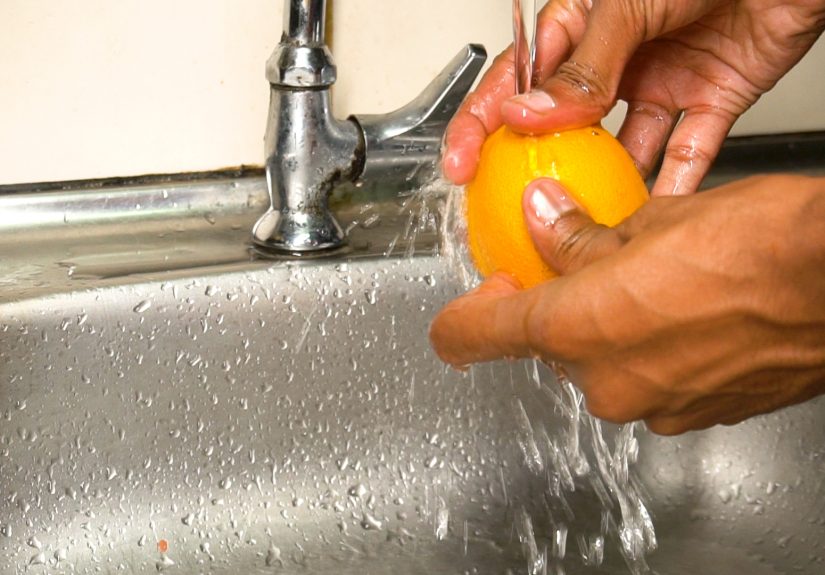
Since you’re eating the peel, wash the orange under running water and rub it well. Skip soap and detergents.
Dry completelyzesting a wet orange is like trying to shave a bar of soap: slippery, sad, and weirdly dangerous.
How to Zest an Orange Without a Zester: 10 Steps
Step 1: Decide what kind of “zest” your recipe needs
“Zest” can mean different shapes, and the shape changes how it behaves in food:
- Fine zest: best for baking, rubs, and batters (disappears into the mix).
- Thin strips: best for infusing syrups, cocktails, and sauces (easy to remove later).
- Twists/curls: best for drinks and garnishes (pretty + aromatic).
Step 2: Set up your workstation (save future-you from chaos)
Grab a cutting board, a small bowl or plate for collected zest, and one of these tools:
box grater, vegetable peeler, paring knife, or a chef’s knife.
Optional but helpful: a paper towel (for grip) and a bench scraper (for scooping tiny bits).
Step 3: Hold the orange like you mean it
The secret to clean zest is control. Hold the orange in your non-dominant hand, fingers tucked.
Rotate the orange often so you only shave the colored peel and stop before the pith appears.
Step 4: Make fine zest with a box grater (the “I’ve got this” method)
If you need classic grated zest and you don’t have a zester, your box grater’s smallest holes are your new best friend.
- Use the side with the tiniest holes.
- Light pressure: drag the orange across the grater 2–3 strokes.
- Rotate the orange as soon as you see white pith peeking through.
- Tap or scrape zest into your bowl.
Pro tip: If the orange is super juicy, the grater can get gummy. Pause and wipe the surface clean.
Step 5: Make wide strips with a vegetable peeler (best for infusions)
A vegetable peeler gives you clean, wide strips that are perfect for steeping into simple syrup, tea, cocktails,
or even a pot of rice. You’re basically making orange “flavor ribbons.”
- Angle the peeler shallowly against the peel.
- Peel in short strokes so you don’t dig into pith.
- Aim for thin orange-only strips; stop if they’re coming off white-backed.
Step 6: Turn peeler strips into “zest” for baking (mince like a boss)
If your recipe calls for grated orange zest but you only have strips, don’t panicjust chop them finer.
- Stack 3–5 strips.
- Slice into thin ribbons (julienne).
- Rotate and mince until finely chopped.
You’ll get slightly chunkier zest than a microplane would make, but the flavor is still fantasticespecially in cookies,
muffins, and compound butters.
Step 7: Use a chef’s knife to “plane” off zest (the stealthy no-tool trick)
No grater. No peeler. Still want zest? Use a chef’s knife like a very polite wood planer.
Keep the blade almost flat and shave off thin flecks of orange peel, avoiding the pith.
- Set the orange on a cutting board for stability.
- Hold the knife at a shallow angle.
- Shave tiny bits of orange peelthink “confetti,” not “roof shingles.”
- Mince the shaved peel to your desired fineness.
Step 8: Make cocktail twists with a paring knife (pretty, dramatic, aromatic)
For drinks, you want a clean piece of peel you can twist over the glass to spray fragrant oils.
Use a sharp paring knife and go slow.
- Cut a coin-sized oval of peel (orange layer only).
- Trim away any visible white pith.
- Twist over the drink to release oils, then rub the rim.
This is also great for garnishing cakes, panna cotta, or a bowl of berries that needs a glow-up.
Step 9: Measure the zest correctly (because “one orange” is not a unit)
Recipes usually measure zest in teaspoons or tablespoons. If you’re grating:
- 1 teaspoon zest = a small but noticeable citrus pop.
- 1 tablespoon zest = bold flavor, common in baking.
If you’re using strips for infusion, you can be more relaxedjust avoid tons of pith, since it can turn bitter as it sits.
Step 10: Store it smart (or turn your hard work into future-you’s shortcut)
Fresh zest is best used immediately, but you’ve got options:
- Refrigerate short-term: sealed container for a few days.
- Freeze: freeze loose, then bag it; label it. Great for baking and cooking later.
- Make orange zest sugar: mix zest into sugar and rub with fingers to release oilsamazing for cookies, muffins, pancakes, and cocktail rims.
Bonus: Once you zest, juice the orange. Zest + juice is the ultimate “I didn’t waste anything” flex.
Common Mistakes (And How to Fix Them Without Crying)
Mistake: My zest tastes bitter
You likely grabbed pith. Fix it by chopping only the bright orange bits and leaving the white behind.
If it’s already mixed into something (like sugar), add a pinch more sugar and a tiny bit of salt to soften bitterness.
Mistake: The orange keeps slipping
Dry it well. If it’s still slippery, hold it with a paper towel for grip. (This is the culinary equivalent of putting socks on a tile floor.
It helps, but you still shouldn’t sprint.)
Mistake: My grater is clogging
The peel oils can gum up small holes. Tap the grater, scrape the back, wipe it clean, and keep going with lighter pressure.
Mistake: I made giant peel chunks and my muffin tastes “orange-y… in a confusing way”
Mince the peel finer next time, or use the strips for infusions instead of baking. Fine zest distributes flavor evenly;
big pieces are like biting into a surprise scented candle.
Where Orange Zest Shines: Quick Ideas You’ll Actually Use
- Orange zest sugar: rub zest into sugar; use for cookies, waffles, whipped cream, or rimming a glass.
- Citrus salt: rub zest into flaky salt; sprinkle on roasted veggies, chicken, or popcorn.
- Orange vinaigrette: whisk zest + juice + olive oil + Dijon + honey + salt.
- Marinade booster: add zest to soy sauce, garlic, ginger, and a little brown sugar for chicken or shrimp.
- Citrus butter: mix zest into softened butter with a pinch of salt; melt over fish or vegetables.