Table of Contents >> Show >> Hide
- Why Bleach Ruins Clothes When It’s Used the Wrong Way
- How to Use Bleach Without Ruining Clothes: 14 Steps
- Step 1: Read the care label first
- Step 2: Know the difference between chlorine bleach and oxygen bleach
- Step 3: Check the fabric content, not just the color
- Step 4: Sort laundry like you mean it
- Step 5: Test questionable items in a hidden spot
- Step 6: Measure bleach carefully
- Step 7: Never pour undiluted bleach directly onto clothes
- Step 8: Add bleach at the right time in the wash cycle
- Step 9: Use detergent too
- Step 10: Pick the right water temperature and cycle
- Step 11: Keep bleach away from ammonia and other cleaners
- Step 12: Don’t use chlorine bleach too often on the same items
- Step 13: Rewash or rinse well if needed
- Step 14: Do not dry the item until you know the stain or dinginess is gone
- Common Bleach Mistakes That Wreck Clothes
- When Oxygen Bleach Is the Better Choice
- Practical Examples of Using Bleach the Right Way
- Extra Experience: What People Learn After a Few Bleach Mishaps
- Conclusion
- SEO Metadata
Bleach is one of those laundry products that can make you feel wildly competent for about five minutes. Whites look brighter, odors back off, and dingy socks suddenly stop looking like they gave up on life. Then, one tiny mistake later, your black shirt has orange freckles, your favorite leggings look tired, and you are standing in the laundry room wondering how a splash of liquid managed to create emotional damage.
The good news is that bleach is not the villain. Bad timing, bad measuring, and bad fabric matches are the real troublemakers. If you learn how to use bleach correctly, it can whiten, sanitize, and freshen laundry without wrecking your clothes. The trick is knowing which bleach to use, when to use it, how much to add, and what fabrics should never meet it under any circumstances.
This guide breaks it all down in plain English, with 14 practical steps that help you use bleach safely and confidently. Whether you are trying to rescue white towels, sanitize sheets, or brighten a cotton tee that has seen better days, here is how to use bleach without turning your wardrobe into a cautionary tale.
Why Bleach Ruins Clothes When It’s Used the Wrong Way
Bleach is powerful. That is the whole point. Chlorine bleach can whiten and disinfect, while oxygen bleach can brighten and help remove stains more gently. But power without a plan is how laundry disasters happen.
Most bleach damage comes from a few common mistakes: pouring it straight onto fabric, using the wrong type on the wrong garment, adding too much, ignoring care labels, or using it on fibers that simply cannot handle it. Delicate materials like wool, silk, and spandex are especially bad candidates for chlorine bleach. Even sturdy fabrics can get damaged if bleach is overused or never diluted properly.
In other words, bleach is not a “glug and hope” product. It is more of a “measure carefully and act like an adult” product.
How to Use Bleach Without Ruining Clothes: 14 Steps
Step 1: Read the care label first
Before the bleach bottle even enters the room, check the garment’s care tag. This is the fastest way to avoid ruining clothes. The bleach symbol is a triangle. An empty triangle generally means bleach is allowed. A triangle with two diagonal lines means use non-chlorine bleach only. A crossed-out triangle means no bleach at all.
If the label says “do not bleach,” believe it. This is not the moment for optimism.
Step 2: Know the difference between chlorine bleach and oxygen bleach
Not all bleach is the same, and treating it like one big happy family is how laundry mistakes start. Chlorine bleach is the stronger option. It is usually best for white, bleach-safe items that need whitening, stain removal, or sanitizing. Oxygen bleach, often sold as color-safe bleach, is gentler and is usually the better pick for many washable colored fabrics and everyday brightening.
A simple rule helps here: if the item is white cotton and the label allows bleach, chlorine bleach may work well. If the item is colored, patterned, or you want a gentler approach, oxygen bleach is usually the safer bet.
Step 3: Check the fabric content, not just the color
People often assume bleach safety is only about whether an item is white or colored. It is also about fiber type. Some fabrics should never be bleached with chlorine bleach, even if they look sturdy. That includes wool, silk, spandex, leather, suede, and some specialty or flame-resistant fabrics.
For example, a white cotton T-shirt may be bleach-safe, while a white blouse with spandex stretch panels is absolutely not. Same color, very different outcome.
Step 4: Sort laundry like you mean it
Bleach is not the place for lazy sorting. Separate whites from colors, and separate bleach-safe items from non-bleachable ones. It also helps to sort by fabric weight. Heavy white towels and lightweight white shirts should not always be treated the same way.
If you throw one bleach-safe towel in with a mixed load and hope for the best, your clothes may respond with a collective protest.
Step 5: Test questionable items in a hidden spot
If you are not fully sure a fabric or dye can handle bleach, test it first. Apply a tiny amount of diluted bleach solution to an inside seam, hem, or another hidden area. Wait briefly, rinse, and blot dry. If the original color stays intact, the item is more likely to be bleach-safe.
This step matters most for colored garments, white items with trim or embroidery, and older clothes that may have unpredictable dye behavior. A one-minute test can save a forty-dollar mistake.
Step 6: Measure bleach carefully
Bleach is not a “more is better” product. Using extra bleach will not magically create extra cleanliness. It is more likely to weaken fibers, leave harsh odor, or cause spotting. Always follow the bleach label and your washer manual for the correct amount. Different bleach concentrations and washer types may require different amounts.
If your instinct is to pour until it “looks right,” kindly ignore that instinct.
Step 7: Never pour undiluted bleach directly onto clothes
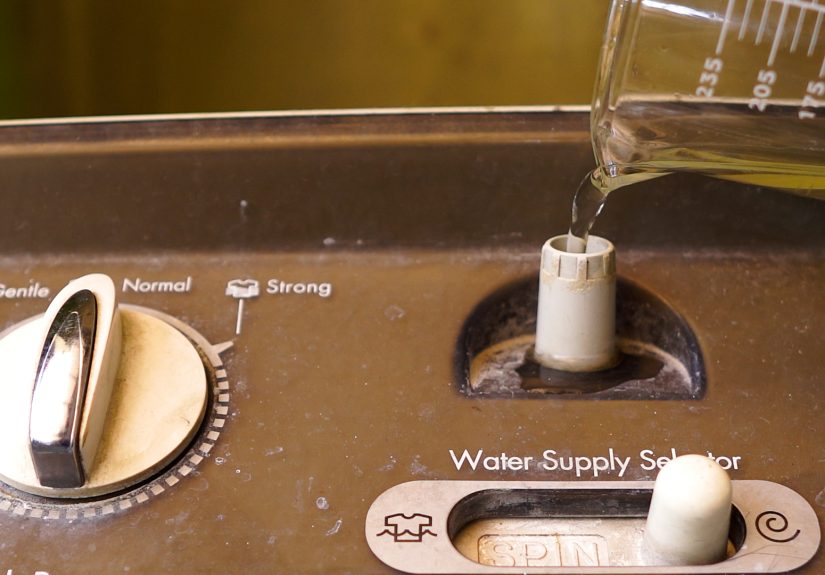
This is one of the fastest ways to ruin fabric. Full-strength bleach can cause color loss, thinning, and even holes that may not show up until later. If your washer has a bleach dispenser, use it. That is the easiest and safest route.
If your machine does not have a dispenser, add bleach to the wash water according to the product directions, not straight onto dry garments. If clothes are already in the machine, make sure they are thoroughly wet before adding diluted bleach.
Step 8: Add bleach at the right time in the wash cycle
Timing matters. In a top-loader without a dispenser, bleach is usually added after the washer fills a bit and the detergent has started mixing with water. In front-load machines, the dispenser is usually the safest place because it releases bleach at the right time automatically.
Do not dump chlorine bleach into the detergent compartment unless your washer manual says that is okay. Laundry products are not always interchangeable in dispensers, and that is a detail worth respecting.
Step 9: Use detergent too
Bleach is an add-on, not a replacement for laundry detergent. Detergent removes soil and oils. Bleach helps whiten, brighten, or sanitize when used properly. You usually want both doing their jobs.
This is especially important for visibly dirty laundry. Bleach works better on already-cleaning fabric than on fabric still carrying a week’s worth of sweat, dirt, and mystery sauce.
Step 10: Pick the right water temperature and cycle
Always follow the garment care label first. In general, oxygen bleach tends to work better in warm to hot water, while chlorine bleach should be used according to both the bleach label and fabric instructions. If you are washing clothing from a sick household member or want a deeper hygienic clean, use the warmest appropriate setting for the fabric and dry items completely afterward.
That said, “hotter” is not always “smarter.” Hot water can shrink or stress some fabrics, so let the care label make the final decision.
Step 11: Keep bleach away from ammonia and other cleaners
This is a safety rule, not a laundry preference. Never mix bleach with ammonia or other household cleaners. Dangerous fumes can form, and that is not something you want in a laundry room, kitchen, bathroom, or anywhere else with breathable air.
Also, use bleach in a well-ventilated space and wash your hands after handling it. Bright whites are nice. Breathing comfortably is nicer.
Step 12: Don’t use chlorine bleach too often on the same items
Even bleach-safe fabrics can wear down if chlorine bleach becomes your answer to every single load. Over time, repeated exposure can weaken fibers and make clothing feel rougher or look tired. For routine brightening, oxygen bleach or a detergent with a bleach alternative may be a gentler long-term strategy.
Think of chlorine bleach like hot sauce: useful in the right amount, regrettable in excess.
Step 13: Rewash or rinse well if needed
When the cycle finishes, check the item. If there is lingering bleach odor or visible residue, an extra rinse may help. This is especially useful for thicker items like towels, bedding, or sweatshirts that can hold onto product more stubbornly than a lightweight T-shirt.
Proper rinsing helps protect fabrics and keeps your clean laundry from smelling like the public pool had a baby with your washing machine.
Step 14: Do not dry the item until you know the stain or dinginess is gone
If you are treating a stained garment, inspect it before tossing it in the dryer. Heat can set many stains and make a second attempt much harder. If the stain is still hanging on like it pays rent, wash the item again before drying.
This is especially helpful when you are using oxygen bleach for stain removal on shirts, sheets, or children’s clothes. Patience here saves a lot of future sighing.
Common Bleach Mistakes That Wreck Clothes
Even experienced laundry people make the occasional bleach blunder. Here are the biggest mistakes to avoid:
- Using chlorine bleach on colored clothes without testing first
- Bleaching wool, silk, spandex, or delicate blends
- Pouring bleach directly onto fabric
- Ignoring washer dispenser instructions
- Using too much bleach because “the towels are really gross”
- Skipping detergent and expecting bleach to do all the cleaning
- Drying stained items before checking results
- Mixing bleach with other cleaning products
If any of these sound familiar, congratulations: you are human and have probably done laundry while distracted.
When Oxygen Bleach Is the Better Choice
If chlorine bleach feels a little too dramatic for the task at hand, oxygen bleach may be your friend. It is useful for brightening whites, refreshing dingy fabrics, and helping with stains on many washable colors. It is generally gentler on fibers and is often a smarter choice for routine laundry care.
For example, if you want to brighten white sheets without repeatedly stressing the fabric, oxygen bleach is often a solid option. If you are washing a pale blue workout shirt or a striped cotton top that looks dull, oxygen bleach is usually far less risky than chlorine bleach.
That does not mean oxygen bleach is magic fairy dust. It still needs proper use, the right water temperature, and patience. But when the goal is brightening without drama, it is often the better pick.
Practical Examples of Using Bleach the Right Way
Example 1: White bath towels. Check the care label, sort towels with other whites, add detergent, use the bleach dispenser, and follow the bleach bottle’s amount recommendation. This is a classic case where chlorine bleach can work well if the towels are bleach-safe.
Example 2: A white cotton shirt with a coffee stain. Pretreat first, wash with detergent, and use bleach only if the label allows it. Check the stain before drying. Do not let the dryer become the stain’s attorney.
Example 3: Colored school uniforms or work polos. Use oxygen bleach if the care label allows non-chlorine bleach. This helps brighten the fabric without the much higher risk of color damage.
Example 4: Stretch leggings. Skip chlorine bleach. Anything with spandex is asking for trouble if you go that route. Choose a gentler product or wash according to the care label.
Extra Experience: What People Learn After a Few Bleach Mishaps
People usually do not become careful with bleach because they read the label for fun on a Saturday night. They become careful because they ruined something once and would very much like to avoid a sequel.
One common experience is the “white load that wasn’t actually white.” A shirt may look bright white at first glance, but then you notice black stitching, beige trim, or a tiny percentage of spandex hiding in the fiber blend. That is often how people learn that color and fabric content are two different things. The shirt may survive one wash, then start yellowing, thinning, or stretching oddly after repeated bleaching. Lesson learned: check the tag, not your assumptions.
Another classic laundry story involves impatience. Someone finds a stain on a favorite shirt, grabs bleach, pours a little directly on the spot, and expects immediate glory. What they get instead is a pale blotch that looks worse than the original stain. That moment teaches a brutal but useful truth: bleach is not a spot treatment you freestyle. It needs dilution, the right fabric, and the right method. Otherwise, the stain leaves, but so does the dye.
There is also the “mystery damage” experience. Clothes seem fine after washing, but after a few more wears, tiny weak spots or holes start appearing. Many people do not realize that undiluted bleach or too much chlorine bleach can damage fibers in a way that shows up later. It is sneaky like that. The towel or T-shirt survives the wash, then falls apart a month later and acts as if it has no idea what happened.
People also learn that oxygen bleach can be a quiet hero. It does not give the dramatic “wow” moment of chlorine bleach, but it often does a better job for routine maintenance. Many people switch after ruining one too many colored items or getting tired of that strong bleach smell clinging to fabrics. Over time, they realize that slower and gentler is sometimes the smarter laundry strategy, especially for clothes they actually care about.
And then there is the emotional growth that comes from finally respecting the washing machine dispenser. At first, it seems overly fussy. Why should the washer care where the bleach goes? Then one accidental splash on a navy sock, one weird dispenser clog, or one faded pillowcase later, the answer becomes obvious. The machine instructions were not being dramatic. They were trying to save your stuff.
The best long-term experience people report is confidence. Once you understand the difference between chlorine and oxygen bleach, know how to test fabrics, and stop guessing on amounts, laundry becomes much less chaotic. You stop treating bleach like a magical cure-all and start using it like a precise tool. That is when it actually works. And more importantly, your clothes stop living in fear.
Conclusion
If you want to use bleach without ruining clothes, the formula is simple: read the label, choose the right bleach, measure carefully, dilute properly, and never use it on the wrong fabric. Chlorine bleach has its place, especially for white bleach-safe laundry, but oxygen bleach is often the better everyday option for brightening and stain help.
The real secret is not using more bleach. It is using bleach more intelligently. Do that, and you can keep whites brighter, laundry fresher, and your favorite clothes out of the accidental tie-dye category.