Table of Contents >> Show >> Hide
- What Is an Extension Ladder?
- Choose the Right Extension Ladder for the Job
- Inspect the Ladder Before Every Use
- Set Up the Extension Ladder Correctly
- How to Raise an Extension Ladder
- How to Climb an Extension Ladder Safely
- Working from an Extension Ladder
- Common Extension Ladder Mistakes to Avoid
- How to Descend and Move the Ladder
- Cleaning and Storing an Extension Ladder
- Extension Ladder Safety Checklist
- When Not to Use an Extension Ladder
- Real-World Experience: Practical Lessons from Using an Extension Ladder
- Conclusion
Using an extension ladder looks simple from the ground. You lean it, climb it, do the job, and come back down looking like a responsible adult who definitely did not almost drop a paintbrush into the bushes. But an extension ladder is not just a tall metal or fiberglass rectangle with ambition. It is a tool that depends on angle, footing, weight rating, inspection, body position, weather, and common sense.
This complete guide explains how to use an extension ladder safely and correctly, whether you are cleaning gutters, painting siding, trimming a branch, checking the roofline, or rescuing a mysteriously athletic frisbee. The goal is simple: get the job done without turning your weekend project into an emergency room story nobody asked for.
Before climbing, remember this: ladders are useful, but they are not forgiving. A few extra minutes of setup can prevent a dangerous fall. So let us walk through the process step by step, from choosing the right ladder to climbing, working, descending, storing, and learning from real-world experience.
What Is an Extension Ladder?
An extension ladder is a non-self-supporting ladder made of two or more sliding sections. Unlike a step ladder, it must lean against a stable surface such as a wall, roof edge, or structural support. The lower section is usually called the base section, while the upper sliding section is often called the fly section.
Extension ladders are popular because they can reach higher areas while still being stored at a shorter length. That makes them useful for exterior home maintenance, roofing access, painting, window cleaning, gutter work, and light construction tasks. However, because they rely on proper placement and a secure upper contact point, setup matters a lot.
Choose the Right Extension Ladder for the Job
The safest ladder is not always the tallest ladder in the garage. It is the ladder that fits the work, the surface, the user, and the environment. Choosing correctly is half the battle; the other half is not pretending you are a circus performer once you are on it.
Check the Ladder Length
Your extension ladder must be long enough to reach the work area without forcing you to stand too high. If you are using the ladder to access a roof or upper landing, the side rails should extend at least three feet above the landing surface. This extra height gives you a safer handhold when stepping on or off the ladder.
Do not solve a short-ladder problem by standing on the top rungs. That is not creativity; that is gravity waiting patiently. As a general rule, avoid standing on the top few rungs of an extension ladder unless the manufacturer specifically states otherwise. If the ladder feels too short, it is too short.
Check the Duty Rating
Every ladder should have a label showing its duty rating, which is the maximum load the ladder is designed to support. This includes your body weight, clothing, tools, equipment, and anything you carry. A gallon of paint, tool belt, roofing bundle, or wet boots all count. The ladder does not care that you forgot to include the cordless drill in your mental math.
Common duty ratings include light duty, medium duty, heavy duty, extra heavy duty, and special duty. For home projects, many people choose at least a Type IA or Type IAA ladder because it provides extra capacity, but the correct choice depends on the job and the total load. Always read the label instead of guessing.
Choose the Right Material
Extension ladders are commonly made from aluminum or fiberglass. Aluminum ladders are lightweight and easy to move, but they conduct electricity. Fiberglass ladders are heavier, but they are preferred when there is any possibility of working near electrical lines or energized equipment.
If power lines are nearby, rethink the job. Keep ladders and tools at least ten feet away from overhead power lines. Electricity does not need an invitation, and it is not impressed by confidence.
Inspect the Ladder Before Every Use
A quick inspection is not optional. It is the ladder version of checking whether your parachute has a hole in it, except you are only two stories up and wearing old sneakers.
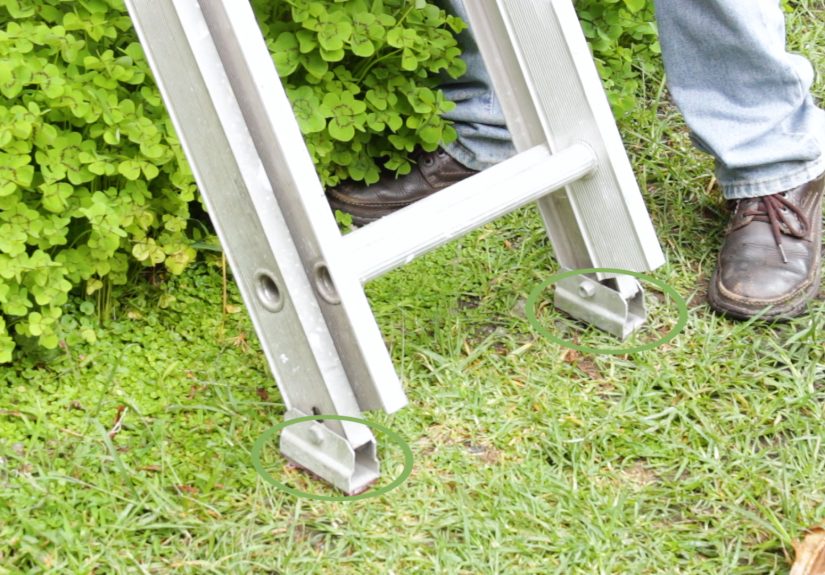
Before using an extension ladder, inspect the rails, rungs, feet, locks, rope, pulleys, rivets, bolts, and labels. Look for cracks, bent sections, corrosion, missing parts, loose hardware, slippery substances, damaged rung locks, frayed rope, or worn ladder feet. If the ladder has any defect, do not use it. Mark it clearly so someone else does not grab it later and unknowingly audition for a bad day.
Also check the ground and work area. Clear leaves, mud, tools, hoses, toys, and anything else that can cause slipping or tripping. If the bottom or top area is cluttered, fix that before climbing.
Set Up the Extension Ladder Correctly
Correct setup is where extension ladder safety becomes real. A strong ladder placed badly can still slide, twist, tip, or bounce. The ladder should feel boringly stable before you ever put a foot on it. In ladder work, boring is beautiful.
Use the 4-to-1 Rule
The 4-to-1 rule is the classic extension ladder angle guide. For every four feet of vertical height, place the base of the ladder one foot away from the wall or support surface. For example, if the ladder touches the wall 16 feet above the ground, the base should be about four feet away from the wall.
This creates an angle of roughly 75 degrees, which helps balance stability and climbing comfort. If the base is too close to the wall, the ladder can tip backward. If it is too far away, the feet can slide out. Neither option improves your weekend.
Place the Feet on Firm, Level Ground
Set the ladder feet on a solid, level surface. Soil, gravel, wet grass, mulch, ice, loose boards, and sloped pavement can make the ladder unstable. Do not place the ladder on boxes, barrels, bricks, buckets, or stacked lumber to gain extra height. That shortcut has “bad idea” written all over it, possibly in permanent marker.
If the ground is uneven, use equipment designed for ladder leveling, and follow the manufacturer’s instructions. Never improvise with random objects. A ladder should be adjusted properly, not negotiated with.
Secure the Top and Bottom When Needed
If the ladder could move, slide, or be bumped, secure it. Tie off the top, use ladder stabilizers where appropriate, block off the area, or have another capable adult help hold the ladder during setup. If the ladder is near a door, lock the door, block it, or place a warning sign so someone does not open it into the ladder.
For roof access, make sure the ladder extends at least three feet above the roof edge and that both rails rest evenly. Do not rest the ladder against gutters alone if they are weak, loose, or not designed to support ladder pressure.
How to Raise an Extension Ladder
Raising a ladder safely is easier with two people, especially for longer ladders. Carry it horizontally with the front end slightly lowered so you can see where you are going. Watch for cars, fences, windows, pets, people, and overhead wires.
To raise the ladder, place the feet firmly against the ground near the wall, then walk the ladder upward rung by rung while keeping control. Once upright, move the base out to the proper distance. Extend the fly section only after the ladder is vertical and stable, and make sure the rung locks fully engage before climbing.
Never move, shift, or extend the ladder while someone is standing on it. That sounds obvious, but many safety rules exist because someone once said, “It’ll be fine.” It was not fine.
How to Climb an Extension Ladder Safely
When climbing, face the ladder. Keep three points of contact at all times: two hands and one foot, or two feet and one hand. Grip the rungs rather than the side rails when possible because rungs are easier to hold if your foot slips.
Climb slowly and stay centered between the rails. A helpful rule is to keep your belt buckle or navel between the side rails. If your work is too far to the left or right, climb down and move the ladder. Overreaching is one of the fastest ways to turn a normal task into a dramatic reenactment of “why we have safety meetings.”
Keep your hands free while climbing. Use a tool belt, rope, bucket, or helper to move materials. Carrying heavy or awkward items up a ladder can throw off your balance. If the object needs both hands, it probably should not be carried while climbing.
Working from an Extension Ladder
Once you are in position, work deliberately. Keep your body centered, maintain contact with the ladder, and avoid sudden movements. Do not bounce, lean, twist, or push sideways with force. Extension ladders are designed for vertical climbing and access, not acrobatics or sideways wrestling matches with stuck gutters.
Use the right accessories for the task. A ladder stabilizer can spread contact across a wider surface and may help protect siding or gutters. A tool tray, bucket hook, or rope system can reduce the need to climb up and down repeatedly. However, accessories must be compatible with your ladder and installed according to instructions.
Pay attention to weather. Avoid using an extension ladder in high winds, rain, lightning, icy conditions, or poor visibility. Wet rungs and slippery shoes are a terrible combination. Wind can also turn a long ladder into a sail, and unless you are a boat, that is not helpful.
Common Extension Ladder Mistakes to Avoid
Many ladder accidents come from a few predictable mistakes. The good news is that these mistakes are easy to avoid once you know them.
- Using the wrong ladder: A ladder that is too short, too weak, or made of the wrong material is unsafe.
- Ignoring the angle: Always use the 4-to-1 rule for setup.
- Overreaching: Keep your body centered between the rails.
- Skipping inspection: Damaged locks, feet, rungs, or ropes can cause serious failure.
- Standing too high: Do not use the top rungs as a work platform.
- Working near power lines: Stay at least ten feet away and use fiberglass when electrical hazards may exist.
- Using unstable surfaces: Never place ladders on boxes, buckets, loose boards, or slippery ground.
How to Descend and Move the Ladder
Coming down deserves the same attention as going up. Face the ladder, move slowly, and maintain three points of contact. Do not slide down the rails. You are not in an action movie, and the sequel would be expensive.
Once you are down, lower tools safely. If you need to move the ladder, fully descend first. Retract the fly section before carrying the ladder unless the manufacturer’s instructions say otherwise. Move carefully and watch overhead space, especially near wires, tree branches, and roof edges.
Cleaning and Storing an Extension Ladder
Good ladder care extends the life of the ladder and helps keep it safe. After use, wipe off mud, grease, paint, wet leaves, or other debris. Check for new damage, especially if the ladder shifted, fell, or was bumped during the project.
Store the ladder in a dry, protected area away from heavy impact, chemicals, moisture, and extreme heat. Support it properly so it does not sag or bend. Do not hang heavy items from it, and do not leave it outdoors where weather can damage ropes, labels, locks, and feet.
Extension Ladder Safety Checklist
Before each use, run through this quick checklist:
- Is the ladder long enough for the job?
- Does the duty rating support your weight plus tools and materials?
- Is the ladder free of cracks, bent rails, damaged rungs, worn feet, and loose parts?
- Are the rope, pulley, and rung locks working properly?
- Is the ground firm, level, and clear?
- Is the ladder set at the 4-to-1 angle?
- Does it extend three feet above the roof or landing if used for access?
- Are power lines at least ten feet away?
- Can you climb with three points of contact?
- Can the work be done without overreaching?
If you answer “no” to any item, fix the problem before climbing. The gutter can wait. Your bones would like to remain a matching set.
When Not to Use an Extension Ladder
Sometimes the smartest way to use an extension ladder is not to use it at all. Avoid ladder work if the weather is unsafe, the ground is unstable, the ladder is damaged, the work area is near power lines, or the task requires heavy pushing, pulling, or two-handed force.
Also consider alternatives when the job will take a long time or require repeated side-to-side movement. Scaffolding, a work platform, or professional help may be safer for large painting jobs, roof repairs, tree work, or complex exterior projects.
Real-World Experience: Practical Lessons from Using an Extension Ladder
After you have used an extension ladder a few times, you start to understand that safety is not just a list of rules. It is a rhythm. You inspect, position, test, climb, work, descend, and move. Each step supports the next. Skip one, and the whole process becomes less stable.
One of the most useful habits is taking a full minute to look at the job before touching the ladder. Where is the best contact point? Is the ground soft? Is there a slope? Are there overhead wires? Will the ladder block a walkway? Can the task be completed from one position, or will the ladder need to be moved several times? This simple pause prevents many problems.
Another practical lesson is that small inconveniences are usually warnings in disguise. If the ladder feels slightly wobbly, do not “just go quickly.” If you have to lean your shoulder outside the rail to reach the last corner of a window, climb down and move the ladder. If the tool you need is still on the ground, do not stretch down like a fishing bird trying to grab it. Descend and retrieve it properly.
Footwear matters more than many people think. Shoes should be dry, clean, and supportive. Muddy soles can make rungs slippery. Loose sandals, worn-out sneakers, or shoes with poor grip are a bad match for ladder work. Gloves can also help, but they should fit well. Oversized gloves can make it harder to grip rungs or handle tools.
For home projects like cleaning gutters, it helps to divide the job into short zones. Clean one area, climb down, move the ladder, and repeat. Yes, it takes longer. No, it is not as exciting as stretching three extra feet while holding a scoop of wet leaves. That is exactly the point. Safe ladder use is not about proving your reach; it is about finishing the project without starring in a neighborhood cautionary tale.
Painting with an extension ladder also teaches patience. Keep supplies light and close. Use a paint hook or small container instead of carrying a full heavy bucket. Work in comfortable sections, and avoid pushing hard against the wall with a roller because sideways pressure can shift the ladder. If the surface requires force, a ladder may not be the right platform.
Roof access requires extra caution. The transition from ladder to roof and roof to ladder is one of the most hazardous moments. The ladder should extend above the roofline, the top should be secure, and your movement should be slow and deliberate. If the roof is steep, wet, damaged, or unfamiliar, do not climb onto it. Hire a qualified professional. A roof is not a place to discover that your confidence has poor traction.
Storage experience matters too. Many ladders get damaged not during work, but while being tossed into sheds, left in the rain, or hit by cars in garages. Store the ladder where it will not be crushed, bent, or exposed to unnecessary weather. Keep the labels readable because they contain important rating and usage information.
The biggest lesson is simple: respect the ladder before it gives you a reason to. An extension ladder is a practical tool, not a challenge. Use the right ladder, inspect it every time, set it at the correct angle, climb with three points of contact, stay centered, and stop when conditions are not right. That is how you turn a high-reach job into a finished project instead of a memorable family lecture.
Conclusion
Learning how to use an extension ladder safely is not complicated, but it does require attention. Choose the correct ladder, check the duty rating, inspect every part, set the ladder at the 4-to-1 angle, extend it properly for roof access, keep it away from power lines, and climb with three points of contact. Most importantly, do not rush. Ladders reward calm, careful users and punish “I can probably reach that” thinking.
Whether you are cleaning gutters, painting trim, accessing a roofline, or handling seasonal home maintenance, the safest approach is always the same: plan the job, set up correctly, stay centered, and climb down when you need to reposition. A ladder is there to help you reach the work, not to test your balance, bravery, or ability to make poor decisions in front of the neighbors.