Table of Contents >> Show >> Hide
- Step 1: Breathe First, Panic Later (Or, Actually, Don’t Panic)
- Step 2: Understand What Actually Went Wrong
- Step 3: Make a Simple Game Plan Before You Talk
- Step 4: Choose the Right Time and Place
- Step 5: Start the Conversation Honestly (With Scripts You Can Use)
- Step 6: Expect Emotionsand Don’t Take Every Word Personally
- Step 7: Share Your Planand Invite Them In
- Step 8: Follow Through So Your Words Mean Something
- Step 9: When a Bad Grade Is a Signal for Something Bigger
- What Not to Do (Tempting but Terrible Ideas)
- Extra : Real-Life Experiences and Lessons From Bad Grades
Your heart is pounding, your hands are sweaty, and that graded test or report card
suddenly weighs about 10 pounds. Getting a bad grade is stressful enough. Having to
tell your parents about it? That can feel like a boss-level challenge in the game of life.
The good news: one bad grade does not define you, and this conversation can actually
make things betterif you handle it the right way. In this guide, you’ll learn how to
calm yourself down, understand what went wrong, pick the right moment, and talk to
your parents in a way that’s honest, mature, and focused on solutions.
Step 1: Breathe First, Panic Later (Or, Actually, Don’t Panic)
Before you start rehearsing your goodbyes to your phone and social life, pause.
A bad grade might feel like the end of the world, but it’s usually a warning sign,
not a final sentence. Taking a moment to calm your body and brain will help you
think clearly and talk more confidently.
- Take a few deep breaths. In through your nose for four counts, hold for four, out through your mouth for four.
- Remind yourself: “I am not my grades. This is a problem, not a disaster.”
- Delay the conversation a little if you’re very upset, but don’t put it off for days.
You want to talk to your parents when you’re calm enough to be honest, listen, and
explain what happened. That doesn’t mean you won’t feel nervousjust that you’re
not in full meltdown mode.
Step 2: Understand What Actually Went Wrong
Before you tell your parents you got a bad grade, you need to understand it yourself.
If you can’t explain the “why,” your parents are more likely to react with confusion,
frustration, or anger. If you show that you’ve already thought it through, you come
across as responsible and mature.
Ask yourself honest questions
- Was this a one-time slip (like a bad test or forgotten assignment), or part of a pattern?
- Did you struggle with the material, or did you not study enough?
- Did anything else get in the way? Stress, sleep, mental health, family stuff, or too many activities?
Look at the details: Was it homework, tests, quizzes, or participation that dragged
your grade down? Knowing this helps you show your parents exactly what needs to change.
Talk to your teacher or counselor first (if possible)
If you can, ask your teacher to go over the grade with you. Questions like:
- “What hurt my grade the most?”
- “Is there any way to make up points or do extra credit?”
- “What should I focus on to improve?”
Walking into the conversation with your parents and saying, “I already talked to my
teacher, and here’s what I can do to fix it,” instantly makes you look more responsible.
Step 3: Make a Simple Game Plan Before You Talk
Parents usually get less angry when they see that you’re not just dropping a problem
in their lapyou’re bringing ideas for how to fix it. You don’t need a 10-page
PowerPoint, but a short, clear plan helps a lot.
Try to include:
- What went wrong. (“I didn’t manage my time well and crammed the night before the exam.”)
- What you’ll do differently. (“I’m going to start reviewing a little each day and use a planner.”)
- Any support you might need. (“I think a tutor or extra help after school could really help me.”)
Even if your parents are upset at first, having a plan shows them this isn’t just
you shrugging and saying, “I don’t know what happened.”
Step 4: Choose the Right Time and Place
Timing doesn’t fix the grade, but it can totally change how the conversation goes.
Telling your parents about a bad grade in the middle of a traffic jam or when they
just walked in from a stressful day is… not ideal.
- Pick a calm moment. After dinner, a quiet weekend afternoon, or when they’re relaxed.
- Avoid “drive-by” confessions. Don’t yell “I failed math!” as you run to your room.
- Try a private setting. If siblings are around, you may feel more embarrassed and less open.
You can even give them a gentle heads-up: “Hey, can we talk later tonight? I need
to tell you something about school.”
Step 5: Start the Conversation Honestly (With Scripts You Can Use)
If you’re not sure what to say, you’re not alone. Here are some word-for-word
examples you can adapt to your situation and your family.
If your parents are usually reasonable
You: “I got a bad grade on my [test/report card] and I want to show it to you now instead of hiding it. I know it’s not what you or I expected.”
You: “Here’s what I think went wrong, and here’s what I’m planning to do so it doesn’t happen again.”
If your parents tend to react strongly
You: “I need to tell you something about school, and I know you might be upset. I’m not proud of this, but I want to be honest so I can fix it.”
You: “I got a bad grade in [subject]. Before you react, can I explain what happened and what I’m planning to do about it?”
If the grade is part of a bigger struggle
You: “My grades have been dropping in [subject], and this latest one is really bad. I’m not just being lazyI’ve been feeling overwhelmed and I don’t know how to keep up.”
You: “I think I might need helpmaybe tutoring, a meeting with the teacher, or talking to a counselor. Can you help me figure out the next step?”
The key is to own your part without beating yourself up. Parents
usually respond better when you take responsibility and show you’re willing to fix
things.
Step 6: Expect Emotionsand Don’t Take Every Word Personally
Your parents might be calm. They might be supportive. They might also be… the
opposite of that. Remember: their initial reaction is often about fearfear for your
future, fear that you’re not trying, or fear they’ve somehow failed you.
If they raise their voice or say something harsh, that doesn’t mean the conversation
is over or hopeless. Try to:
- Listen without interrupting at first, even if you disagree.
- Stay respectful. Rolling your eyes or yelling back will usually make it worse.
- Use calm phrases: “I understand why you’re upset.” “I agree this is serious.”
If things are getting too heated, it’s okay to say, “Can we take a break and talk
again in a little while? I really want to fix this, but I’m feeling overwhelmed.”
Step 7: Share Your Planand Invite Them In
Once your parents know about the grade and they’ve reacted, shift the focus from
punishment to problem-solving. This is where your game plan from earlier comes in.
Try something like:
You: “I know this grade is a big deal. Here’s what I’m planning to do:”
- “I’m going to start using a planner and setting study blocks each day.”
- “I’ll go to extra help sessions twice a week.”
- “I’ll check in with you every Sunday about how I’m doing.”
Then ask: “Is there anything else you think would help?” This turns your parents
from judges into teammates, which is way more useful.
Step 8: Follow Through So Your Words Mean Something
Telling your parents you have a plan is one thing. Actually following it is where
trust gets rebuilt. If you say you’re going to study more or go to tutoring, try
your best to stick with it.
- Use tools: calendar apps, reminders, to-do lists, or a paper planner.
- Study in shorter blocks: 25–30 minutes with 5-minute breaks instead of huge cram sessions.
- Check in regularly: A quick weekly update like, “I did all my homework this week and studied for Friday’s quiz.”
When your parents see effort and small improvements, they’re more likely to calm
down and trust you moreeven if the grade doesn’t jump overnight.
Step 9: When a Bad Grade Is a Signal for Something Bigger
Sometimes a bad grade isn’t just about not trying hard enough. It can be a sign of:
- Ongoing stress or anxiety
- Problems with focus or organization
- Learning differences that make certain subjects harder
- Big changes at home or in your social life
If you’ve been trying and still can’t keep up, tell your parents that. This is not
an excuseit’s information. Ask about meeting with a school counselor, talking to
your doctor, or getting evaluated for extra support if needed.
Your mental health and well-being are more important than any single grade. Getting
support early can help you feel better and do better in school over time.
What Not to Do (Tempting but Terrible Ideas)
Look, your brain might suggest some “creative” solutions when you’re scared. Let’s
call them what they are: bad plans.
- Don’t hide or destroy the report card. It almost always comes out eventuallyand then you have two problems: the grade and the lying.
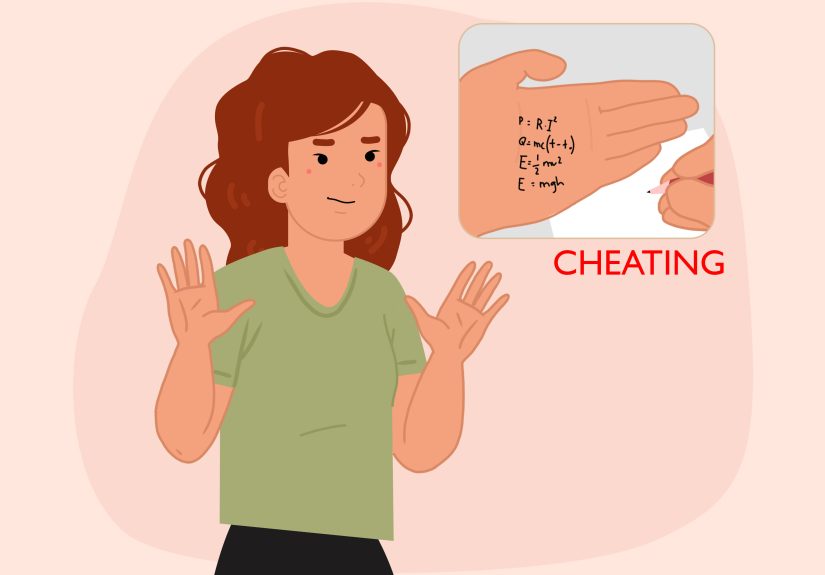
- Don’t change grades electronically or on paper. That’s academic dishonesty and can have serious consequences.
- Don’t blame everyone else. Even if your teacher is tough, owning your part shows maturity.
Honesty and responsibility might not feel like the easiest route in the moment, but
they’re the ones that protect your future and your relationship with your parents.
Extra : Real-Life Experiences and Lessons From Bad Grades
To make all of this feel more real (and less like a lecture), let’s walk through
some experience-based examplessituations that are very common, even if people
don’t always talk about them out loud.
Experience 1: The “I Waited Too Long” Conversation
Imagine this: you bomb a big test in October. You tell yourself you’ll fix it on
the next one. Then the next test doesn’t go well either. Suddenly, it’s the end of
the semester, and that “one bad grade” has turned into a borderline or failing
average. Now you’re not just telling your parents about a bad testyou’re telling
them you might have to repeat the class or go to summer school.
Many students who’ve been in this situation say the same thing: the hardest part
wasn’t the grade itself, it was the delay. By the time they finally told their
parents, there wasn’t much time left to fix things. That usually led to more stress,
more conflict, and a bigger mess overall.
The takeaway? The earlier you speak up, the more options you have.
If something feels like it might turn into a problem, looping your parents in while
there’s still time to improve can actually protect youfrom failing, from summer
school, and from giant blowups later.
Experience 2: The “I Thought They’d Be Furious, But They Weren’t” Moment
A lot of teens imagine the absolute worst reaction from their parents: shouting,
lectures, grounded until retirement. But in reality, plenty of parents respond with
concern more than angerespecially when you come to them calmly and early.
Picture this: you walk into the kitchen with your test in your hand and say,
“I did badly on this test. I’m disappointed too. Can we talk about how I can get
back on track?” That’s not the vibe of someone who’s careless. That’s the vibe of
someone who’s trying.
Many parents have said that what matters most to them isn’t perfection, it’s
effort, honesty, and communication. Knowing you’re willing to face problems instead
of hide them can actually make them more supportiveoffering to quiz you, help you
make a schedule, or look into tutoring with you.
Experience 3: When the Bad Grade Comes From Burnout, Not Laziness
Sometimes students who care a lot about school actually struggle because they’re
overwhelmed, not because they’re lazy or careless. They might be taking difficult
classes, doing activities, working a job, or dealing with stress at home. By the
time the bad grade appears, they’re already exhausted.
In this kind of situation, telling your parents isn’t just about confessingit’s
about asking for help before things get worse. A real conversation might sound like:
You: “I’ve been trying to handle everything, but it’s too much. This bad grade is kind of a wake-up call. I think I need to adjust my schedule or drop something, because I’m burned out.”
When you frame the grade as a signal that something needs to change, you and your
parents can look at the bigger picture together. Maybe you scale back on some
activities, get support for anxiety, or set more realistic expectations. That’s not
failurethat’s smart self-awareness.
Experience 4: The Long-Term Win After a Short-Term Failure
It might not feel like it right now, but learning how to tell the truth when it’s
uncomfortable is a life skill that goes far beyond school. That awkward conversation
about a bad grade can teach you how to:
- Own your mistakes without attacking your self-worth
- Talk honestly with people in authority (parents, teachers, bosses)
- Ask for help before a problem becomes unfixable
- Handle criticism and feedback without shutting down
Ten years from now, you probably won’t remember the exact score you got on this test.
But you might remember what you learned about yourself: that you can face hard
conversations, that you’re capable of bouncing back, and that one bad grade doesn’t
cancel out your potential.
So yes, telling your parents you got a bad grade is stressful. But it’s also a
chance to show themand yourselfthat you’re more than a number on a page. You’re
someone who can be honest, learn from mistakes, and keep moving forward.