Table of Contents >> Show >> Hide
- What a Healthy Betta Usually Looks Like
- Common Signs Your Betta Fish May Be Sick
- The First Thing to Check: Water Quality
- How to Treat a Sick Betta Fish
- When to Call a Veterinarian
- Betta Diseases That Owners Commonly Confuse
- How to Prevent Illness in Betta Fish
- Common Betta Owner Experiences and Practical Lessons
- Final Thoughts
- SEO Tags
Betta fish have a reputation for being tough little swimmers. They can survive a lot of beginner mistakes, which is both impressive and, frankly, terrible for their public relations. Because they can hang on in less-than-ideal conditions, people often assume they are perfectly fine right up until they are very much not fine. That is why learning how to tell if a betta fish is sick matters so much. Bettas rarely send a formal memo. Instead, they whisper with subtle changes: less appetite, clamped fins, faded color, strange swimming, or a new habit of parking themselves at the bottom like a tiny, dramatic submarine.
If you catch those early warning signs, your betta has a much better chance of recovering. The tricky part is that “sick betta fish” is not one single problem. Illness can come from parasites, bacterial infections, fungal issues, constipation, swim bladder trouble, stress, or poor water quality. In many home aquariums, the tank itself is the first suspect. Before you reach for medication with the energy of a late-night internet detective, you need to figure out what your fish is showing you and what the environment is doing to make things worse.
What a Healthy Betta Usually Looks Like
Before you can spot trouble, it helps to know what normal looks like. A healthy betta is usually alert, curious, and responsive. He should come to the front of the tank when you approach, eat regularly, hold his fins in a natural open posture, and show clear, vibrant coloring. He may rest from time to time, because bettas do enjoy lounging like royalty, but he should not spend all day motionless, gasping, or listing to one side.
Healthy bettas also do best in warm, stable water with gentle filtration. Sudden temperature swings, detectable ammonia or nitrite, and chronically dirty water can stress the fish long before you notice a visible disease. In other words, if your betta seems off, your thermometer and water test kit deserve a starring role in the investigation.
Common Signs Your Betta Fish May Be Sick
1. Loss of Appetite
A betta missing one meal is not always an emergency. A betta refusing food for more than a day or two, especially with other symptoms, is a red flag. Sick bettas often lose interest in pellets, freeze-dried treats, and even favorite foods. This can happen with stress, constipation, water-quality problems, infections, or parasitic disease.
2. Lethargy or Unusual Resting
If your fish is suddenly inactive, hides more than usual, or spends long periods at the bottom or surface, something is wrong. Bettas do rest, yes, but they should not look like they have emotionally checked out of the aquarium. Lethargy often shows up with poor water conditions, low temperature, ich, internal illness, or advanced stress.
3. Clamped Fins
A healthy betta’s fins usually look relaxed and expressive. Clamped fins stay tight against the body and make your fish look smaller and more uncomfortable. This is one of the clearest signs of stress or illness. It can appear with parasites, bacterial infections, cold water, ammonia exposure, or generalized poor health.
4. Color Changes
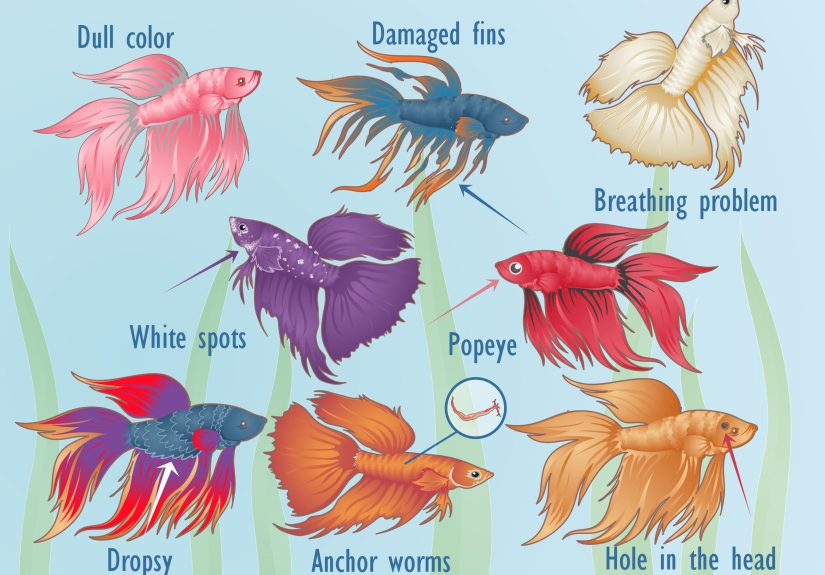
A sick betta may fade, darken, develop unusual pale patches, or lose that glossy “I run this tank” appearance. Some natural color shifts can happen with age or genetics, but sudden dullness often points to stress, illness, or declining water quality.
5. Rapid Breathing or Gasping
If your betta is breathing hard, hanging at the surface, or flaring the gill area while trying to breathe, do not ignore it. Respiratory distress can be linked to gill irritation, low oxygen, parasites, ammonia toxicity, or severe infection. This is one of the signs that moves your case from “monitor closely” to “act now.”
6. Erratic Swimming
Swimming in circles, floating sideways, sinking, struggling to stay upright, darting around the tank, or scraping against decorations all suggest trouble. Flashing, which is when a fish rubs its body against objects, often points to irritation from parasites such as ich or other skin and gill problems.
7. Frayed, Torn, or Receding Fins
Betta fins can snag on rough decor, but ragged edges, blackened or whitish margins, shortened fin rays, or worsening damage often suggest fin rot or secondary infection. If the fins look like they are slowly being eaten away, that is not just “a bad hair day for fish.”
8. White Spots, Cottony Growth, or Slimy Skin
Tiny white specks can indicate ich. A yellow-gold dusty appearance may suggest velvet. Cottony patches can be mistaken for fungus, though some bacterial conditions can look similar. Extra mucus, cloudy skin, or a slimy film can also signal irritation, parasites, or infection.
9. Swelling, Pineconing, or Bloating
If your betta’s belly is enlarged, the scales stick outward like a pinecone, or the fish looks puffy, take it seriously. Bloating may be caused by constipation, fluid retention, organ problems, or a condition commonly called dropsy. Dropsy is not a single disease but a symptom of something deeper going wrong.
10. Cloudy Eyes, Lumps, Sores, or Red Streaks
Cloudy eyes, ulcers, bloody patches, raised lesions, or new lumps suggest infection, injury, or systemic disease. These signs often need more than guesswork and may require targeted treatment or veterinary guidance.
The First Thing to Check: Water Quality
Here is the truth many betta keepers learn the hard way: the tank causes a surprising number of “medical emergencies.” Poor water quality is one of the biggest reasons aquarium fish become stressed, immunocompromised, and sick. If ammonia or nitrite is above zero, the water is already irritating and potentially dangerous. Elevated nitrate over time can also contribute to chronic stress and illness.
Start with the basics:
- Check temperature and keep it stable.
- Test ammonia, nitrite, nitrate, and pH.
- Look at the filter flow. Bettas like gentle movement, not a daily hurricane.
- Review the cleaning routine. Uneaten food and waste build up fast in small tanks.
- Ask whether the tank was cycled before the fish was added.
If your betta lives in cold water, unfiltered water, a tiny bowl, or a tank with detectable ammonia, the “treatment plan” starts with husbandry, not a mystery bottle from the pet store shelf.
How to Treat a Sick Betta Fish
Step 1: Stabilize the Environment
Before anything else, correct the basics. Perform a partial water change using conditioned, temperature-matched water. Avoid wild swings. Replace filthy water, but do not turn the aquarium into a chemistry experiment by changing everything at once. Make sure the heater is working, the filter is running gently, and the fish is not being stressed by aggressive tank mates or sharp decor.
Step 2: Observe the Specific Symptoms
Treatment depends on what you actually see. White spots are not the same as fin rot. Pineconing is not the same as constipation. A fish that cannot stay upright may have buoyancy issues, but those can be caused by many underlying problems. Resist the urge to treat every symptom with every medication. That approach usually helps your wallet lose weight faster than the fish gets better.
Step 3: Quarantine When Appropriate
If your betta shares a tank, move sick fish to a separate hospital setup when possible. Quarantine reduces stress, makes observation easier, and lowers the risk of spreading disease. It also prevents healthy fish from getting medicated unnecessarily.
Step 4: Match the Treatment to the Problem
For ich: Look for white spots, flashing, lethargy, and rapid breathing. Follow a proven ich treatment exactly as labeled, keep the water warm and stable within the safe range for bettas, and continue treatment for the full course even if the spots seem to disappear early.
For fin rot: Improve water quality first. Mild cases may improve with pristine conditions alone. More advanced cases with redness, erosion, or body involvement may require an antibacterial treatment appropriate for aquarium fish.
For fungal-looking growths: Cottony patches may need antifungal treatment, but remember that some bacterial infections can mimic fungus. If the fish is worsening, eating poorly, or developing sores, broaden your assessment instead of assuming “fluffy means fungus.”
For constipation or mild bloating: Stop feeding briefly, check temperature, and review how much food is being offered. Overfeeding is common with bettas because they act like every meal is a once-in-a-lifetime event.
For swim bladder problems: Address the underlying cause. Some cases improve once constipation, stress, or infection is corrected. A floating or sinking betta is showing a symptom, not always a stand-alone disease.
For dropsy-like swelling: This is more serious. Isolate the fish, optimize water quality immediately, and understand that prognosis can be guarded. If the scales are protruding, the illness may already be advanced.
When to Call a Veterinarian
Yes, fish veterinarians are real, and yes, this is one of those moments where they deserve more respect. Contact a veterinarian if your betta has persistent breathing trouble, severe bloating, pineconing, major ulcers, worsening fin loss, a lump, dramatic color changes, or no improvement despite improved water quality and appropriate treatment. A vet is especially valuable when symptoms are vague, multiple medications have already been tried, or the fish is valuable to you and you want a more precise diagnosis.
Betta Diseases That Owners Commonly Confuse
Ich vs. Air Bubbles or Debris
Ich spots usually look like salt grains and are often paired with scratching, stress, and respiratory signs. Random debris on the fins does not usually come with flashing or lethargy.
Fin Rot vs. Mechanical Damage
A torn fin from decor usually has a cleaner story and does not keep steadily worsening. Fin rot tends to progress, discolor the edges, and come with general stress or poor water conditions.
Bloating vs. Dropsy
A constipated fish may look swollen, but dropsy often involves scale protrusion, lethargy, and more severe systemic decline. One is a manageable digestive issue in some cases; the other can be a sign of organ failure or deep infection.
Fungus vs. Bacterial Growth
Cottony growths are not always true fungus. Some bacterial diseases create fuzzy-looking patches, which is why symptom tracking and tank history matter.
How to Prevent Illness in Betta Fish
The best treatment is preventing the tank from becoming a problem in the first place. Keep your betta in an appropriately sized aquarium, use a heater, provide gentle filtration, avoid overcrowding, feed high-quality food in reasonable amounts, and test water regularly. Quarantine new fish and plants when possible. Keep decor smooth enough to protect delicate fins. Perform routine maintenance instead of emergency cleanups after the tank has already gone sideways.
Also, do not underestimate consistency. Bettas thrive when temperature is stable, chemistry is predictable, and the person in charge is not reinventing the care plan every weekend after watching three contradictory videos.
Common Betta Owner Experiences and Practical Lessons
One of the most common experiences betta owners report is that the first sign of illness is not dramatic at all. The fish still looks beautiful, still swims to the front, and still seems “mostly normal,” but something is just a little off. Maybe he ignores one pellet. Maybe he rests more than usual. Maybe the fins are not as open as they were last week. That tiny shift is often the moment people later look back on and realize, “That was the beginning.” Bettas rarely flip a giant neon sign that says I AM SICK. They usually offer a subtle trailer, and you have to notice it.
Another familiar experience is discovering that the real issue was the tank, not the fish. Many owners panic over a fish lying at the bottom, only to test the water and find ammonia, nitrite, or a temperature that is far too low. It is a surprisingly common story: the betta seemed depressed, clamped, pale, and uninterested in food, and the fix started with clean, warm, stable water. That does not mean every sick betta just needs a water change, but it does mean water quality should be checked before people start tossing medications into the tank like seasoning into soup.
Owners also learn that overfeeding is much easier than underfeeding with bettas. These fish are enthusiastic beggars. They can look starving five minutes after eating. Plenty of keepers have treated bloating or buoyancy issues only to realize they were simply feeding too much, too often, or leaving uneaten food to foul the tank. Bettas are tiny fish with tiny digestive systems and a huge talent for convincing humans they need a third dinner.
Then there is the classic “I thought it was fin rot, but it was actually damage from decor” story. Or the reverse: “I thought he tore a fin, but it kept getting worse.” This is why observing progression matters so much. A snagged fin may stay the same or heal. Fin rot tends to march forward. Experienced owners often say the turning point in fishkeeping came when they stopped guessing based on one glance and started comparing symptoms over several days.
Many betta keepers also talk about the emotional side of nursing a sick fish. Because bettas are interactive and full of personality, people get attached fast. Watching one struggle at the surface or stop greeting you at feeding time can feel surprisingly awful. But owners who handle it well usually follow the same pattern: slow down, test the water, isolate the fish if needed, identify the symptoms clearly, and avoid random treatment stacking. In other words, the most helpful experience is learning not to panic. A calm, methodical approach gives your betta the best odds, and it gives you something even better than internet chaos: a real plan.
Final Thoughts
If you want to know how to tell if a betta fish is sick, pay attention to behavior first, appearance second, and water quality immediately. Loss of appetite, clamped fins, lethargy, color change, abnormal breathing, ragged fins, white spots, bloating, and odd swimming all deserve attention. The earlier you act, the better the outcome tends to be. And in a lot of cases, the smartest first move is not dramatic medication. It is warm, clean, stable water and a careful look at what changed.
Your betta does not need you to be a fish wizard. He just needs you to notice the small stuff before it becomes big stuff. That, more than anything, is what turns a worried owner into a good one.