Table of Contents >> Show >> Hide
- Why “Knee Stretches” Are Really Leg-and-Hip Stretches
- Before You Stretch: A 60-Second Safety Check
- The 6 Best Stretches to Support the Knee
- 1) Standing Quadriceps Stretch (Front of Thigh)
- 2) Supine Hamstring Stretch (Back of Thigh, Behind the Knee)
- 3) Wall Calf Stretch (Heel Cord / Achilles + Calf)
- 4) Kneeling Hip Flexor Stretch (Front of Hip)
- 5) IT Band/TFL “Side Stretch” (Outer Hip/Thigh)
- 6) Assisted Knee Flexion Stretch (Towel Heel Slide)
- Other Tips That Make Knee Stretching Work Better
- A Simple 10-Minute Knee Stretch Routine
- FAQ
- Extra Experiences: What People Commonly Notice When They Start Stretching Their Knees
- Experience #1: “My knee isn’t screamingit's just stiff.”
- Experience #2: The runner who thought it was a “knee problem”… but it was a hip-and-calf problem
- Experience #3: Knee arthritis and the “Goldilocks zone”
- Experience #4: The “I stretched once and now I’m sore” panic
- Experience #5: The unexpected benefitbetter squats, stairs, and getting off the floor
- Conclusion
Knees are the unsung heroes of daily life. They carry groceries, climb stairs, chase buses, and occasionally remind you
that you are not, in fact, made of titanium. If your knees feel stiff, cranky, or “fine until I stand up,” stretching can
helpespecially when you stretch the muscles that control and stabilize the knee (not the knee joint itself like you’re trying
to wring out a towel).
This guide walks you through 6 practical knee-friendly stretches plus smart tips on timing, technique, and what to do
if your knee pain is trying to become the main character.
Why “Knee Stretches” Are Really Leg-and-Hip Stretches
Your knee is a hinge joint, and it depends heavily on the muscles above and below itespecially the quadriceps (front of thigh),
hamstrings (back of thigh), calves (lower leg), and the hip muscles that guide your leg’s alignment.
When these areas are tight, your knee may feel like it’s moving through molasses, or you may notice discomfort with squats, stairs,
sitting too long, or running.
Stretching helps by improving flexibility and range of motion, reducing the “pull” on the kneecap and surrounding structures, and
pairing nicely with strengthening and balance work (because a flexible knee with weak support is like a nice door on wobbly hinges).
Before You Stretch: A 60-Second Safety Check
- Warm up first: Do 5–10 minutes of easy movement (walk, march in place, gentle cycling) so muscles are warm and more pliable.
- Stretch to “mild tension,” not pain: You should feel a gentle pull, not sharp pain, pinching, or tingling.
- No bouncing: Keep it slow and controlled. Your knee is not impressed by sudden drama.
- Typical hold: Aim for about 30 seconds per stretch and repeat 2–4 times per side when appropriate.
When to stop and get medical advice
Skip stretching and get evaluated if you have severe swelling, a knee that gives out, inability to bear weight, a locked knee,
a major injury, fever/redness, or pain that’s rapidly worsening. Those signs can mean something more than tight muscles.
The 6 Best Stretches to Support the Knee
Do these on both sides, even if only one knee is complaining. Symmetry is a kindness to your future self.
If you’re short on time, pick 3–4 that match your tight spots (most people benefit from quads + hamstrings + calves).
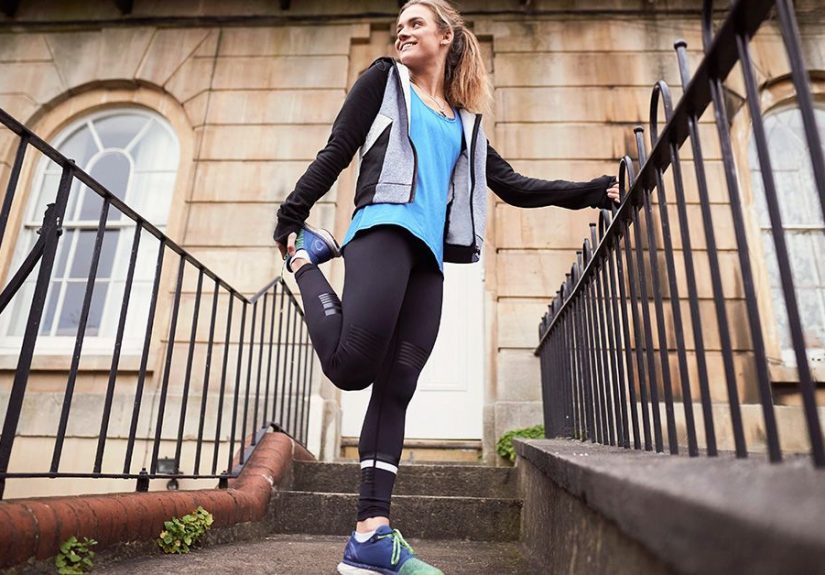
1) Standing Quadriceps Stretch (Front of Thigh)
Why it helps: Tight quads can increase pressure around the kneecap and make bending/straightening feel stiff.
- Stand tall and hold a wall or chair for balance.
- Bend one knee and bring your heel toward your butt.
- Hold your ankle (or pant leg). Keep your knees close together.
- Gently pull the heel in until you feel a stretch along the front of the thigh.
- Hold 30–60 seconds. Switch sides.
Form tip: Keep your hips tucked slightly under (don’t arch your low back). If balance is tricky, do this lying on your side.
2) Supine Hamstring Stretch (Back of Thigh, Behind the Knee)
Why it helps: Tight hamstrings can limit knee extension and contribute to a stiff, tuggy feeling behind the knee.
- Lie on your back with both legs bent.
- Loop a towel/strap behind one thigh (or hold behind the thigh with your hands).
- Lift the leg up and slowly straighten the knee as comfortable.
- Pull gently until you feel a stretch in the back of the thigh.
- Hold 30–60 seconds. Switch sides.
Common mistake: Locking the knee hard. Aim for “straight-ish” without forcing it.
3) Wall Calf Stretch (Heel Cord / Achilles + Calf)
Why it helps: Tight calves can change how your ankle moves, which can increase stress up the chainyes, including the knee.
- Face a wall and place both hands on it.
- Step one foot back; keep the back heel down and toes pointing forward.
- Bend the front knee and lean in until you feel a stretch in the back leg’s calf.
- Hold 30 seconds, then switch sides.
Variation: Slightly bend the back knee to bias the deeper calf muscle (soleus).
4) Kneeling Hip Flexor Stretch (Front of Hip)
Why it helps: Tight hip flexors can alter pelvic position and leg alignment, which can change how the knee tracks during walking, running, and stairs.
- Kneel on one knee with the other foot in front (a lunge stance).
- Keep your torso tall and gently tuck your pelvis (think: zipper up, ribs down).
- Shift forward slightly until you feel a stretch in the front of the hip on the kneeling side.
- Hold ~30 seconds. Switch sides.
Make it knee-friendlier: Place a cushion under the kneeling knee or do a standing version with a short split stance.
5) IT Band/TFL “Side Stretch” (Outer Hip/Thigh)
Why it helps: The iliotibial band region is often involved in outer-knee discomfort in active people. Stretching the outer hip can reduce tension along the side of the thigh.
- Stand near a wall for support.
- Cross your left leg behind your right.
- Reach your left arm overhead and lean gently to the right until you feel a stretch along the left hip/outer thigh.
- Hold ~30 seconds. Switch sides.
Reality check: The IT band itself is dense connective tissue; you’re mainly targeting the muscles around it (especially the TFL and glutes). That’s still useful.
6) Assisted Knee Flexion Stretch (Towel Heel Slide)
Why it helps: If your knee feels stiff when bending, gentle flexion work can help you reclaim range of motionespecially after sitting a lot or during early rehab (with clinician guidance if you’re post-injury/surgery).
- Sit or lie with your leg extended.
- Loop a towel around your heel.
- Slowly slide the heel toward your butt, bending the knee.
- Use the towel to assist gentlyno yanking.
- Pause at a comfortable end range for 5–10 seconds, then slowly return.
- Repeat 8–12 times per side.
Stop if: You feel sharp pain, catching/locking, or swelling increases afterward.
Other Tips That Make Knee Stretching Work Better
1) Pair stretching with strengthening
Stretching improves mobility, but strength helps your knee use that mobility safely.
Prioritize the muscles that stabilize the knee: quads, hamstrings, glutes, and calves.
Beginner-friendly options include wall sits, mini-squats (pain-free range), step-ups, hamstring curls, and calf raises.
2) Try “micro-stretches” for desk knees
If your knee stiffness is mostly from sitting, use tiny breaks:
stand up every 30–60 minutes, do 10 heel raises, a gentle quad stretch, and 8–10 heel slides.
It’s not glamorous, but neither is hobbling to the coffee machine like a pirate.
3) Use heat before, ice after (when appropriate)
Some people find gentle heat helps stiffness before stretching. If you’re irritated after activity (especially with swelling),
ice can feel soothing. If you’re unsure what’s best for your situation, ask a clinicianespecially if you have arthritis or a recent injury.
4) Mind your alignment during daily moves
- When squatting or standing from a chair, keep knees roughly tracking over the middle toes.
- Avoid repeated deep knee bends if they trigger pain (modify range).
- For running/walking, wear supportive shoes and avoid sudden spikes in training volume.
5) Progress gradually (the “two-notches rule”)
If you feel like a stretch is at a 7/10 intensity, back it down to a 4–5/10.
You want consistent practice, not a heroic one-time session that leaves you sore for three days.
A Simple 10-Minute Knee Stretch Routine
Do this 3–5 days/week (or daily if it feels good and symptoms stay calm):
- Warm up: 2 minutes easy walking or marching
- Wall calf stretch: 30 seconds each side × 2
- Supine hamstring stretch: 30 seconds each side × 2
- Standing quad stretch: 30 seconds each side × 2
- Kneeling hip flexor stretch: 30 seconds each side × 1–2
- IT band/TFL side stretch: 30 seconds each side × 1
- Heel slides: 8–12 reps each side
If you’re dealing with knee arthritis or persistent pain, keep everything gentle and consistent.
“A little often” usually beats “a lot once.”
FAQ
How often should I stretch my knee?
Many general flexibility guidelines suggest stretching major muscle groups at least 2–3 days per week, and more often (even daily) if it’s comfortable.
Consistency matters more than intensity.
Should I stretch if my knee hurts?
It depends on the type of pain. Gentle stretching can help stiffness and mild soreness, but you should avoid stretching through sharp pain,
instability, significant swelling, or after an acute injury until you’ve been evaluated.
Why does my knee feel tight behind the joint?
Tight hamstrings and calf muscles commonly contribute to that “back of the knee” tightness.
Try the supine hamstring stretch and calf stretch, and consider strengthening your glutes and hamstrings for better support.
Extra Experiences: What People Commonly Notice When They Start Stretching Their Knees
I don’t have a body (and therefore no knees to offend), but people’s experiences with knee stretching follow some surprisingly consistent patterns.
Below are common real-world scenarios that physical therapists and clinicians often hear aboutshared here as illustrative examples,
not as medical guarantees. Bodies are delightfully weird; your results may vary.
Experience #1: “My knee isn’t screamingit’s just stiff.”
A lot of people start stretching because their knee feels tight after sitting, driving, or working at a desk. In the first week,
the most noticeable change is often how quickly the knee “unlocks” when standing up. The heel slides feel especially helpful here:
they’re gentle, they lubricate the movement pattern, and they feel like you’re negotiating peace with your knee rather than challenging it to a duel.
One common moment: the person stands up after a meeting and realizes the first three steps are smoother.
Not perfectjust less creaky. That’s a win worth celebrating with a responsible amount of enthusiasm.
Experience #2: The runner who thought it was a “knee problem”… but it was a hip-and-calf problem
People who walk or run a lot frequently discover their knee discomfort improves when they stretch the hips and calves,
not just the area around the kneecap. After two to four weeks of consistent stretching (especially hip flexors + calves + hamstrings),
they often report:
- Less outer-knee irritation on longer walks or runs
- Better stride comfort (not longer stridejust smoother)
- Less “post-run stiffness” the next morning
The practical lesson: the knee is a team player. If the hip is tight and the ankle is stiff, the knee often ends up doing extra work
like the friend who always gets stuck driving everyone home.
Experience #3: Knee arthritis and the “Goldilocks zone”
People with knee arthritis frequently describe a sweet spot: too little movement increases stiffness, too much too soon increases soreness.
When they find a routine that’s gentle and steadyoften a warm-up walk, calf and hamstring stretches, and a few strengthening movesmany report
that mornings get easier, stairs feel less intimidating, and they trust their knee a bit more.
A recurring theme is confidence. Stretching alone doesn’t “fix” arthritis, but it can help maintain comfort and mobility
especially when paired with strength and balance work.
Experience #4: The “I stretched once and now I’m sore” panic
This is incredibly common. Someone does an intense quad stretch, yanks hard, holds forever, and wakes up feeling like they argued with gravity.
The fix is usually simple: reduce intensity, shorten holds, and aim for gentle repetition over time. Many people do best treating stretching like brushing teeth:
not heroic, just consistent.
Experience #5: The unexpected benefitbetter squats, stairs, and getting off the floor
After a few weeks, people often notice functional improvements before they notice “flexibility” on a dramatic level.
Examples include:
- Stairs feel less like a personal insult
- Getting up from a chair is smoother
- They can squat to pick something up without their knee making ominous comments
These changes usually show up when stretching is combined with a little strengtheningeven basic calf raises and mini-squats in a pain-free range.
The body likes balanced upgrades.
If you want to “stress test” your progress safely, pick one everyday movement (like stairs or sitting-to-standing) and track it for 2–3 weeks.
Most people find that small, steady improvements are the ruleespecially when they keep the routine doable enough to repeat.