Table of Contents >> Show >> Hide
- Should You Reupholster This Chair or Leave It Alone?
- Tools and Materials You’ll Want Nearby
- How to Reupholster a Chair: Step-by-Step
- Step 1: Choose the right fabric before you start ripping things apart
- Step 2: Take photos and disassemble the chair carefully
- Step 3: Remove the old fabric and save every usable piece
- Step 4: Inspect the seat base, foam, and frame
- Step 5: Add batting for smoother edges and a softer finish
- Step 6: Use the old fabric as a pattern for cutting the new fabric
- Step 7: Staple the new fabric from the center out
- Step 8: Fold neat corners and add welting if you want a tailored look
- Step 9: Finish the underside and reassemble the chair
- Common Mistakes to Avoid
- DIY or Professional Help?
- How to Make Your Reupholstered Chair Last
- Real-World Experiences and Lessons From Reupholstering Chairs
- Final Thoughts
- SEO Tags
If you have a chair with good bones but sad fabric, congratulations: you are one staple gun away from becoming the kind of person who says things like, “Oh, this old thing? I redid it myself.” Reupholstering a chair is one of the smartest DIY upgrades for a tired dining chair, accent chair, vanity seat, or thrift-store rescue. It can save a well-built piece from the curb, give you a custom look for less than buying new, and turn a bland chair into something that actually looks like it belongs in your home instead of a waiting room from 2007.
The good news is that many chair upholstery projects are beginner-friendly, especially if the seat is removable. The slightly less adorable news is that upholstery rewards patience, neat folds, and a willingness to pull out a staple that landed crooked. Still, this is absolutely a learnable skill. Once you understand the process, reupholstering a chair becomes less mysterious and more like a recipe: take it apart carefully, use the old fabric as your pattern, replace what is worn out, and put everything back together tighter and cleaner than before.
Should You Reupholster This Chair or Leave It Alone?
Before you buy fabric you “sort of love” and a foam cutter you will use exactly twice this year, inspect the chair itself. Reupholstery is worth the effort when the frame is sturdy, the joints are secure, and the shape is something you genuinely like. A solid wood dining chair with a removable seat? Great candidate. A vintage armchair with strong framing and sentimental value? Also promising. A wobbly bargain chair held together by hope and one surviving screw? Maybe not the hero of today’s story.
For beginners, the easiest projects are dining chairs, drop-in seats, stools, and simple side chairs. Fully upholstered club chairs, wingbacks, and recliners can be done at home, but they take more time, more tools, and more accuracy. If the piece has complicated curves, deep tufting, attached arms, springs, or major structural damage, you may want to start smaller or hire a professional.
Tools and Materials You’ll Want Nearby
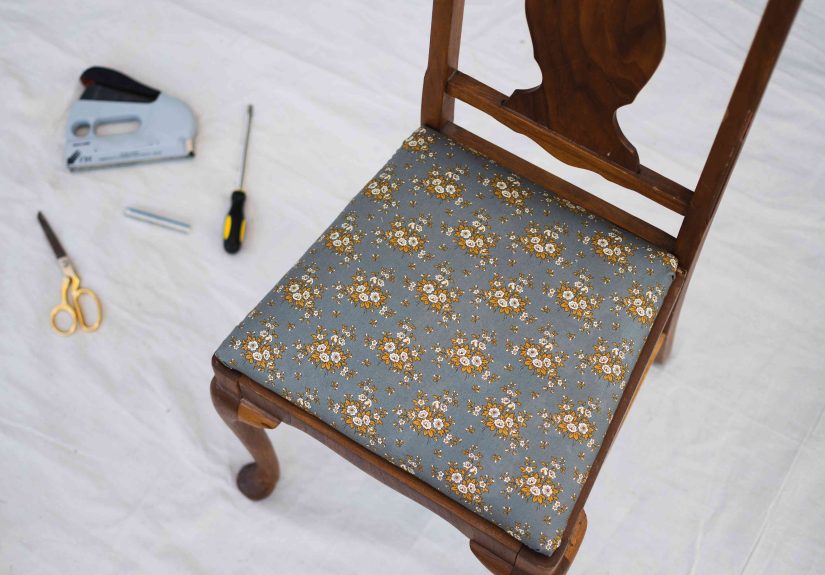
Here is the practical lineup for a basic chair reupholstery project: upholstery fabric, staple gun, staples, screwdriver, pliers, staple remover or awl, scissors, chalk or fabric marker, foam if needed, batting, spray adhesive, and black dust-cover fabric for the underside if you want a clean finish. If your chair uses piping or welting, you will also need welt cord and a sewing machine capable of handling upholstery-weight fabric.
When choosing fabric, skip lightweight apparel fabrics unless you enjoy doing projects twice. Upholstery-grade fabric is designed to handle friction, weight, and everyday use. For a chair that gets real-life traffic, look for durable upholstery fabric, and if the chair will live near pets, kids, spills, or sunlight, performance fabric is often worth the upgrade.
How to Reupholster a Chair: Step-by-Step
Step 1: Choose the right fabric before you start ripping things apart
Yes, technically you can remove the old fabric first and shop later, but it helps to have a plan. Think about where the chair will live. A dining chair needs durability and stain resistance. A bedroom accent chair can be a little more fashionable and a little less indestructible. If the chair is used every day, choose upholstery fabric with enough abrasion resistance for regular residential use and a weave that can handle repeat sitting, scooting, and dramatic flopping.
Patterned fabric can look fantastic, but it adds complexity. Stripes, plaids, and large prints need to be centered and matched so they do not end up looking crooked. That charming floral can become surprisingly sinister if one arm says “garden party” and the other says “fabric shortage.” If this is your first time, a solid or subtle texture is much more forgiving.
Step 2: Take photos and disassemble the chair carefully
Before removing anything, take pictures from every angle: front, sides, back, underside, corners, and any folds or trims. These photos are your future sanity. Upholstery comes off in a specific order, and those pictures will help you remember how the layers were built.
If the chair has a removable seat, unscrew it from the frame and set the hardware aside in a small container. If it is a fully upholstered chair, work slowly and remove trim, dust cover, or decorative nails first. Label parts if needed. This is not overkill. This is wisdom in a very practical outfit.
Step 3: Remove the old fabric and save every usable piece
Use pliers, a staple remover, or an awl to lift staples and tacks. Go slowly so you do not damage the wood or tear apart fabric pieces that you still need as templates. The old upholstery is not trash yet. It is your pattern guide.
As each piece comes off, keep it intact if possible and label it. Write notes such as “inside back,” “seat top,” “left side,” or “welt around front edge.” This makes the reassembly process much easier and helps you understand how the original upholsterer shaped the fabric around corners and curves.
Step 4: Inspect the seat base, foam, and frame
Now that the fabric is off, inspect what is underneath. If the seat base is cracked, warped, or sagging, replace it before moving on. Many removable chair seats use a plywood base, and if yours is damaged, you can trace the old piece onto new plywood and cut a replacement slightly smaller so it fits neatly back into the frame.
Next, check the foam. If it has flattened out, crumbles when touched, or makes sitting feel like a direct meeting with plywood, replace it. For many dining chairs, a one-inch high-density foam is a smart starting point. For thicker seats or lounge chairs, match the original thickness and contour as closely as possible. Glue the foam to the seat base with spray adhesive so it stays centered while you work.
Step 5: Add batting for smoother edges and a softer finish
Batting is the secret layer that makes a chair look finished instead of just wrapped. It softens the edges of the foam, smooths small irregularities, and gives the fabric a more padded, professional shape. Lay the batting over the foam, pull it snug, and staple it underneath the seat base or onto the back of the chair frame, depending on the construction.
Work from the center of each side outward. The goal is smooth, not strangled. If you pull so tightly that the batting shifts or dents, loosen it and try again. Upholstery has a lot in common with gift wrapping, except the gift fights back.
Step 6: Use the old fabric as a pattern for cutting the new fabric
Lay the original pieces on the wrong side of the new fabric. Pay close attention to grain, direction, and pattern placement. If your fabric has stripes, a woven texture, or a visible motif, make sure it runs the same way on every piece. Add enough extra fabric around the edges to grip and staple comfortably. Being stingy here creates suffering later.
Cut carefully and keep all your new pieces organized. If the chair has multiple panels, double-check that mirrored pieces are actually mirrored. This is one of those moments where five extra minutes can save you from discovering, at the worst possible time, that both arms were cut for the same side.
Step 7: Staple the new fabric from the center out
Place the new fabric over the seat or frame and center it before stapling. Start with one staple in the middle of the front edge, then one in the middle of the back, then one on each side. This anchors the fabric evenly and lets you adjust tension before you commit.
From there, keep working outward from the center, alternating sides as you go. Pull the fabric taut, but not so tight that it distorts the weave, shifts the pattern, or creates puckers on top. Smooth the visible side often with your hand. On a simple seat, this center-out method is the difference between “custom chair makeover” and “why does it look seasick?”
Step 8: Fold neat corners and add welting if you want a tailored look
Corners take a little finesse. For square seats, you usually fold the excess fabric into tidy pleats underneath where they are hidden. For rounded corners, make smaller, smoother folds and trim bulk if needed. The top should look smooth and intentional, not stuffed like an overpacked suitcase.
If your chair originally had welting or piping, now is the time to recreate it. Welting outlines the edges of a chair and gives the project a polished, custom appearance. It can be sewn from matching or contrasting fabric and attached along seams or edges. If sewing piping feels like a bridge too far for today, you can skip it on many beginner projects and still get a beautiful result.
Step 9: Finish the underside and reassemble the chair
Once the visible upholstery is smooth and secure, trim excess fabric underneath. Then attach a dust cover, usually a black cambric fabric, to hide staples and give the underside a clean finish. This final step makes the chair look complete instead of merely victorious.
Reattach the seat to the frame, tighten hardware, and test the chair on a flat surface. If it wobbles, check screws and joints before celebrating too hard. Sit down, admire your work, and pretend you always knew exactly what you were doing.
Common Mistakes to Avoid
The first big mistake is not taking enough photos. The second is throwing away the old fabric too soon. The third is using fabric that looks nice but was never meant for upholstery. After that, the usual suspects include uneven tension, crooked pattern placement, bulky corners, and skipping the foam inspection because you hoped the old padding had one more life left in it.
Another common mistake is rushing the stapling. Upholstery rewards correction. If something looks off, pull the staples and redo that section. This is normal. It does not mean you have failed. It means you have eyes.
DIY or Professional Help?
If your chair has a simple removable seat, go for it. It is one of the best beginner upholstery projects around. If you are dealing with antiques, intricate carving, attached backs, leather, deep channeling, or major frame repairs, it may be smarter to call an upholsterer. Reupholstery is absolutely doable at home, but there is no prize for turning a valuable chair into an expensive learning experience.
A good middle ground is to do part of the project yourself. You can strip the chair, clean the frame, choose the fabric, and then hand the complicated sewing or final upholstery work to a pro. That still saves labor time and lets you control the finished look.
How to Make Your Reupholstered Chair Last
Once your chair is finished, basic care matters. Vacuum upholstered surfaces regularly with a soft brush attachment so dust does not grind into the fibers. Clean spills quickly, blot instead of scrub, and always follow the cleaning method recommended for your specific fabric. If your chair sits in strong sun, rotate it when possible or choose fade-resistant fabric from the start.
If you used a performance textile, maintenance is usually easier. That does not make the chair immortal, but it does make life more forgiving when coffee, crayons, or mystery snack dust show up uninvited.
Real-World Experiences and Lessons From Reupholstering Chairs
One of the most common experiences people have when learning how to reupholster a chair is realizing that the job is less about brute force and more about order. At first glance, the project looks like a wrestling match with fabric. In reality, the best results usually come from slowing down and respecting the sequence. People who enjoy the process tend to be the ones who remove the old upholstery carefully, label pieces, and treat the chair like a puzzle instead of a race.
Another familiar lesson is that fabric choice can completely change the mood of a chair. A plain thrift-store side chair can become elegant in textured linen-look fabric, casual in denim-style upholstery, dramatic in velvet, or family-proof in a performance weave. Many DIYers start the project thinking only about color, then discover that texture, pattern scale, and durability are just as important. A gorgeous fabric that snags easily or highlights every crumb may not feel so gorgeous after two weeks of daily use.
People also learn quickly that foam matters more than expected. New fabric alone can improve appearance, but replacing flattened foam can transform how the chair feels. That difference is especially noticeable on dining chairs and desk chairs where comfort has quietly been declining for years. The moment someone sits in a properly padded seat after living with a tired one is usually the exact moment they start looking around the house for “the next victim.”
There is also a nearly universal first-project mistake: pulling one side tighter than the other. This often results in a pattern drifting off-center or corners bunching up in ways that feel deeply personal. The fix is almost always the same: remove a few staples, re-center the fabric, and work from the middle outward again. In other words, the chair is not cursed. It just wants better symmetry.
Many home DIYers say the most satisfying part of the project is the reassembly. Once the dust cover goes on and the seat is screwed back into place, the chair suddenly stops looking like a workbench disaster and starts looking intentional again. It is a small reveal, but it feels big. That is especially true when the chair has sentimental value, like a family dining set, a flea-market find, or an inherited accent chair that was too solid to toss but too ugly to keep ignoring.
In the long run, the experience teaches more than one skill. You learn how furniture is built, how materials behave under tension, and how much difference small details make. You also gain a sharper eye for quality. After reupholstering even one chair, people tend to shop differently. They notice frame strength, seat construction, cushion quality, and whether a piece has enough substance to deserve a second life. That may be the sneakiest benefit of all: reupholstery does not just give you a better chair. It gives you better judgment.
Final Thoughts
Learning how to reupholster a chair is one of those home projects that looks intimidating until you understand the rhythm of it. Strip, study, repair, pad, cut, staple, smooth, finish. That is the basic dance. Start with a simple chair, choose durable fabric, keep the old pieces for templates, and do not be shy about pulling out staples to improve the result. The goal is not factory perfection. The goal is a clean, comfortable, custom-looking chair that feels fresh, useful, and distinctly yours.
And if this project goes well, be warned: chairs multiply. The moment you finish one successfully, every worn seat in the house starts making direct eye contact.