Table of Contents >> Show >> Hide
- What Does “Crotch Measurement” Mean for Pants?
- Tools You Need Before Measuring
- How to Measure Your Crotch for Pants: 9 Steps
- Step 1: Decide What You Are Measuring
- Step 2: Wear the Right Clothing
- Step 3: Find the Crotch Point
- Step 4: Measure Your Body Inseam
- Step 5: Measure the Inseam on Pants That Fit Well
- Step 6: Measure the Front Rise
- Step 7: Measure the Back Rise
- Step 8: Record the Numbers Clearly
- Step 9: Test the Fit Before Trusting the Number Forever
- Body Measurement vs. Garment Measurement
- Common Mistakes When Measuring Pants
- How to Adjust Measurements for Different Pants Styles
- Quick Measurement Chart
- How to Use Your Crotch Measurement When Shopping Online
- Tailoring Tips for a Better Pants Fit
- Experience: Real-Life Lessons From Measuring Crotch Fit for Pants
- Conclusion
- SEO Tags
Note: This article is written as original, publication-ready HTML body content based on widely used apparel sizing and tailoring measurement practices.
Few clothing problems are as annoying as pants that look great on the hanger but turn into a personal betrayal the moment you sit down. Too tight in the crotch? Too much fabric bunching up? Hem dragging like you borrowed pants from a very stylish giant? The culprit is often not the waist size at all. It is the crotch-related measurement: mainly the pants inseam, along with the rise and fit through the seat.
Learning how to measure your crotch for pants is not as awkward as it sounds. In clothing terms, this usually means finding the correct distance from the crotch seam to the hem, also called the inseam. For a more precise pants fit, you may also need the front rise, back rise, and seat measurement. Once you know these numbers, buying jeans, chinos, trousers, joggers, work pants, or dress pants becomes much easierand your fitting room drama drops dramatically.
What Does “Crotch Measurement” Mean for Pants?
When people say “crotch measurement” for pants, they often mean one of three things: the inseam, the front rise, or the back rise. The inseam runs from the crotch seam down the inside of the leg to the bottom hem. This is the number you see on many pants labels, such as 30, 32, or 34 inches. The front rise measures from the crotch seam up to the top of the front waistband. The back rise measures from the crotch seam up to the top of the back waistband.
Why does this matter? Because two pairs of pants can have the same waist and inseam but feel completely different. One pair may sit high and comfortable, while another may pull, sag, or create that dreaded “I need to leave this room immediately” feeling. Measuring correctly helps you understand both length and comfort.
Tools You Need Before Measuring
You do not need a tailor’s studio, a velvet measuring cushion, or dramatic fashion-show lighting. You only need a few basic items:
- A soft measuring tape
- A mirror, preferably full-length
- A pair of pants that already fits well
- A flat surface such as a table, bed, or clean floor
- A notebook or phone to record measurements
- Optional: a friend to help with body measurements
A cloth or flexible measuring tape works best because it follows the body and seams naturally. If you only have a piece of string, you can use it first, then measure the string against a ruler. That method is less elegant, but it worksand the pants will not know the difference.
How to Measure Your Crotch for Pants: 9 Steps
Step 1: Decide What You Are Measuring
Before you begin, decide whether you need the inseam, the rise, or both. If your pants are too long or too short, focus on the inseam. If your pants feel tight, droopy, or uncomfortable around the crotch, measure the front and back rise too. If you are ordering pants online, having all three numbers gives you a much better chance of choosing the right size.
Step 2: Wear the Right Clothing
For body measurements, wear close-fitting clothing or undergarments. Bulky sweatpants will add extra fabric and distort the result. Stand naturally with your feet about hip-width apart. Do not pose like a superhero unless your daily activities include rooftop landings. The goal is to measure how your pants need to fit in real life.
Step 3: Find the Crotch Point
The crotch point is the spot where the inside leg seams meet. On pants, it is easy to find: look for the seam intersection under the fly area. On your body, it is the high inside-leg point where the inseam would begin. This point is the anchor for inseam and rise measurements. Accuracy here is important, so take your time.
Step 4: Measure Your Body Inseam
Stand straight without shoes. Place the end of the measuring tape at the crotch point and run it down the inside of your leg to the spot where you want the pants to end. For full-length pants, this is usually around the ankle, the top of the shoe, or slightly lower depending on the style. For cropped pants, stop higher. For dress pants, consider the shoes you will wear most often.
If you are measuring alone, it may be easier to use a book. Place a thin hardcover book between your legs, gently raise it to the crotch point, keep it level, and measure from the top edge of the book down to the floor or desired hem point. Yes, it feels a little silly. No, the book will not judge you.
Step 5: Measure the Inseam on Pants That Fit Well
Lay a pair of well-fitting pants flat. Smooth the fabric without stretching it. Fold one leg slightly out of the way if needed so you can see the inseam clearly. Place the measuring tape at the crotch seam intersection and measure along the inside leg seam to the bottom of the hem. This is your garment inseam.
This method is often the easiest and most reliable because you are measuring something you already know works. If those pants feel perfect, record the inseam as your reference number.
Step 6: Measure the Front Rise
With the pants still flat, measure from the crotch seam up to the top of the front waistband. This is the front rise. A lower front rise usually sits below the waist, while a higher rise comes closer to the natural waist. Front rise affects how much room you have when sitting, bending, and walking.
If pants pinch in front, the rise may be too short. If fabric bunches heavily, the rise may be too long or the cut may not match your body shape.
Step 7: Measure the Back Rise
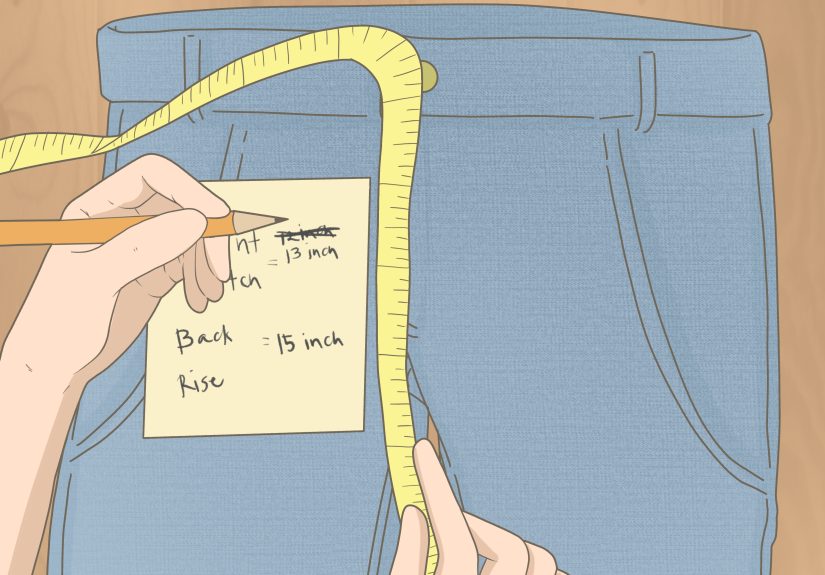
Flip or adjust the pants so you can measure from the crotch seam to the top of the back waistband. This is the back rise. It is often longer than the front rise because the body needs more coverage in the back, especially when sitting. If pants slide down, gap at the waist, or feel too low in the seat, the back rise may be part of the problem.
Step 8: Record the Numbers Clearly
Write your measurements in a simple format:
- Body inseam: 31 inches
- Best-fitting pants inseam: 30.5 inches
- Front rise: 11 inches
- Back rise: 15 inches
- Preferred hem style: slight break over shoes
Always record whether the number came from your body or from a garment. A body inseam and a pants inseam may not match exactly because fabric, fit, shoes, and style all influence the final look.
Step 9: Test the Fit Before Trusting the Number Forever
Measurements are powerful, but your body still gets the final vote. Try pants on and move around. Sit, stand, squat slightly, walk, and check the mirror from the front, side, and back. Pants should allow movement without pulling sharply at the crotch seam. The hem should match your preferred style, whether that is cropped, no break, slight break, or fuller break.
If your measurement says one thing but your comfort says another, believe the comfort. Pants are not math homework; they are clothes you have to live in.
Body Measurement vs. Garment Measurement
One of the biggest mistakes people make is assuming body measurements and garment measurements are identical. They are related, but not the same. Body measurements tell you your actual dimensions. Garment measurements tell you the size of the pants themselves. Pants include design ease, fabric stretch, seam allowances, and style choices.
For example, a pair of relaxed-fit jeans may have more room through the seat and thigh than slim-fit chinos with the same waist and inseam. Stretch denim may feel forgiving, while rigid cotton twill may feel stricter. This is why checking the inseam, front rise, back rise, and fit description is smarter than relying on waist size alone.
Common Mistakes When Measuring Pants
Pulling the Tape Too Tight
A measuring tape should lie flat, not act like it is trying to win a wrestling match. Pulling it too tight can shorten the measurement and lead to uncomfortable pants.
Measuring Over Bulky Clothes
Thick clothing adds false inches. Measure over thin layers or directly over undergarments for the most accurate result.
Ignoring Rise
If your pants fit in the leg but feel wrong in the crotch, the issue may not be the inseam. It may be the rise. Always check rise when comfort around the crotch or seat is the main problem.
Using Old Pants That No Longer Fit
Do not measure pants from a decade ago unless they still fit well today. Bodies change. Pants shrink. Fashion evolves. Your old “perfect jeans” may now be more of a historical artifact.
Forgetting Shoes
Shoes affect pant length. Dress pants worn with loafers may need a different inseam than jeans worn with boots or sneakers.
How to Adjust Measurements for Different Pants Styles
Different pants are designed to fall differently. A 30-inch inseam in jeans may not look the same as a 30-inch inseam in tailored trousers. Here is how to think about common styles.
Jeans
Jeans often look good with a slight break, no break, or a casual stack depending on the cut. Slim jeans usually need a cleaner length, while straight or relaxed jeans can handle a bit more fabric at the ankle.
Dress Pants
Dress pants usually look best with a clean hem. Many people choose no break or a slight break. Too much fabric can make formal trousers look sloppy.
Chinos
Chinos are flexible. You can wear them slightly cropped, cuffed, or with a small break. If you like rolling the hem, add enough length to make the cuff look intentional.
Work Pants
Work pants need movement. If you bend, climb, kneel, or lift during the day, crotch comfort and rise matter just as much as inseam length. A gusseted crotch or relaxed fit can help with mobility.
Joggers
Joggers often have elastic cuffs, so the inseam may be shorter than your usual pants. Measure from the crotch seam to where you want the cuff to sit.
Quick Measurement Chart
| Measurement | Where to Start | Where to End | Why It Matters |
|---|---|---|---|
| Inseam | Crotch seam | Bottom hem | Controls pant length |
| Front rise | Crotch seam | Top front waistband | Affects front comfort and waist position |
| Back rise | Crotch seam | Top back waistband | Affects seat coverage and sitting comfort |
| Seat/hip | Fullest part of hips and seat | Around the body | Helps prevent pulling or sagging |
How to Use Your Crotch Measurement When Shopping Online
Online shopping gets easier when you compare your numbers to the size chart, not just the model photo. Check the listed inseam first. Then look for rise details if available. If the product page says “high rise,” “mid rise,” “low rise,” “relaxed fit,” “slim fit,” or “roomy through the seat,” take those descriptions seriously.
If you are between two inseam lengths, think about styling. Choose the shorter option for cropped or no-break looks. Choose the longer option if you wear boots, prefer stacking, or plan to tailor the hem. It is usually easier to shorten pants than to magically add fabric after checkout. Sadly, fabric does not grow back.
Tailoring Tips for a Better Pants Fit
If the inseam is too long, hemming is usually simple. If the rise is wrong, alterations can be more complicated. A tailor can sometimes adjust the seat, waist, or crotch curve, but major rise changes may not be worth the cost unless the pants are high quality or special occasion trousers.
Before buying expensive pants, compare them with a pair you already love. Measure both flat and check the product measurements. If the inseam is right but the rise is dramatically different, expect the pants to feel different too.
Experience: Real-Life Lessons From Measuring Crotch Fit for Pants
The first big lesson from measuring pants is that most people are wearing at least one wrong size without realizing it. They blame the brand, the dryer, the chair, lunch, or mysterious denim spirits. Sometimes those things are involved, especially the dryer. But often, the issue is simply that the inseam or rise does not match the body.
For example, someone may always buy a 32-inch inseam because that is what they wore in college. Then they notice every pair bunches at the ankle unless they wear thick boots. After measuring a pair of pants that actually looks good, they discover their best everyday inseam is closer to 30 or 31 inches. The number on the tag was not a personality trait. It was just a habit.
Another common experience happens with office pants. A person buys trousers that fit at the waist and seem fine while standing. Then they sit at a desk and feel pulling at the crotch seam all day. The problem may be a short front rise, a narrow seat, or fabric with little give. Measuring the front rise and back rise on a comfortable pair of trousers can reveal why one pair feels professional and another feels like a trap designed by a committee.
Jeans create their own lessons. Stretch jeans can hide measurement mistakes because the fabric gives a little. Rigid jeans are less forgiving. If the crotch seam is too high, rigid denim can feel tight quickly. If the rise is too long, the fabric may sag or create extra folds. Measuring before buying helps, but trying the pants with normal movement is still essential. Walk around. Sit down. Bend slightly. If the pants complain before you do, listen.
People who buy pants online often learn to build a small “fit profile.” This can include preferred waist, hip, inseam, front rise, back rise, and favorite leg opening. Once you have that list, shopping becomes much less random. Instead of guessing from photos, you compare real numbers. A pair of chinos with a 30-inch inseam and 11-inch front rise may become your reliable formula. A low-rise style with the same inseam may not work at all.
Another useful experience is measuring after washing. Cotton pants and jeans can shrink slightly, especially if dried with heat. Measure your best pants after they have been washed and dried the way you normally care for them. That gives you a practical number, not a showroom number. Clothing lives in laundry reality, not catalog fantasy.
Finally, remember that comfort is not vanity; it is function. Pants that fit well help you move, sit, work, travel, and exist without constantly adjusting your waistband. The crotch area is where poor fit becomes obvious fast. Taking five minutes to measure can save money, returns, and that awkward little pants dance people do when fabric is fighting them in public.
Conclusion
Knowing how to measure your crotch for pants is really about understanding the relationship between inseam, rise, and comfort. Start at the crotch seam, measure accurately, compare with pants that already fit, and record your numbers. Once you know your ideal pants inseam, front rise, and back rise, you can shop with confidence instead of hope.
The best pants are not just the ones that match your waist size. They are the ones that let you sit, walk, bend, and move without thinking about them every five minutes. Measure once, write it down, and your future selfstanding happily in better-fitting pantswill thank you.