Table of Contents >> Show >> Hide
If your tomato plant looked lush and happy yesterday but today resembles a salad bar after a lunch rush, chances are good you have tomato hornworms. These big green caterpillars are masters of camouflage, which is rude enough. What is even ruder is their appetite. They can strip leaves fast, chew stems, and scar fruit before you realize anything is wrong.
The good news is that getting rid of tomato hornworms naturally is absolutely doable. In fact, most home gardeners do not need harsh treatments at all. With regular scouting, a little patience, and a willingness to remove a few leaf-chomping freeloaders by hand, you can protect your tomato crop and keep your garden ecosystem in decent shape.
This guide explains how to identify hornworms, what damage they cause, and the best natural ways to stop them before they turn your prized tomatoes into a buffet. It also covers prevention, common mistakes, and real-world gardening experiences that make the advice easier to use.
What Are Tomato Hornworms?
Tomato hornworms are the caterpillar stage of a large sphinx moth, sometimes called a hawk moth. They are usually bright green, thick-bodied, and impressively large when mature. That last part is almost offensive. You would think something that big would be easier to spot, but their color blends in beautifully with tomato foliage.
Gardeners often talk about tomato hornworms and tobacco hornworms together because they behave similarly and damage the same kinds of plants. Both attack crops in the nightshade family, including tomatoes, peppers, eggplant, and potatoes. Both can remove a shocking amount of foliage in a short time. For a home gardener, the practical response is basically the same either way: find them, remove them, and stay consistent.
How to tell them apart
The classic tomato hornworm usually has a darker horn and pale V-shaped markings along the sides. The tobacco hornworm often has a reddish horn and diagonal white stripes. This difference is useful if you enjoy insect trivia or like winning small arguments in the garden. For pest control, though, both are equally unwelcome dinner guests.
Signs You Have Hornworms on Tomatoes
The first clue is often not the caterpillar itself. It is the damage. Hornworms are sneaky, but they are not neat. If the top or inner parts of the plant look chewed, stripped, or oddly thin, start investigating.
Common signs of hornworm damage
Leaves may be missing entirely, reduced to stems, or ragged around the edges. You may also see feeding scars or shallow chewing on green tomatoes. Another major clue is frass, which is a polite gardening word for caterpillar droppings. Hornworm frass is dark, chunky, and often found on lower leaves or the soil beneath the plant. When you see that, the culprit is usually somewhere above, pretending to be a branch with commitment issues.
Look carefully at stems, leaf undersides, and the interior of the plant. Hornworms often hang along the main stem or along leaf petioles where they blend in almost absurdly well.
How to Get Rid of Tomato Hornworms Naturally
If you want a natural, low-risk way to control hornworms, start with the methods below. These are the most practical options for home gardens, and they work best when used together rather than as a one-time rescue mission.
1. Handpick them off the plant
This is the gold standard for natural hornworm control. It is simple, cheap, and very effective. Check your tomato plants at least a few times each week during active growing season, especially in midsummer when hornworms are more likely to show up.
Pick the caterpillars off by hand and drop them into a bucket of soapy water. If the idea of touching them makes you reconsider gardening forever, use gloves, kitchen tongs, or light pruners. No one is judging.
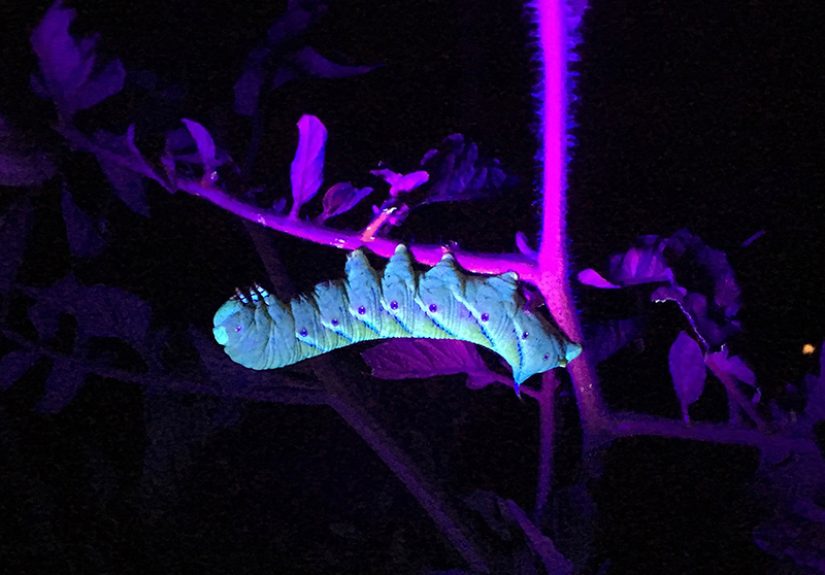
The best times to look are early morning, dusk, or at night, when hornworms can be easier to spot. Some gardeners lightly shake the plant or spray it with water to make the caterpillars move. A UV flashlight can also help because hornworm markings can stand out under ultraviolet light in the dark.
2. Leave parasitized hornworms alone
This is the one time you should not rush to remove a hornworm. If you spot a caterpillar covered with small white cocoon-like structures that look like grains of rice, that hornworm has already been parasitized by beneficial braconid wasps. The wasps are doing free pest control for you, and honestly, they deserve a little respect.
A parasitized hornworm usually stops feeding or slows down dramatically. Leaving it in place allows the wasps to complete their life cycle and go on to attack more hornworms in your garden. Removing that caterpillar means removing your natural backup team.
3. Use Bt or Btk on small larvae
If handpicking is not enough, Bacillus thuringiensis, especially the caterpillar-targeting type often labeled Btk, is one of the best natural tools available. It is a microbial insecticide that works when caterpillars eat treated leaves. It is most effective on young, small hornworms, not giant late-stage caterpillars that already look like they pay rent.
Apply it carefully according to the product label, making sure the foliage is coated where small larvae are feeding. Because Bt breaks down fairly quickly outdoors, timing matters. It is a smart option when you catch the problem early and want to avoid broader-impact treatments.
4. Protect beneficial insects
Natural hornworm control works better when your garden welcomes the insects that prey on pest species. Parasitic wasps, lacewings, and general predators all help keep caterpillar numbers down. That is one reason to avoid broad-spectrum insecticides unless absolutely necessary.
When a garden is full of beneficial activity, hornworm outbreaks are often less severe. A healthy garden is not pest-free. It is balanced. That difference matters.
5. Remove weeds and alternate host plants
Nightshade weeds near the garden can give hornworms and their moth parents extra places to feed and reproduce. Keeping the area tidy reduces hiding spots and can interrupt the pest cycle. Remove weeds around tomato beds, especially solanaceous weeds that may host related pests.
This is not the flashiest advice, but it works. Garden cleanup rarely gets applause, yet it quietly solves a lot of problems before they become dramatic.
6. Till or disturb soil after harvest
After feeding, hornworms pupate in the soil. That means the ground around your tomatoes may be holding next season’s trouble in a very literal sense. Disturbing or tilling the soil after harvest can reduce the number of overwintering pupae and lower future pressure.
If you had a bad hornworm year, do not skip this step. It is one of the easiest long-game strategies for prevention.
What Not to Do
When gardeners panic, they often do one of two things: they ignore the problem too long, or they overreact with the gardening equivalent of fireworks. Neither approach is ideal.
Avoid these common mistakes
Do not wait until half the plant is gone before scouting. Hornworms are easier to manage when small. Do not remove parasitized hornworms with white cocoons. Do not assume one tomato plant with missing leaves means disease or drought; check for pests first. And do not rely on random internet remedies that sound clever but are not supported by solid horticultural guidance.
Natural control is not the same as doing nothing. It means using targeted, lower-risk methods that actually fit the pest’s life cycle.
How to Prevent Tomato Hornworms Next Season
Prevention is not glamorous, but it is cheaper than replacing stressed tomato plants in July.
Build a hornworm-resistant routine
Start scouting early, especially once tomatoes are growing strongly and moth activity increases. Inspect the tops and interior of plants, check for frass, and look under leaves for eggs or tiny larvae. Keep weeds down around beds. Encourage beneficial insects by avoiding unnecessary sprays. At the end of the season, remove plant debris and disturb the soil where hornworms may pupate.
If you garden every year, routine observation is your secret weapon. Most hornworm disasters do not begin with a giant caterpillar. They begin with a few days of not looking closely.
Are Tomato Hornworms Ever Worth Tolerating?
In a large, healthy garden, one or two hornworms may not justify a full-scale campaign. Tomatoes can recover from light feeding, especially if plants are otherwise vigorous. If the population is low and beneficial insects are active, you may only need to remove the obvious offenders and keep watching.
That said, hornworms are not shy eaters. If you see repeated damage, fresh frass, or fruit feeding, it is time to act. Waiting for them to become more polite has not been shown to work.
Final Thoughts
Getting rid of tomato hornworms naturally is mostly about timing, observation, and calm follow-through. Handpicking remains the best first move for home gardeners. Beneficial wasps are valuable allies. Bt or Btk can help when larvae are still small. Seasonal cleanup and soil disturbance make future outbreaks less likely.
The most encouraging part is this: you do not need a complicated system to manage hornworms well. You need a bucket, a few minutes of scouting, and the confidence to inspect your tomato plants like a detective who already knows the suspect is green and weirdly muscular.
Experience and Practical Lessons from Gardeners
Many gardeners describe the same hornworm experience the first time they run into it. They walk outside expecting a peaceful tomato check, notice a few stripped stems, and immediately suspect weather, rabbits, or some mysterious gardening curse. Then they spot one enormous green caterpillar attached to the plant like it owns the deed. After that first encounter, most people never forget what hornworm damage looks like.
A common lesson from experienced growers is that the damage usually appears before the pest does. That is why seasoned tomato gardeners look for clues rather than waiting to see the caterpillar outright. They scan for missing leaflets, dark droppings on lower foliage, and fruit that has been nibbled in ugly little gouges. Once they see those signs, they know to search upward and inward, where hornworms often hide along stems.
Another pattern gardeners often mention is how much easier control becomes when they stop thinking of scouting as a big task. The people who keep hornworms under control are not necessarily the ones with fancy setups. They are usually the ones who spend a few minutes with their plants several times a week. They harvest ripe tomatoes, tie up a loose stem, notice a bit of frass, and remove a caterpillar before it becomes a larger problem. That rhythm matters more than heroic once-a-month intervention.
Gardeners who grow organically also tend to talk about the relief of finding hornworms covered in white wasp cocoons. At first glance, it looks alarming. Then they learn that the hornworm has already been targeted by beneficial insects, and suddenly the garden feels less like a battlefield and more like an ecosystem with useful employees. Many say this is the moment they become more patient and less spray-happy overall.
There are also plenty of stories about nighttime hornworm hunts. Some growers use a small flashlight or UV light and describe the process like a strange suburban safari. It sounds dramatic, but it works. In the daytime, hornworms can vanish into the foliage. At night, they are easier to track, especially when their markings stand out. Gardeners who try this once often add it to their midsummer routine.
Perhaps the biggest shared lesson is that hornworms look worse than they are, provided you respond quickly. Yes, they are large. Yes, they can strip a branch fast. But they are also slow, visible once you know the signs, and very manageable without harsh methods. Gardeners who stay calm, scout regularly, and trust simple natural controls usually come away with healthy plants, a decent harvest, and a memorable story about the day they discovered that one tomato plant was apparently feeding a caterpillar the size of a small cucumber.