Table of Contents >> Show >> Hide
- Why the Big Dipper Is Worth Learning First
- How to Find the Big Dipper: 10 Steps
- Step 1: Go Outside After Dark
- Step 2: Face North
- Step 3: Look for a Large Bowl Shape
- Step 4: Find the Curved Handle
- Step 5: Use Dubhe and Merak as Pointer Stars
- Step 6: Confirm Polaris and True North
- Step 7: Know the Best Season to See It
- Step 8: Escape Light Pollution When Possible
- Step 9: Use the Big Dipper to Star-Hop
- Step 10: Practice on Different Nights
- Common Mistakes When Looking for the Big Dipper
- How to Find the Big Dipper From Different Places
- What the Big Dipper Teaches You About the Sky
- Personal Stargazing Experiences: Learning the Big Dipper the Easy Way
- Conclusion
Finding the Big Dipper is one of the easiest and most satisfying ways to begin stargazing. It is big, bright, familiar, and wonderfully usefulbasically the night sky’s version of a friendly roadside sign that says, “North is this way.” Even better, you do not need a telescope, a fancy astronomy degree, or the ability to pronounce every star name without sounding like you sneezed mid-sentence.
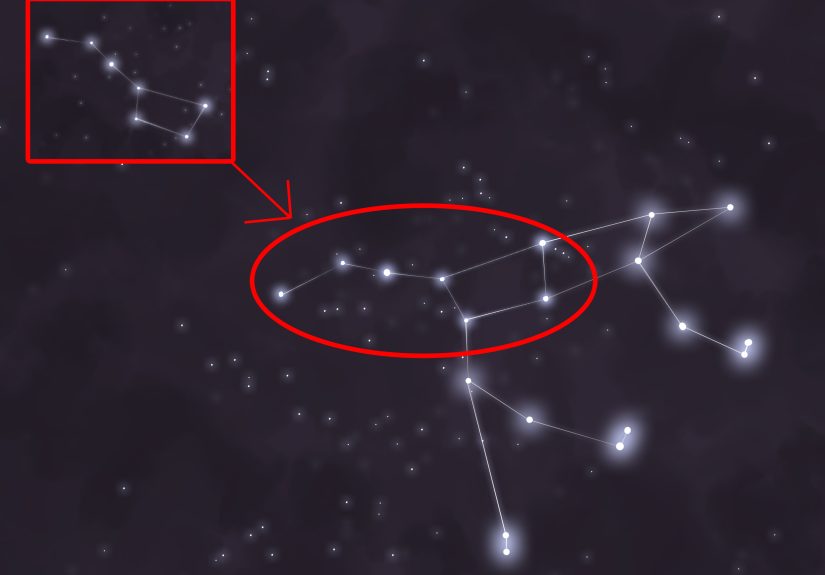
The Big Dipper is not officially a constellation. It is an asterism, which means it is a recognizable star pattern inside a larger constellation. In this case, the Big Dipper is part of Ursa Major, the Great Bear. Its seven bright stars form a shape that looks like a ladle, saucepan, wagon, ordepending on how hungry you area cosmic soup spoon.
This guide explains how to find the Big Dipper in 10 steps, how to use it to locate the North Star, when it is easiest to see, and what to do if city lights, trees, clouds, or general sky confusion get in your way.
Why the Big Dipper Is Worth Learning First
The Big Dipper is one of the most helpful patterns in the northern sky. Once you can spot it, you can use it to find Polaris, the North Star, identify true north, and star-hop to other bright stars such as Arcturus and Spica. For beginners, it is like unlocking the tutorial level of astronomy.
Its shape is also memorable. Four stars form the “bowl,” while three stars curve away as the “handle.” The seven main stars are named Dubhe, Merak, Phecda, Megrez, Alioth, Mizar, and Alkaid. You do not need to memorize all of them right away, but knowing Dubhe and Merak is especially useful because they are the famous “pointer stars” that lead you to Polaris.
How to Find the Big Dipper: 10 Steps
Step 1: Go Outside After Dark
This may sound obvious, but the Big Dipper is not a daytime celebrity. Wait until the sky is truly dark, usually about an hour after sunset. Twilight can hide fainter stars, and the Big Dipper becomes much easier to recognize once the background sky has deepened.
For the best view, choose a night with clear weather and low haze. If the Moon is full and bright, you may still see the Big Dipper because its stars are fairly bright, but a darker night will make the search easier and more enjoyable.
Step 2: Face North
In the United States and most of the Northern Hemisphere, the Big Dipper is found in the northern part of the sky. If you know where north is, face that direction first. A compass app can help, but you can also use familiar landmarks. If you know the direction of sunrise and sunset, remember that the Sun generally rises in the east and sets in the west, so north is roughly to your left when facing west.
Do not worry if you are not perfectly aligned. The Big Dipper is large enough that you can scan the northern sky and still catch it. Think of it as looking for a giant starry ladle, not a tiny lost earring.
Step 3: Look for a Large Bowl Shape
Start by searching for four stars that form a rough rectangle or bowl. This is the “cup” of the Big Dipper. The bowl may appear upright, sideways, upside down, or tilted depending on the season and time of night.
Many beginners expect the Big Dipper to look exactly like the diagrams in books. The sky, however, enjoys rotating the furniture. The shape remains the same, but its angle changes as Earth turns. If you can identify the four-star bowl, you are already halfway there.
Step 4: Find the Curved Handle
Once you spot the bowl, look for three stars curving away from it. These form the handle. The handle bends slightly, giving the Big Dipper its classic dipper shape.
The middle star in the handle is Mizar. On a clear, dark night, people with sharp eyesight may see a smaller companion star nearby called Alcor. This pair has often been described as a traditional eyesight test. Do not panic if you cannot split them from your backyard; modern porch lights are not exactly cheering for your night vision.
Step 5: Use Dubhe and Merak as Pointer Stars
The two stars on the outer edge of the bowl are Dubhe and Merak. These are called the pointer stars because they point toward Polaris, the North Star. Merak sits at the lower outside corner of the bowl, and Dubhe sits above it.
Imagine drawing a straight line from Merak through Dubhe. Continue that line outward about five times the distance between the two stars. You should arrive near Polaris. This is one of the most famous tricks in skywatching because it works reliably and does not require equipment.
Step 6: Confirm Polaris and True North
Polaris is not the brightest star in the sky, despite its superstar reputation. It is moderately bright, steady-looking, and located at the end of the Little Dipper’s handle. Once you find Polaris, you are facing true north.
This matters because the Big Dipper changes position around Polaris throughout the night and across the seasons. Polaris stays nearly fixed in the northern sky while the surrounding stars appear to rotate around it. That makes Polaris an anchor point, especially if you are camping, hiking, or simply trying to impress someone without using Wi-Fi.
Step 7: Know the Best Season to See It
The Big Dipper is visible during much of the year from many northern locations, but spring evenings are often the easiest time to find it. In spring, the Big Dipper climbs high in the northern sky, making it bright, obvious, and less likely to be blocked by trees or buildings.
In summer evenings, it often appears toward the northwest or west. In fall, it may sit low near the northern horizon, which can make it harder to see if you have hills, rooftops, or enthusiastic backyard trees in the way. In winter, it rises again in the northeast later in the evening.
Step 8: Escape Light Pollution When Possible
You can often see the Big Dipper from suburbs and even some cities, but darker skies make the experience much better. Light pollution washes out stars, especially the dimmer ones around Ursa Major and the Little Dipper.
Try a park, open field, lakeshore, beach, campground, or rural road with a clear northern view. Turn off bright flashlights and avoid staring at phone screens. If you need a light, use a red-light mode or dim setting so your eyes stay adjusted to the dark. Your night vision is precious; do not let your phone blast it into next Tuesday.
Step 9: Use the Big Dipper to Star-Hop
Once you find the Big Dipper, you can use it as a guide to other stars. The classic phrase is “arc to Arcturus”. Follow the curve of the handle away from the bowl, and your eyes will eventually reach Arcturus, a bright orange star in the constellation Boötes.
From Arcturus, you can “spike to Spica” by continuing the same sweeping motion toward Spica, a bright star in Virgo. This simple route helps beginners build a mental map of the sky. Instead of seeing random dots, you begin to recognize neighborhoods.
Step 10: Practice on Different Nights
The fastest way to learn the Big Dipper is to look for it repeatedly. Try finding it once in early evening, again later at night, and again a few weeks later. You will notice that it changes position around Polaris, but the bowl-and-handle shape stays recognizable.
Do not rely only on a stargazing app. Apps are helpful, but your eyes and memory are better long-term tools. Use the app to confirm what you see, then put it away and practice finding the pattern naturally. The goal is to look up and think, “There it is,” not “Where did my screen go?”
Common Mistakes When Looking for the Big Dipper
Mistake 1: Looking Too Low or Too High
The Big Dipper’s height changes with the season and time of night. In spring, it may be high overhead in the northern sky. In fall, it may sit low near the horizon. If you do not see it right away, scan from the horizon upward instead of staring at one spot.
Mistake 2: Expecting It to Always Be Upright
The Big Dipper may look like it is pouring water, scooping water, hanging sideways, or balancing in a very questionable kitchen cabinet. Its orientation changes because the sky appears to rotate around Polaris.
Mistake 3: Confusing It With the Little Dipper
The Little Dipper is smaller and dimmer. Polaris marks the end of its handle, but several Little Dipper stars can be difficult to see in light-polluted areas. The Big Dipper is usually easier to spot because its main stars are brighter and its shape is larger.
Mistake 4: Searching Under a Bright Moon
A bright Moon can make the sky look pale and reduce contrast. The Big Dipper may still be visible, but faint surrounding stars will disappear. For the best beginner experience, try stargazing near the new Moon or when the Moon is below the horizon.
How to Find the Big Dipper From Different Places
From a City
Find a place with the fewest direct lights. A rooftop, open parking area, sports field, or waterfront can help. Shield your eyes from streetlights and look north. The bowl stars and handle stars are bright enough that you may still see them through moderate light pollution.
From a Suburban Backyard
Turn off porch lights and give your eyes 10 to 20 minutes to adjust. Stand where houses and trees do not block the northern sky. If you can see Polaris, use it as your anchor and look around it for the Big Dipper’s rotating position.
From a Campground or Rural Area
This is where the Big Dipper really shines. With darker skies, you may see more stars in Ursa Major and nearby constellations. Bring a blanket or reclining chair so you can scan the sky comfortably. Neck comfort is not glamorous, but it is deeply important after minute five of looking upward.
What the Big Dipper Teaches You About the Sky
The Big Dipper is more than a pretty pattern. It teaches several important skywatching skills: recognizing asterisms, finding cardinal directions, understanding seasonal sky movement, and using star-hopping to locate other objects.
It also reveals that the sky is not random. Stars rise, set, circle, and shift in predictable ways because Earth rotates and orbits the Sun. When you learn one dependable pattern, the rest of the sky starts to feel less like a glitter spill and more like a map.
Personal Stargazing Experiences: Learning the Big Dipper the Easy Way
One of the best things about learning how to find the Big Dipper is that the process feels surprisingly personal. The first time many people spot it, they have a small “aha” moment. Suddenly, the sky is not just a dark ceiling with sparkles; it is a place with structure, direction, and familiar landmarks.
A great way to practice is to make the search part of an ordinary evening. Step outside after dinner, let your eyes adjust, and look north. At first, you may only see a few bright stars. Then the bowl appears. Then the handle curves away. Within a few minutes, the shape becomes obvious, and you wonder how you ever missed something so large.
If you are stargazing with kids, the Big Dipper is a perfect first target. Ask them what shape they see before telling them the name. Some may see a spoon, a kite, a shopping cart, or a saucepan. Their answers may not match an astronomy textbook, but that is part of the fun. Ancient cultures also saw different stories in the same stars, proving that imagination has always been part of skywatching.
Camping trips make the experience even better. Away from city lights, the Big Dipper looks sharper and brighter. You may notice Mizar and Alcor in the handle, or you may see fainter stars around Ursa Major that are invisible from town. On a quiet night, finding the Big Dipper can feel like discovering an old friend waiting above the trees.
Another useful habit is to find the Big Dipper at different times of year. In spring, it may appear high and bold. In summer, it slides toward the west. In fall, it can dip low near the horizon, almost as if it is trying to sneak out of the sky early. In winter, it returns in the northeast. Watching these changes helps you understand the rhythm of the night sky.
For beginners, frustration is normal. You may go outside and see clouds. You may face the wrong direction. You may mistake an airplane for a star and briefly believe the Big Dipper has developed blinking lights and travel plans. That is fine. Stargazing rewards patience, not perfection.
The most satisfying moment comes when you no longer need instructions. You step outside, glance north, find the bowl, trace the handle, and use Dubhe and Merak to locate Polaris. In that moment, the sky becomes useful. You know where north is. You know how the Dipper moves. You know how to begin exploring beyond it.
That is why the Big Dipper remains such a beloved starting point. It is simple enough for a first night under the stars, but useful enough to keep teaching you for years. It is a cosmic landmark, a navigation tool, and a friendly reminder that sometimes the universe really does hand you a giant spoon.
Conclusion
Learning how to find the Big Dipper is one of the easiest ways to begin exploring the night sky. Start by facing north, look for the four-star bowl and three-star handle, then use Dubhe and Merak to point your way to Polaris. Once you can recognize this famous asterism, you can find true north, understand seasonal sky movement, and star-hop to other bright stars.
You do not need expensive gear. A clear night, a dark viewing spot, and a little patience are enough. The Big Dipper is bright, practical, and beginner-friendlybasically the night sky’s welcome mat.