Table of Contents >> Show >> Hide
- Why Cleaning Your Dishwasher Matters
- How Often Should You Clean a Dishwasher?
- Supplies You Need to Clean a Dishwasher
- Step-by-Step Guide: How to Clean a Dishwasher
- How to Clean the Outside of a Dishwasher
- How to Clean a Smelly Dishwasher
- How to Prevent Dishwasher Buildup
- Common Dishwasher Cleaning Mistakes to Avoid
- Troubleshooting After Cleaning
- Personal Experience: What Actually Works When Cleaning Dishwashers
- Conclusion
Your dishwasher has one job: take dirty dishes, blast them with hot water and detergent, and return them to you looking like they belong in a detergent commercial. But here is the tiny kitchen plot twist: the machine that cleans everything else also needs cleaning. Yes, your dishwasher is not a magical self-purifying stainless-steel wizard. It collects grease, mineral buildup, food bits, soap scum, and the occasional mystery crumb that looks like it survived three geological eras.
Learning how to clean dishwashers properly can help reduce odors, improve wash performance, prevent cloudy glassware, and keep your appliance working more efficiently. The good news is that you do not need a chemistry degree, a tool belt, or a dramatic soundtrack. Most dishwasher cleaning jobs require simple supplies, a few regular habits, and a willingness to look inside the filter without immediately regretting your life choices.
This guide explains how to clean a dishwasher step by step, how often to do it, what to use, what to avoid, and how to keep your machine fresher between deep cleans. Whether your dishwasher smells like old soup, leaves grit on glasses, or simply has not been cleaned since the last time low-rise jeans were popular, this article will help you bring it back to respectable kitchen-citizen status.
Why Cleaning Your Dishwasher Matters
A dishwasher may look clean after every cycle because water swirls around inside it. Unfortunately, rinsing is not the same as cleaning. Over time, small food particles, grease, hard-water minerals, detergent residue, and soap scum can build up in hidden areas. The most common trouble spots are the filter, spray arms, drain area, door gasket, detergent dispenser, and the bottom of the tub.
When those areas get dirty, your dishwasher can start leaving spots, cloudy film, unpleasant smells, or tiny bits of food on plates and glasses. In more annoying cases, a clogged filter or blocked spray arm can reduce water flow, making the dishwasher work harder while cleaning worse. That is the appliance equivalent of running on a treadmill while eating nachos: plenty of effort, questionable results.
Regular dishwasher maintenance also helps protect the machine itself. A clean filter allows water to circulate properly. Clear spray-arm holes help water reach dishes from every angle. A wiped-down gasket keeps grime from collecting around the door seal. And a monthly cleaning cycle helps reduce buildup that may hide where your sponge cannot reach.
How Often Should You Clean a Dishwasher?
For most homes, a practical dishwasher cleaning schedule looks like this:
- After each load: Remove visible food pieces from the bottom of the tub.
- Weekly: Check and rinse the filter if your model has a removable manual filter.
- Monthly: Run an empty cleaning cycle using a dishwasher cleaner or white vinegar, then freshen with baking soda if needed.
- Every few months: Inspect spray arms, wipe the door gasket, clean the exterior, and check for mineral buildup.
If your dishwasher runs daily, handles greasy cookware, or lives in a hard-water area, clean it more often. If you use it only a few times a week and scrape dishes well, you may be able to stretch filter cleaning slightly longer. The dishwasher will usually tell you when it needs help. Odor, residue, cloudy glasses, poor draining, or dishes that come out looking “emotionally rinsed” instead of clean are all signs that maintenance is overdue.
Supplies You Need to Clean a Dishwasher
You do not need a cart full of specialty products. Gather these basics before you start:
- Distilled white vinegar
- Baking soda
- Warm water
- Mild dish soap
- Soft sponge or microfiber cloth
- Soft toothbrush or small cleaning brush
- Toothpick, pipe cleaner, or flexible cleaning brush for spray-arm holes
- Dishwasher-safe cup or bowl
- Commercial dishwasher cleaner, optional
- Stainless steel cleaner, optional for stainless exteriors
Before using vinegar, baking soda, citric acid, or any commercial cleaner, check your owner’s manual. Most modern dishwashers can handle routine cleaning with appropriate products, but manufacturer instructions always win. Your manual is not glamorous reading, but neither is an appliance repair bill.
Step-by-Step Guide: How to Clean a Dishwasher
Step 1: Empty the Dishwasher Completely
Start with an empty dishwasher. Remove dishes, utensils, racks if needed, and anything that does not belong. A dishwasher cleaning cycle should not be treated like a multitasking opportunity. Cleaning the machine while also washing last night’s lasagna pan sounds efficient, but it reduces the effectiveness of the cleaning process.
Pull out the bottom rack and inspect the floor of the dishwasher. Look around the drain area for food pieces, labels from jars, seeds, bones, pasta, broken glass, or tiny items that slipped through the racks. Remove debris carefully with a paper towel or cloth. If you see broken glass, wear gloves and move slowly.
Step 2: Clean the Dishwasher Filter
The filter is often the main reason a dishwasher starts smelling bad or cleaning poorly. Many newer dishwashers have removable manual filters located at the bottom of the tub, usually under the lower spray arm. Some models have self-cleaning filters, while others require regular manual cleaning.
To clean a removable dishwasher filter, unlock it according to your manual, lift it out gently, and rinse it under warm running water. Use a soft brush or sponge to remove stuck-on food, grease, and mineral deposits. Avoid wire brushes or harsh scouring pads because they can damage the filter mesh. Wash the filter with mild soap if greasy residue is present, rinse thoroughly, and reinstall it securely.
Do not skip the reinstall step. Running a dishwasher without the filter properly locked in place can allow debris to circulate through the machine. That is how yesterday’s rice becomes tomorrow’s glassware confetti.
Step 3: Wipe the Door, Edges, and Gasket
The dishwasher door does not get blasted with water the same way the tub does. That means grime can collect around the edges, hinges, detergent dispenser, and rubber gasket. Dip a microfiber cloth or soft sponge into warm, soapy water and wipe the door interior, especially where the door meets the frame.
Use a soft toothbrush for the gasket and tight corners. If there is sticky buildup, a diluted vinegar solution can help cut through residue. Wipe again with clean water and dry with a towel. Pay attention to the bottom edge of the door. It is a favorite hiding spot for gunk, and it enjoys staying out of sight like a villain in a low-budget mystery movie.
Step 4: Check and Clean the Spray Arms
Spray arms are the rotating parts that shoot water onto your dishes. If the tiny holes become clogged with food particles or mineral deposits, water cannot spray properly. That can leave the top rack dirty, the bottom rack gritty, or one unlucky casserole dish completely ignored.
Spin the spray arms by hand to make sure they move freely. If a spray arm is removable, take it out according to your manual and rinse it under warm water. Use a toothpick, pipe cleaner, or soft brush to clear clogged holes. Avoid breaking anything off inside the holes. After cleaning, reinstall the spray arm and spin it again to confirm it moves without hitting racks or tall dishes.
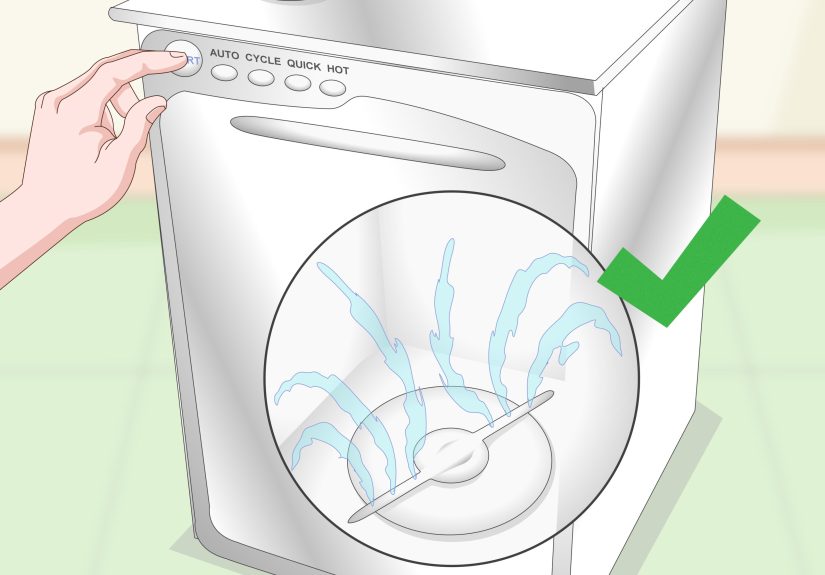
Step 5: Run a Vinegar Cleaning Cycle
White vinegar is commonly used to help loosen grease, reduce odors, and dissolve some mineral buildup. Place one cup of distilled white vinegar in a dishwasher-safe cup or bowl on the top rack. Run the empty dishwasher on a hot water cycle. Do not pour vinegar directly into the detergent dispenser unless your manual says it is safe.
Use vinegar as a cleaner, not as a miracle disinfectant. It is helpful for everyday buildup and odor, but it is not as powerful as EPA-registered disinfectants or dishwasher cleaners designed for specific performance issues. Also, never mix vinegar with bleach or cleaning products that contain bleach. Mixing acids and bleach can produce dangerous fumes. When in doubt, keep cleaners separate and use one method at a time.
Step 6: Freshen with Baking Soda
After the vinegar cycle finishes, sprinkle about one cup of baking soda across the bottom of the dishwasher tub. Run a short hot cycle. Baking soda can help neutralize lingering odors and leave the interior smelling fresher.
Do not combine vinegar and baking soda in the same cup and expect cleaning fireworks. They fizz dramatically, which is fun if your kitchen needs a tiny science fair, but the reaction can reduce their cleaning strength. Use vinegar first, then baking soda separately.
Step 7: Use a Commercial Dishwasher Cleaner When Needed
A commercial dishwasher cleaner can be useful for monthly maintenance, hard-water buildup, grease, limescale, and odors hidden in internal parts. Many dishwasher cleaners are formulated with citric acid or other ingredients designed to clean areas you cannot easily reach. Follow the product directions exactly, and run the dishwasher empty unless the cleaner specifically says otherwise.
If you have hard water, a dishwasher cleaner may outperform vinegar for mineral deposits. If your dishwasher has a stainless interior, always check whether the cleaner is compatible. The goal is to remove buildup, not give your appliance an unexpected spa treatment with the wrong product.
How to Clean the Outside of a Dishwasher
The exterior deserves attention too, especially around the handle and control panel. For painted or plastic fronts, wipe with a soft cloth dipped in warm, soapy water. Dry with a clean towel to prevent streaks.
For stainless steel dishwashers, wipe in the direction of the grain. Use a microfiber cloth and a cleaner made for stainless steel if fingerprints or smudges are stubborn. Avoid abrasive powders, steel wool, and rough pads. Stainless steel looks tough, but it scratches more easily than it admits.
For buttons or touch panels, use only a lightly damp cloth unless your manual recommends otherwise. Do not spray cleaner directly onto electronic controls. Spray the cloth, not the machine. Your dishwasher is good with water on the inside; the control panel prefers personal boundaries.
How to Clean a Smelly Dishwasher
If your dishwasher smells bad, the first suspect is usually trapped food. Start by cleaning the filter, removing debris from the drain area, and wiping the gasket. Then run an empty hot cycle with a dishwasher cleaner or a cup of white vinegar placed on the top rack. Follow with a baking soda cycle if odors remain.
Odors can also come from poor drainage. If water stands at the bottom after a cycle, check for a clogged filter, blocked drain area, kinked hose, or garbage disposal connection issue. If the dishwasher is newly installed and connected to a garbage disposal, make sure the disposal knockout plug was removed. If the problem continues, it may be time to call a professional instead of arguing with the appliance at midnight.
How to Prevent Dishwasher Buildup
Scrape, But Do Not Over-Rinse
Scrape large food pieces into the trash or compost before loading. You generally do not need to pre-rinse every plate until it shines like showroom porcelain. Modern dishwasher detergents are designed to work on food soil. However, large chunks of food can clog the filter and cause odors, so scrape well and let the dishwasher do the actual washing.
Load Dishes So Water Can Move
Loading matters. Avoid blocking the spray arms with tall pans, cutting boards, or bowls. Place cups and bowls face down at an angle so water drains properly. Keep utensils separated enough for water to reach them. Before starting a cycle, spin the spray arms by hand to make sure nothing blocks them.
Use the Right Detergent
Use automatic dishwasher detergent only. Do not use regular dish soap in the dishwasher unless you are intentionally auditioning for a bubble disaster documentary. Hand dish soap creates too many suds and can leak from the machine. Choose powder, gel, tablets, or pods according to your dishwasher and water conditions.
Use Rinse Aid for Spots and Drying
Rinse aid helps water slide off dishes, which can reduce spotting and improve drying. It is especially helpful in hard-water homes or when plastic items stay wet. Refill the rinse-aid dispenser as needed and adjust the setting if your manual allows it.
Leave the Door Slightly Open After Cycles
After unloading, leaving the door cracked open for a while can help moisture escape. This simple habit may reduce musty smells, especially if you run the dishwasher at night and unload it the next day. A little airflow goes a long way. Think of it as letting the dishwasher take a polite breath after doing the dishes you did not want to do.
Common Dishwasher Cleaning Mistakes to Avoid
- Mixing cleaners: Never mix vinegar with bleach, ammonia, or unknown cleaners.
- Forgetting the filter: A dirty filter can send food particles back onto dishes.
- Using abrasive tools: Wire brushes and harsh pads can damage filters, gaskets, and stainless finishes.
- Ignoring the gasket: The rubber seal collects grime and odor-causing residue.
- Using too much detergent: More detergent does not always mean cleaner dishes; it can leave residue.
- Blocking spray arms: Poor loading can make even a clean dishwasher perform badly.
- Skipping the manual: Different dishwasher models have different filter and cleaning instructions.
Troubleshooting After Cleaning
If you cleaned the dishwasher and dishes still come out dirty, check the basics. Make sure the filter is locked in place, the spray arms spin freely, and the detergent dispenser opens during the cycle. Confirm that the water is hot enough and that you are using the right cycle for the load. Heavy pots and dried-on food need a stronger cycle than lightly used cups.
If glasses come out cloudy, the issue may be hard water, too much detergent, not enough rinse aid, or permanent etching. Hard-water film may improve with rinse aid, dishwasher cleaner, or a water-softening solution. Etching, however, is permanent damage to the glass surface. Unfortunately, once glass is etched, no cleaning trick can fully reverse it. That is not cleaning failure; that is chemistry being dramatic.
If the dishwasher still smells after a full cleaning, inspect the drain hose, garbage disposal connection, and air gap if your sink has one. Persistent odor, leaks, standing water, or unusual grinding sounds may require professional service.
Personal Experience: What Actually Works When Cleaning Dishwashers
After cleaning more dishwashers than I care to admit, I have learned that the filter is almost always the star of the show. It may be small, hidden, and deeply unglamorous, but it has enormous influence over how clean your dishes look and how fresh the machine smells. The first time someone removes a neglected dishwasher filter, the reaction is usually a mix of horror, curiosity, and immediate respect for appliance maintenance. It is like discovering a swamp under your dinner plates.
The best habit is to check the filter before there is a problem. Waiting until the dishwasher smells bad is like waiting until your car makes dragon noises before checking the oil. A quick rinse every week or two takes only a few minutes and prevents most of the drama. I like to remove the lower rack, twist out the filter, rinse it under warm water, and use a soft toothbrush around the mesh. If grease is present, a drop of mild dish soap helps. The whole process is simple, but the payoff is obvious when dishes come out cleaner.
Another real-world lesson: the door gasket gets ignored because it is not directly in the splash zone. But that rubber seal can hold a surprising amount of grime. Wiping it with warm, soapy water makes a big difference, especially in homes where the dishwasher door stays closed most of the time. The bottom edge of the door is another sneaky area. It can collect residue without anyone noticing until the smell arrives wearing tap shoes.
I have also found that vinegar and baking soda work best when used separately. The popular fizzy volcano method looks satisfying, but separate cycles are more practical. A vinegar cycle helps loosen mineral film and odors, while a baking soda cycle freshens the tub afterward. If the dishwasher has serious limescale or a persistent smell, a commercial dishwasher cleaner often works better because it is formulated for grease, minerals, and hidden buildup.
Spray arms are another underrated detail. When only the top rack or bottom rack is coming out dirty, people often blame the detergent. Sometimes the real culprit is a blocked spray hole or a spoon handle stopping the spray arm from spinning. Before running a cycle, give the arms a quick spin. If they bump into something, rearrange the load. That two-second check can save you from rewashing an entire rack of dishes.
The final experience-based tip is consistency. A dishwasher does not need a dramatic deep clean every weekend. It needs small, boring habits done regularly. Scrape plates, clean the filter, wipe the gasket, run a monthly cleaning cycle, and use rinse aid if spots are a problem. It is not fancy, but it works. And in the world of kitchen maintenance, “boring but effective” is basically a standing ovation.
Conclusion
Cleaning a dishwasher is not complicated, but it is easy to forget because the appliance spends its life looking busy and helpful. A clean dishwasher starts with an empty tub, a rinsed filter, a wiped gasket, clear spray arms, and a monthly cleaning cycle. Add smart loading habits, the right detergent, and a little rinse aid, and your dishwasher can do what it was built to do: clean dishes without leaving behind smells, spots, or crunchy surprises.
The best way to clean dishwashers is to treat maintenance as a routine, not a rescue mission. Check the filter before it becomes a science experiment. Wipe the door seal before it develops a personality. Run a cleaning cycle before odors move in and sign a lease. With a few simple steps, your dishwasher can stay fresher, work better, and keep your plates ready for dinner instead of round two in the sink.
Note: Always check your dishwasher owner’s manual before removing parts or using cleaning products. Never mix vinegar, bleach, ammonia, or other household cleaners together.