Table of Contents >> Show >> Hide
- Why Build a Pallet Puzzle Table?
- Before You Start: Choose Safe, Clean Pallet Wood
- Plan Your Size: Make It Fit Your Puzzle Habit
- Tools and Materials
- Build Overview: Base + Puzzle Tray Top
- Step-by-Step: How to Build the Table
- Step 1: Break down the pallet (or use it as a base)
- Step 2: Build a stable base
- Step 3: Make the puzzle tray top (the part you’ll love)
- Step 4: Add a puzzle-friendly surface (optional, but nice)
- Step 5: Attach the tray to the base
- Step 6: Add storage (choose your adventure)
- Step 7: Build a cover to protect your puzzle
- Step 8: Sand, seal, and finish (the “make it feel like furniture” stage)
- Step 9: Add casters and final tweaks
- Safety Notes That Actually Matter
- Troubleshooting and Pro Tips
- Style Upgrades That Don’t Feel Like Extra Homework
- FAQ
- Real-World DIY Experiences and Lessons Learned (Extra)
- Conclusion
If you’ve ever tried to do a 1,000-piece puzzle on the dining table, you already know the emotional arc:
confidence → crumbs → panic → someone moves “that one corner piece” → existential dread.
A dedicated puzzle table fixes all of that. And building one from reclaimed pallet wood? That’s the DIY equivalent of finding a $20 bill in last winter’s coat.
This guide walks you through a sturdy, good-looking pallet puzzle table with a raised “puzzle tray” top, an optional cover,
and upgrades like drawers, sorting trays, and casters. It’s beginner-friendly, budget-conscious, and designed for real life
(aka pets, kids, and the mysterious law of physics that makes puzzle pieces teleport).
Why Build a Pallet Puzzle Table?
A puzzle table isn’t just a tableit’s a project station. The best ones do three things well:
they protect your work-in-progress, keep pieces organized, and stay comfortable for long sessions.
- Upcycling win: Pallets can provide rustic boards and a ready-made base structure.
- Raised edges: A shallow lip keeps pieces from sliding off during “dramatic chair scoots.”
- Cover option: Hide the puzzle fast when company arrives (or when your cat starts “helping”).
- Storage: Drawers or trays keep colors separated and sanity intact.
- Mobility: Locking casters let you roll the fun where you want it.
Before You Start: Choose Safe, Clean Pallet Wood
Not all pallets are created equal. Some are perfectly fine for indoor furniture; others have lived hard lives in warehouses,
trucks, and who-knows-what spills. Because this table will be in your home (with your hands on it for hours),
be picky on purpose.
Quick pallet checklist
- Look for a treatment stamp: Prefer heat-treated pallets. Avoid pallets marked for chemical fumigation.
- Skip “mystery pallets”: If it smells funky, looks oily, or has stains you can’t explainleave it behind.
- Avoid painted pallets: Paint can hide damage and adds unknowns you don’t want to sand into dust.
- Pick straighter boards: Warped slats can be used, but you’ll work harder to make a flat table top.
Safety note: If you’re a teen DIYer, this is an awesome buildbut use adult supervision for power tools,
and don’t “freestyle” with blades or sanding dust. Fingers and lungs are not replaceable parts.
Plan Your Size: Make It Fit Your Puzzle Habit
Your ideal work surface depends on the puzzles you actually do. The simplest method is also the most accurate:
measure the finished puzzle size on the box, then add breathing room.
Easy sizing formula
Work surface = puzzle length + 4 inches (minimum) by puzzle width + 4 inches (minimum).
That extra margin gives you room to rotate sections, park sorted pieces, and keep edges from feeling cramped.
Example sizes (common and comfortable)
- 1,000-piece focus: 24" x 32" work surface (roomy without taking over the room)
- 1,500-piece focus: 30" x 40" work surface (great “serious puzzler” zone)
- 2,000-piece focus: 32" x 48" work surface (a “commitment,” like a pet tortoise)
Table height is personal. Many people like standard table height (around 28–30 inches).
If you prefer standing or using a tall stool, you can build it higherjust keep the base stable.
Tools and Materials
Below is a practical list that fits most builds. Use what you have, upgrade what you’ll reuse, and borrow what makes sense.
Tools
- Pry bar and hammer or a reciprocating saw with a metal-cutting blade (for faster pallet breakdown)
- Drill/driver and bits
- Measuring tape, square, pencil
- Sander (orbital is easiest) + sandpaper (80, 120, 180 grit)
- Clamps (helpful, not mandatory)
- Safety gear: eye protection, hearing protection, and a dust mask/respirator
Materials
- 1–2 clean, heat-treated pallets (or pallet boards plus scrap 2x4s)
- 3/4" plywood for the puzzle base (one sheet is usually plenty)
- 1×3 or 1×4 boards (pallet boards can work) for the raised frame/lip
- Wood glue
- Wood screws (assorted 1-1/4" and 2" are common)
- Felt, speed cloth, or thin craft carpet for the puzzle surface (optional but popular)
- Finish: water-based polyurethane (low odor) or oil-based polyurethane (tough, longer cure)
- Optional: locking casters, drawer slides, small handles, hinges, magnets, rubber feet
Build Overview: Base + Puzzle Tray Top
This project is easiest when you treat it as two parts:
(1) a stable base table and (2) a removable or fixed “puzzle tray” top.
That approach keeps your build flexibleespecially if you want to add drawers or a cover later.
Step-by-Step: How to Build the Table
Step 1: Break down the pallet (or use it as a base)
You have two solid options:
-
Option A: Use a pallet as the base. Great if the pallet is sturdy and you like the rustic look.
You’ll add legs or stack a second pallet for height. -
Option B: Harvest pallet boards. Great if you want a cleaner finish and a more furniture-like table.
This takes longer (mostly because nails never miss a chance to be annoying).
To preserve boards, many DIYers cut nails between slats and stringers rather than prying everything apart aggressively.
If you pry, work slowly near nail points to reduce splitting.
Either way, assume there are hidden nails and plan to remove or cut them before your saw blade finds them first.
Step 2: Build a stable base
Here’s a dependable base design that doesn’t require fancy joinery:
- Decide your footprint: Make the base slightly smaller than the top (about 1" inset on all sides looks nice).
-
Create a frame: Use pallet 2×4-style stringers or regular 2x4s to build a rectangle.
Example: for a 30" x 40" top, a 28" x 38" base frame is a good start. - Add legs: Four legs (2x2s, 2x4s, or laminated pallet boards) attached inside the corners.
- Add stretchers: A lower set of rails between legs prevents wobble (and earns you bragging rights).
- Optional shelf: Use pallet slats across the bottom stretchers for a storage shelf.
Tip: If your pallet wood is rough, build the base first, then obsess over prettiness later. Structural first, glow-up second.
Step 3: Make the puzzle tray top (the part you’ll love)
The “tray” is what makes this a puzzle table instead of a regular table that’s currently experiencing a puzzle.
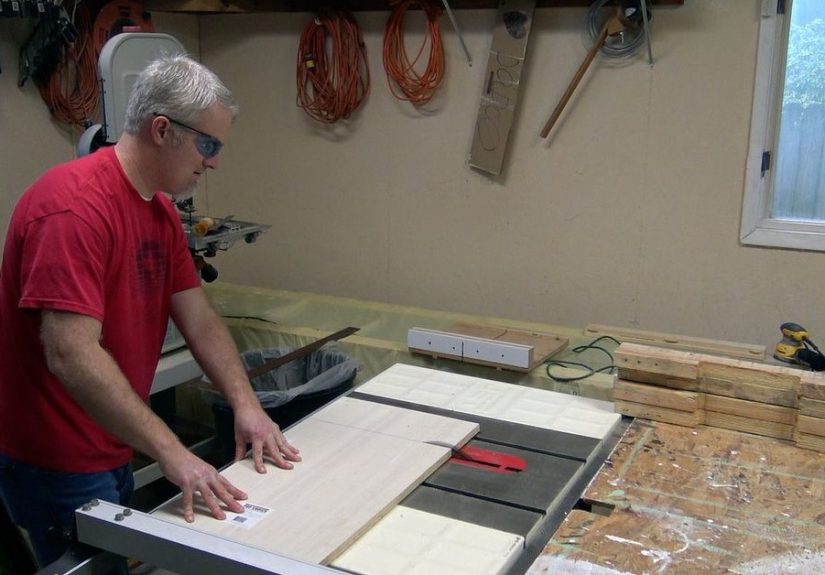
- Cut the tray base: From 3/4" plywood, cut your work surface size (example: 30" x 40").
-
Build the frame/lip: Cut four boards (1×3 or similar) to wrap the plywood edges like a picture frame.
A 1×3 gives you a comfortable raised edge without feeling like you’re puzzling in a kiddie pool. -
Attach the frame: Glue and screw the frame to the plywood edges.
Pre-drill to reduce splitting, especially with pallet boards. - Soften the edges: Sand or round over the top edge of the frame so your forearms don’t file a complaint.
Step 4: Add a puzzle-friendly surface (optional, but nice)
Many puzzlers like a slightly grippy surface so pieces don’t slide when you bump the table.
Felt or speed cloth works well and feels cozy.
- Cut the fabric slightly oversized.
- Spray adhesive or staple it underneath the plywood (keep the top smooth and wrinkle-free).
- Trim excess, then install the frame if you haven’t already.
Prefer a hard surface? Totally fine. A smooth, sealed plywood top works greatespecially if you use sorting trays.
Step 5: Attach the tray to the base
You can make the tray fixed or removable:
- Fixed: Screw up from the base frame into the tray bottom (strongest and simplest).
- Removable: Use corner cleats under the tray so it “nests” onto the base and won’t slide around.
Step 6: Add storage (choose your adventure)
Storage is where puzzle tables go from “nice” to “how did I live before this?”
-
Easy mode: Make shallow slide-under trays from thin plywood (no hardware needed).
Store sorted pieces by color or section. - Medium mode: Build one wide drawer under the tray for boxes, trays, and “spare time” you’ll never find.
- Deluxe mode: Multiple small drawers around the perimeter, like a puzzler’s command center.
Step 7: Build a cover to protect your puzzle
A cover is a game-changer if you share space with pets, kids, or roommates who “tidy up” with the confidence of a tornado.
-
Removable panel cover: Two or three lightweight panels that sit inside the tray frame.
Add a finger hole or small pull to lift them. -
Hinged lid: A single top that flips up (add hinges at the back).
Consider a support hinge or chain so it doesn’t slam down. - Two-sided bonus: Paint the underside with a checkerboard or game board design for double duty.
Step 8: Sand, seal, and finish (the “make it feel like furniture” stage)
Pallet wood can be splintery and uneven, so sanding isn’t optional if you want a table you actually enjoy using.
Work through grits: rough shaping first, then smooth it out.
- Start with 80 grit to remove splinters and flatten rough spots.
- Move to 120 grit to smooth and prep for finish.
- Finish with 180 grit for a comfortable touch.
Apply your chosen finish in thin coats. A durable topcoat matters because puzzles involve constant hand contact,
sliding pieces, leaning, and the occasional snack-related incident (we don’t judge; we just seal).
Step 9: Add casters and final tweaks
If you add casters, choose locking ones so the table doesn’t drift mid-session.
Check for wobble, tighten hardware, and add felt pads or rubber feet if needed.
Safety Notes That Actually Matter
- Dust control: Cutting and sanding wood creates fine dustuse a mask/respirator and ventilate.
- Nails are sneaky: Scan boards carefully, remove embedded metal, and protect your tools (and hands).
- Gloves for handling, not spinning blades: Gloves help with rough boards, but avoid them near rotating tools.
- Go slow on pallet wood: It’s often dry, hard, and unpredictablesplits happen fast.
Troubleshooting and Pro Tips
Problem: My top isn’t perfectly flat
Use plywood as the base for the tray top (it’s naturally flatter than most pallet slats).
If you’re building a slat-style top, clamp boards tightly and add cross supports underneath.
Problem: The table wobbles
Add stretchers between the legs. If it still wobbles, check for a twisted base frame,
then shim legs as needed. Wobble is not a “quirk.” It’s an enemy.
Problem: Felt is wrinkling or bubbling
Pull it taut, attach from the center outward, and keep the adhesive even.
If you staple, place staples closer together on corners to prevent puckers.
Pro tip: Make the lip the “right” height
Too low and pieces escape. Too high and your wrists complain.
Around 1"–1.5" is a comfortable sweet spot for most puzzle sessions.
Style Upgrades That Don’t Feel Like Extra Homework
- Two-tone look: Dark base, lighter tray frame for contrast.
- Corner guards: Small metal corners protect edges and add a finished vibe.
- Label your drawers: “Edges,” “Sky,” “Regret,” “Definitely Not Sky.”
- Magnetic cover: Small magnets keep cover panels from shifting.
- Soft lighting: A clip-on lamp helps reduce eye strain for night puzzling.
FAQ
Can I build this without a lot of tools?
Yes. The simplest version is a basic base frame plus a plywood tray top.
If you can measure, drill, and sand, you can build a functional puzzle table.
Do I have to use pallet wood for everything?
Not at all. A smart hybrid is: pallet boards for the rustic frame and trim,
plus new lumber/plywood where flatness and consistency matter (like the tray base).
What’s the best finish for a puzzle table?
A durable clear coat is popular because it protects against wear and is easy to wipe clean.
If you use a fabric puzzle surface, finish the wooden frame and base anywayhands and humidity still happen.
Real-World DIY Experiences and Lessons Learned (Extra)
Let’s talk about the part nobody puts on the “pretty reveal” photo: building with pallet wood is a little like adopting a rescue dog.
It’s rewarding, it’s quirky, and it will test your patience right when you thought you were the boss.
Here are the most common real-world lessons DIYers run into when making a pallet puzzle tableand how to come out winning.
1) The pallet “selection” stage is half the project. People often assume any free pallet is a gift from the DIY universe.
In reality, the best pallets are the ones that look boring: clean, dry, straight, and stamped with a safe treatment code.
The super-interesting onespainted, stained, or “mysteriously fragrant”tend to come with extra sanding, extra worry,
and extra “why did I do this?” energy. The win is choosing a pallet you feel comfortable bringing into your home,
because you’ll be leaning on this table for hours.
2) Nail removal is a personality test. If you’re prying boards, you’ll discover nails that are:
(a) bent, (b) rusted, (c) hiding, and (d) emotionally attached to the wood.
Many builders end up switching strategies midstreamcutting nails between boards instead of trying to yank everything out.
It’s faster, it saves more usable slats, and it reduces splitting. The best mindset is to treat pallet breakdown
like meal prep: annoying at first, but you’ll thank yourself later when the “cooking” part goes smoothly.
3) “Rustic” is fun until it hurts your forearms. Pallet wood texture looks charming, but puzzle sessions involve
lots of leaning, sliding pieces, and resting your hands on the table edge. That’s why experienced DIYers spend extra time
easing corners and smoothing the top lip. Even a small round-over or thorough sanding pass can turn the table from “cute”
to “comfortable.” Comfort is what makes you come back to finish the puzzle instead of abandoning it like a sad, flat artifact.
4) Flatness matters more than you think. A puzzle table doesn’t need to be museum-perfect,
but a wavy surface can make pieces drift, especially on a slick finish. Builders who are happiest with the final result
usually rely on plywood for the puzzle base because it’s stable and flat. Pallet boards are great for the base, trim,
and framebut plywood is the quiet hero that makes the table feel “real.” If you want the pallet-board look on top,
you can still do it: just build the slat top over a plywood substrate.
5) The cover is the feature you’ll brag about. People often start the project thinking the raised edge is the star,
but the cover becomes the real MVP. A simple removable panel cover protects from dust, sunlight, and “helpful” paws.
DIYers who add a cover also tend to keep puzzles out longerbecause it’s easy to pause without fully cleaning up.
And yes, the first time you drop the cover on and instantly turn chaos into “tidy living room,” you will feel powerful.
6) Finishing takes longer than expected, but it pays off. Many folks underestimate drying and cure time,
especially with multiple coats. The best real-world tip is to finish in thin coats and let it fully harden before heavy use.
That patience pays off when your table resists scratches and cleans easily. Your future selfholding a cup of coffee near a
half-finished puzzlewill be grateful.
Conclusion
A pallet puzzle table is one of those DIY projects that’s practical, personal, and surprisingly satisfying.
You’re not just building furnitureyou’re building a dedicated space for a hobby that slows life down in the best way.
Keep your pallet selection safe, build a flat tray top, give yourself the gift of a cover, and don’t skimp on sanding.
Your next puzzle will thank you… quietly… by finally looking like a puzzle instead of a confetti situation.