Table of Contents >> Show >> Hide
- Why Personal Safety Starts Before Anything Happens
- 10 Must-Know Tips for Personal Safety
- 1. Keep Your Head Up and Your Phone Down
- 2. Choose Bright, Busy Routes Over Shortcuts
- 3. Walk Like You Know Where You’re Going
- 4. Use Safety in Numbers Whenever You Can
- 5. Pay Attention to People, Not Just Places
- 6. Trust Your Gut Early, Not Late
- 7. If You Think You’re Being Followed, Make the Situation Public
- 8. Make Parking-Lot and Doorway Moments Fast and Boring
- 9. If a Confrontation Starts, Prioritize Escape, Distance, and Help
- 10. Build a Personal Safety Routine Before You Need One
- Common Mistakes That Can Increase Your Risk
- What to Do Right After an Attack or Attempted Attack
- Experience-Based Examples: How These Situations Often Play Out in Real Life
- Final Thoughts
- SEO Tags
Let’s get one thing straight right away: if someone attacks, threatens, or targets you, that is never your fault. Personal safety advice is not about blaming victims. It is about stacking the odds in your favor, spotting trouble early, and giving yourself more ways to leave a bad situation before it gets worse.
And yes, that matters. Most people do not need to become action-movie heroes. They need practical habits that work in real life: noticing what is happening around them, choosing smarter routes, keeping a little distance from strangers who feel off, and knowing what to do if a situation starts going sideways. In other words, you do not need a cape. You need a plan.
This guide breaks down 10 must-know personal safety tips to help you avoid getting jumped, reduce your risk in public spaces, and respond quickly if something feels wrong. These tips are simple, realistic, and easy to remember when your brain is doing that lovely thing where it forgets everything under stress.
Why Personal Safety Starts Before Anything Happens
When people think about self-protection, they often imagine the moment of attack. But the best personal safety strategies usually happen much earlier. They happen when you pick a busy sidewalk instead of a dark shortcut. They happen when you stop scrolling while walking to your car. They happen when you notice someone matching your pace and decide, “Nope, not today,” and head into a store.
The goal is not paranoia. The goal is awareness. You want to look harder to surprise, harder to isolate, and harder to corner. That does not mean acting afraid. It means acting deliberate.
10 Must-Know Tips for Personal Safety
1. Keep Your Head Up and Your Phone Down
If you remember only one thing from this article, make it this: distraction is expensive. Looking down at your phone, wearing both earbuds, or zoning out while walking makes it easier to miss the person lingering too close, the car slowing near the curb, or the route that suddenly gets too quiet.
Try this instead:
- Put your phone away while walking through parking lots, side streets, transit stops, and building entrances.
- Skip noise-canceling mode in places where awareness matters.
- Scan ahead, behind, and to both sides every so often.
Your playlist may be amazing, but it is not worth trading for situational awareness. Beyoncé will survive if you pause her for six minutes.
2. Choose Bright, Busy Routes Over Shortcuts
A shortcut through an isolated alley, empty stairwell, or poorly lit lot can shave off three minutes and add a giant serving of regret. Safer routes are usually the ones with more people, more lighting, more open businesses, and more chances to get help fast.
Good rule of thumb: choose the route where you could find assistance quickly if something felt wrong. Busy sidewalks, main roads, staffed buildings, and open stores are your friends. Dark “nobody’s around” routes are not mysterious and cool. They are just low on witnesses.
3. Walk Like You Know Where You’re Going
Confident body language does not make you invincible, but it can make you less appealing as a target. Walk with purpose. Keep your shoulders up, your pace steady, and your attention outward. You do not need to glare at the world like you are late to a board meeting. Just avoid looking lost, confused, or completely absorbed in your screen.
If you need directions, step into a business or stand with your back protected while you check your map. Do not stop in the middle of a quiet sidewalk broadcasting, “Hello, I am both distracted and stationary.”
4. Use Safety in Numbers Whenever You Can
One of the easiest ways to improve personal safety is to avoid moving around alone in riskier situations. If you are leaving work late, going back to your car after dark, or walking through an unfamiliar neighborhood, go with someone when possible.
That can mean:
- walking with a friend, coworker, or neighbor,
- using a campus or workplace escort service,
- sharing your route and expected arrival time with someone you trust,
- meeting rides in well-lit public pickup zones instead of isolated corners.
Think of it as borrowing extra eyes, ears, and common sense. A good safety buddy is basically a low-cost upgrade for your evening.
5. Pay Attention to People, Not Just Places
Many people focus only on whether an area looks sketchy. But sometimes the bigger clue is behavior. A person who changes direction when you do, hangs back too close, asks oddly personal questions, blocks your path, or tries to get you to a more private spot deserves your attention.
Watch for behavior that feels off, such as:
- someone lingering without a clear reason,
- someone trying to isolate you from others,
- someone closing distance after you move away,
- someone pushing conversation when you are clearly not interested.
You do not owe politeness to a person who is making you feel unsafe. You are allowed to ignore them, move away, change direction, or go inside somewhere public.
6. Trust Your Gut Early, Not Late
Instinct is not magic. It is your brain spotting patterns before you can explain them. If a situation feels wrong, act on that feeling early. Leave the area. Cross the street. Step into a store. Call someone. Get near other people. The best time to listen to your instincts is before you have ironclad proof.
Too many people talk themselves out of caution because they do not want to seem rude, dramatic, or “weird.” Here is your permission slip: weird and safe beats polite and cornered.
7. If You Think You’re Being Followed, Make the Situation Public
This is one of the most important personal safety tips on the list. If you think someone is following you, do not go home and do not head anywhere isolated. Move toward people, lights, and help.
Do this instead:
- Change direction or cross the street to test whether the person follows.
- Go into an open business, hotel lobby, restaurant, or other staffed public place.
- Tell an employee or bystander clearly: “I think I’m being followed, and I need help.”
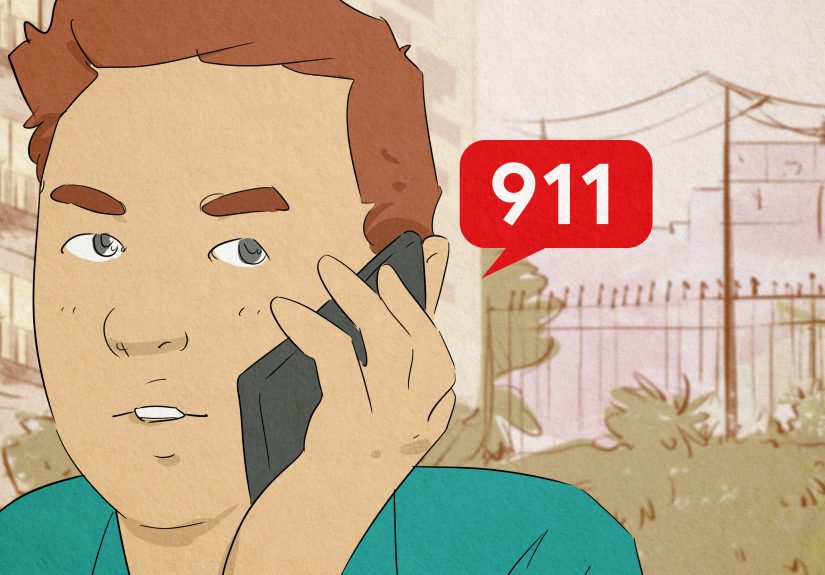
- Call or text 911 if you are in immediate danger or it is unsafe to speak aloud.
If you are driving and think someone is following your car, head to a busy public place or a police or sheriff’s station if one is nearby. Do not drive to your driveway and hand over your home address like a free loyalty reward.
8. Make Parking-Lot and Doorway Moments Fast and Boring
Many vulnerable moments happen in transition: walking to your car, unlocking your door, carrying bags, digging for keys, or loading the trunk while half your attention is in another universe. These moments are not ideal for multitasking.
Make them cleaner:
- Have your keys ready before you reach your car or front door.
- Park in well-lit areas with visibility.
- Check around and inside your car before getting in.
- Lock the doors as soon as you enter.
- Do not linger in your vehicle scrolling messages before driving off.
The safer move is to be quick, calm, and boring. Boring is underrated. Boring gets home.
9. If a Confrontation Starts, Prioritize Escape, Distance, and Help
If trouble is no longer theoretical and someone is threatening you, your priorities change. At that point, your best options are usually to create distance, get to safety, attract attention, and get help as fast as possible.
That may mean:
- moving quickly toward a crowded space,
- yelling for help if people are nearby,
- using a loud, simple command like “Back up!” or “Call 911!”,
- giving up property if a robber is demanding it, rather than risking a violent struggle.
If you get away, go to a safe place immediately. Then call 911. If you are injured, seek medical attention. After any violent incident, taking care of your body and mental health matters just as much as making the report.
10. Build a Personal Safety Routine Before You Need One
The best safety habits are the ones that feel automatic. Build a simple routine you can use without overthinking:
- Charge your phone before going out.
- Share your location or arrival plan with one trusted person when needed.
- Know which businesses on your route stay open late.
- Memorize one or two emergency contacts.
- Use safety apps or campus escort options if available.
- Take a reputable self-defense or safety-awareness class if you want more confidence.
A routine gives you fewer decisions to make when stress hits. Under pressure, simple beats fancy every time.
Common Mistakes That Can Increase Your Risk
Sometimes how to avoid getting jumped comes down to not making life easier for the wrong person. Here are some common mistakes people make without realizing it:
- walking while texting in isolated areas,
- wearing both earbuds at night,
- taking secluded shortcuts to save a minute,
- going home when you suspect you are being followed,
- staying polite with someone who is making you uncomfortable,
- fumbling for keys outside your car or door,
- assuming “it’s probably nothing” when your instincts are screaming otherwise.
No one follows every rule perfectly. The point is not perfection. The point is increasing your margin for safety.
What to Do Right After an Attack or Attempted Attack
If the worst happens, focus on the next right step, not the perfect one.
- Get to a safe place. A business, friend’s home, security desk, or anywhere with people is better than staying where the incident happened.
- Call 911. Share your location, what happened, and a description of the person if you can.
- Get medical care. Even if injuries seem minor, adrenaline can hide pain.
- Save details. Write down what you remember: clothing, direction of travel, car type, time, and location.
- Ask for support. Violent incidents can leave emotional aftershocks. Talking to a trusted person, advocate, or counselor is not weakness. It is recovery.
Experience-Based Examples: How These Situations Often Play Out in Real Life
The following examples are realistic composite scenarios based on common situations described in personal safety education. They are useful because danger rarely announces itself with dramatic background music. Usually, it starts small.
Scenario one: A college student leaves the library after dark and starts walking home with music in both ears. Halfway there, she notices a man behind her at two different corners. Instead of going straight home, she crosses the street, sees that he crosses too, and immediately goes into a convenience store. She tells the clerk, “I think I’m being followed.” The man keeps walking. Nothing physical happens, but her decision matters. She trusted the pattern early instead of waiting for certainty.
Scenario two: A restaurant worker finishes a late shift and heads to the parking lot while checking messages. He is carrying leftovers, his phone, and a jacket, which means his hands and attention are both busy. He spots someone hanging near the darker end of the lot and suddenly realizes he has no keys ready. He turns around, goes back inside, asks a coworker to walk out with him, and leaves a few minutes later. Could that person have been harmless? Maybe. But the safer choice was still the right one.
Scenario three: A woman waiting for a rideshare notices a stranger trying to start a personal conversation and inching closer even after she steps away. Rather than staying rooted to the spot, she moves nearer to the entrance of a busy hotel, stands where staff can see her, and calls a friend while she waits. The stranger loses interest once the situation becomes visible and inconvenient. That is a recurring theme in personal safety: people looking for easy opportunities often back off when the target becomes harder to isolate.
Scenario four: A man walking back from a transit stop gets approached by two people demanding his wallet. He does not argue, does not make sudden moves, and does not try to prove he has watched too many crime dramas. He hands over the wallet, backs away when he can, and goes straight into a nearby business to call 911. Later, he feels shaken and embarrassed, even though he did the smart thing. That emotional reaction is normal. Surviving safely is not cowardice. It is success.
These examples all point to the same lesson: personal safety is often about small early decisions. Looking up. Changing direction. Going inside. Asking for help. Leaving before the situation becomes a test of toughness. The smartest move is often the least cinematic one. And honestly, that is good news. It means ordinary habits can do a lot of heavy lifting.
Final Thoughts
If you want to know how to avoid getting jumped, start with awareness, not fear. Keep your attention up, choose better routes, trust your instincts sooner, and make a habit of moving toward people and help when something feels wrong. The aim is not to live nervously. It is to move through the world with more control, more confidence, and fewer preventable risks.
You do not need to become paranoid, confront everyone, or rehearse roundhouse kicks in a parking garage. You just need practical personal safety tips that work in the moments most people actually face. Stay alert. Stay mobile. Stay hard to isolate. And whenever possible, let common sense be the loudest voice in the room.