Table of Contents >> Show >> Hide
- What You’re Actually Trying to Do (In Plain English)
- Step 1: Make the Scene Safer (Yes, Even Before Touching Anything)
- Step 2: Call 911 (Or Tell Someone Else to Call)
- Step 3: Control the Bleeding (The Main Event)
- Step 4: Watch for Shock (And Treat It Early)
- Step 5: Check Breathing and Responsiveness
- Step 6: Special Situations (Where You Should Be Extra Cautious)
- What Not to Do (A Quick List That Prevents Big Mistakes)
- After the Emergency: Why Medical Care Still Matters
- A Simple “Stab Wound First Aid” Script You Can Remember
- Experiences and Real-World Lessons (What People Learn the Hard Way)
- Conclusion
Important: A stab wound is a medical emergency. This guide is for immediate first aid while you wait for professional helpnot a substitute for medical care. If you’re in the U.S., call 911 right away.
What You’re Actually Trying to Do (In Plain English)
In the first minutes after a stabbing, your goals are simple:
- Get help fast (EMS can do what you can’tIV fluids, surgery, advanced airway care).
- Stop life-threatening bleeding (blood loss is the urgent danger you can influence).
- Prevent shock from getting worse (keep the person warm, still, and monitored).
- Don’t make it worse (no digging, no “checking the depth,” no removing objects).
If you remember nothing else: call 911, apply firm pressure, keep them warm, and stay with them. Your inner action-movie hero can take a seatthis is a “boring wins” situation.
Step 1: Make the Scene Safer (Yes, Even Before Touching Anything)
1) Check for ongoing danger
Before you kneel down to help, look around. If the area isn’t safe (ongoing violence, traffic, broken glass, etc.), move to safety and call 911. You can’t help if you become the second patient.
2) Protect yourself from blood exposure
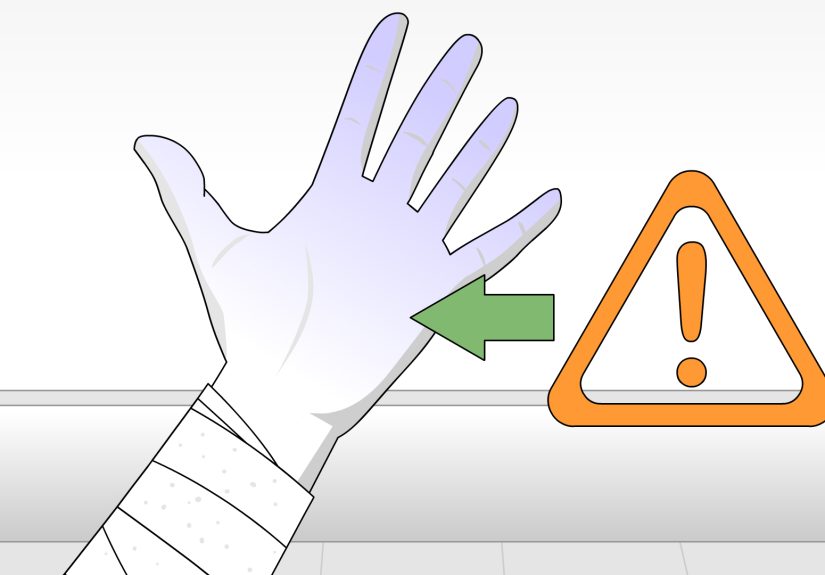
If you have gloves, put them on. If you don’t, use a barrier (plastic bag, thick cloth) between your hands and blood when you can. This isn’t being dramaticthis is being smart.
Step 2: Call 911 (Or Tell Someone Else to Call)
Call 911 immediately for any suspected stab woundespecially if there’s bleeding that won’t stop, the wound involves the head/neck/chest/abdomen, the person is pale/weak/confused, or they’re having trouble breathing.
If other people are present, delegate like a director on opening night:
- Person A: “Call 911 and stay on the line.”
- Person B: “Bring a first aid kit, clean cloths, or gauze.”
- Person C: “Look for an AED (if available) and clear space.”
Step 3: Control the Bleeding (The Main Event)
Bleeding control is the most important first aid skill in severe trauma. Start with the simplest, most effective method: direct pressure.
3A) Apply direct pressurehard and steady
- Expose the wound if possible (cut or move clothing aside).
- Place a clean cloth or gauze on the wound.
- Press firmly with both hands and do not “peek” every few seconds.
- If blood soaks through, add more layers on topdon’t remove the first layer.
Direct pressure works because it helps compress bleeding vessels. It’s simple, but it’s not gentle. Be firm.
3B) If there’s an object still in the wound: do NOT remove it
If a knife or other object is embedded, don’t pull it out. Removing it can drastically worsen bleeding.
- Apply pressure around the object, not on top of it.
- Stabilize the object in place with bulky dressings or folded cloths on either side.
- Keep the person as still as possible until EMS arrives.
3C) For heavy bleeding on an arm or leg: use a tourniquet (if available)
For life-threatening limb bleeding that won’t stop with direct pressure, a commercial tourniquet can be lifesaving.
- Place the tourniquet on the limb above the wound (closer to the body).
- Tighten until the bleeding stops.
- Note the time it was applied and tell EMS.
- Do not remove it once appliedlet professionals handle that decision.
If you’ve never used one, don’t panic. Many tourniquets have printed instructions and are designed for fast use.
3D) Wound packing: only if you’re trained and it’s the right location
Some bleeding can’t be controlled well by pressure alone (for example, deep wounds in areas where tourniquets can’t be used). In structured bleeding-control training, people learn wound packingfirmly filling a deep bleeding wound with gauze and holding pressure.
If you are not trained, focus on direct pressure and call 911. If you are trained (for example, through a bleeding-control course), follow your training steps and keep continuous pressure until help arrives.
Step 4: Watch for Shock (And Treat It Early)
Shock can happen when the body isn’t getting enough blood flowoften from major bleeding. It can sneak up fast.
Common signs of shock
- Pale, cool, or clammy skin
- Weakness, dizziness, fainting
- Confusion or unusual anxiety
- Fast breathing or fast pulse
- Extreme thirst, nausea
What to do for shock while waiting for EMS
- Lay them down if you can do so safely.
- Keep them still (movement can worsen bleeding).
- Keep them warm with a jacket or blanket (even if it’s not “that cold”).
- Do not give food or drink (surgery/anesthesia may be needed, and drinking increases choking risk).
- If they vomit and there’s no suspected spinal injury, turn them on their side to reduce choking risk.
Step 5: Check Breathing and Responsiveness
Bleeding control is crucialbut so is basic life support.
If the person is awake
- Keep them talking if possible. Talking = breathing and brain perfusion are at least present.
- Coach them to take slow breaths.
- Continue firm pressure on bleeding.
If the person becomes unresponsive
- Call 911 (or confirm it’s already done).
- Check breathing.
- If they are not breathing normally, start CPR if you’re trained (or follow dispatcher instructions).
- If an AED is available, use it as directed.
Step 6: Special Situations (Where You Should Be Extra Cautious)
Stab wounds to the chest, neck, or abdomen
These areas can involve internal bleeding or airway problems. Your priorities stay the samecall 911 immediately, keep the person still, and control any external bleeding with careful pressure.
- Don’t probe the wound.
- Don’t try to “clean deep inside.”
- Don’t attempt home fixes (no gluing, no powders, no “closing it up”).
- If there’s an embedded object, stabilize it and apply pressure around it.
Small-looking punctures that “aren’t bleeding much”
Stab wounds and punctures can look deceptively minor on the surface while being serious underneath. Even if bleeding seems limited, professional evaluation is still importantespecially for infection risk and tetanus protection.
What Not to Do (A Quick List That Prevents Big Mistakes)
- Don’t remove an embedded object.
- Don’t wash or irrigate a deep bleeding wound when severe bleeding is presentstop bleeding first and let professionals handle cleaning.
- Don’t “check the depth” with fingers, tweezers, cotton swabs, or curiosity.
- Don’t use household adhesives (including superglue) on a serious puncture wound.
- Don’t give pain medicine, alcohol, or food/drink while waiting for EMS.
- Don’t stop pressure too soon because you “think it’s better.” Stay consistent until help arrives.
After the Emergency: Why Medical Care Still Matters
Once EMS takes over, the next phase is about preventing complications and treating hidden injury. Even “stable” puncture wounds often require medical attention because of:
- Infection risk (puncture wounds can trap bacteria deep inside).
- Tetanus risk (especially if immunizations aren’t up to date).
- Internal injury that isn’t obvious from the outside.
Tetanus: the “boring” complication that can be serious
Tetanus is rare in the U.S. thanks to vaccinesbut puncture wounds are exactly the kind of injury that can raise concern. A clinician may recommend a booster based on your vaccine history and the type of wound.
Watch for signs of infection (in the days after)
- Increasing redness, warmth, swelling, or pain
- Drainage from the wound
- Fever or feeling unwell
- Red streaking away from the wound
If any of these appear, medical evaluation is important.
A Simple “Stab Wound First Aid” Script You Can Remember
If panic is doing jazz hands in your brain, repeat this:
- Safe? Make sure you’re not in danger.
- 911. Call or assign someone to call.
- Pressure. Press hard on the wound (around any embedded object).
- Warm + still. Prevent shock and monitor breathing.
Experiences and Real-World Lessons (What People Learn the Hard Way)
You don’t need to be an EMT to help in a bleeding emergency, but real-world experiences from first aid and bleeding-control training tend to repeat a few consistent themes. If you’ve ever watched people practice on training mannequins or simulated wounds, you’ll notice that most “mistakes” come from normal human instinctsinstincts that are great for avoiding spiders, but not so great for trauma care.
Lesson #1: People underestimate pressure. In classes, the most common feedback instructors give is: “More pressure. More pressure. Okayyes, like that.” New helpers often press the way they’d press a doorbell. Severe bleeding needs a “I’m trying to stop a leak in a garden hose” level of firmness. The awkward part is that it can feel aggressive, especially if the injured person is alert and reacting. But controlled, steady pressure is exactly what helps. When trainees finally press hard enough, the change is immediate: less bleeding, less chaos, and more control.
Lesson #2: The urge to look is strongand unhelpful. People constantly lift the cloth to “see if it’s working.” It’s understandable: your brain wants a progress bar. But every time you lift the dressing, you can break the clotting process and restart bleeding. Experienced responders often coach bystanders with a simple rule: “Keep pressing. Don’t peek. If it soaks through, add more.” In real emergencies, that steady, unbroken pressure is often the difference between “holding things together” and “we’re losing ground.”
Lesson #3: Delegation is a superpower. In public emergencies, the scene can get crowded fastpeople filming, people yelling suggestions, and one person trying to do everything. Training emphasizes giving clear, specific tasks: “You in the blue shirtcall 911.” “Youbring clean towels.” “Youguide paramedics to us.” When helpers do this, the whole scene becomes calmer. It also reduces the risk that everyone assumes “someone else called” when nobody did.
Lesson #4: Tourniquets aren’t “last resort” in the way movies imply. A lot of folks have outdated ideas that tourniquets automatically cause limb loss. Modern guidance emphasizes that a properly applied commercial tourniquet can save a life when limb bleeding is life-threatening and not controlled by pressure. In training scenarios, once trainees see how quickly a tourniquet can stop simulated catastrophic bleeding, it changes their mindset from “That seems extreme” to “That’s a tool for exactly this problem.” The real-world takeaway: if you have one available and the bleeding is severe on an arm or leg, using it correctly can be the safest move while waiting for EMS.
Lesson #5: “Small” punctures can still be serious. People frequently report being surprised when clinicians take a “tiny-looking” puncture seriously. The reason is simple: punctures go deep, carry bacteria inward, and may injure structures you can’t see. Many families have stories of someone stepping on something sharp or getting a small puncture and thinking it’s fineonly to need medical care learn about tetanus boosters, antibiotics, imaging, or deeper wound management. The good news is that seeking care early is usually straightforward. The bad news is that delaying can turn a manageable problem into a bigger one.
Lesson #6: Comfort measures matter more than you think. In trauma situations, panic and shock can amplify each other. People who’ve helped in emergencies often mention that calm communication made a huge difference: “Help is coming.” “I’m staying with you.” “Keep breathing slowly.” These phrases don’t sound “medical,” but they reduce fear, keep the person cooperative, and help you keep pressure in place. Also, keeping the person warmyes, even with a random hoodieshows up repeatedly in after-action stories because cold stress can worsen outcomes.
Lesson #7: Training pays off, even if you never “use it.” Many people who take first aid or bleeding-control classes say the biggest benefit is not becoming a superhero; it’s becoming less frozen when something scary happens. They’re quicker to call 911, quicker to apply pressure, and less likely to do risky things (like pulling out objects or “cleaning” a severe wound on scene). If you want one practical follow-up after reading this: consider taking a community first aid course or a bleeding-control class. It turns “I read an article once” into muscle memory.
Conclusion
Attending to a stab wound is about fast, focused first aid: call 911, control bleeding with firm pressure (and a tourniquet for severe limb bleeding if you have one and know how to use it), don’t remove embedded objects, and treat for shock by keeping the person warm, still, and monitored. Even if the wound looks small, punctures can hide serious damage and infection riskso professional medical evaluation is essential. In emergencies, calm, consistent action beats panic every time.