Table of Contents >> Show >> Hide
- Why depression hits hard in medical school (and why it’s not a personal failure)
- Meet Alex (a composite story based on real patterns)
- Step 1: He named the problem (and stopped arguing with symptoms)
- Step 2: He got real treatment (not just “self-care”)
- Step 3: He made a safety plan for the dangerous days
- Step 4: He stopped trying to “out-tough” the curriculum and asked for accommodations
- Step 5: He rebuilt daily life with “minimum viable habits”
- Step 6: He learned the “clinical years” survival skills
- What his classmates did that actually helped (and what didn’t)
- When it’s urgent: use crisis support
- Conclusion: The unsexy truth that saved him
- Extra: of “what it actually felt like” (and what Alex wishes someone told him)
Disclaimer: This article is for educational purposes and isn’t medical advice. If you’re in danger of harming yourself or feel like you might, call/text 988 in the U.S. for immediate support.
Medical school trains you to spot subtle symptoms, memorize terrifyingly long lists, and function on caffeine plus sheer stubbornness. What it doesn’t always train you to do is notice when you are the patient.
This is the story of how one medical studentlet’s call him Alextook care of severe depression while still showing up for anatomy lab, shelf exams, and that one attending who says “fun fact” right before asking you something you’ve never heard of. Alex’s path isn’t a magical montage where everything gets better in two weeks. It’s a realistic, evidence-based approach: professional treatment, safety planning, support systems, and a lot of small daily choices that add up.
And yesthere’s humor here, because sometimes the only thing standing between you and a spiral is a joke that buys you ten seconds of breathing room. But we’ll keep it respectful, because severe depression is not a “just do yoga” situation.
Why depression hits hard in medical school (and why it’s not a personal failure)
Medical students face a potent mix of chronic stress, sleep disruption, high stakes evaluation, and a culture that can reward perfectionism while quietly punishing vulnerability. Research has consistently found elevated rates of depressive symptoms and suicidal ideation among medical students compared with many peer groups. That doesn’t mean med school “causes” depression in every studentbut it can absolutely amplify risk, especially for people with prior anxiety/depression, trauma history, or limited support.
Also: depression is not “sadness with extra steps.” It’s a full-body, full-brain condition that can change sleep, appetite, concentration, energy, motivation, and even physical pain. When Alex got sick, it wasn’t because he lacked grit. He had plenty. His brain and nervous system were waving a white flag.
Meet Alex (a composite story based on real patterns)
Alex isn’t one specific person. He’s a composite built from common experiences reported by U.S. medical trainees, mental health clinicians, and academic medical centers. The details are “true-to-life,” not a diary transcript.
Alex entered med school with a strong academic record and a personality that could be summarized as: “I can handle it.” First year was intense but manageable. Second year, as exams piled up, he started sleeping less and isolating more. By the time dedicated board study arrived, he was running on fumes. Then, during a clinical rotation, he hit a wall so hard it felt physical.
He didn’t just feel down. He felt flat. Food tasted like cardboard. He forgot simple instructions. He stared at the shower like it was an Olympic event. He started thinking, “If I disappeared, everyone would be better off.”
That last thought scared him. It also saved himbecause it finally made the situation undeniable: this was severe depression, not “a rough week.”
Step 1: He named the problem (and stopped arguing with symptoms)
Alex’s first major shift wasn’t medication or therapy. It was the moment he stopped debating whether he “deserved” help.
He had been doing what many trainees do: explaining away symptoms as laziness, weakness, burnout, or “just stress.” But depression has a classic trick: it convinces you that you’re the problem, not the illness.
He used a simple screening questionnaire (the kind primary care clinics commonly use) and realized how far things had slid. That didn’t diagnose him by itselfbut it gave him a language for what was happening. He wasn’t “bad at med school.” He was ill.
Key insight: Naming it didn’t fix it. Naming it made it treatable.
Step 2: He got real treatment (not just “self-care”)
Alex did what medical students often resist: he became a patient on purpose.
He started with professional assessment
He booked an appointment with a clinician outside his evaluation chain. That mattered. Many medical schools encourage confidential mental health services and separate treatment from academic oversight to reduce fear and stigma. Alex wanted to speak freelyabout symptoms, sleep, concentration, and suicidal thoughtswithout worrying it would be relayed back as gossip or grading bias.
At that visit, a clinician evaluated severity, safety, possible medical contributors (like thyroid issues or anemia), and comorbid anxiety. They discussed options: psychotherapy, medication, or both.
He chose therapy that matched depression (structured, practical, evidence-based)
Alex started cognitive behavioral therapy (CBT). He liked that it had structurehome practice, specific goals, and skills he could use at 2 a.m. when his thoughts turned into a courtroom drama where he was both defendant and jury.
CBT helped him:
- Spot “thought traps” (catastrophizing, mind-reading, all-or-nothing thinking).
- Separate feelings from facts (“I feel hopeless” vs. “Things are hopeless”).
- Do behavioral activationsmall actions that rebuild momentum when motivation is gone.
He also learned a surprising truth: you don’t wait to feel better to do life. You do tiny parts of life to give your brain evidence that “better” is still possible.
He used medication as a tool, not a personality change
Because his depression was severe and impairing, Alex and his clinician also discussed antidepressants. He was wary. Like many trainees, he worried medication would dull him, change who he was, or show up as a “weakness.” His clinician reframed it: medication is not a moral verdict. It’s a lever on biologysleep, appetite, energy, anxiety, and intrusive rumination.
They talked through expected timelines (often several weeks for meaningful improvement), side effects, follow-ups, and what to do if symptoms worsened. Alex started a second-generation antidepressant and tracked sleep, energy, and mood with simple weekly notes.
He didn’t feel instantly great. He felt slightly less pinned to the floor. That was enough to keep going.
Step 3: He made a safety plan for the dangerous days
Severe depression can include suicidal thinking. Alex didn’t want drama. He wanted a plan.
With his therapist, he created a safety plana short, practical document he could follow when his brain stopped being reliable. It included:
- Warning signs that he was sliding (isolating, skipping meals, doom-scrolling, “goodbye” thoughts).
- Internal coping actions that didn’t require motivation (cold water on face, five-minute walk, guided breathing).
- People he could text “I’m not okay” without explaining everything.
- Professional resources (clinic number, after-hours line).
- Emergency steps (call/text 988; go to the ED; don’t stay alone).
He also reduced access to lethal means in his environmentanother evidence-informed safety stepby putting distance between impulsive thoughts and irreversible actions. Severe depression can be episodic; safety planning buys time until the episode passes.
Step 4: He stopped trying to “out-tough” the curriculum and asked for accommodations
This step felt like swallowing glass. Alex thought accommodations meant he wasn’t cut out for medicine. But he realized something: physicians make care plans. They don’t refuse care plans out of pride.
He contacted student affairs/disability services (not a random administrator, and not an attending on his service) and discussed options such as:
- Adjusted exam timing or reduced-load scheduling.
- Temporary leave of absence when medically necessary.
- Protected time for therapy appointments.
He didn’t ask for special treatment. He asked for medically appropriate support so he could function and recover while still progressing.
In practice, his school helped restructure one rotation and gave him flexibility around appointments. That didn’t “solve” depressionbut it removed avoidable stressors that were worsening it.
Step 5: He rebuilt daily life with “minimum viable habits”
When depression is severe, advice like “exercise more” can feel like telling a drowning person to “just swim.” Alex’s therapist used a different strategy: minimum viable habitsthe smallest action that still counts.
Sleep: he protected a window, not perfection
He set a realistic sleep window and treated it like a medication dose. Not perfect. Just protected. He used simple rules: no studying in bed, lights down earlier, and if he couldn’t sleep, he did a low-stimulation activity until drowsy.
Food: he used “default meals”
Decision fatigue is real. He kept a short list of default meals that required no creativity: yogurt + granola, rice + eggs, pre-made salads, protein shakes. The goal wasn’t culinary excellence; it was stable blood sugar and fewer crashes.
Movement: he stopped calling it “working out”
He did 10-minute walks, sometimes just around the hospital parking lot like a very stressed ghost. Movement helped sleep and moodnot because it was cute wellness culture, but because it changed physiology.
Connection: he scheduled low-pressure contact
Alex picked two people and made a simple pact: a check-in text every other day. Not therapy. Not a confession booth. Just: “Alive. You?” Depression loves isolation; he made isolation harder.
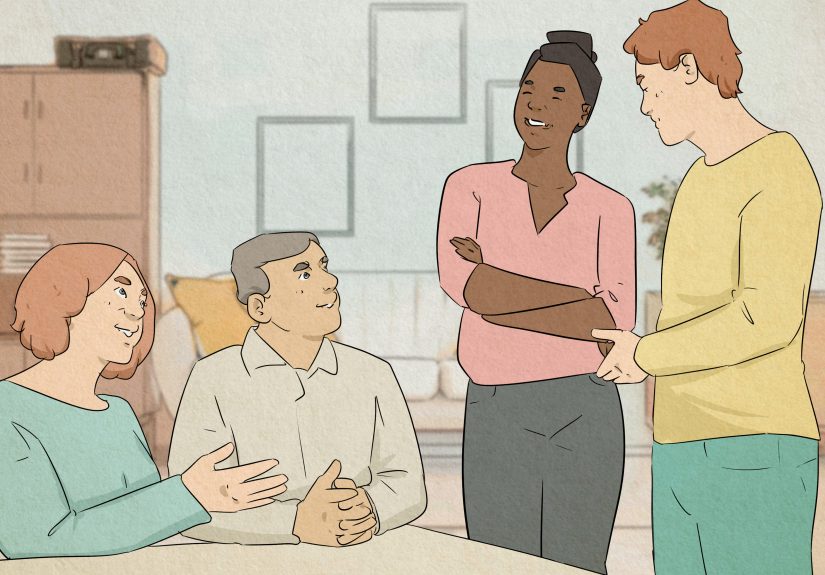
He also joined a peer support space (outside grading structures) where people spoke honestly about mental health without pretending everyone is thriving on green smoothies and gratitude journals.
Step 6: He learned the “clinical years” survival skills
When Alex returned to full clinical rotations, he didn’t pretend depression had vanished. Instead, he treated recovery like ongoing managementsimilar to asthma or diabetes: monitor, adjust, follow the plan.
What helped most:
- Pre-rotation planning: therapy sessions scheduled in advance; sleep plan; backup meals.
- Micro-boundaries: a 15-minute decompression ritual after shifts (shower, snack, silence).
- Mentorship: one resident and one faculty mentor who normalized mental health care.
- Reality checks: when feedback stung, he asked, “Is this about my worthor one skill to practice?”
He still had bad days. But he stopped treating bad days like proof he was doomed.
What his classmates did that actually helped (and what didn’t)
Some classmates were fantastic. Some tried, but accidentally made it worse.
Helpful:
- “Want company while you eat?” (concrete support)
- “I can walk with you to student health.” (removes friction)
- “No pressurejust checking in.” (connection without demand)
- Respecting confidentiality and not turning his pain into gossip
Not helpful:
- “But you’re so smart!” (depression doesn’t care)
- “Just think positive.” (thanks, I’m cured)
- “Other people have it worse.” (irrelevant and isolating)
When it’s urgent: use crisis support
If you’re in the U.S. and you’re thinking about harming yourself, or you feel unsafe, call/text 988 or use chat support. It’s free, confidential, and available 24/7. If immediate danger is present, call emergency services or go to an emergency department.
Conclusion: The unsexy truth that saved him
Alex didn’t recover because he found a secret “med student hack.” He recovered because he did the boring, brave stuff consistently: he got assessed, started evidence-based therapy, used medication when appropriate, built a safety plan, asked for accommodations, and rebuilt daily functioning with small steps.
He also learned something that future physicians deserve to learn early: getting help is not an interruption of your training. It is part of becoming the kind of clinician you’d trust.
If you’re reading this and recognizing yourself, consider this your permission slipsigned by realityto get support. Depression is treatable. You don’t have to white-knuckle it alone.
Extra: of “what it actually felt like” (and what Alex wishes someone told him)
Alex describes severe depression in med school like carrying an invisible backpack full of wet concrete. Everyone else looked like they were speed-walking through life, and he was trudging through molasses, pretending he was “just tired.” He got weirdly good at performing competence. He could present a patient, answer pimp questions, and then go home and stare at a wall like it was a required reading assignment.
The most confusing part was how depression hijacked meaning. Things that used to mattermedicine, friends, even musicfelt like they belonged to someone else. He’d think, “If I can’t feel joy, what’s the point?” That’s a classic depression lie: it makes temporary numbness feel permanent. If Alex could time-travel, he’d tell himself: “Your brain is running a faulty forecast model. Don’t make lifetime decisions based on today’s weather.”
He also wishes someone explained that treatment isn’t linear. In week three of therapy, he had a rough day and assumed he was failing recovery. His therapist reframed it: a bad day is not a relapse; it’s data. What were the triggers? Did he skip meals? Sleep four hours? Avoid people? It turned recovery into a clinical problem-solving processironically, something med students are good atexcept the patient was him.
Medication was another emotional hurdle. Alex feared becoming “not himself.” What he experienced was more like getting his baseline back. He didn’t turn into a robot; he became less trapped in rumination. The biggest benefit wasn’t sudden happinessit was capacity. Capacity to shower. Capacity to read. Capacity to respond to a friend’s text without feeling like he was lifting a car.
On rotations, he learned practical survival tactics that sound laughably small until you try them depressed. He kept “floor snacks” in his bag (protein bar, nuts) because hunger made everything darker. He stopped studying in bed because his brain began to associate bed with panic. He used a two-sentence journal at night: “One thing I did. One thing I need.” That was it. Depression tried to demand a 12-page essay on his failures; he gave it two sentences and went to sleep.
And the most underrated tool: telling one trusted person the truth. Alex picked a friend and said, “I’m dealing with depression. I’m in treatment. I may be quiet sometimes, but I’m not ignoring you.” That single conversation reduced shame, and shame reduction is rocket fuel for recovery.
His final lesson was humbling: he couldn’t outsmart depression alone, even as a future doctor. But with care, support, and structure, he didn’t just survive med schoolhe learned how to practice the medicine he’ll one day recommend to patients: compassionate, evidence-based, and real.