Table of Contents >> Show >> Hide
- What Is Honey Mustard Dressing, Exactly?
- The Flavor Formula: Sweet + Tangy + Savory
- Two Styles You Can Master in One Afternoon
- Base Recipe: 5-Minute Honey Mustard Dressing (Choose Your Adventure)
- Flavor Tweaks That Make It Yours
- What to Put Honey Mustard Dressing On (Besides Salad)
- Troubleshooting: Fix a “Meh” Dressing Fast
- Storage, Meal Prep, and Food Safety
- Homemade vs. Store-Bought: Which One Wins?
- Kitchen Experiences With Honey Mustard Dressing (Real-Life Moments, No Fancy Apron Required)
- Conclusion
- SEO Tags
If your salad has been feeling emotionally unavailable lately, honey mustard dressing is the relationship counselor it deserves. Sweet, tangy, a little punchy, and wildly adaptable, this classic can go from “simple weeknight salad” to “why is everyone hovering around the veggie platter?” in about five minutes.
In this guide, you’ll learn exactly how honey mustard dressing works, how to nail the flavor balance, and how to spin it into a vinaigrette, a creamy dip, a quick marinade, or a glossy glaze. Basically: one jar, endless opportunities.
What Is Honey Mustard Dressing, Exactly?
At its core, honey mustard dressing is a sweet-and-tangy blend built from two starshoney and mustardplus a supporting cast that usually includes an acid (like vinegar or lemon juice), fat (oil, mayo, or yogurt), and seasonings.
Depending on what you add, it can land in a few different categories:
- Honey mustard vinaigrette (oil + vinegar): bright, pourable, and great on greens.
- Creamy honey mustard dressing (mayo or yogurt): thicker, clingier, and excellent for dipping.
- Honey mustard sauce (often mayo-forward): a sandwich spread and nugget bestie.
The Flavor Formula: Sweet + Tangy + Savory
Honey mustard dressing tastes “right” when four notes are in harmony: sweetness, acidity, richness, and salt. If one is too loud, the whole band sounds off. Here’s how to control the mix.
Sweetness (Honey)
Honey brings sweetness, yesbut also floral depth. A mild clover honey keeps things classic. A darker honey (like buckwheat) can taste more robust and slightly bitter, which some people love and others find… dramatic.
Tang (Mustard + Acid)
Mustard adds bite and personality. Dijon is smooth and sharp; yellow mustard is milder and nostalgic; whole-grain gives texture and a gentler heat. Add vinegar (apple cider, red wine, white wine, or balsamic) or lemon juice to brighten everything and keep it from tasting flat.
Richness (Oil, Mayo, or Yogurt)
Fat rounds the edges. Olive oil makes a classic vinaigrette (peppery and grown-up). Mayo makes it creamy and dip-like. Greek yogurt makes it tangier and lighter, with a thicker body that still feels satisfying.
Salt + Seasoning (The “Why Does This Taste So Good?” Part)
Salt is the volume knob. Add black pepper, garlic, onion powder, paprika, or a pinch of cayenne to give it depth. If you want “restaurant energy,” a tiny splash of pickle juice or a pinch of MSG (optional!) can add savory oomph.
Two Styles You Can Master in One Afternoon
1) Honey Mustard Vinaigrette (Light, Bright, Pourable)
This is the version for leafy greens, grain bowls, roasted veggies, and “I need something fast” lunches. Mustard helps the oil and vinegar play nicely together, so the dressing clings instead of sliding off your salad like it’s late for an appointment.
2) Creamy Honey Mustard Dressing (Thick, Clingy, Dip-Ready)
This is for chicken tenders, wraps, crudités, and sandwiches. Mayo makes it richer; Greek yogurt makes it tangier and slightly lighter. Either way, it’s the one people “taste-test” with a finger and then pretend they didn’t.
Base Recipe: 5-Minute Honey Mustard Dressing (Choose Your Adventure)
These are reliable starting points. Taste as you gobecause honey varies, mustard varies, and your taste buds have opinions.
Option A: Classic Honey Mustard Vinaigrette (Makes about 3/4 cup)
- 3 tablespoons Dijon mustard
- 3 tablespoons honey
- 3 tablespoons apple cider vinegar (or red wine vinegar)
- 6 tablespoons extra-virgin olive oil (or neutral oil)
- 1 small garlic clove, finely grated (optional)
- 1/2 teaspoon kosher salt, plus more to taste
- Black pepper to taste
- In a bowl or jar, whisk (or shake) the mustard, honey, vinegar, salt, and pepper until smooth.
- Slowly whisk in the oil (or shake hard in a sealed jar) until the dressing looks slightly thickened and uniform.
- Taste and adjust: more honey for sweeter, more vinegar for brighter, more salt for “wow.”
Option B: Creamy Honey Mustard Dressing (Makes about 1 cup)
- 1/2 cup mayonnaise or plain Greek yogurt
- 1/4 cup Dijon mustard
- 1/4 cup honey
- 1–2 tablespoons apple cider vinegar or lemon juice
- 1–3 tablespoons water (to thin, if needed)
- 1/2 teaspoon kosher salt
- Black pepper (and a pinch of paprika, optional)
- Whisk mayo/yogurt, mustard, honey, vinegar/lemon, salt, and pepper until smooth.
- If it’s too thick, add water 1 tablespoon at a time until it pours the way you want.
- Rest 5 minutes (optional, but helpful) so flavors mellow and mingle.
Jar method tip: Add everything to a mason jar, screw on the lid, and shake like you’re trying to wake up a sleepy salad. It’s fast, low-mess, and oddly satisfying.
Flavor Tweaks That Make It Yours
Honey mustard dressing is a blank canvas that happens to taste great. Here are upgrades that don’t require a culinary degreeor a second jar.
Make it more “savory”
- Shallot: Finely mince 1–2 tablespoons for a gentle onion bite.
- Garlic: Microplane a clove for punch; roasted garlic for sweetness.
- Herbs: Dill, parsley, or chives make it feel fresh and green.
Make it smoky or spicy
- Smoked paprika: Adds warmth and a little barbecue vibe.
- Hot sauce or cayenne: A few dashes turns “sweet” into “sweet… with consequences.”
- Chipotle powder: Smoky heat that pairs beautifully with chicken and roasted sweet potatoes.
Make it brighter
- Lemon zest: A pinch lifts the whole dressing.
- White wine vinegar: Cleaner, lighter tang than apple cider vinegar.
- Champagne vinegar: Fancy, delicate, and slightly fruity.
Make it “healthier” without making it sad
- Greek yogurt base: Creamy texture with extra tang and protein.
- Use olive oil + yogurt: A hybrid that’s creamy but still bright.
- Reduce honey gradually: Start by cutting 1 tablespoon and see if you miss it (you might not).
What to Put Honey Mustard Dressing On (Besides Salad)
Honey mustard dressing is basically a multi-tool. Here are the best ways to use it so your jar doesn’t get lonely in the fridge.
Salads that love honey mustard
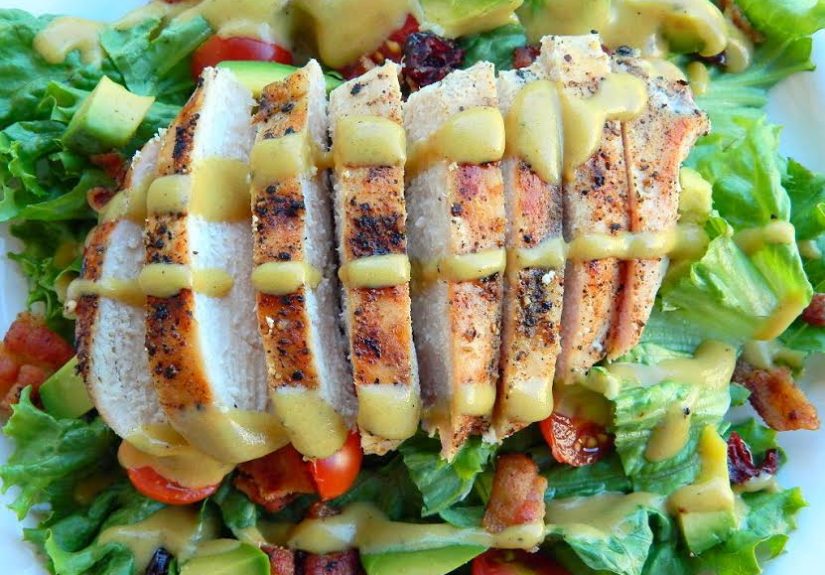
- Classic: Romaine, shredded carrots, cucumbers, and croutons.
- Autumn vibe: Mixed greens, apple slices, walnuts, and sharp cheddar.
- Power bowl: Quinoa, roasted broccoli, chickpeas, and avocado.
- Crunch party: Cabbage slaw with sunflower seeds and dried cranberries.
As a dip
- Chicken tenders, nuggets, or grilled chicken strips
- Raw veggies (carrots, bell pepper, sugar snap peas)
- Pretzels (soft or crunchyno judgment)
As a marinade or glaze
Use the vinaigrette version as a quick marinade for chicken thighs or pork tenderloin (30 minutes to a few hours). For a glaze, brush on near the end of cooking so the honey doesn’t over-brown too quickly. It’s also excellent on roasted Brussels sprouts, carrots, and sweet potatoes.
On sandwiches and wraps
Spread creamy honey mustard on turkey sandwiches, veggie wraps, or grilled cheese for a sweet-tangy twist. It’s especially good with salty meats like ham or bacon because it balances the saltiness instead of competing with it.
Troubleshooting: Fix a “Meh” Dressing Fast
“It’s too sweet.”
Add 1 teaspoon vinegar or lemon juice at a time, plus a pinch of salt. Sweetness often needs acid and salt, not an apology.
“It’s too sharp or tangy.”
Add more honey (1 teaspoon at a time) or a splash more oil/yogurt. If you used a bold vinegar (like balsamic), consider diluting with a milder one next time.
“It separated.”
Totally normal for vinaigrettes. Shake again. If you want it more stable, increase mustard slightly or whisk the oil in slowly. A small spoonful of mayo can also help bind it if you don’t mind a creamier finish.
“It’s too thick.”
Thin with water (or a splash of vinegar) 1 tablespoon at a time. For creamy versions, water is your friend.
“It’s too thin.”
Add a bit more mustard, yogurt, or mayo. Or whisk in more oil to build body in a vinaigrette.
Storage, Meal Prep, and Food Safety
Homemade dressings don’t have the preservatives of store-bought bottles, which is great for flavorbut it means you should store them smartly.
- Refrigerate it: Especially if it contains garlic, herbs, citrus, yogurt, or mayo.
- Use clean utensils: Double-dipping introduces crumbs and bacteria. (Crumbs do not belong in a dressing jar, emotionally or scientifically.)
- Expect olive oil to thicken: Olive oil can solidify in the fridge. Let the jar sit at room temperature for a few minutes, then shake.
How long does it last? As a general rule, vinaigrette-style honey mustard dressing keeps about 1–2 weeks in the refrigerator, while creamy versions are best used within about a week (sometimes sooner, depending on ingredients). When in doubt, trust your senses: if it smells off, looks moldy, or tastes bitter in a suspicious way, toss it.
Homemade vs. Store-Bought: Which One Wins?
Homemade wins when you want a fresh, bright flavor and control over sweetness, thickness, and ingredients. You can make it less sugary, more tangy, extra garlicky, or creamy without paying extra for a “chef’s kiss” label.
Store-bought wins when you need convenience, longer shelf life, and consistent texture that won’t separate. There’s no shame in grabbing a bottlejust know that homemade is often faster than you think and can taste noticeably fresher.
Kitchen Experiences With Honey Mustard Dressing (Real-Life Moments, No Fancy Apron Required)
Honey mustard dressing has a funny way of becoming a “signature” in everyday kitchensnot because it’s complicated, but because it quietly solves a bunch of small problems. Someone wants a salad but hates bitter greens? Honey mustard makes arugula taste friendlier. Someone wants something to dip carrots into but doesn’t want ranch again? Honey mustard shows up like, “Hi, I’m different, but I’m still lovable.” It’s the culinary equivalent of a playlist that works for both a road trip and folding laundry.
One of the most common experiences people have the first time they make it is realizing how much the mustard matters. Swap yellow mustard for Dijon and suddenly it tastes like a backyard cookout. Use whole-grain mustard and it feels fancy, like the dressing has opinions about wine pairings. Try a spicy brown mustard and it wakes up your taste buds like a cold splash of waterin a good way. Honey changes things too: a mild honey makes a clean, classic dressing; a darker honey can taste deeper and more intense. That’s why tasting as you go is less “chef behavior” and more “basic self-care.”
Then there’s the jar-shake ritual. People love it because it’s fast, but also because it’s oddly empowering to make something that looks like a finished product in seconds. The ingredients go in looking separate and suspicioussticky honey clinging to the bottom, mustard sitting there like a bright yellow warning signthen you shake, and it turns into a smooth, unified dressing. It’s satisfying in the same way organizing a messy drawer is satisfying. You didn’t just make dressing. You created order.
Honey mustard dressing also tends to “accidentally” become dinner. Someone makes it for a salad, then realizes it’s perfect on roasted potatoes. The next night it becomes a quick glaze for chicken because it hits sweet, tangy, and savory without needing a long ingredient list. Then it becomes a sandwich spread because the mayo-based version is basically a cheat code for bland lunches. Soon you’re keeping a jar in the fridge and making salads more oftennot because you turned into a new person, but because the barrier to entry is low and the reward is high.
And finally, there’s the universal moment: the taste test. People dip a spoon, try a little, and immediately start adjusting like a tiny dressing scientist. “Needs more tang.” “Needs more honey.” “Needs salt.” Five minutes later, it’s perfectand somehow, half the jar has vanished. That’s not failure. That’s quality control.
Conclusion
Honey mustard dressing is proof that “simple” doesn’t have to mean “boring.” With a handful of pantry ingredients, you can make a vinaigrette that brightens salads, a creamy dressing that doubles as a dip, and a sweet-tangy sauce that plays nicely with chicken, veggies, sandwiches, and snacks. Master the balancesweet, tangy, rich, saltyand you’ll never be stuck with a sad salad again.