Table of Contents >> Show >> Hide
- What Exactly Is a “Dragon Dog”?
- Why Dragon Dogs Feel Weirdly Believable
- Supplies You Need (Traditional + Digital)
- Step-by-Step: How to Draw a Dragon Dog
- 1) Pick a “Base Dog” (Silhouette First)
- 2) Start With Gesture, Not Details
- 3) Decide Your Dragon “Recipe” (Pick 2–4 Features)
- 4) Build the Head: Canine Structure With Dragon Accents
- 5) Make the Body Language Read Like a Dog
- 6) Add Wings That Make Structural Sense
- 7) Transition Fur to Scales Without Making It Weird
- 8) Color and Lighting: Make It Pop (Without Overcooking It)
- Dragon Dog Design Ideas You Can Steal (Respectfully)
- Common Mistakes (and Fast Fixes)
- Quick Prompts for the “Hey Pandas” Crowd
- FAQ
- Conclusion
- of Dragon-Dog Drawing Experiences
Somewhere between “good boy” and “ancient winged terror” lives the creature we all secretly needed:
the dragon dog. It’s the kind of idea that sounds ridiculous until you picture it
then suddenly you’re emotionally attached to a scaly puppy that could (maybe) toast your marshmallows
with a sneeze.
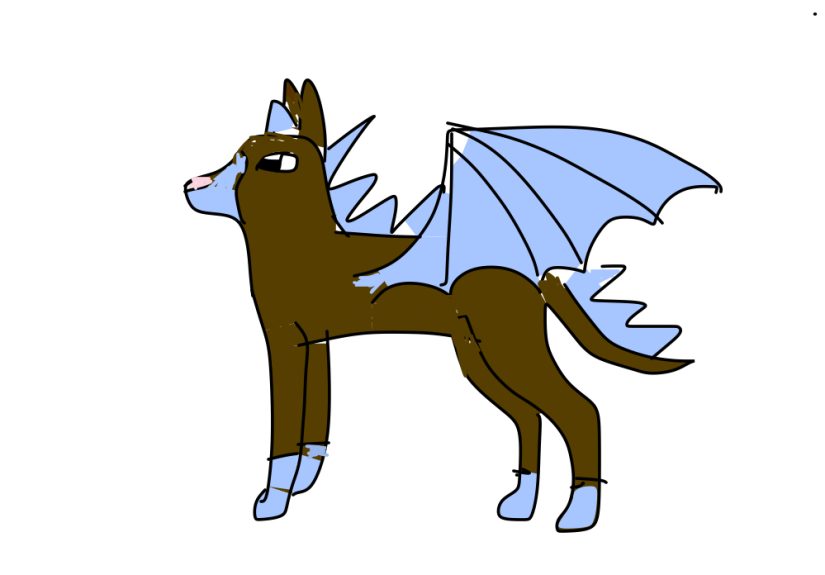
This article is your friendly, slightly chaotic guide to drawing a dragon doga believable
canine-dragon hybrid with strong anatomy, a clear silhouette, and just enough fantasy flair to make it
look like it has a backstory and a tiny criminal record (for stealing hearts).
What Exactly Is a “Dragon Dog”?
A dragon dog is a hybrid creature design: the structure and body language of a dog, combined with
recognizable dragon traitshorns, wings, scales, spines, a reptilian tail, or even elemental “vibes”
like smoke, frost, or sparks.
The key is anchoring the fantasy in something real. If the dog anatomy makes sense,
the dragon parts look like they belong there. If the anatomy is wobbly, the wings won’t save it.
(Wings have never saved anyone from bad proportions. Not even in real life.)
Why Dragon Dogs Feel Weirdly Believable
Dogs are already expressive creatures with strong silhouettesupright ears, curled tails, powerful chests,
tiny paws, long legs, or short “potato-with-feet” bodies depending on the breed. Dragons, meanwhile,
are basically the world’s most remixable myth: different cultures imagine them differently, and artists
have been mixing traits for centuries.
When you combine them thoughtfully, you get a creature that’s instantly readable:
“That’s a dog… but also absolutely not safe to pet.”
Supplies You Need (Traditional + Digital)
Traditional
- Pencil + eraser (your undo button from the physical realm)
- Fineliner or marker for clean linework
- Colored pencils or markers for scales, glow effects, and dramatic “dragon energy”
Digital
- Any drawing app with layers (one for sketch, one for line, one for color)
- A basic hard round brush + a textured brush for fur/scales
- A simple color palette (3–5 core colors is plenty)
Step-by-Step: How to Draw a Dragon Dog
1) Pick a “Base Dog” (Silhouette First)
Choose a breed typeor just a general body shapebefore you add dragon parts. This gives you
a clean foundation.
- Husky/Wolf build: athletic, heroic, perfect for a “guardian” dragon dog.
- Bulldog/Pug build: compact, comedic, and surprisingly great for armored scales.
- Greyhound build: elegant, fast, and terrifying with wings (like a flying spear).
- Corgi build: short legs + big attitude = instant fan favorite.
2) Start With Gesture, Not Details
Sketch a quick “action line” that shows the pose: running, sitting, stalking, or that classic dog move
where they look innocent while actively causing chaos.
Then build the body using simple forms:
head sphere + ribcage oval + pelvis oval.
Connect them with a flexible spine line. Add cylinders for legs.
3) Decide Your Dragon “Recipe” (Pick 2–4 Features)
Most designs look stronger when you limit the ingredients. Too many features can turn into visual soup.
Pick a few that support your concept:
- Horn type: deer-like antlers, ram horns, sharp spikes, or a single unicorn-style horn.
- Tail type: whip tail, spade tip, tufted lion tail, or finned “sea dragon” tail.
- Skin: full scales, partial scales, or “scale patches” like armor plates.
- Wings: bat wings, feathered wings, tiny vestigial wings, or none at all.
- Spines: along the back or neck like a mohawk made of danger.
4) Build the Head: Canine Structure With Dragon Accents
The head sells the hybrid. Keep the dog skull logic (muzzle length, jaw hinge, eye placement), then
layer dragon traits on top:
- Place horns where they could attach to a skull: brow ridge or back of the cranium.
- Add dragon nostrils on the muzzlebigger openings imply stronger breath power.
- Try reptile-inspired brow plates to give a “mythic” look without changing the whole face.
- Keep the ears dog-like for charm, or sharpen them for menace. (Or both: menace + charm = best combo.)
5) Make the Body Language Read Like a Dog
Even with wings and scales, your dragon dog should still “speak dog.” A raised tail, a tucked tail,
perked ears, and weight shifts communicate mood instantly. If the pose reads clearly, the design feels alive.
6) Add Wings That Make Structural Sense
Wings are not decorative stickers. For them to feel believable, attach them to a strong area of the torso
(upper back/shoulder region) and give them enough “support” visuallythicker at the base, lighter toward the tips.
Pro tip: If you’re unsure, draw smaller wings. Tiny wings can look intentional (and adorable), while badly placed
giant wings look like a furniture-moving accident.
7) Transition Fur to Scales Without Making It Weird
The secret is gradients and patches. Instead of switching from fur to scales in one harsh line,
try these transition zones:
- Scales on the forehead and down the spine, fur elsewhere.
- “Armor plates” on shoulders and hips.
- Scaled tail and legs, fluffy chest and neck like a mane.
8) Color and Lighting: Make It Pop (Without Overcooking It)
Use a limited palette:
one main color, one secondary, and one accent glow.
Glow accents (eyes, cracks between scales, breath effects) instantly communicate “dragon.”
For quick harmony, choose colors that naturally work togetherlike complementary or analogous palettes.
Keep your brightest value for the focal point (usually the face).
Dragon Dog Design Ideas You Can Steal (Respectfully)
- “Guardian Pup”: a noble, lion-like dragon dog with curled tail and temple-guardian vibes.
- “Marsh Dragon”: webbed paws, finned tail, algae greens, and sleepy amphibious energy.
- “Ember Hound”: charcoal fur, glowing orange cracks between scales, smoke coming from the nose.
- “Frost Corgi Wyvern”: tiny wings, icy breath, and unstoppable confidence.
- “Thunder Shepherd”: long fur like storm clouds, horn silhouettes like lightning forks.
- “Library Dragon Dog”: tiny spectacles (optional), scroll-carrying harness, zero patience for nonsense.
Common Mistakes (and Fast Fixes)
Mistake: The creature looks like “a dog with random spikes.”
Fix: Commit to a theme (fire, water, guardian, forest) and make every dragon feature serve it.
Mistake: Wings feel pasted on.
Fix: Draw the shoulder blades and upper back muscles first. Then attach wings as part of that structure.
Mistake: Too many textures.
Fix: Choose one hero texture (scales, fur, feathers) and keep the others quieter.
You want contrast, not confusion.
Mistake: The pose is stiff.
Fix: Add asymmetryone paw lifted, one shoulder higher, head tilt, tail curve.
Dogs rarely stand like statues unless they’re being bribed.
Quick Prompts for the “Hey Pandas” Crowd
- Draw a dragon dog that guards a bakery. What does it protect: cupcakes or secrets?
- Design a rescue dragon dog with mismatched wings (one feathered, one bat-like).
- Create a tiny dragon dog that fits in a hoodie pocket but has a very serious roar.
- Draw a “sea dragon dog” fetching pearls like tennis balls.
- Make a dragon dog based on your real pet’s personalitythen add one dramatic elemental power.
FAQ
Do I need to know anatomy to draw a dragon dog?
You don’t need a biology degree, but basic structure helps. If you can draw a simple dog “skeleton” out of shapes,
the fantasy layer will look intentional.
Should I draw a Western dragon or an Eastern dragon?
Either worksjust be consistent. Western dragons often read as winged, fire-associated beasts, while many East Asian
traditions depict dragons as long, serpentine, and tied to water and weather. Pick the vibe that supports your design.
What if my dragon dog looks silly?
Congratsyou’ve discovered one of the best outcomes. Silly dragon dogs are still dragon dogs. And honestly,
the world needs more creatures that could defeat evil and trip over their own tail.
Conclusion
Drawing a dragon dog is basically creature design in its most joyful form: start with real structure, choose a theme,
add a few strong fantasy traits, and let the personality do the rest. If the pose reads like a dog and the silhouette
reads like a dragon, you’ve nailed it. Everything after thatscales, glow, wings, dramais just the icing on the
mythical cupcake.
of Dragon-Dog Drawing Experiences
If you’ve ever joined a community art prompt like “Hey Pandas, draw a dragon dog,” you already know the best part:
everyone starts with the same silly sentence, and somehow the results look like an entire fantasy ecosystem moved into
your comment section. One artist goes full epican armored guardian hound standing on a cliff with wings spread, eyes
glowing like it’s about to deliver a prophecy. Another draws a loaf-shaped dragon dachshund with tiny wings and the
facial expression of a creature that’s offended you expected it to fly.
A very common experience for beginners is realizing the “dog part” is harder than the “dragon part.” Spikes are easy.
Poses are not. People often start by decorating a dog outline, then notice the legs don’t feel connected, the chest looks
flat, and the head feels pasted on. The breakthrough usually comes when they slow down and build the body from simple
formshead, ribcage, pelvisthen add limbs as cylinders. Suddenly, even a ridiculously cute dragon corgi looks grounded,
like it could actually waddle over and demand snacks.
Another pattern you’ll see is how much personality changes the design. Artists who focus on dog body languagetail height,
ear angle, weight shifttend to make their dragon dogs feel “real” faster. A confident dragon dog might stand tall with a
high tail and forward ears, while a shy one might crouch with wings folded tight like a cape it’s not sure it deserves yet.
People also love designing “jobs” for their dragon dogs: library guardians, mountain rescue companions, garden protectors,
or tiny apartment dragons whose main power is knocking things off shelves while making intense eye contact.
Color choices become their own learning moment. Many artists begin with “dragons are red,” then discover how fun it is to
build a theme palette: swamp greens with algae highlights, icy blues with pale glow, midnight purple with star-speckle scales.
The biggest improvement often comes from limiting the palettechoosing one main body color, one secondary for features like
horns or wing membranes, and one accent for magic glow. That simple constraint makes the design feel intentional and helps
viewers read the creature quickly.
Finally, the most relatable experience: you finish your dragon dog, post it, and immediately think, “I could do a better one.”
That’s not failurethat’s momentum. Hybrid creature prompts are powerful because they teach iteration. Every dragon dog you
draw is a tiny research project: anatomy, silhouette, texture transitions, and expression. And even when the drawing isn’t
perfect, it still delivers the main reward: you created a creature that didn’t exist five minutes ago, and now it feels like
it has a name, a favorite toy, and a sworn enemy (probably vacuum cleaners).