Table of Contents >> Show >> Hide
- The Wrong Text That Turned Into a Thanksgiving Tradition
- By The 6th Celebration, It Was Clear This Was Real
- Why America Couldn’t Stop Rooting For Them
- What Happened After Their 6th Thanksgiving?
- The Bigger Meaning Behind The Story
- Related Experiences: Why This Story Feels So Familiar To So Many People
- Conclusion
Some holiday stories feel like they were engineered in a laboratory for maximum internet happiness: a little confusion, a lot of warmth, one unforgettable meal, and just enough wholesome chaos to make everyone text their own family group chat. That is exactly why the story of Wanda Dench and Jamal Hinton keeps showing up on Thanksgiving timelines year after year. What began as an accidental text invitation in Arizona turned into a real friendship, then a beloved tradition, and by the time the pair celebrated their sixth Thanksgiving together, it was clear this was no longer a funny one-off. It was family.
That distinction matters. The internet loves a viral moment, but it respects consistency even more. Anyone can trend for a day. Not everyone can turn a wrong-number Thanksgiving invite into a six-year tradition that survives changing headlines, everyday life, grief, and the passage of time. This story stuck because it moved beyond “Look at this funny mix-up” and became something sturdier: a lesson in chosen family, kindness, and the strangely powerful idea that one small act of openness can change the shape of a life.
So yes, this is a feel-good story. But it is also a story about why people were still paying attention by year six, why the tradition kept resonating with Americans, and why a simple holiday dinner ended up becoming one of the most enduring Thanksgiving stories of the social media era.
The Wrong Text That Turned Into a Thanksgiving Tradition
The setup is now internet folklore. Back in 2016, Wanda Dench sent a Thanksgiving invitation to a number she believed belonged to her grandson. Instead, the message landed with Jamal Hinton, then a high school student who quickly realized that this was definitely not his grandmother. The two exchanged photos, confirmed the mix-up, laughed about it, and then Hinton asked the question that launched a thousand “faith in humanity restored” comments: could he still come by for a plate?
Dench’s answer was the kind of thing that instantly makes a story bigger than itself. She welcomed him anyway. No drama, no suspicion, no long debate over etiquette. Just a grandmotherly response that said, in essence, there is always room for one more person at the table. That exchange went viral for obvious reasons. It was funny. It was sweet. It took place around Thanksgiving, the American holiday most likely to produce equal parts mashed potatoes and emotional symbolism.
But the real reason the story lasted is what happened next: Hinton actually showed up. He had Thanksgiving dinner with Dench and her family, and the whole thing turned out not to be awkward, forced, or weird in a “this would make a very uncomfortable indie movie” way. It worked. A genuine bond formed. The first dinner became a second. Then a third. Then a fourth. Suddenly, an accidental text had become a yearly ritual.
Why The Story Went Viral So Fast
There are plenty of viral moments online, but only a handful become annual traditions the public actively roots for. Dench and Hinton’s story had all the ingredients. It was easy to understand in seconds, funny without being mean, emotional without being manipulative, and rooted in a universal holiday theme: the table is bigger when you make room for other people.
It also arrived at a time when audiences were hungry for something gentle. Instead of another argument-filled feed, here was a story about two strangers from different generations building an actual friendship. No one needed a complicated explainer. One mistaken text, one invitation honored, one holiday transformed. It was basically a Hallmark premise with better timing and less suspiciously perfect lighting.
By The 6th Celebration, It Was Clear This Was Real
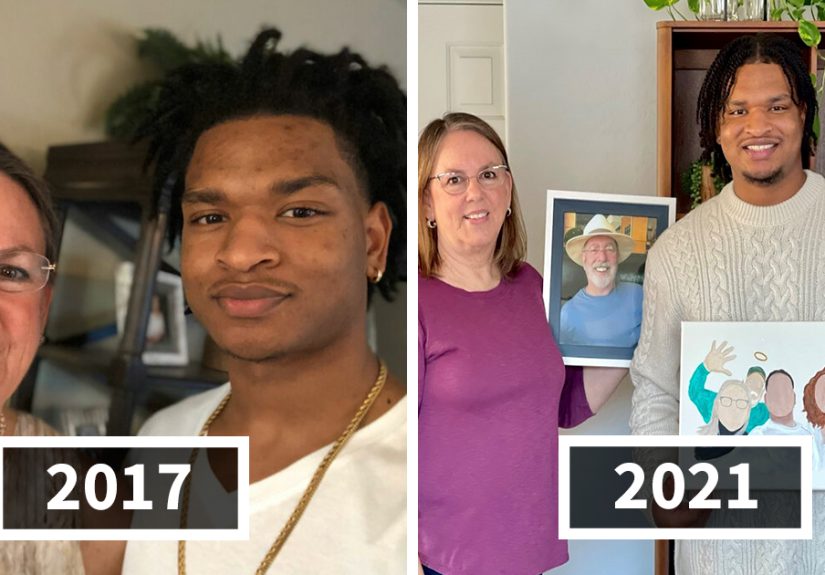
When Dench and Hinton reunited for their sixth Thanksgiving celebration in 2021, that milestone mattered for more than sentimental reasons. Year six proved the tradition had graduated from internet novelty into something deeply personal. At that point, nobody could dismiss the story as a cute social media stunt that happened to linger a bit longer than expected. Six years is long enough to reveal intent. Six years is long enough to show up for birthdays, losses, life changes, and ordinary check-ins that never make headlines.
That sixth gathering carried extra emotional weight because of what had happened the year before. In 2020, Wanda Dench’s husband, Lonnie, died from complications related to COVID-19. Reports at the time described that year’s holiday as bittersweet, and understandably so. The annual Thanksgiving tradition continued, but it did so under a cloud of grief. That changed the story in a profound way. It was no longer just about a random invitation and a charming tradition; it was also about loyalty, comfort, and the kind of friendship that remains steady when life becomes hard.
So by the time the sixth Thanksgiving arrived, people were not simply waiting for another annual photo. They were watching a living example of what it means to keep showing up for someone. The celebration represented continuity after loss. It showed that traditions can help carry people through painful seasons. In a culture that often treats “viral” as another word for “temporary,” Dench and Hinton offered the opposite: a friendship that endured.
The Difference Between A Viral Moment And A Real Bond
A lot of internet-famous stories fade because they depend entirely on the novelty of the first surprise. Once the punchline lands, there is nowhere else to go. Dench and Hinton’s story kept going because the original joke gave way to a deeper connection. The wrong text was the spark, not the substance.
That is why their sixth Thanksgiving landed with so many people. The annual reunion had become evidence. It showed that kindness can outlast virality. It suggested that chosen family is not some trendy phrase people throw around online when they want to sound emotionally evolved. Sometimes chosen family is just what happens when two people decide that a mistake turned out to be meaningful.
Why America Couldn’t Stop Rooting For Them
The phrase “heartwarming holiday story” gets thrown around so often it has practically become decorative throw-pillow language. But in this case, it fits. Americans kept following Dench and Hinton because their friendship reflected several things people desperately want to believe are still possible.
1. The Idea Of Chosen Family
Thanksgiving is supposed to be about togetherness, but not everyone experiences the holiday in the same way. For some, it is joyful. For others, it is complicated, lonely, expensive, exhausting, or all four at once with pie on top. That is one reason the Dench-Hinton tradition resonated so strongly. It reminded people that family is not always limited to blood relatives, paperwork, or the names already stored in your phone.
Chosen family has become a meaningful concept for many Americans, especially those who have moved away from home, built close networks of friends, blended households, or redefined what belonging looks like. Dench and Hinton did not just talk about that idea; they embodied it in the most practical way possible. They kept sharing Thanksgiving.
2. A Rare Example Of The Internet Making Life Better
Most people approach viral stories with the emotional caution of someone handling a casserole dish they are not sure is hot. The internet, after all, is not always a reliable delivery system for goodness. But this story felt different. It started online and stayed human. There was no cruel twist, no embarrassing reveal, no hidden marketing gimmick at the beginning. Just a stranger saying yes to dinner and a grandmother saying yes to one more guest.
That matters because people are still hungry for stories in which technology accidentally helps two human beings find each other instead of making them argue in all caps. A wrong-number text becoming a long-running friendship feels almost rebellious in an age of spam, scams, and algorithmic nonsense.
3. Thanksgiving Is Built For Stories Like This
No major holiday is more linked to the idea of extra chairs at the table than Thanksgiving. The mythology of the day, at least in modern family culture, is that everyone gets fed. Neighbors come over. New partners appear. college roommates get adopted for the afternoon. Someone’s cousin brings a friend. Somebody always says, “There’s plenty, make another plate.”
Dench and Hinton’s friendship turned that unspoken holiday rule into a public tradition. The story worked because it felt both unusual and familiar. Most people have not gone viral because of an accidental text, but a lot of people understand the larger experience of welcoming someone unexpected into a holiday celebration.
What Happened After Their 6th Thanksgiving?
The sixth celebration did not mark the end of the story. If anything, it confirmed that the friendship had become part of the modern Thanksgiving calendar. Later reporting showed that Dench and Hinton kept celebrating together, remained part of each other’s lives beyond the holiday itself, and even saw their story turned into a planned Netflix film titled The Thanksgiving Text.
That next chapter matters because it reinforces the core truth of the story: this was never just about one dinner. Over the years, their friendship evolved alongside ordinary life. There were family changes, public attention, media appearances, and business partnerships. Yet the part people cared about most remained simple. Would they still sit down together for Thanksgiving? The answer, year after year, kept being yes.
In a media environment obsessed with escalation, that kind of steadiness is surprisingly powerful. The story did not need a shocking twist to remain interesting. Its appeal came from repetition. Another year, another meal, another reminder that something good can continue.
The Bigger Meaning Behind The Story
There is a temptation to treat stories like this as adorable exceptions, the emotional equivalent of holiday candy. Nice to look at, pleasant to consume, not especially substantial. But the Dench-Hinton friendship offers something more useful than that. It shows how community can begin in ordinary moments. Not every act of openness leads to a decade of friendship, of course. If your wrong-number text is from a dentist’s office, you probably do not need to invite them over for sweet potatoes. Still, the larger idea holds.
Kindness is often less dramatic than people imagine. It is not always grand, polished, or cinematic. Sometimes it is simply refusing to shut the door on a moment that could become meaningful. Dench could have laughed off the mistake and moved on. Hinton could have ignored the text. Instead, both chose curiosity over distance. That one choice created a tradition the public still remembers.
By their sixth Thanksgiving together, the original accident had become almost beside the point. What mattered was the consistency. The repeated decision. The mutual care. The willingness to return to the table, again and again, because what started as a mix-up had become one of the most charming examples of chosen family in modern holiday culture.
Related Experiences: Why This Story Feels So Familiar To So Many People
Part of the reason this Thanksgiving story continues to connect with readers is that it mirrors experiences many people have had, even if theirs never trended online. Plenty of Americans know what it is like to discover that the holidays are not only about tradition, but also about improvisation. One guest becomes three. A neighbor shows up because they had nowhere else to go. A friend joins the table after a breakup, a move, a deployment, or a semester far from home. What starts as “Do you want to come by?” quietly becomes “Of course you belong here.”
That emotional pattern is everywhere. Families adopt college students who cannot travel home. Coworkers invite newly relocated colleagues. Military families create holiday circles out of necessity and care. Friends in big cities host “orphan Thanksgivings” for anyone without a nearby place to land. Blended families, chosen families, and friend groups often build traditions that become just as meaningful as inherited ones. In other words, Dench and Hinton’s story feels exceptional in its origin, but deeply familiar in its emotional logic.
There is also something relatable about the way accidental moments can become permanent landmarks in a relationship. Many lasting friendships begin with a misunderstanding, a coincidence, or an oddly timed encounter. The person who first felt random later becomes the one who always remembers your birthday, checks in after a hard week, or claims the same seat at your holiday table every year. Life is full of these sideways beginnings. We make elaborate plans, and then the most meaningful connection arrives through the equivalent of a wrong turn.
Another reason the story lands so well is that it speaks to grief and continuity. Holidays can become heavier after loss. Anyone who has sat down for a first Thanksgiving without a loved one understands how traditions can hurt and heal at the same time. Continuing a shared meal after a death is not just about keeping plans; it is about honoring memory while refusing to let grief erase community. That is why the later chapters of this story, especially after Lonnie Dench’s death, gave it more depth. Readers recognized a truth they already knew: the people who continue showing up in painful seasons often become the people who matter most.
Even the internet angle feels strangely personal. Many of us have seen how online spaces can flatten relationships into jokes, reactions, and quick-hit content. But every so often, a story breaks through and reminds people that behind the screen there are still humans capable of sincerity. That is part of what made this friendship memorable. It was born on a phone screen, yes, but it refused to stay there. It moved into kitchens, dining rooms, family photos, annual updates, and real-life loyalty.
Ultimately, the reason “Grandma and a stranger celebrate Thanksgiving together” keeps working as a headline is because it points to something larger than itself. People want to believe they can still be surprised by kindness. They want to believe there is room for one more person at the table. They want to believe mistakes do not always have to be corrected; sometimes they can be welcomed. And maybe that is the secret ingredient here, even more than turkey, stuffing, or internet nostalgia. The story feels good because it suggests that belonging is not always inherited. Sometimes it is offered. Sometimes it is accepted. Sometimes it begins with a text that was meant for someone else, and somehow lands exactly where it was supposed to.
Conclusion
By the time Wanda Dench and Jamal Hinton shared their sixth Thanksgiving celebration together, the world had enough proof: this was not just a viral Thanksgiving story, but a durable friendship built on generosity, humor, and showing up. The original mix-up made people smile. The six-year tradition made them stay invested. In a holiday culture that can sometimes feel performative, rushed, or overly polished, their story remained refreshing because it was so human. One mistaken text. One open invitation. One tradition that kept growing.
And that may be why the story still matters. It reminds us that family can expand, kindness can be practical, and the best Thanksgiving memories are often the ones nobody planned. Sometimes the most meaningful guest list begins with an accident. Then, with enough heart, it becomes a tradition.