Table of Contents >> Show >> Hide
- Why a Fresh Fish Pillow Pattern Works So Well
- What “Fresh” Means in a Fresh Fish Pillow Pattern
- Three Smart Ways to Make One
- How to Choose the Best Fabric
- Pattern Design Tips That Make Life Easier
- How to Add Personality Without Overdoing It
- Styling Ideas for the Finished Pillow
- Common Mistakes to Avoid
- Is a Fresh Fish Pillow Pattern Good for Beginners?
- Conclusion
- Experiences People Commonly Have With a Fresh Fish Pillow Pattern
If your sofa is looking a little too polite, a fresh fish pillow pattern might be exactly what it needs. Not an actual fish, thankfully. No scales on the couch. No suspicious smell. Just a fun, coastal-inspired pillow project that adds color, personality, and a wink of humor to a room. In the craft world, fish-shaped pillows have become a favorite because they sit right at the sweet spot between practical and playful. They are useful as throw pillows, cute enough for kids’ rooms, charming in beach houses, and weird in the best possible way on a porch swing.
What makes this idea so appealing is how flexible it is. A fresh fish pillow pattern can be made from quilting cotton, denim, felt, canvas, velvet, or a glorious pile of fabric scraps that have been waiting for their moment to shine. You can sew a simple stuffed fish shape, create a removable fish-themed pillow cover, or add a fish appliqué to a square throw pillow. In other words, this project can be as easy as “I just learned what a seam allowance is” or as fancy as “I own three kinds of embroidery scissors and feelings about interfacing.”
Why a Fresh Fish Pillow Pattern Works So Well
A fish pillow has instant character. A square pillow is fine. Respectable. Dependable. But a fish pillow? That thing has a point of view. It can feel nautical, cottagey, vintage, whimsical, rustic, or modern depending on the fabric and finishing details you choose. A striped blue fish reads beach house. A denim fish feels casual and upcycled. A floral fish feels delightfully eccentric, like your coolest aunt discovered sewing and never looked back.
Another reason this project works is that pillows are forgiving. They do not need to fit a human body, thank goodness, so you get more freedom when cutting, shaping, and experimenting. If the fish ends up a little chunkier than planned, congratulations, you made a charming fish. If it turns out long and lean, congratulations again, now it is a stylish fish. This is one of those rare sewing projects where personality often matters more than perfection.
What “Fresh” Means in a Fresh Fish Pillow Pattern
In this context, “fresh” is all about the look. It means clean lines, lively color, playful detail, and a pattern that feels updated rather than dusty or overly themed. A fresh fish pillow pattern usually includes at least one of these features:
Modern Fabric Choices
Think crisp cotton prints, soft velvet, chambray, canvas, or repurposed denim. The fabric does a lot of the design work for you. Graphic stripes, block prints, gingham, and textured solids all make a fish pillow feel current instead of kitschy.
Simple, Bold Shapes
The best fish pillow patterns often keep the silhouette clear: a rounded head, a tapered body, a distinct tail, and maybe one fin. This kind of shape is easier to cut, sew, and stuff, and it looks great from across the room.
Layered Details
Fresh designs often use appliqué, ribbon fins, stitched scales, embroidery, or buttons for eyes. These details add charm without turning the project into a sewing marathon that steals your whole weekend and possibly your sanity.
Three Smart Ways to Make One
1. The Stuffed Fish Pillow
This is the classic version: cut two fish shapes, sew them right sides together, leave an opening, turn, stuff, and stitch closed. It is simple, satisfying, and perfect for beginners who want a shaped pillow instead of a square one. If you want a more dimensional look, you can piece the fish into sections for the head, body, and tail using contrasting fabrics.
2. The Fish Appliqué Throw Pillow
If sewing a curved fish shape feels like a lot, do not panic. A square or rectangular pillow with a fish appliqué on the front is often easier. You get the fish look with less wrestling. Fusible web can help hold the appliqué in place before stitching, and this approach also makes it easy to play with scraps, trim, embroidery, and layered fins.
3. The Upcycled Fish Cushion
Old jeans, thrifted table linens, worn button-down shirts, and leftover upholstery fabric can all become part of a fish pillow. Upcycled versions often have the most personality because the seams, fading, and mixed textures give the fish a handmade, collected feel. A denim fish pillow, especially, has that relaxed “coastal cabin but make it cool” energy.
How to Choose the Best Fabric
The best fabric depends on how you want the finished pillow to look and feel. Quilting cotton is usually the easiest place to start because it is stable, easy to cut, and available in roughly one million cute prints. Canvas and denim give more structure, which helps a fish pillow hold its shape. Velvet or corduroy adds softness and drama. Felt works beautifully for decorative appliqué and small details such as fins, scales, and lips because it does not fray easily.
If the pillow will live on a couch, bed, or porch, durability matters too. Prewashing washable fabric is a smart move so the finished project does not shrink later and turn your proud fish into a slightly confused sardine. If you are adding embroidery or appliqué, lightweight woven interfacing or stabilizer can help support the fabric and keep everything looking crisp.
Pattern Design Tips That Make Life Easier
Keep the First Shape Simple
For your first fresh fish pillow pattern, avoid a million tiny fins and dramatic curves. A rounded body with a triangular tail is enough. You are making a pillow, not auditioning for a marine biology documentary.
Use Sections for Visual Interest
Breaking the fish into head, body, and tail pieces is a great design trick. It lets you mix fabrics, use scraps, and create contrast. Just remember that every extra seam adds work, so balance creativity with common sense and your current patience level.
Respect Curves
Curves are not evil, but they do want your attention. When sewing a shaped fish, clip or notch the seam allowance carefully so the pillow turns smoothly and lies flat. Stuff the nose, tail, and fin areas gradually instead of shoving in a giant handful of filling and hoping for the best.
How to Add Personality Without Overdoing It
The difference between “adorably handmade” and “what exactly happened here?” usually comes down to editing. Pick two or three decorative details and let them do the work.
Eyes
A button eye is the classic choice. Embroidered eyes are softer and more child-friendly. Felt circles work well too if you want a graphic, cartoon-like look.
Scales
You can suggest scales with rows of embroidery, curved quilting lines, or layered half-circles of fabric. For a cleaner, more modern style, skip literal scales and let the print carry the design.
Fins and Trim
Ribbon loops, ric-rac, contrast piping, and flanged edges can make a fish pillow more playful. Decorative trim is fun, but use it like salt, not like an emotional support blanket.
Styling Ideas for the Finished Pillow
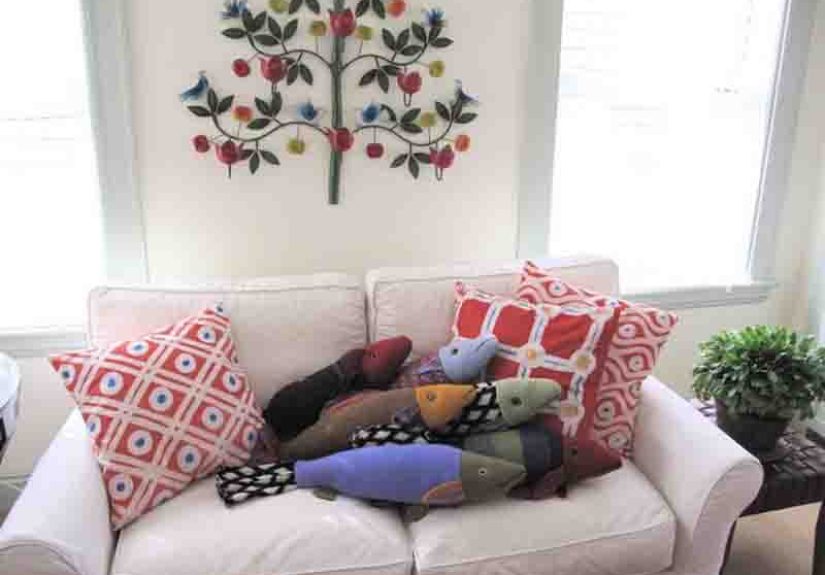
A fresh fish pillow pattern is surprisingly versatile once the project is done. In a living room, it pairs beautifully with striped or solid pillows in navy, sand, white, coral, or olive. In a kid’s room, it can become part of a broader sea-life theme without feeling too babyish. In a lake house or coastal rental, it fits right in without needing every surface to scream “nautical.” One fish pillow on a neutral chair can be charming. Five fish pillows on one loveseat begins to look like an aquarium meeting. Pace yourself.
These pillows also make fun gifts. They work for beach lovers, fishermen, cabin owners, crafty friends, and people who appreciate decor with a sense of humor. A handmade fish pillow says, “I care about you enough to sew this,” but also, “I am not above making your gift slightly ridiculous.” That is a strong combination.
Common Mistakes to Avoid
Choosing Fabric That Is Too Flimsy
Light fabric can work, but unsupported fabric may sag once stuffed. If your chosen fabric is soft or loosely woven, give it some help with interfacing or stabilizer.
Ignoring Stuffing Strategy
A fish pillow should feel plush, not lumpy. Add stuffing in small amounts and work it into the head, tail, and corners first. Overstuffing can strain seams, but under-stuffing makes the pillow look tired before it even starts its career.
Making the Details Too Tiny
Tiny fins and tiny eyes can be cute, but they are also harder to sew neatly. Scale your details to the size of the pillow. A decorative pillow should make a statement, not require a magnifying glass.
Is a Fresh Fish Pillow Pattern Good for Beginners?
Yes, especially if you start with the right version. Beginners should consider either a simple fish silhouette or a square pillow with a fish appliqué. Those projects teach useful skills such as cutting fabric accurately, sewing smooth seams, pressing, turning, stuffing, and hand-finishing an opening. More advanced sewists can add patchwork sections, embroidery, piping, zipper backs, or machine-appliqué details.
That flexibility is a big reason this project keeps showing up in modern craft spaces. It meets people where they are. It can be cute and easy. It can be polished and gift-worthy. It can use scraps, thrifted fabric, or premium yardage. And at the end, you still get a fish. A soft fish. A fish that belongs on a sofa. Frankly, that is excellent value.
Conclusion
A fresh fish pillow pattern is one of those rare DIY ideas that checks every box. It is practical enough to count as home decor, fun enough to keep you interested, and customizable enough to feel original every time you make it. Whether you sew a stuffed fish from cotton prints, appliqué one onto a throw pillow, or build a quirky version from old denim and scraps, the result can feel polished, personal, and unexpectedly stylish.
If you want a project that lets you practice sewing skills without feeling stiff or overly serious, this is a great place to begin. Keep the shape simple, choose fabric with confidence, add a few thoughtful details, and let the fish do what it does best: make people smile. No bait required.
Experiences People Commonly Have With a Fresh Fish Pillow Pattern
One of the most interesting things about a fresh fish pillow pattern is how often it becomes a “just one more” project. Many makers start by planning a single novelty pillow for a chair, a porch, or a kid’s room, and then discover that the pattern invites experimentation. The first fish is usually a test run. The second one is where the confidence kicks in. By the third, people are suddenly making design decisions with suspicious authority, saying things like, “This one needs a mustard tail,” as if they have been consulting for marine interiors their whole lives.
Beginners often describe this project as surprisingly encouraging because it feels low-pressure. A fish shape is recognizable even when it is not mathematically perfect. That gives new sewists room to focus on the process: tracing the pattern, pinning curved edges, learning how much stuffing is enough, and figuring out how important pressing really is. The moment the project gets turned right side out is usually the emotional turning point. It stops looking like random fabric and starts looking like an actual object with personality. That little transformation is part of the fun.
People who enjoy scrap sewing tend to love fish pillows for a different reason: freedom. A fish body can be pieced from mismatched prints, old shirts, leftover quilting cotton, thrifted denim, or even small fabric samples that are too pretty to throw away but too small for larger projects. The result often feels more interesting than a perfectly matched design. A patchwork fish with a striped tail, floral head, and dotted body somehow makes sense in a way that should not work on paper but absolutely works on a couch.
There is also a practical satisfaction to the project. Many crafters like that a fish pillow can be finished in an afternoon or over a weekend, which means the reward comes quickly. Unlike huge quilts or room makeovers that demand long-term commitment and possibly emotional resilience, a fish pillow gives fast results. You cut, sew, stuff, stitch, and suddenly there is a whimsical piece of decor sitting in front of you. It is hard not to feel a little triumphant about that.
Another common experience is that the pillow ends up getting more attention than expected. Guests notice it. Kids claim it. Pets try to sit on it immediately. It becomes the thing in the room that gets commented on first. That is part of the charm of a project like this. It is functional, yes, but it is also a conversation piece. A fresh fish pillow pattern tends to create decor that feels personal and memorable, which is not something every store-bought accent can manage.
For experienced sewists, the appeal often comes from customization. They can test appliqué methods, practice embroidery, play with piping, use lapped or envelope backs, or scale the pattern into a larger statement cushion. For newer makers, the project builds confidence without demanding perfection. For almost everyone, it delivers a final result that feels cheerful, handmade, and genuinely useful. That mix of creativity, skill-building, and immediate payoff is exactly why fish pillows keep swimming back into sewing rooms again and again.