Table of Contents >> Show >> Hide
- What Is Freight Farms?
- How a Shipping Container Becomes a Farm
- Why NASA Cares About Container Farming
- The Link Between Space Farming and Earth Farming
- What Freight Farms Gets Right
- The Challenges: Because Lettuce Still Has Opinions
- Why the NASA Angle Makes Sense
- Container Farms as Disaster-Ready Food Infrastructure
- What This Means for the Future of Food
- Experience Section: What It Feels Like to Step Inside a Container Farm
- Conclusion
Some ideas sound like they escaped from a sci-fi writer’s lunch break: take a shipping container, fill it with lettuce, lights, sensors, water systems, and software, then suggest that a future version could help astronauts grow food beyond Earth. Yet that is the surprisingly practical world of Freight Farms, a company best known for turning ordinary-looking containers into controlled, hydroponic farms.
The concept is simple enough to explain at a dinner table and complex enough to make engineers cancel their weekend plans. Freight Farms builds modular farms inside shipping-container-sized units, allowing people to grow leafy greens, herbs, and other crops in places where traditional agriculture may be difficult, expensive, seasonal, or just plain impossible. Cities, schools, resorts, remote communities, military sites, and food entrepreneurs have all shown interest in this “farm-in-a-box” model.
Then NASA entered the conversation. Not because astronauts were desperate for artisanal kale, although fresh greens in space would probably beat another vacuum-packed meal. NASA’s interest comes from a much bigger challenge: long-duration missions need reliable food systems. If humans are going to live and work farther from Earth, they will need ways to grow food with limited land, limited water, tight energy budgets, and very little room for error.
What Is Freight Farms?
Freight Farms is a Boston-born agtech company that develops hydroponic container farms designed to grow fresh produce year-round. Its earlier flagship system, the Leafy Green Machine, helped introduce the public to the idea that a farm could fit inside a shipping container. Today, the company’s Greenery line continues the same basic mission: make local food production possible almost anywhere.
Inside one of these container farms, “outside weather” is not the boss. Instead, growers manage the environment through lighting, irrigation, airflow, temperature, humidity, nutrients, and digital monitoring. The system uses vertical growing space rather than broad acres of land, and plants grow without soil in a hydroponic setup where nutrient-rich water does the heavy lifting.
In plain English: Freight Farms takes the messy unpredictability of outdoor farming and replaces it with a carefully controlled indoor ecosystem. Sunlight becomes LED light. Soil becomes a growing medium and nutrient solution. A field becomes a 320-square-foot container. The scarecrow, sadly, is unemployed.
How a Shipping Container Becomes a Farm
A Freight Farms container farm is not just a metal box with plants in it. That would be a greenhouse having an identity crisis. The real value comes from the controlled environment agriculture system inside.
1. Vertical growing maximizes space
Instead of spreading crops horizontally across acres, plants are arranged vertically in dense growing rows. This allows a compact container to produce a meaningful amount of food in a small footprint. For urban areas, campuses, food-service operations, and remote communities, that space efficiency is a major advantage.
2. Hydroponics reduces dependence on soil
Hydroponic farming grows plants using water and nutrients instead of traditional soil. This matters because fertile land is not always available where people need food. A container farm can be placed in a parking lot, behind a school, near a hospital kitchen, or in a region where outdoor growing is limited by climate.
3. LED lights replace sunlight
Plants need light, but they do not necessarily need the sun shining directly on their leaves. Indoor farms use LED lighting to deliver the wavelengths plants need for growth. This helps growers control day length, crop cycles, and consistency. It also means the farm can operate in winter, at night, or in places where natural light is unreliable.
4. Sensors and software help growers manage the farm
Modern container farms rely on monitoring tools that track important conditions such as temperature, humidity, water flow, and nutrient levels. This turns farming into a blend of horticulture, engineering, and data management. The farmer still matters, but now the farmer may be checking an app instead of staring at clouds and muttering, “Please don’t hail.”
Why NASA Cares About Container Farming
NASA’s interest in Freight Farms came through a Small Business Technology Transfer grant involving Freight Farms and Clemson University. The goal was to explore self-sustaining crop production for extreme environments, including possible future applications in deep-space exploration.
That does not mean NASA planned to strap a standard shipping container to a rocket and send romaine lettuce on a sightseeing tour of Mars. The real idea is more sophisticated. NASA is interested in technologies that can support closed-loop or semi-closed-loop living systems: systems that recycle water, manage waste, reduce dependence on resupply, and help astronauts produce food during long missions.
Fresh food in space is not just a luxury. On long missions, astronauts need nutrition, variety, and psychological comfort. Anyone who has eaten the same lunch three days in a row understands this at a very small scale. Now imagine doing that millions of miles from Earth with no grocery store, no farmers market, and absolutely no “quick run for cilantro.”
The Link Between Space Farming and Earth Farming
Space agriculture sounds futuristic, but much of it is built on very earthly problems. Drought, poor soil, food deserts, high transportation costs, extreme weather, and supply-chain disruptions all make fresh food harder to access. The same questions NASA asks about Mars also matter in Alaska, Arizona, island communities, dense cities, and disaster-response zones.
Can crops grow with less water? Can food be produced near the people who eat it? Can a farm operate in a harsh climate? Can technology reduce waste? Can fresh produce be grown where traditional agriculture is impractical? These questions are not science fiction. They are Tuesday morning for many communities.
Container farms offer one possible answer. They are not meant to replace all outdoor agriculture. No one is suggesting Iowa cornfields should move into steel boxes. But for high-value crops like leafy greens, herbs, and some specialty produce, container farms can shorten the distance between harvest and plate.
What Freight Farms Gets Right
Local production becomes more flexible
One of the biggest strengths of container farming is location freedom. A farm can be installed close to restaurants, schools, grocery stores, healthcare facilities, or neighborhoods that need better access to fresh produce. This reduces the long journey many vegetables take before reaching a plate.
Year-round growing improves consistency
Outdoor farming depends on seasons. Indoor container farming can produce crops throughout the year when managed properly. That consistency is valuable for chefs, institutions, and small produce businesses that need a steady supply.
Water use can be much lower
Hydroponic systems recycle water more efficiently than many traditional growing methods. In a world where drought and water stress are growing concerns, water-efficient agriculture is not just a nice bonus. It is a survival skill with better branding.
It creates educational opportunities
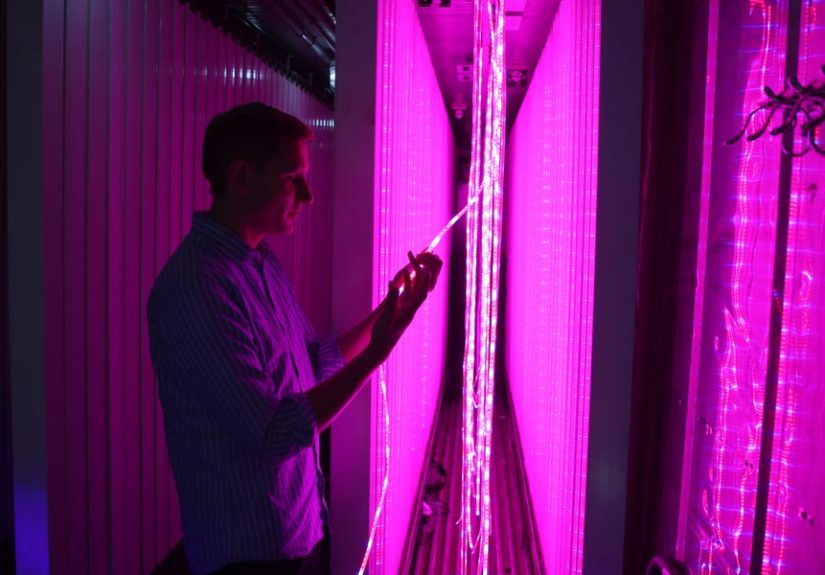
Schools and universities use container farms to teach biology, sustainability, engineering, entrepreneurship, and food systems. Students can see plant science in action instead of only reading about photosynthesis in a textbook. Lettuce may not seem dramatic, but when it grows under purple LEDs inside a metal box, it suddenly has main-character energy.
The Challenges: Because Lettuce Still Has Opinions
Container farming is impressive, but it is not magic. The first major challenge is cost. Building a climate-controlled farm with lighting, irrigation, sensors, insulation, software, and training is expensive. The upfront investment can be a barrier for small growers unless they have a strong business plan, reliable buyers, or institutional support.
Energy use is another serious issue. When indoor farms replace sunlight with LEDs and depend on HVAC systems to manage temperature and humidity, electricity becomes a major operating cost. The cleaner and cheaper the energy source, the stronger the sustainability case becomes. This is one reason NASA’s interest in renewable, off-grid crop systems is so important.
Crop selection also matters. Leafy greens and herbs are well-suited to controlled environments because they grow quickly, command decent prices, and do not require as much space as fruiting crops. Growing wheat, corn, or watermelons inside a container would be much less practical. A container farm is not a universal food machine. It is more like a very smart specialist.
Why the NASA Angle Makes Sense
NASA has studied plant growth in controlled environments for decades. Space missions require systems that are efficient, compact, resilient, and carefully monitored. Those same qualities are useful in indoor farming on Earth.
For deep-space exploration, food production must solve several problems at once. A growing system must use limited space. It must minimize water loss. It must operate reliably. It must support human life without constant supply deliveries from Earth. It may even need to help recycle carbon dioxide and organic waste.
Freight Farms’ container model is not a finished Mars farm, but it is a practical Earth-based platform for testing ideas that matter in extreme environments. The company’s work with Clemson University and NASA focused on an off-grid, self-sustaining crop production unit that could use renewable energy and water reclamation. That is exactly the kind of thinking needed for both space missions and remote communities on Earth.
Container Farms as Disaster-Ready Food Infrastructure
One underrated use of container farming is emergency resilience. Natural disasters can disrupt food transportation, damage fields, and isolate communities. A modular farm that can operate near the point of need could help provide fresh greens when supply chains are stressed.
This does not mean container farms can feed an entire city after a hurricane. They cannot replace broad food logistics. But they can become part of a diversified food system. Think of them as local produce engines: small, controlled, movable, and useful when the big system gets wobbly.
What This Means for the Future of Food
The bigger story is not simply “NASA likes shipping-container lettuce.” The bigger story is that farming is becoming more modular, more data-driven, and more adaptable. Traditional agriculture will remain essential, but controlled environment agriculture gives communities another tool.
In the future, food systems may look more mixed. Rural farms will still grow staple crops. Greenhouses may supply tomatoes, cucumbers, and peppers. Vertical farms may focus on greens and herbs. Container farms may serve schools, restaurants, hospitals, remote regions, and research programs. Space agriculture may push all of these technologies to become more efficient.
That cross-pollination matters. NASA research can inspire better indoor farms on Earth, while companies like Freight Farms can test practical designs in real-world markets. Space exploration and local agriculture may seem far apart, but both are asking the same basic question: how do we grow more food with fewer resources in tougher places?
Experience Section: What It Feels Like to Step Inside a Container Farm
Walking into a container farm for the first time feels a little like entering a spaceship that decided to major in salad. From the outside, the unit may look industrial and ordinary. It has the familiar shape of a shipping container, the kind you see stacked at ports or riding behind trucks on the highway. Then the door opens, and the inside tells a completely different story.
The first thing many people notice is the light. It is not the soft golden light of a summer field. It is bright, purposeful, and engineered for plants. Depending on the system and crop stage, the glow can feel almost theatrical. Rows of greens stand upright in vertical panels, looking impossibly tidy compared with a muddy outdoor bed after a rainstorm.
The second thing is the sound. Container farms are not silent. Fans move air. Pumps circulate water. Equipment hums in the background. It is not loud, but it has a steady rhythm, like the farm is breathing through machinery. That sound reminds visitors that the environment is being actively managed every minute.
Then comes the smell. Healthy greens have a clean, fresh scent, especially herbs such as basil, mint, or cilantro. There is no heavy soil smell because the system is hydroponic. Instead, the air feels crisp, humid, and alive. It is agriculture without the boots, bugs, and dramatic weather reports.
For a new grower, the experience can be exciting and slightly intimidating. Outdoor farmers read clouds, soil, insects, and seasons. Container farmers read dashboards, sensors, crop recipes, water chemistry, and plant behavior. The skills overlap, but the tools are different. A yellowing leaf may point to nutrient imbalance. Slow growth may involve light intensity, temperature, airflow, or spacing. The farm may be inside a box, but the learning curve does not fit neatly in one.
For chefs and food buyers, the appeal is immediate. Greens harvested close to where they are served can be fresher, more consistent, and easier to plan around. A restaurant that can source basil from a nearby container farm may get better flavor and less waste than relying only on long-distance shipping. A school cafeteria can turn the farm into both a food source and a classroom. Students can plant, monitor, harvest, and eat what they helped grow, which is a much better science lesson than another worksheet with a sad clip-art tomato.
For communities in remote or harsh climates, the emotional impact may be even stronger. Fresh greens are easy to take for granted when a supermarket is ten minutes away. In isolated places, produce may arrive expensive, tired, bruised, or unavailable. A container farm can make fresh food feel less like a luxury and more like local infrastructure.
The NASA connection adds another layer of wonder. Standing inside a container farm, it is easy to imagine why space researchers would care. The system is compact. It is controlled. It treats water, light, space, and nutrients as precious resources. Those are exactly the rules of living beyond Earth. In that sense, a Freight Farms unit is not just a clever farm. It is a small rehearsal for growing food wherever humans decide to go next.
Conclusion
Freight Farms shows how agriculture can move beyond the traditional image of wide fields and seasonal limits. By building hydroponic farms inside shipping-container-style units, the company has helped make local, year-round produce possible in places where farming once seemed unlikely. NASA’s interest makes the story even more compelling because the same technologies that help grow lettuce in a city parking lot may also inform how astronauts grow food during future missions.
The idea is not perfect, and it is not cheap. Energy use, startup costs, crop limitations, and technical skill all matter. But container farming is a powerful example of how food production is changing. It is smaller, smarter, closer to consumers, and ready to operate in unusual places. Whether the destination is a school campus, a desert community, a hospital kitchen, or one day a spacecraft, the humble shipping container may have found its most surprising second career: feeding people where fields cannot.