Table of Contents >> Show >> Hide
- What Is a Bradford Pear Tree?
- Why Bradford Pear Trees Became So Popular
- The Biggest Problems With Bradford Pear Trees
- How Bradford Pear Went From Favorite to Warning Label
- How to Identify a Bradford Pear Tree
- Should You Keep a Bradford Pear Tree or Remove It?
- What to Plant Instead of a Bradford Pear
- How to Live With a Bradford Pear If You Already Have One
- Experiences Homeowners, Gardeners, and Arborists Commonly Share About Bradford Pear Trees
- Final Thoughts
If you have ever driven past a row of white-blooming trees in early spring and thought, “Wow, that looks gorgeous,” there is a decent chance you were looking at Bradford pear trees. If you got a little closer and suddenly thought, “Why does spring smell like a bad seafood prank?” then yes, you were almost definitely looking at Bradford pears.
The Bradford pear tree was once sold as the ultimate suburban superstar: fast-growing, neatly shaped, covered in white flowers, and supposedly easy to maintain. For years, developers, homeowners, and landscapers planted them like they were handing out trophies for curb appeal. But time has been brutally honest with this tree. What looked polished in the nursery often turned into a high-maintenance headache in the yard.
Today, the Bradford pear is better known for weak branches, storm damage, short lifespan, nasty-smelling flowers, and its role in spreading invasive Callery pear populations across the United States. In other words, the tree that once promised elegance now has a reputation closer to “pretty, but problematic.”
This guide breaks down what a Bradford pear tree is, why it became so popular, what its biggest problems are, whether it should stay or go, and what to plant instead if you want spring beauty without the future regret.
What Is a Bradford Pear Tree?
The Bradford pear tree is a cultivated variety of Pyrus calleryana, commonly called Callery pear. It was introduced as an ornamental tree because people loved its neat pyramidal shape, glossy leaves, early white flowers, and red-to-purple fall color. At first glance, it checked all the landscaping boxes. It looked tidy, it grew quickly, and it tolerated a wide range of urban conditions, including compacted soil, air pollution, and heat.
For decades, that combination made it wildly popular in subdivisions, office parks, sidewalks, medians, and front yards. A Bradford pear could make a new property look “established” fast, which was great for developers and very convincing for buyers. It was the tree version of putting on a nice blazer and hoping nobody asked follow-up questions.
The problem is that Bradford pear’s beauty came with structural flaws and ecological consequences that became much more obvious over time.
Why Bradford Pear Trees Became So Popular
To understand why Bradford pears are everywhere, it helps to remember what landscapers wanted during the tree’s peak years. They wanted something ornamental, fast, adaptable, and relatively cheap. Bradford pear delivered on all of that in the short term.
It bloomed early, which gave people an instant shot of spring color. It had a symmetrical, almost too-perfect canopy when young. It handled tough growing sites better than many native flowering trees. And it grew quickly enough to satisfy anyone who did not want to wait ten years for shade.
In the nursery world, that sounded like a dream. In the real world, it turned out to be a dream with expensive cleanup attached.
The Biggest Problems With Bradford Pear Trees
1. Weak branch structure
The most serious Bradford pear tree problem is its structure. The branches tend to grow at narrow angles and form weak attachments, which makes them much more likely to split as the tree ages. When the canopy gets dense and heavy, those branch unions become a liability.
This is why so many mature Bradford pears split apart during wind, ice, or snow events. Sometimes the damage is minor. Sometimes the tree basically opens like a zipper. Homeowners often discover this the hard way after a storm, when a once-beautiful tree is now lying across a driveway, roofline, or lawn furniture that never asked for this drama.
Even when the tree survives a storm, repeated breakage can ruin its form and create long-term safety risks. That means more pruning, more maintenance, and more money spent on arborists. A tree planted to save effort can end up demanding a surprising amount of it.
2. A short useful lifespan
Bradford pears often look their best when they are young. Unfortunately, that is also when they are least honest about their future behavior. Many remain attractive for several years, then start developing split limbs, crowded crowns, and structural weaknesses as they mature.
That means the tree can be relatively short-lived in the landscape compared with sturdier species. Some homeowners plant one expecting a decades-long anchor tree and instead get an ornamental tree with a fairly short prime and a messy midlife crisis.
That short lifespan matters because removal costs are not cheap, especially if the tree is near a house, street, fence, or power line. So while Bradford pears may look budget-friendly at planting time, they can become expensive later.
3. The smell is… memorable
Yes, we need to talk about the smell. Bradford pear flowers are showy, but their fragrance is famously unpleasant. Depending on who you ask, it smells like rotting fish, sour garbage, or springtime making several terrible life choices in a row.
Not everyone notices it equally, but enough people do that the smell has become one of the tree’s defining traits. This creates an odd situation where a tree can look like a wedding centerpiece from a distance and smell like a warning sign up close.
4. It contributes to invasive Callery pear spread
This is where the Bradford pear goes from annoying to ecologically damaging. The original Bradford cultivar was once promoted as nearly sterile, but the real-world story became much more complicated. When Bradford pears cross-pollinate with other Callery pear cultivars, they can produce viable fruit and seed.
Birds eat the small fruits and spread those seeds into fields, roadsides, woodland edges, and disturbed sites. The offspring often revert to a more aggressive, thorny, wild-type form. These escaped Callery pears can form dense thickets that crowd out native plants and change habitat structure.
That means one ornamental tree in a neighborhood can help fuel a much bigger invasive problem beyond the yard itself. The issue is not just what happens in landscaping; it is what happens after the tree’s seeds hitch a ride into natural areas.
5. Thorny offspring and hard-to-manage spread
Many people are shocked to learn that invasive Callery pear offspring can be thorny. The cultivated Bradford pear sold in landscapes may not seem dangerous, but its wild descendants often grow into dense, thorny stands that are much tougher to manage.
Once established, these thickets are no joke. They can move into open land quickly, make access difficult, and compete with native trees and shrubs. The cleanup is more than a cosmetic job; it becomes a long-term land management issue.
6. Storm mess and property risk
A Bradford pear does not have to fully fail to become a problem. Dropped limbs, split trunks, and storm debris are common complaints. That creates risks for parked cars, fences, sidewalks, roofs, and people walking underneath. In some areas, municipalities and property managers have grown tired of the repeated maintenance burden.
This is one reason the tree’s reputation has changed so dramatically. What was once praised as dependable is now widely viewed by arborists and extension experts as a weak-wooded tree that creates predictable problems.
How Bradford Pear Went From Favorite to Warning Label
Bradford pear trees were heavily planted from the mid-20th century onward because they solved short-term landscaping needs so well. But as more cultivars entered the market and more trees matured in real landscapes, the flaws became impossible to ignore.
Homeowners noticed the branch failures. Arborists noticed the weak crotch angles. Ecologists noticed the invasive spread. Conservation groups noticed entire roadsides and unmanaged fields filling with escaped Callery pear. States started paying attention too.
As a result, several states have banned or restricted sale and planting of Callery pear or its cultivars, including Bradford pear. That policy shift says a lot. Trees do not land on state problem lists because they are mildly inconvenient. They get there because the evidence piles up for years and eventually becomes impossible to decorate away with pretty blossoms.
How to Identify a Bradford Pear Tree
If you think you have one, look for these common features:
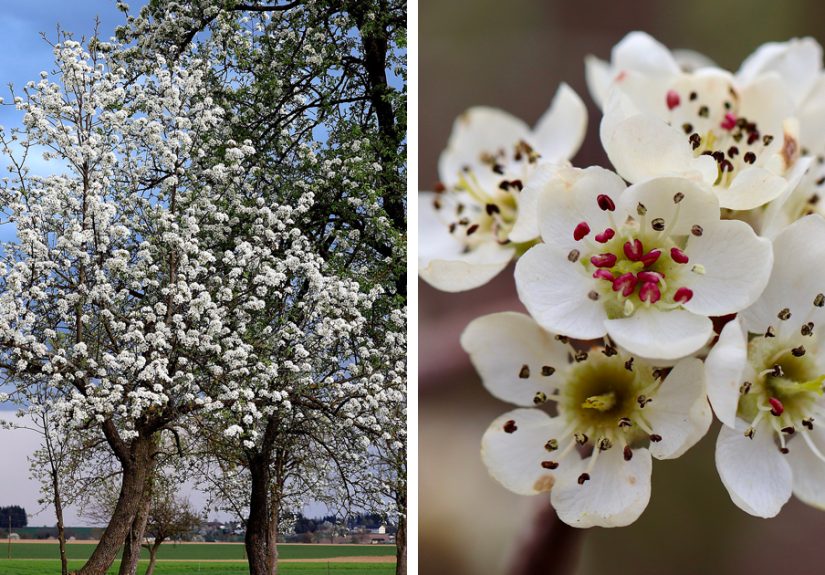
- Masses of white flowers in very early spring, often before many native trees leaf out
- A dense, upright, symmetrical canopy when young
- Glossy green leaves that often turn reddish, orange, or purple in fall
- Smooth to lightly furrowed bark on older trees
- A tendency for branch crowding and tight angles as the tree matures
Escaped or wild Callery pear trees can look less tidy and more sprawling than cultivated Bradford pears. They may also develop thorns, especially on vigorous shoots and wild-type growth. If you are seeing white-flowering pear-like trees along highways, fence lines, or open fields, those are often invasive Callery pear populations rather than intentionally planted yard trees.
Should You Keep a Bradford Pear Tree or Remove It?
That depends on the tree’s age, structure, condition, and location. A young tree that is healthy and far from structures may not be an immediate hazard, but the long-term issues do not magically disappear. An older tree with narrow branch unions, signs of splitting, or repeated storm damage deserves serious attention.
If the tree is close to your home, driveway, patio, or utility lines, the risk goes up. In that case, removal often makes more sense than waiting for the next storm to make the decision for you. A certified arborist can evaluate structural defects and help you decide whether pruning can reduce risk or whether replacement is the smarter move.
Many homeowners choose removal for one simple reason: they do not want to spend money preserving a tree with a bad long-term track record. Others remove them because they want to stop contributing to invasive spread. Both reasons are valid.
What to Plant Instead of a Bradford Pear
If you love the idea of a spring-flowering ornamental tree but not the baggage, good news: you have options. Several better-behaved trees can deliver beauty without the same structural and ecological downsides.
Good Bradford pear alternatives
- Eastern redbud – A native favorite with pink to magenta spring flowers and strong seasonal appeal
- Serviceberry – Offers white blooms, berries for wildlife, and excellent fall color
- Flowering dogwood – A classic native ornamental with layered branching and beautiful spring display
- American fringetree – Airy, unusual white flowers and a softer, more natural look
- Chickasaw plum – Early bloom and good habitat value
- Crabapple – Many cultivars provide flowers, fruit, and better structural reliability
- Japanese tree lilac – Not native, but often recommended as a more manageable flowering tree for tough sites
The best replacement depends on your climate, site conditions, mature size needs, and whether native habitat value matters most to you. But in general, planting something sturdier and less invasive is a decision future-you will probably appreciate.
How to Live With a Bradford Pear If You Already Have One
Not everyone is ready to remove a tree tomorrow, and that is understandable. If you already have a Bradford pear, monitor it carefully. Watch for cracking at branch unions, canopy imbalance, storm damage, dead limbs, or rapid sprouting after pruning. Keep an eye out for fruit as well, since that can contribute to spread when birds get involved.
Try not to think of the tree as a permanent centerpiece. Think of it as a tree on probation. It may behave for a while, but the file is thick.
If you begin seeing repeated structural issues, do not wait for a catastrophic split. Preventive removal is usually cheaper and safer than emergency removal after failure. And if your area has restrictions on planting or selling Callery pear, follow local guidance before replacing it.
Experiences Homeowners, Gardeners, and Arborists Commonly Share About Bradford Pear Trees
People’s real-life experiences with Bradford pear trees tend to follow a surprisingly similar script. First comes admiration. Someone buys a house with one in full bloom and thinks it is beautiful. A builder plants several along a new street because they make the neighborhood look polished right away. A homeowner chooses one at the garden center because the label promises flowers, fast growth, and easy care. In the beginning, the tree really can seem like a winner.
Then the years pass, and the stories start sounding a lot less romantic.
One common experience is storm damage that feels sudden but was actually predictable. Homeowners often say the tree looked perfectly fine until one windy afternoon or ice storm split a major limb. In many cases, the break happens where several upright branches meet in a tight cluster. The result can be a huge crack down the middle of the canopy, a trunk split, or a large limb scattered across the lawn. People are often shocked by how quickly a “healthy-looking” Bradford pear can fail.
Another frequent complaint is maintenance fatigue. Owners describe repeated pruning, recurring branch issues, and a general sense that the tree is always one bad weather event away from becoming an expensive problem. Some say they spent years trying to shape or thin the canopy, only to realize they were working hard to preserve a tree with poor structure from the start. That is not exactly the low-maintenance fantasy they signed up for.
The smell also shows up in plenty of firsthand reactions. People regularly mention that the blooms look fantastic in photographs but are far less charming in person. Visitors might comment on the flowers, then immediately ask what that smell is. It is one of the few trees that can turn “What a lovely spring display” into “Please close the window” in under a minute.
Gardeners and conservation-minded homeowners often talk about a second wave of frustration: seeing thorny pear seedlings show up beyond the original planting. Some notice volunteer trees along fences, ditches, or nearby open lots. Others learn that birds are moving the seeds around and helping invasive Callery pear populations spread into places where nobody intentionally planted them. That realization changes the conversation from personal landscaping preference to environmental responsibility.
Arborists and land managers tend to be even more blunt. Their experience is shaped by cleanup, risk assessment, and long-term landscape consequences. Many have seen enough split Bradford pears to treat the species with immediate skepticism. Their perspective is less about whether the tree looks pretty for two weeks in spring and more about whether it is worth the structural risk and replacement cost ten or fifteen years later.
Still, not every homeowner talks about Bradford pear with total hatred. Some people genuinely loved the flowers, shade, and fast growth for a while. That is part of why the tree became so widespread in the first place. The frustrating part is that the good qualities are real; they are just attached to a much bigger set of problems. In practice, many people end up describing the tree the same way: lovely when young, disappointing when mature, and rarely worth repeating.
Final Thoughts
The Bradford pear tree is a classic example of a plant that won the short game and lost the long game. It offered quick beauty, fast growth, and an easy sales pitch. But over time, its weak branch structure, bad-smelling flowers, short lifespan, and invasive offspring turned it into one of the most criticized ornamental trees in America.
If you already have one, the smartest move is to assess it honestly. If you are thinking about planting one, the smarter move is simpler: do not. There are better trees for beauty, better trees for wildlife, and definitely better trees for surviving a windy Thursday.
In the end, the Bradford pear is a great reminder that landscaping is not just about what looks good this spring. It is about what still makes sense ten, fifteen, or twenty years from now.