Table of Contents >> Show >> Hide
- Why This Makeover Works So Well
- Before You Start: Plan Like a Designer (Not Like a Panicked DIYer)
- The Big Three Upgrades That Change Everything
- Staircase Makeover Menu: Choose Your Upgrade Level
- A Reveal-Ready Sequence: How to Make the Process Feel Smooth
- The Stair Runner + Railing Combo: The Crowd-Pleaser Reveal
- Entry Styling That Doesn’t Turn Into Clutter Again
- Common Makeover Mistakes (So You Don’t Accidentally Create More Work)
- Cost Breakdown: Where to Save and Where to Spend
- Maintenance: Keep the Reveal Look Without Living in a Museum
- of Real-World “Experience” Lessons (From What DIYers Commonly Run Into)
- Final Reveal: What You Want to Feel When You Walk In
If your home had a handshake, it would be your entry and staircase. It’s the first “hello,” the last “welcome back,” andwhen it’s messythe loudest
“please don’t look at my life choices.” The good news: an entry and staircase makeover doesn’t require a wrecking ball or a reality TV crew. With the right
plan, a few high-impact upgrades, and some strategic “hide-the-chaos” storage, you can turn a tired foyer and staircase into a space that feels intentional,
bright, and honestly kind of impressive.
This reveal-style guide walks you through what to change, what to keep, and how to get that finished lookwhether you’re doing a weekend refresh or a
full-on transformation with a runner, railing update, lighting glow-up, and a “wow” moment the second you open the front door.
Why This Makeover Works So Well
The entry and stairs are visual power zones. They’re often part of an open sightline to your living area, so when they look good, your whole home looks
better. They’re also high-traffic surfaces, which means small upgrades (a durable runner, wipeable paint, better lighting) pay off daily. You’re not just
decoratingyou’re reducing friction in your routine: fewer lost keys, fewer shoe piles, fewer near-misses on dark steps.
The entryway’s job description
- Welcome: set the tone with color, light, and a clear path.
- Catch: create a landing spot for keys, bags, mail, and shoes.
- Protect: manage dirt and wear with rugs, runners, and washable finishes.
The staircase’s job description
- Be safe: solid handrails, good lighting, no slippery surprises.
- Look intentional: cohesive paint, updated railing details, balanced decor.
- Survive real life: scuffs, pets, kids, guests, and the occasional dramatic entrance.
Before You Start: Plan Like a Designer (Not Like a Panicked DIYer)
The biggest reveal mistake is doing random upgrades that don’t talk to each other. A successful entry and staircase makeover is basically a mini system:
color + lighting + function + one statement moment. Start with a quick plan so your choices feel connected.
Step 1: Do a “standing-at-the-front-door” audit
Stand outside, open the door, and take a photo. Then walk in and take another photo facing the stairs. These pictures show you what your brain has stopped
noticingclutter hotspots, weird shadows, and that one corner that always looks unfinished. Mark what you want to change in three categories:
must fix (safety/function), should fix (visual cohesion), and nice to have (extra styling).
Step 2: Pick a palette with a “bridge color”
Entries and staircases usually connect multiple rooms, so aim for a palette that transitions well. A bridge color is a shade that looks good next to the
adjacent rooms and complements the flooring. Popular approaches include:
- Warm neutral walls + crisp white trim + black/charcoal rail accents for contrast.
- Moody color on the entry wall (deep green, navy, brownish-taupe) + lighter stair runner to keep it airy.
- Soft greige walls + natural wood tones + brass/aged gold lighting for warmth.
Step 3: Decide your “reveal moment”
Every great before-and-after has a hero. Choose one standout element so the makeover feels purposeful:
a statement light fixture, a stair runner with pattern, a dramatic painted railing, wainscoting, or a gallery wall that climbs the stairs.
One hero is stylish. Five heroes is a costume party.
Step 4: Don’t ignore safety and basics
Make sure your handrail feels solid, continuous, and easy to grip. If the railing wobbles, the makeover isn’t “done” until that’s fixed.
Also, if your stairs are dim at night, add lighting (or at least brighter bulbs) before you invest in decor.
The Big Three Upgrades That Change Everything
1) Paint: the fastest transformation-per-dollar
Paint is the entryway’s instant attitude adjustment. It can make a small foyer feel bigger, a tall staircase feel grand, and outdated trim feel intentional.
For busy zones, focus on washable finishes: eggshell or satin for walls, and semi-gloss for trim/rails.
For stair parts (rails, balusters, treads), prep matters more than the brand of paint. Clean thoroughly, sand to degloss, and prime where needed so the
finish doesn’t peel the first time someone slides a hand along the rail. If your staircase has glossy wood, skipping prep is basically asking paint to
“just believe in itself.” Paint does not believe in itself.
2) Lighting: the secret sauce of a high-end reveal
Many entries have one lonely ceiling light trying to do the work of three. A layered approach looks better and feels safer:
- Overhead statement fixture for style and general brightness.
- Wall sconces or a nearby lamp for softer, flattering light.
- Stair lighting (bulb upgrades, nearby fixture improvements, or subtle step illumination) for nighttime visibility.
Want the space to feel larger? Add a mirror across from a light source to bounce light and visually widen the entry. Bonus: mirrors also catch last-second
“Do I look like a responsible person?” checks before you leave.
3) Function-first storage: the clutter cure
A beautiful entryway that can’t handle real life turns into chaos by Tuesday. Build in a simple “drop zone”:
- Catch-all tray for keys and small items (on a console or shelf).
- Hooks for everyday jackets and bags (limit the number so it doesn’t become a coat museum).
- Bench (ideally with storage) so shoes don’t migrate into the walkway.
- Shoe tray or washable rug to protect floors during wet weather.
Staircase Makeover Menu: Choose Your Upgrade Level
Not every staircase needs a full renovation. Pick the level that matches your budget, time, and patience.
Level 1: Refresh (1–2 days)
- Paint walls and trim for a clean, cohesive look.
- Swap outdated light fixture(s) and upgrade bulbs for brighter, warmer light.
- Style the entry: rug, mirror, console, and one piece of art or greenery.
Level 2: Upgrade (a few days to a week, depending on drying time)
- Paint or refinish railings and balusters (classic white balusters + darker rail is a popular modern look).
- Add a stair runner for softness, grip, and design impact.
- Improve storage with hooks, bench, or a slim console with baskets.
Level 3: Transform (1–3 weeks, often with pro help)
- Replace balusters, newel posts, or rail profile for a structural style update.
- Add paneling/wainscoting or a stairwell gallery wall with upgraded frames/lighting.
- Replace treads/risers or refinish floors for a dramatic “new staircase” feel.
A Reveal-Ready Sequence: How to Make the Process Feel Smooth
Here’s a practical order that avoids redoing work and keeps your home functional while you makeover.
Day 1: Clear, clean, and fix the annoying stuff
- Remove clutter and create a temporary bin for “entry essentials.”
- Tighten any loose railing parts and address squeaks or wobbles before cosmetic work.
- Deep-clean: hand oils on railings, dust on trim, and grime on stair edges.
Day 2–3: Paint walls and trim (then rails if you’re doing them)
- Patch holes, sand rough spots, and caulk gaps for a crisp finish.
- Paint walls first, then trim, then railings/balusters.
- Let everything cure properlythis is where patience turns into durability.
Day 4: Runner install and finishing touches
- Install your stair runner once paint is cured enough to handle contact.
- Add hardware (hooks, brackets) and finalize the drop zone layout.
- Style with a rug, mirror, and a small lamp or accent lighting if needed.
The Stair Runner + Railing Combo: The Crowd-Pleaser Reveal
If you want the biggest “before/after” moment, this is it. A runner adds pattern, softness, and traction. A painted or refreshed railing modernizes the
entire staircase silhouette. Together, they make the stairs feel like a designed feature instead of a background utility.
Runner choices that actually make sense
- Low-pile, durable fibers: better for high traffic and easier to clean.
- Pattern that forgives: subtle stripes, small geometrics, or tonal weaves hide wear.
- Edge finish: bound edges look polished and help the runner keep its shape.
Installation styles vary, but the key is a tight, consistent fit with secure fastening so the runner doesn’t shift. If you’re not comfortable with tools,
professional installation can be worth it for safety and longevityespecially on steep stairs.
Railing updates that feel current (without feeling trendy)
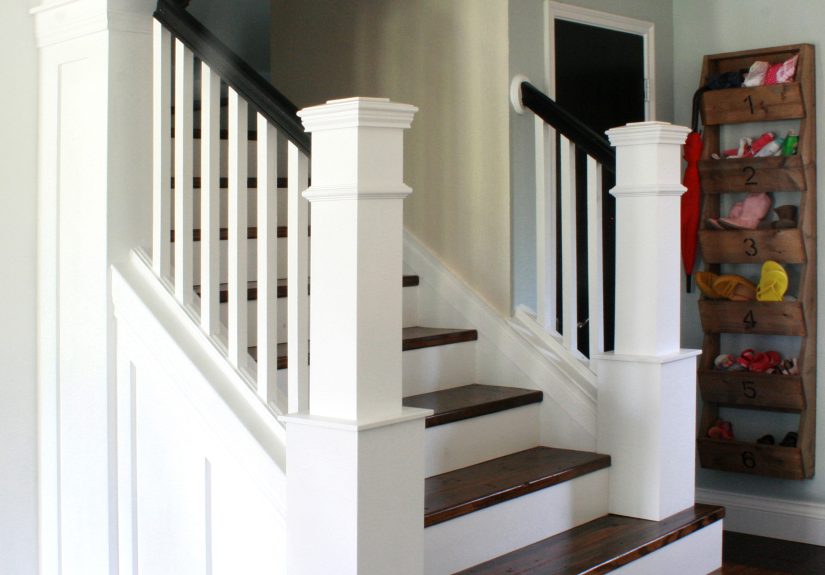
- High-contrast classic: white balusters + dark rail/newel for a tailored look.
- All one color: painting the entire railing system a single tone can look sleek and modern.
- Baluster swap: changing balusters (for a simpler profile or metal look) can modernize fast, but may require pro help.
Entry Styling That Doesn’t Turn Into Clutter Again
The reveal isn’t just “pretty.” It’s sustainable. The difference between a styled entryway and a future mess is usually one thing:
assigned homes for everyday items.
A simple, high-function layout
- Near the door: a rug + shoe tray (or basket) so shoes stop at the border.
- On the wall: hooks for daily-use coats/bags, spaced so items don’t overlap into a heap.
- In the middle: a slim console or shelf with a tray for keys and a small bowl for change.
- For comfort: a bench that makes putting on shoes easypreferably with hidden storage.
Add one “warmth” item: a small plant, a framed photo, or a candle (placed safely). That’s it. If you add five decorative objects, the entryway starts to
feel like a gift shop displaycute, but not functional.
Common Makeover Mistakes (So You Don’t Accidentally Create More Work)
- Skipping prep on railings: paint chips faster on high-touch surfaces without proper cleaning and sanding.
- Choosing a rug that’s too small: your entry rug should catch traffic, not just decorate a square foot of floor.
- Overloading hooks: too many hooks = too much stuff = visual chaos. Curate what belongs there.
- Going too dark with no lighting plan: moody paint is gorgeous, but only if the space is well-lit.
- Ignoring “real life” cleaning: pick finishes and materials that won’t punish you for existing.
Cost Breakdown: Where to Save and Where to Spend
You can absolutely get a high-impact entry and staircase makeover on a reasonable budgetespecially if you focus spending where it shows and save where it
doesn’t.
Save on
- Paint color testing: sample sizes and swatches beat repainting regret.
- Decor: a simple mirror, a tray, and one art piece can look elevated without being expensive.
- Storage baskets: basic bins inside a console or bench do the job beautifully.
Spend on
- Lighting: a quality fixture changes the whole vibe and can last for years.
- Runner durability: the stairs get constant wearchoose something that can handle it.
- Safety repairs: if the handrail or steps are questionable, prioritize fixing them properly.
Maintenance: Keep the Reveal Look Without Living in a Museum
- Weekly: quick vacuum on runner and entry rug; wipe down the key tray area.
- Monthly: clean handrails (they collect oils and dust); shake out rugs and check runner fasteners.
- Seasonally: rotate out off-season gear so the entry doesn’t become a storage unit with a welcome mat.
of Real-World “Experience” Lessons (From What DIYers Commonly Run Into)
Even a well-planned entry and staircase makeover has a few “oh, right” momentsthose practical surprises that don’t show up in the dreamy reveal photo.
Here are experience-based lessons that homeowners and DIYers commonly share after doing this kind of project, written as a reality-friendly checklist you
can borrow.
First: your entryway is a behavior-change project disguised as a design project. People often assume new hooks and a bench will magically
stop clutter, but the real magic is deciding what belongs there. Many DIYers say the biggest improvement comes from setting limits: one hook per
person, one pair of shoes per person in the entry (the rest live in closets), and one tray for keysno roaming piles. Once those boundaries exist, the
makeover stays “revealed” longer.
Second: paint color is different at the front door than it is in the living room. Entries often have mixed lighting (daylight from outside,
warm bulbs at night, shadows from stair angles). A shade that looks perfect on a sample card can turn icy, muddy, or overly bright in the foyer. DIYers who
end up happiest tend to test paint in multiple spotsnear the door, on the stair wall, and by the trimthen check it morning, afternoon, and night. It’s not
overthinking; it’s avoiding “why does my entry look like a dentist office at dusk?” regret.
Third: stair railings are “high-touch, high-judgment.” The reveal might focus on the runner pattern, but daily life focuses on the railing.
If it feels sticky, rough, or shows fingerprints easily, you’ll notice every single time you use the stairs. People often report that smoother prep (proper
sanding and a finish that cures fully) matters more than choosing the trendiest color. A slightly longer timeline with proper curing can mean the difference
between a railing that looks great for years and one that looks tired after a busy month.
Fourth: runners change how your staircase sounds. A common surprise: adding a runner can reduce echo and soften footstep noise, which makes
the whole entry feel calmer. But DIYers also note that runners highlight unevennessif one tread is slightly off or the runner isn’t centered consistently,
your eye catches it on the way up. The best approach is slow, measured alignment. Some people find it helpful to mark consistent spacing from the wall or
stair edge before fastening anything. If that sounds stressful, that’s your sign to hire installation help. Peace of mind is a valid line item.
Fifth: the final 10% is what makes it look “done.” Many homeowners finish the big stepspaint and runnerand wonder why the space still
doesn’t feel like the reveal photo. The missing pieces are usually small: updated switch plates, matching hardware finishes (don’t mix five metals unless
you’re doing it intentionally), a properly sized rug, and lighting that flatters the space. The reveal feeling often arrives when you add a mirror to bounce
light, a lamp for warmth, and one piece of art that pulls the palette together. That’s when the entry stops being “new paint” and starts being “new
atmosphere.”
Final Reveal: What You Want to Feel When You Walk In
A great entry and staircase makeover doesn’t just photograph wellit works. It makes mornings smoother, guests feel welcomed, and your home feel more put
together even when the rest of life is, frankly, doing its thing. Nail the basics (paint, lighting, storage), add one hero element (runner or statement
fixture), and keep your drop zone realistic. That’s the formula for a reveal that lasts.