Table of Contents >> Show >> Hide
- What is lip eczema, exactly?
- Types of lip eczema
- Common symptoms of eczema on the lips
- Top triggers that can set off lip eczema
- How lip eczema is diagnosed
- Best treatment options for eczema on the lips
- What not to do during a flare
- When to see a doctor
- Common experiences people describe with lip eczema
- Final thoughts
When lip eczema shows up, it rarely makes a grand entrance. It usually sneaks in like an uninvited guest with dry flakes, tight skin, burning, and the kind of cracking that makes smiling feel like a risky business decision. The medical term often used for this problem is eczematous cheilitis, which basically means eczema-like inflammation affecting the lips. It can happen in people who already have eczema elsewhere, but it can also appear when the lips react to something irritating or allergenic.
The tricky part is that eczema on the lips is easy to confuse with ordinary chapping, a yeast infection, cold sores, angular cheilitis, perioral dermatitis, or even sun damage. That is why a good article on lip eczema needs more than the usual “use balm and good luck” advice. Below, we break down the main types of lip eczema, the most common lip eczema triggers, what usually helps, and when it is time to let a dermatologist take over the case.
What is lip eczema, exactly?
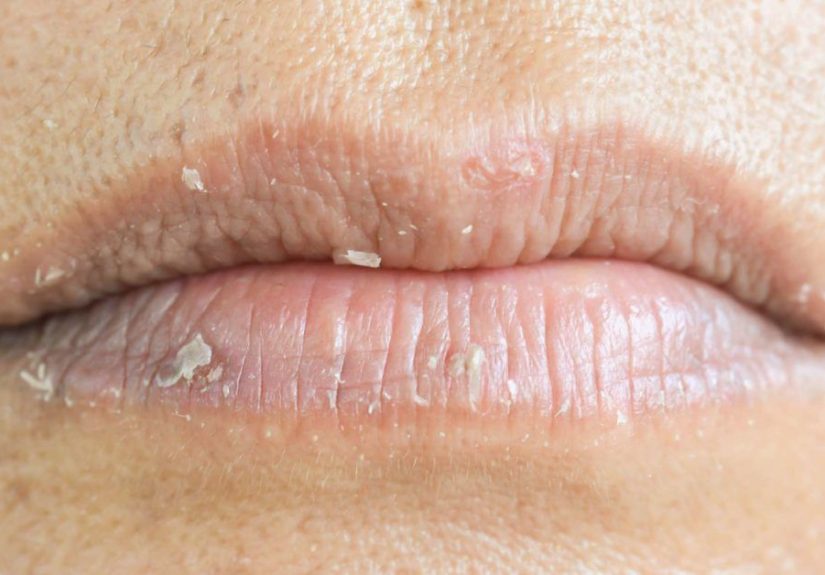
Lip eczema is an inflammatory skin condition that can make the lips feel dry, itchy, sore, rough, red, scaly, or cracked. In some people, the area around the lips also gets involved. In others, the irritation stays on the vermilion border, which is the visible pink or red part of the lips.
Unlike a basic case of weather-related chapping, eczema on the lips often keeps coming back. It may improve for a while, then flare again after a new lipstick, a flavored toothpaste, winter wind, or a marathon lip-licking session that felt harmless at the time. Spoiler alert: saliva is not skincare.
Types of lip eczema
1. Atopic cheilitis
This type is linked to atopic dermatitis, the most common form of eczema. People with atopic cheilitis often have a personal or family history of eczema, asthma, allergies, or generally sensitive skin. Their skin barrier tends to be more fragile, which means the lips are more likely to get dry, inflamed, and reactive.
Atopic cheilitis is often chronic. It can flare in cold weather, during stressful periods, or after exposure to irritating products. The lips may feel persistently dry and rough even when the rest of the face looks calm.
2. Irritant contact cheilitis
This is one of the most common culprits. It happens when the lips are repeatedly annoyed by something that damages the skin barrier. Common offenders include frequent lip licking, drooling, strong toothpaste, harsh mouthwash, spicy foods around the lip line, fragranced lip products, and weather extremes.
Think of it as the lips getting tired of being “helped.” The more friction, moisture cycling, and chemical exposure they get, the angrier they become. Irritant lip eczema can feel dry, tight, stinging, or burning, and the skin may peel or split.
3. Allergic contact cheilitis
Allergic contact cheilitis is different from simple irritation. Here, the immune system has decided to overreact to a specific substance. The rash may appear after repeated exposure to a product you have used for weeks, months, or even longer without obvious trouble.
Classic examples include reactions to ingredients in lip balm, lipstick, gloss, toothpaste, mouthwash, dental materials, fragrance, flavorings, lanolin, propolis, essential oils, preservatives, and certain sunscreen ingredients. In other words, the thing marketed as “nourishing” can occasionally be the villain in the story.
4. Mixed-pattern lip eczema
Real life loves to ignore neat categories. Many people have a mixed picture: a naturally sensitive atopic skin barrier plus irritation from saliva plus an allergy to one product ingredient. That is why lip eczema can be stubborn. You may be solving one part of the puzzle while another part keeps the flare going.
Common symptoms of eczema on the lips
- Dryness that does not improve with ordinary lip balm
- Redness or darker discoloration, depending on skin tone
- Flaking, scaling, or peeling
- Burning, stinging, or itching
- Cracks or painful fissures
- Tightness when talking, smiling, or eating
- Inflammation around the lip border
- Occasional crusting if the skin becomes more irritated or infected
Symptoms vary by skin tone. On lighter skin, inflammation may look bright red. On deeper skin tones, it may appear violet, brown, grayish, or darker than the surrounding skin. That difference matters because lip eczema is sometimes missed when people assume “eczema always looks red.” It does not.
Top triggers that can set off lip eczema
Lip licking and saliva
One of the biggest triggers is also one of the most common habits. Licking the lips can feel soothing for about three seconds. Then the saliva evaporates, the lips dry out more, and the irritation cycle restarts. Kids get caught in this loop a lot, but adults are not exactly innocent.
Fragranced or flavored lip products
Mint, cinnamon, citrus, peppermint, menthol, camphor, eucalyptus, fragrance, and other “fresh” ingredients can be surprisingly irritating on inflamed lips. Some people also react to lanolin, propolis, vitamin E, botanical oils, and preservatives in lip products.
Toothpaste and mouthwash
Toothpaste is a frequent hidden trigger, especially when flavorings or foaming agents are involved. If lip eczema flares every morning and night like clockwork, your toothpaste may deserve a raised eyebrow.
Weather and sun
Cold air, dry wind, indoor heating, and sun exposure can all worsen lip eczema. Sun damage can also create a scaly lip condition called actinic cheilitis, which is not eczema and needs medical evaluation.
Stress and sweating
Stress does not create eczema out of thin air, but it can absolutely help a flare throw a party. Sweating and rapid temperature changes may also aggravate sensitive skin.
Harsh skin-care or cosmetic products
Facial products can migrate onto the lips. Retinoids, exfoliating acids, acne treatments, fragranced moisturizers, sunscreens, and makeup can all irritate already fragile lip skin.
How lip eczema is diagnosed
A dermatologist usually starts with the basics: where the rash is, how it looks, how long it has been happening, whether you have eczema elsewhere, and what products touch the lips every day. That last part matters more than most people realize. The “culprit” is often something boring and routine, not an exotic mystery ingredient.
If the rash keeps recurring, patch testing may be recommended. This test helps identify delayed contact allergies, which are common in chronic lip dermatitis. Patch testing is especially useful when symptoms flare with lip products, toothpaste, mouthwash, cosmetics, or dental materials.
Your clinician may also consider other diagnoses if the pattern does not fit eczema. For example, cracks only at the mouth corners may point to angular cheilitis. A rash around the mouth could suggest perioral dermatitis. Blisters might raise concern for cold sores. A stubborn rough patch on a sun-exposed lip needs evaluation for actinic cheilitis.
Best treatment options for eczema on the lips
1. Remove the trigger
This is the least glamorous step and often the most important. If a product or habit keeps irritating the lips, no cream in the universe is going to outsmart it for long. Treatment usually starts with simplifying everything:
- Stop licking, biting, or picking at the lips
- Pause flavored, fragranced, plumping, or tingling lip products
- Switch to a bland, fragrance-free routine
- Consider changing toothpaste if the pattern suggests a trigger
- Avoid known allergens found on patch testing
2. Use a bland ointment, not a “fancy” lip cocktail
When lips are inflamed, simple is smart. A thick, bland ointment such as plain petroleum jelly often works better than trendy balms packed with flavorings, essential oils, or active ingredients. Ointments seal in moisture better than lighter products and are less likely to sting.
Look for products labeled fragrance-free and preferably hypoallergenic. Mineral-based sun protection can also help if sun exposure makes symptoms worse. Zinc oxide or titanium dioxide lip products are often better tolerated than more irritating formulas.
3. Prescription anti-inflammatory treatment
When moisturizer alone is not enough, doctors may prescribe a topical corticosteroid ointment for short-term use. Because lip skin and nearby facial skin are delicate, the exact product, strength, and duration matter. This is not an area for freestyle medication experiments.
For recurrent or sensitive-area disease, clinicians may also use nonsteroidal topical treatments such as tacrolimus or pimecrolimus. These are often considered when steroid exposure needs to be limited or when flares keep returning. In select cases, other prescription anti-inflammatory creams may also be considered.
4. Treat infection if present
Sometimes cracked lips become secondarily infected. If there is pus, honey-colored crusting, unusual swelling, significant tenderness, or worsening rather than healing, a bacterial, fungal, or viral issue may be involved. At that point, treatment may need to shift to an antifungal, antibiotic, or antiviral approach instead of standard eczema care.
What not to do during a flare
- Do not keep testing new lip products every other day
- Do not assume “natural” means safe for sensitive lips
- Do not keep using a product that burns or stings
- Do not overuse topical steroids without medical guidance
- Do not ignore a persistent scaly lip patch that does not heal
In short, this is not the time for a brave beauty experiment. Your lips want a ceasefire, not a chemistry fair.
When to see a doctor
See a clinician if lip eczema lasts more than two to three weeks despite gentle care, keeps recurring, spreads beyond the lips, becomes very painful, or starts crusting or swelling. Medical evaluation is also a good idea if you suspect allergy, need repeated steroid courses, or notice symptoms mostly at the mouth corners.
Urgent evaluation is important if you have blisters, fever, rapidly worsening swelling, bleeding that is hard to control, or a persistent rough patch on a sun-exposed lip. Not every scaly lip problem is eczema.
Common experiences people describe with lip eczema
The examples below are composite, real-world style scenarios based on common patterns clinicians see, not individual patient case reports.
One of the most common experiences is what people call the lip balm trap. Their lips start feeling dry, so they buy a flavored balm. Then they reapply it ten times a day because the dryness gets worse, not better. Soon the lips sting, peel, and look red around the edges. Many people are shocked to learn that the very product they used for relief may be part of the problem. Once they switch to a bland ointment and cut out the irritating ingredients, the lips finally calm down. It is a humbling moment. The lips basically say, “I asked for moisture, not peppermint fireworks.”
Another classic experience happens in winter. A person goes outside in cold wind, comes back in, licks their lips because they feel tight, then repeats that cycle for days. The result is a ring of red, irritated skin around the mouth, plus flaky lips that crack when eating salty foods. Parents often notice this pattern in children, especially kids who lick their lips without realizing it. Adults do it too, usually while working, driving, or doom-scrolling. The habit feels soothing in the moment, but it quietly keeps the eczema going.
Then there is the mystery toothpaste story. Someone changes nothing about their skincare, but their lips still flare every day. They stop lipstick, stop gloss, drink more water, and practically become a part-time humidifier owner. Nothing works. Eventually they switch to a gentler, flavor-free or less irritating toothpaste, and suddenly the flares improve. People often do not suspect toothpaste because it is not technically a “lip product,” but it touches the mouth area all the time. This kind of experience is exactly why dermatologists ask boring but brilliant questions.
Some people also describe the emotional side of lip eczema. Because the lips sit front and center on the face, even a mild flare can feel highly visible. Talking hurts, smiling pulls at cracks, and meals become strategic planning events. Acidic foods sting. Spicy foods feel like betrayal. Even kissing may be off the table for a while, which is not exactly the romantic subplot anyone requested. When symptoms keep returning, frustration builds fast, especially if friends casually say, “Maybe you’re just dehydrated,” which is sometimes about as helpful as telling a sunburn to relax.
Finally, many people with chronic lip eczema talk about the relief that comes from getting the right diagnosis. For some, it turns out to be allergic contact cheilitis. For others, it is angular cheilitis at the corners, or perioral dermatitis, or irritation from overusing topical steroids on the face. That moment matters because once the condition is named correctly, treatment gets much more effective. In other words, fewer random products, less guessing, and a much better chance that your lips can go back to doing normal lip things instead of starring in a dermatology mystery series.
Final thoughts
Eczema en los labios may sound like a small problem because the lips are small. The discomfort says otherwise. The good news is that most cases improve once the trigger is found and the routine gets dramatically simpler. If your lips keep cracking, peeling, stinging, or flaring despite “helpful” lip products, consider the possibility that your lips are not under-moisturized. They may simply be over-irritated.
A calm routine, careful trigger avoidance, and the right medical guidance can make a huge difference. And yes, plain petroleum jelly may be less glamorous than a luxury gloss with a tropical name. But during a flare, boring is beautiful.
Note: This article is for educational purposes only and is not a substitute for personal medical advice, diagnosis, or treatment.