Table of Contents >> Show >> Hide
- Why Pantry Door Pan Storage Works So Well
- Best Items to Store on a Pantry Door
- Measure Before You Buy Anything
- Easy Pantry Door Pan Storage Ideas
- How to Install Pantry Door Pan Storage Safely
- How to Arrange Pans and Lids for Daily Convenience
- Pantry Door Storage for Small Kitchens
- Budget-Friendly DIY Pantry Door Pan Storage
- Common Mistakes to Avoid
- Easy Maintenance Tips
- Real-Life Experience: What Actually Works on a Pantry Door
- Conclusion
If your pots, pans, lids, baking sheets, and cutting boards have formed a tiny metal avalanche inside your cabinet, congratulations: you own a normal kitchen. Cookware is useful, hardworking, and somehow impossible to stack neatly for more than three days. One minute you have a calm cabinet. The next, you are wrestling a skillet, a saucepan lid, and a muffin tin while dinner waits on the stove like a disappointed judge.
The good news is that one of the most overlooked storage zones in the kitchen is also one of the easiest to use: the back of the pantry door. With the right rack, hooks, baskets, or DIY setup, pantry door pan storage can turn a blank vertical surface into a tidy, convenient cookware station. It is especially helpful for small kitchens, apartments, rental homes, busy family kitchens, and anyone who wants to stop treating pot lids like loose puzzle pieces.
This guide explains how to create easy pan storage on a pantry door, what types of organizers work best, what to measure before buying, how to avoid damage, and how to arrange everything so your kitchen feels less like a cookware obstacle course and more like a place where dinner might actually happen peacefully.
Why Pantry Door Pan Storage Works So Well
A pantry door is valuable because it uses vertical space that usually sits empty. Cabinets, drawers, and countertops fill up quickly, but the inside of a pantry door can hold lightweight cookware, lids, baking pans, sheet pans, cooling racks, cutting boards, wraps, and small kitchen tools. Instead of digging through a deep cabinet, you open the door and see what you need immediately.
This kind of storage works because it solves three common kitchen problems at once: clutter, visibility, and access. Pans stored flat in a cabinet are hard to remove without lifting the entire stack. Lids slide around, clang loudly, and hide behind bigger items. Baking sheets lean awkwardly unless they have dividers. A pantry door organizer lets you store many of these items vertically, which makes them easier to grab and easier to put back.
Another benefit is flexibility. You do not need a full kitchen remodel, custom cabinetry, or a mysterious budget labeled “dream pantry.” Many pantry door storage ideas can be done with an over-the-door rack, mounted wire baskets, adhesive lid holders, towel bars, hooks, or slim vertical dividers. Some options require screws, while others are renter-friendly and removable.
Best Items to Store on a Pantry Door
Not every pan belongs on the pantry door. The goal is to store items that are useful, relatively slim, and not so heavy that the door groans every time you open it. Think of the door as a smart storage assistant, not a weightlifting champion.
Great Candidates for Pantry Door Storage
Flat and lightweight cookware usually works best. Sheet pans, muffin tins, cooling racks, splatter screens, pot lids, shallow skillets, lightweight sauté pans, cutting boards, pizza pans, and silicone baking mats are excellent choices. These items are often annoying to stack but easy to store vertically.
Pot lids are especially well-suited for pantry door storage. A simple lid rack or set of mounted holders can keep them upright and visible. This prevents the classic “where is the lid for this pot?” performance, which often includes clattering noises and mild emotional damage.
Items to Avoid Storing on the Door
Very heavy cast-iron skillets, large Dutch ovens, stockpots, and oversized cookware should usually stay in a sturdy cabinet, deep drawer, or dedicated shelf. Heavy items can strain hinges, damage hollow-core doors, or pull weak adhesive mounts loose. If you want to store heavier pans on a door, use a screw-mounted organizer and check the door construction first.
Also avoid storing anything that prevents the pantry door from closing fully. A great organizer is not so great if it turns your pantry door into a decorative suggestion instead of an actual door.
Measure Before You Buy Anything
Before choosing a pantry door pan organizer, grab a tape measure. This step is not glamorous, but neither is returning a rack that blocks the shelves, bangs into the doorframe, or traps your cereal boxes in pantry jail.
Measure Door Width and Height
Start by measuring the inside surface of the pantry door. Note the total width and height, then check whether the door has raised panels, trim, glass, vents, or decorative molding. Flat doors are easiest, but paneled doors can still work if you choose smaller racks or individual holders that fit within the recessed areas.
Measure Door Clearance
Open and close the pantry door slowly. Look at how much space exists between the back of the door and the pantry shelves. This is your clearance zone. If your shelves are close to the door, choose shallow organizers for lids, baking sheets, or cutting boards. If you have more space, an over-the-door basket system may work.
Check Handle and Knob Placement
Pan handles can stick out at odd angles, so plan where they will land. A skillet that looks perfect on the rack may hit the wall, pantry frame, or shelving when the door swings. Position long-handled pans vertically or at an angle where they do not interfere with movement.
Easy Pantry Door Pan Storage Ideas
There is no single best setup for every kitchen. The right solution depends on your cookware, door type, pantry depth, budget, and whether you can drill. Here are the most practical options.
1. Over-the-Door Pantry Rack
An over-the-door pantry rack is one of the simplest ways to add storage without complicated installation. These racks usually hang from the top of the door and include several wire baskets or shelves. They are great for pantry items, but they can also hold lightweight lids, cutting boards, small baking pans, and shallow cookware.
Choose a rack with adjustable shelves if possible. Adjustable baskets allow you to create taller openings for sheet pans and shorter sections for lids or wraps. Look for a rack that includes stabilizing brackets or wall-safe pads so it does not swing every time the door moves.
This option is ideal for renters because many models do not require drilling. However, check the top gap above your pantry door. Some over-the-door hooks are too thick for tight frames and may stop the door from closing smoothly.
2. Mounted Pot Lid Holders
Pot lid holders are small, efficient, and surprisingly satisfying. They can be mounted in pairs or rows to hold lids by their rims. Some use screws, while others use strong adhesive backing. For pantry doors, lid holders work best when installed in vertical columns by lid size.
Place larger lids near the bottom and smaller lids near the top. This keeps the weight lower and makes the door feel more balanced. It also helps you find the right lid quickly instead of performing the ancient kitchen ritual of trying every lid on every pot.
3. Towel Bars for Lids and Shallow Pans
A simple towel bar can become a clever pantry door pan storage tool. Mount one or two bars horizontally on the inside of the door, then slide pot lids behind them. The lid knob keeps the lid from falling through, while the bar holds the rim in place.
This idea works best for lids with raised knobs or handles. It can also hold thin cutting boards, splatter screens, and lightweight trays. For extra protection, add small rubber bumpers behind the lids to reduce noise and prevent scratches when the door closes.
4. Vertical File Dividers or Bakeware Racks
Vertical dividers are excellent for baking sheets, muffin pans, cooling racks, and cutting boards. While many people use them inside cabinets, a slim mounted version can also work on the pantry door if you have enough clearance.
The advantage of vertical storage is that you can remove one item without disturbing the whole stack. No more lifting four pans to reach the one you need. Your cookie sheet simply slides out, like it has been waiting politely for its big moment.
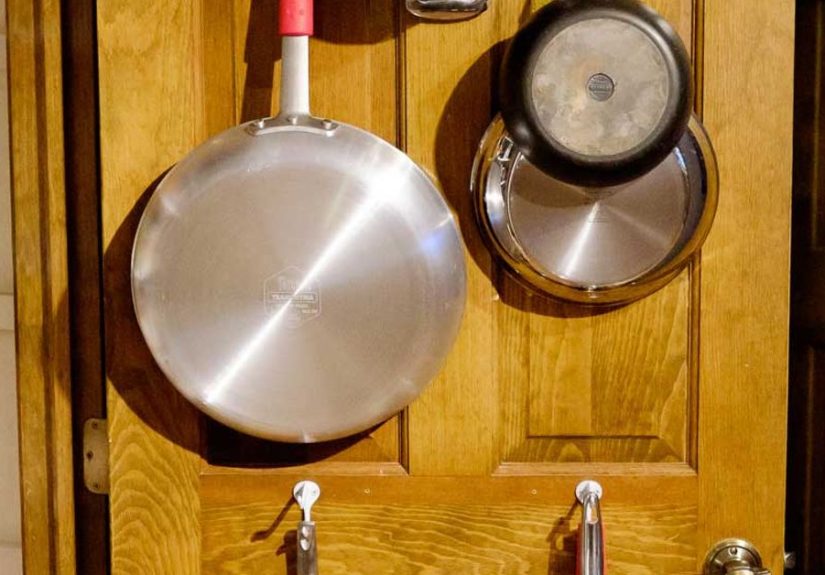
5. Heavy-Duty Hooks for Lightweight Pans
Hooks are a low-cost way to store pans with hanging holes in their handles. Use screw-in hooks for a permanent setup or removable hooks for a rental-friendly option. Hooks work best for lightweight skillets, small pans, measuring tools, strainers, and splatter guards.
When using hooks, stagger the heights so handles do not collide. Keep the most-used pan at eye level or slightly below. Avoid placing pans too close to the edge of the door, where they may hit the wall or frame.
6. Pegboard on the Pantry Door
A small pegboard panel can turn the pantry door into a customizable cookware station. Pegboard is useful because you can move hooks and holders as your needs change. It can hold lids, small pans, measuring cups, kitchen scissors, oven mitts, and even small baskets.
For a clean look, paint the pegboard to match the pantry door or kitchen trim. Use spacers behind the board so hooks fit properly. This is a more involved DIY project, but it gives you a flexible system that can grow with your kitchen habits.
How to Install Pantry Door Pan Storage Safely
Good installation makes the difference between a tidy storage solution and a dramatic midnight crash from the kitchen. Always match the organizer to the door, the weight of the cookware, and the amount of daily use.
Know Your Door Type
Solid wood doors can typically handle more weight than hollow-core doors. Hollow-core doors are common in many homes and apartments, but they need extra care. If you drill into a hollow door, use hardware designed for hollow surfaces. If you are not sure what kind of door you have, knock on it. A hollow door usually sounds lighter and more echo-like than a solid one.
Keep Heavy Items Low
Place heavier pans, larger lids, and bulkier items lower on the door. This helps balance the weight and makes the door easier to open and close. Lightweight items can go higher. This arrangement also reduces the chance of a pan falling from shoulder height, which is good because cookware should help make dinner, not attack you.
Use the Right Hardware
For screw-mounted organizers, use the included hardware only if it suits your door. If the organizer feels flimsy, upgrade to stronger screws or anchors. For adhesive organizers, clean and dry the surface first, press firmly, and allow the adhesive to cure according to the product instructions before adding weight.
Test the Door Swing
After installation, load only a few items and open the door slowly. Check whether anything hits shelves, trim, walls, or stored pantry goods. Then add the rest gradually. If the door feels too heavy or the hinges squeak, reduce the load.
How to Arrange Pans and Lids for Daily Convenience
A pantry door organizer should match the way you cook. If you make breakfast daily, keep your small skillet easy to reach. If you bake often, place sheet pans and cooling racks near the center. If you mostly need lids, give them the most visible section.
Group by Category
Store similar items together. Put lids in one area, baking sheets in another, and lightweight pans on hooks or racks. Grouping prevents the door from becoming a vertical junk drawer with hinges.
Store by Frequency of Use
The items you use most often should be easiest to grab. Everyday lids, a go-to skillet, and a favorite sheet pan belong in the prime zone between waist and eye level. Holiday roasting racks and specialty pans can live higher or lower.
Protect Nonstick Surfaces
If you store nonstick pans on hooks or in dividers, prevent rubbing. Use pan protectors, soft cloths, silicone pads, or careful spacing. Nonstick coatings can scratch when pans bang together, especially on a moving door.
Pantry Door Storage for Small Kitchens
Small kitchens benefit the most from vertical storage. When every drawer is already packed and every cabinet shelf is doing its best, the pantry door gives you a bonus zone without stealing floor space.
In a small apartment kitchen, consider storing only the slimmest items on the door: lids, baking sheets, cutting boards, cooling racks, and small pans. Keep bulky pots elsewhere. This keeps the door functional while freeing cabinet shelves for food storage, mixing bowls, or appliances.
If the pantry is narrow, use shallow racks instead of deep baskets. Deep baskets are great for snacks and spices, but they may interfere with shelves. Slim holders give you storage without turning the pantry into a door-closing puzzle.
Budget-Friendly DIY Pantry Door Pan Storage
You do not need to spend a fortune to organize pans on a pantry door. Some of the best solutions use basic hardware and a little planning.
DIY Lid Rack with Towel Bars
Install two short towel bars on the inside of the pantry door. Space them so your lids can sit securely behind the bars. This is simple, inexpensive, and clean-looking. It also works for lightweight cutting boards and trays.
DIY Hook System
Install a row of sturdy hooks for small pans, strainers, or splatter screens. Stagger the hooks to prevent items from overlapping too much. If you rent, use removable hooks rated for the weight of the items you plan to hang.
DIY Pegboard Panel
Attach a small pegboard panel with spacers and use hooks to create a custom layout. This option is perfect if your cookware collection changes often. You can rearrange the hooks without creating new holes each time.
Common Mistakes to Avoid
The most common mistake is overloading the door. Just because you can fit eight pans on it does not mean you should. A pantry door moves often, and moving weight puts stress on hinges and hardware. Keep the load reasonable.
Another mistake is ignoring clearance. Always test the door with the organizer loaded. A rack that looks perfect when the door is open may slam into pantry shelves when closed.
Do not rely on weak adhesive for heavy cookware. Adhesive holders can be wonderful for lids and lightweight tools, but heavy pans need stronger support. Also, avoid storing frequently used items in awkward spots. If you have to stretch, bend, or remove three other items to get your favorite skillet, the system will not last.
Easy Maintenance Tips
Once your pantry door pan storage is set up, keep it working with a simple monthly reset. Remove anything you no longer use. Wipe dust or grease from racks and holders. Check screws, hooks, and adhesive mounts. Make sure pans are not rubbing against each other or scraping the door.
It also helps to label zones if several people use the kitchen. A small label for “lids,” “baking sheets,” or “cutting boards” can prevent the organizer from slowly becoming a mystery wall of kitchen objects.
Real-Life Experience: What Actually Works on a Pantry Door
In real kitchens, the best pantry door pan storage setup is usually the one that feels almost boring. That may sound disappointing, but boring systems are the ones people actually keep using. A complicated organizer with twelve special compartments looks impressive for one weekend. A simple rack that lets you grab the lid you need in two seconds is the hero that survives Tuesday night pasta.
One practical experience is that lids are often the first thing worth moving to the pantry door. Many people try to organize pans first, but lids create more daily frustration. They slide, fall, hide, and never stack as neatly as you hope. Once lids are moved onto the door, cabinets immediately feel calmer. Pots can nest together more easily, and you no longer need to balance lids on top like a cookware circus act.
Another useful lesson is to store baking sheets vertically whenever possible. A sheet pan stored flat at the bottom of a cabinet tends to become buried under cutting boards, roasting pans, and that one tray nobody remembers buying. On a pantry door, slim bakeware can stand upright in a divider or rack. This makes it easier to pull out one tray for roasted vegetables, cookies, frozen pizza, or emergency nachos. Emergency nachos are a legitimate kitchen category.
It is also wise to start with fewer items than you think the door can hold. Load your most-used lids, one or two lightweight pans, and a few flat items. Then live with the setup for a week. Notice what you reach for and what feels awkward. Maybe the skillet handle hits the pantry frame. Maybe the largest lid is too heavy for the top holder. Maybe the cutting board belongs lower because you use it twice a day. Adjust before adding more.
For renters, removable hooks and over-the-door racks can be very helpful, but they should still be chosen carefully. Thin hooks may prevent the door from closing, and low-quality racks can swing or rattle. Adding felt pads, rubber bumpers, or small stabilizers can make the setup feel much more polished. A quiet organizer is more likely to stay in use because nobody wants a pantry door that sounds like a marching band every time it opens.
Families often benefit from a “kid-safe lower zone.” Avoid putting sharp, heavy, or breakable items near the bottom if children open the pantry. Instead, place lightweight cutting boards, silicone mats, or harmless lids lower down. Keep heavier pans higher only if they are very secure, or better yet, store them in a cabinet.
The biggest real-world win is mental. When pans and lids have a clear home, cooking feels easier before you even turn on the stove. You can see what you own. You stop buying duplicate lids or pans because you forgot what was hiding in the cabinet. Cleanup becomes quicker because every item has an obvious landing spot. That is the quiet magic of easy pan storage on a pantry door: it does not just save space; it removes one small annoyance from every meal.
Conclusion
Easy pan storage on a pantry door is one of the smartest ways to reclaim space in a crowded kitchen. By using vertical storage, you can organize lids, sheet pans, lightweight skillets, cutting boards, cooling racks, and bakeware without sacrificing counters or digging through cabinets. The key is to measure first, choose the right organizer, respect the weight limits of your door, and arrange items based on how often you use them.
Whether you choose an over-the-door rack, mounted lid holders, towel bars, hooks, or a DIY pegboard, the best system is the one that makes cooking smoother every day. Your pantry door may not look like much now, but with a little planning, it can become a hardworking storage zone that keeps your pans visible, reachable, and far less likely to start a cabinet avalanche.
Note: This article is written in original American English and synthesized from real, practical kitchen organization guidance, product-use patterns, and common home storage best practices.