Table of Contents >> Show >> Hide
- What Lawn Aeration Actually Does
- Does Every Lawn Need Aeration?
- The Biggest Clues Your Lawn Probably Needs Aerating
- The Easiest Tests to Check Before You Aerate
- When Aeration Helps Most
- Core Aeration vs. Spike Aeration
- How Often Should You Aerate?
- What to Do After Aerating
- Common Mistakes Homeowners Make
- So, Does Your Lawn Really Need Aerating?
- Real-World Experiences: What Homeowners Notice Before and After Aerating
- SEO Tags
Aeration has become the lawn-care equivalent of buying vitamins in bulk: lots of people do it, not everyone knows why, and some yards probably need it a lot less than the marketing says. If your lawn looks tired, thin, puddly, or weirdly crunchy underfoot, aerating can absolutely help. But if your grass is already dense, drains well, and doesn’t feel like it was installed over a parking lot, you may not need to punch thousands of holes in it just for sport.
The truth is simple: lawns do not need aeration just because the calendar says so. They need it when the soil is compacted, the roots are struggling, water is not moving properly, or thatch is building up beyond what the lawn can handle. In other words, aeration is a solution, not a personality trait.
So how can you tell whether your lawn is actually begging for relief or just being dramatic? Let’s break down the real signs, the right timing, and the easiest ways to decide whether aerating is worth the effort.
What Lawn Aeration Actually Does
Aeration is the process of creating openings in the soil so air, water, and nutrients can move more easily into the root zone. The best version of this is core aeration, also called plug aeration, which pulls small soil plugs out of the lawn. That matters because compacted soil has fewer open spaces, and fewer open spaces mean fewer places for roots, oxygen, and moisture to go.
When the soil is too tight, grass roots stay shallow and weak. Then the lawn starts reacting badly to normal life: a little heat, a little traffic, a missed watering, and suddenly your turf is behaving like it has endured great personal betrayal. Aeration helps by loosening the soil, improving infiltration, and encouraging deeper root growth.
Core aeration can also help with moderate thatch buildup. As the soil plugs break down on the surface, they add microorganisms and soil back into the turf canopy, which can speed decomposition. Translation: those little dirt cores may look messy for a minute, but they are doing important work. Think of them as tiny lawn interns.
Does Every Lawn Need Aeration?
No. And that is good news, because not every lawn wants to spend a weekend getting jabbed repeatedly by a machine.
A lawn is more likely to need aeration if it has:
- Heavy clay soil
- Constant foot traffic from kids, pets, or backyard sports
- Construction damage or subsoil exposure
- Poor drainage or standing water
- Noticeable thatch buildup
- Thin, stressed turf that never quite perks up
A lawn is less likely to need aeration right now if it is dense, resilient, drains properly, and passes a simple compaction test. Some lawns may benefit every year or two. Others may only need it occasionally. The key is to diagnose first and aerate second.
The Biggest Clues Your Lawn Probably Needs Aerating
1. Water puddles or runs off instead of soaking in
If irrigation or rainfall sits on the surface, forms puddles, or runs down the slope like your lawn has suddenly become nonstick cookware, that often points to compacted soil. Healthy soil absorbs water. Compacted soil resists it. When water cannot move downward, roots miss out and the top layer stays soggy or crusted.
2. The lawn feels hard underfoot
Walk across the grass. Does it feel springy and alive, or does it feel like you are strolling across green-painted brick? A lawn that feels hard can signal compaction, especially in worn paths, near sidewalks, around play sets, and along the dog’s favorite zoom route.
3. Grass is thinning in high-traffic areas
Compaction and traffic go together like lawn chairs and uneven legs. Repeated pressure from feet, mowers, pets, and outdoor hangouts compresses soil particles and limits root growth. The result is often thin turf, bare patches, and weeds creeping into the openings.
4. Your lawn struggles during heat or drought
Shallow roots mean the grass dries out faster. If your lawn browns quickly in hot weather while better-performing areas stay greener, poor rooting caused by compaction may be part of the story. Aeration does not replace watering or good mowing habits, but it can help turf become more resilient.
5. Thatch is thicker than about half an inch
A little thatch is normal. In fact, a thin layer can cushion the lawn and protect the crown of the grass plant. But when thatch grows beyond about 1/2 inch, it can block water movement, harbor pests and disease, and keep roots from interacting well with the soil below. Core aeration can help manage thatch, especially when paired with good watering, mowing, and fertilizing habits.
6. Your lawn was built on post-construction soil
New homes often come with beautiful sod laid over soil that has been compacted by trucks, equipment, grading, and general builder chaos. If your lawn looks decent on top but performs badly underneath, aeration is often one of the first fixes worth trying.
The Easiest Tests to Check Before You Aerate
Try the screwdriver test
This is the low-tech hero of lawn diagnostics. After the soil is moderately moist, push a screwdriver into the lawn. If it slides in easily several inches, the soil may not be compacted enough to justify aeration. If it is hard to push in without serious effort, compaction is likely an issue. Test a few areas, especially spots that look weak or get lots of traffic.
Cut a small wedge to inspect thatch
Use a spade to remove a small wedge-shaped piece of turf. Look at the layer between the green grass and the soil surface. If thatch is 1/2 inch or less, it is usually manageable. If it is thicker than that, the lawn may benefit from core aeration or other thatch-control practices.
Watch how the lawn behaves after watering
If water lingers on top, runs off quickly, or leaves some spots soaked and others dry, your lawn may have compaction or drainage problems. This is especially common in clay soils and areas with a lot of wear.
When Aeration Helps Most
The best time to aerate depends on your grass type. You want to aerate when the lawn is actively growing so it can recover quickly.
For cool-season grasses
If your lawn is made of tall fescue, Kentucky bluegrass, fine fescue, or perennial ryegrass, the best time is usually late summer to early fall. Early spring can also work, especially in some regions, but fall is often preferred because the grass is growing well and weed pressure tends to be lower.
For warm-season grasses
If you have bermudagrass, zoysiagrass, centipedegrass, or St. Augustinegrass, aerate in late spring through summer when the grass is actively growing. Avoid doing it when the lawn is dormant or just heading into cold weather.
Also important: do not aerate when the soil is bone dry or soggy. Dry soil is hard to penetrate, and wet soil can get even more compacted. Aim for moderately moist soil. If necessary, water deeply a day or two ahead of time.
Core Aeration vs. Spike Aeration
If you only remember one thing from this article, make it this: core aeration is usually the better choice.
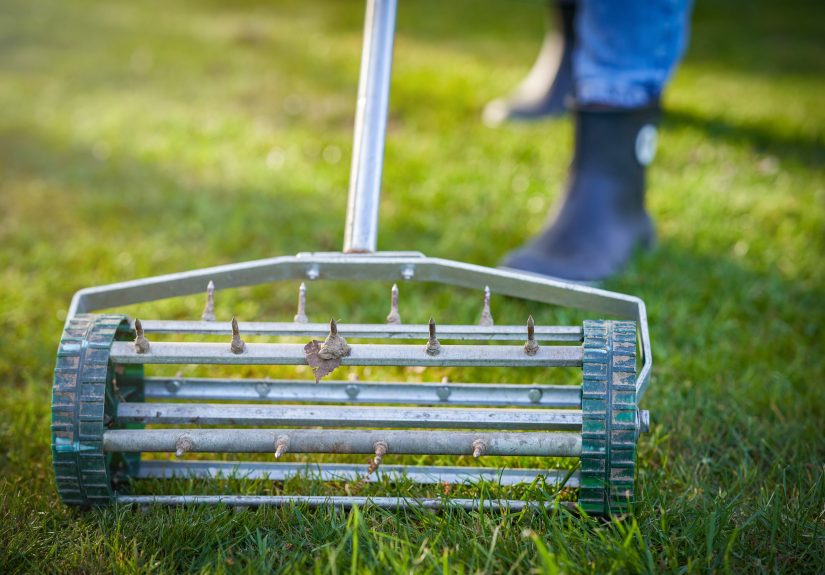
Core aerators remove plugs of soil. That creates actual space in the profile, reduces compaction, and improves air and water movement. Spike aerators, on the other hand, poke holes without removing soil. That can provide a short-term effect, but in many soils, especially clay, it may push soil aside and increase compaction around the hole.
This is why lawn pros and extension experts generally favor plug aerators over spike shoes, spike rollers, or other “easy” gadgets that promise miracle results. If your lawn is truly compacted, it needs soil removed, not merely insulted.
How Often Should You Aerate?
There is no one-size-fits-all schedule. Some heavily used lawns on clay soil may benefit from annual aeration, or even more frequent attention in problem spots. Other lawns may only need it every couple of years. A healthy lawn with decent soil structure may not need it this season at all.
Instead of asking, “Should I aerate every year?” ask, “What is my lawn telling me right now?” If the answer is puddles, thin spots, hard soil, and sad roots, aeration makes sense. If the answer is “Honestly, I look pretty good,” you can probably focus on mowing, watering, and fertilizing properly instead.
What to Do After Aerating
Aeration opens a great window for follow-up lawn care.
- Leave the cores on the lawn: They will break down and return soil to the surface.
- Overseed if needed: Aeration improves seed-to-soil contact and can help thin lawns fill in.
- Topdress lightly: In some cases, compost or compatible soil can help improve the surface over time.
- Water wisely: Keep the lawn evenly moist after overseeding, but do not drown it.
- Keep mowing correctly: Cutting too short adds stress and defeats the point of helping the roots.
If your lawn has serious drainage or soil problems, aeration may help, but it may not solve everything on its own. Sometimes compaction is only one piece of a larger issue involving grading, shade, irrigation habits, or poor soil quality.
Common Mistakes Homeowners Make
Aerating when the lawn does not need it
More lawn care is not always better lawn care. Aerating a healthy lawn “just because” is not usually harmful when timed well, but it may be unnecessary effort and expense.
Using spike shoes and calling it a day
Walking around in aerator sandals may make you feel like a very committed lawn wizard, but it is rarely the best fix for real compaction.
Aerating at the wrong time
If the grass is dormant or stressed, recovery will be slow. Match the timing to the grass type and growth cycle.
Ignoring the cause of the problem
If the lawn keeps compacting because of constant traffic, poor drainage, or construction-grade soil, aeration should be part of a bigger plan. Otherwise, you are just treating symptoms.
So, Does Your Lawn Really Need Aerating?
Maybe. But not because a machine rental place is having a sale.
Your lawn probably needs aerating if the soil is compacted, the grass is thinning, water is pooling, or thatch is getting too thick. It probably does not need aerating right now if the soil is easy to probe, roots are healthy, water soaks in normally, and the turf is dense and growing well.
The smartest move is to check first. Do the screwdriver test. Look at the thatch. Watch how water behaves. Notice where traffic beats up the lawn. Those clues will tell you more than any generic lawn calendar ever could.
In the end, aeration is one of the most useful lawn-care tools when it is used for the right reason. And like all good tools, it works best when you are solving an actual problem instead of just looking busy in the yard.
Real-World Experiences: What Homeowners Notice Before and After Aerating
One of the most common experiences homeowners describe is that their lawn looks “fine from the street” but feels awful when they actually walk on it. The grass may still be green, yet the soil underneath is hard, slick, and stubborn. People often realize something is wrong when the sprinkler runs and the water starts puddling near the sidewalk, or when a simple afternoon of kids playing outside leaves visible worn paths in the turf. In many cases, the lawn is not dead; it is just suffocating under compacted soil.
Another frequent story comes from people who move into newer homes. The sod looked gorgeous on closing day, but by the next season, parts of the yard turned thin, patchy, or weak. The issue often is not laziness or bad luck. It is that the lawn was installed over compacted subsoil after construction. Homeowners may fertilize, water, and mow properly, yet the grass still struggles because the roots cannot move deeply into the soil. Once they aerate, overseed, and improve the soil little by little, they often notice more even growth and fewer bare spots.
Pet owners also tend to spot compaction early. Dogs have favorite race tracks, launch zones, and squirrel-alert stations. Those repeated routes can compress the soil so much that grass thins out, especially near gates, patios, and fence lines. Aeration does not magically teach the dog to stop doing donuts at full speed, but it can help the grass recover better in those high-use areas.
Homeowners with clay soil often report the biggest “aha” moment after a good core aeration. Before aerating, the lawn may seem sticky when wet and rock-hard when dry, which is a truly rude combination. After core aeration, people often notice water soaking in more evenly, less runoff during irrigation, and a softer feel underfoot. The change is not always instant, but over time the turf usually becomes more resilient, especially when aeration is paired with smart watering and proper mowing height.
There is also the visual shock of those little soil plugs scattered across the lawn. First-time aerators sometimes panic and assume they have ruined everything. Then, about a week or two later, the plugs break apart, the lawn settles down, and the grass begins to respond. Many people are surprised by how quickly the turf recovers when the timing is right and the lawn is actively growing.
One more experience shows up again and again: homeowners who aerate and overseed together often get better results than those who do either one alone. The holes help seed make contact with soil, and thin lawns start filling in more evenly. So if your yard looks tired, compacted, or patchy, aeration is often less about “doing a lawn chore” and more about finally giving the grass a fair chance to act like healthy grass again.