Table of Contents >> Show >> Hide
- What Makes a Mirror “Trumeau” (and Why It Looks Expensive)
- Plan First: Size, Proportions, and Where Your Mirror Will Live
- Materials and Tools
- Step-by-Step: Build a Trumeau Floor Mirror
- Step 1: Mock up the layout on the floor
- Step 2: Cut the backer board to the final outer dimensions
- Step 3: Build the “frame body” (optional but makes it feel substantial)
- Step 4: Mount the mirror securely
- Step 5: Design the trumeau panel (the “wow” moment)
- Step 6: Add molding to create the trumeau silhouette
- Step 7: Fill, sand, and make it look like one piece
- Step 8: Prime and paint (or stain, or both)
- Make It Stand: Stable Leaning Mirror Setup
- Style and Storage Ideas That Don’t Ruin the Look
- Troubleshooting: Common DIY Trumeau Mirror Problems
- Final Styling Tips (So It Looks Like It Belongs There)
- DIY Trumeau Floor Mirror: Real-World “Experience” Notes (Add-On)
- Conclusion
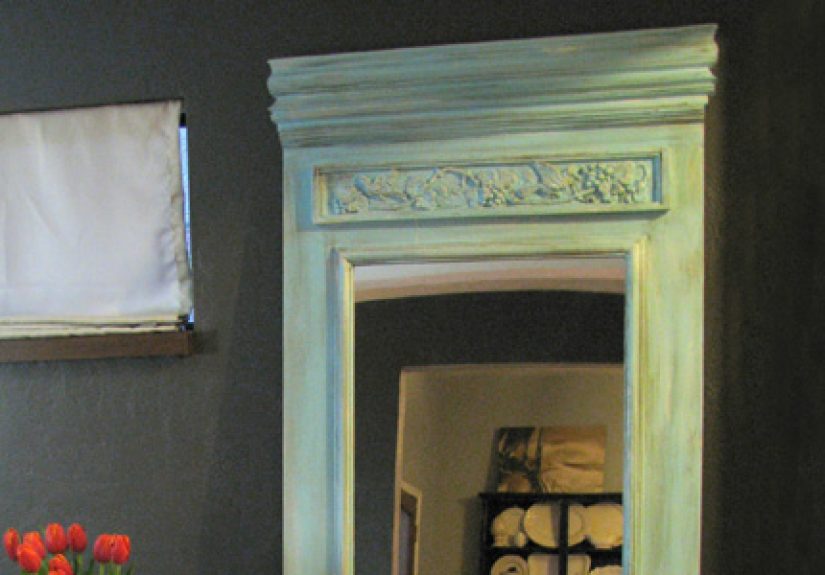
A trumeau mirror is basically what happens when a regular mirror gets a glow-up and decides it wants an art career.
It’s tall, elegant, and topped (or sometimes bottomed) with a decorative panelpainted, carved, wallpapered, or
otherwise fancied up. Traditionally, trumeau mirrors lived above mantels and between windows, helping bounce light
around before electricity made “mood lighting” a switch instead of a candle-and-a-prayer situation.
In this tutorial, you’ll build a trumeau-style floor mirror: a full-length statement piece that leans like
it owns the place. It’s perfect for entryways, bedrooms, and any room where you’d like to feel just a little more
“French château,” even if your actual address is “Apartment With Questionable Parking.”
What Makes a Mirror “Trumeau” (and Why It Looks Expensive)
The telltale trumeau feature is the combination of mirror glass and a decorative panel in the same frameoften a
painted scene, carved detail, or ornate trim treatment. In classic interiors, a trumeau (also called a “pier glass”
in some traditions) was designed to amplify light and add architectural drama. The panel could be subtle (think:
linen-textured wallpaper) or theatrical (think: gilded scrollwork that whispers, “Yes, I do summer in Provence.”)
The good news: you don’t need hand-carved cherubs or a royal budget. You can get the look with smart proportions,
layered molding, and one confident design decision on the top panel.
Plan First: Size, Proportions, and Where Your Mirror Will Live
Pick a mirror size that makes sense for real life
Start with the mirror you already have (hello, budget win) or choose a new full-length mirror. For a floor trumeau,
a common visual sweet spot is a mirror that’s roughly 55–70 inches tall. The overall finished piece usually lands
tallerbecause the decorative panel adds height.
Choose a panel height that looks intentional
The panel is where a trumeau becomes a trumeau. As a rule of thumb:
about 20–30% of the total height works well for the decorative section. Example: If your finished
mirror will be 80 inches tall, a 16–24 inch panel feels balanced. If your room has high ceilings, go bolder.
If your ceiling fan is already dominating the room like a helicopter audition, keep the panel a bit shorter.
Leaner vs. wall-hung: decide now
This tutorial focuses on a leaning floor mirror. Even so, plan for safety: a tall mirror can tip if bumped,
especially in homes with kids, pets, or that one friend who gestures dramatically during storytelling.
If you want to hang it instead, you’ll build the same framethen swap to secure hanging hardware rated for the weight.
Materials and Tools
Materials
- Full-length mirror (existing mirror or new mirror glass)
- Backer board: 1/2-inch plywood or MDF cut to your full finished size
- Trim & molding: a mix of baseboard, casing, chair rail, panel molding, or crown (choose what fits your style)
- Construction adhesive (mirror-safe if it will touch the back of the mirror)
- Wood glue (for trim-to-wood connections)
- Brad nails (and/or finishing nails) or trim screws
- Mirror clips or a mirror mounting channel (recommended for extra security)
- Caulk (paintable) for seamless trim joints
- Primer + paint (satin, semi-gloss, or matte depending on vibe)
- Optional finishes: glaze, rub-on gilding wax, gold leaf accents, crackle medium, or a light stain
- Felt pads and rubber bumpers (to protect floors and keep it stable against the wall)
- Optional anti-tip strap (highly recommended for a floor leaner)
Tools
- Measuring tape, pencil, straightedge
- Miter saw (or miter box + hand saw for patience champions)
- Circular saw (or have the store cut your plywood/MDF)
- Drill/driver
- Brad nailer (nice) or hammer + nail set (still works)
- Sandpaper or sanding sponge
- Paintbrush + small foam roller
- Safety gear: gloves, eye protection (mirror edges don’t play)
Step-by-Step: Build a Trumeau Floor Mirror
Step 1: Mock up the layout on the floor
Lay your mirror on a blanket or rug to prevent scratches. Use painter’s tape to outline your desired border width
around the mirror and the height of the decorative panel above it. Stand back and look at it from a few feet away.
If you immediately think “tiny hat,” your panel is too short. If you think “top-heavy wedding cake,” your panel is too tall.
Adjust until it looks like it was always meant to be this way.
Step 2: Cut the backer board to the final outer dimensions
Cut plywood or MDF to the total finished size of the mirror (including the panel area). If long, perfectly straight cuts
aren’t your love language, many lumber yards and home improvement stores can cut sheet goods to size.
The backer board is your foundationsquare and straight here makes everything else easier.
Step 3: Build the “frame body” (optional but makes it feel substantial)
If you want the mirror to look more like a true furniture piece (not just “trim glued to a board”), create a shallow frame
around the backer board edges using 1×2 or 1×3 lumber. This gives the piece thickness, helps prevent warping, and makes
hardware installation easier later.
Attach the perimeter boards to the backer with wood glue and screws. Keep screw heads slightly countersunk, then fill if needed.
Now your backer is more like a “mirror cabinet without the cabinet,” which is exactly the kind of dramatic illusion we want.
Step 4: Mount the mirror securely
This is where you choose your comfort level: mirror clips (mechanical support) + mirror-safe adhesive (extra support) is a
solid combo. If using adhesive, confirm it’s safe for mirrorssome adhesives can damage mirror backing over time.
Center the mirror in the lower portion of the backer. Mark the corners lightly. If using clips, plan clip placement so they
don’t interfere with your trim later. Attach clips to the backer, then set the mirror in place. If adding adhesive, apply
in vertical beads (not giant blobs) so air can circulate and the mirror can settle evenly.
Step 5: Design the trumeau panel (the “wow” moment)
The top panel is where your mirror gets its personality. A few proven approaches:
- Classic painted panel: Paint it a contrasting color (moody charcoal above a crisp white frame is gorgeous).
- Wallpaper inset: Use peel-and-stick wallpaper for a reversible pattern moment.
- Art print look: Frame a printed landscape or vintage botanical behind clear acrylic (so it’s durable).
- Architectural texture: Add beadboard, fluted trim, or thin plywood planks for dimension.
If you’re unsure, choose a simple option (paint or wallpaper) and let your trim do the heavy lifting. That’s not cheating
that’s design efficiency.
Step 6: Add molding to create the trumeau silhouette
Dry-fit all trim pieces before attaching. Start with the main border around the mirror and panel, then add inner trim
(like panel molding) to “frame” the decorative section. Miter corners at 45 degrees for clean joints. If you’re new to
miters, remember: measuring is helpful, but dry-fitting is holy.
Attach trim with wood glue and brad nails (or finishing nails). Work in layers:
a wider outer trim first, then smaller decorative pieces on top. This layered effect is what makes trumeau mirrors look
high-endeven if your “carving” is just clever molding choices and a little confidence.
Step 7: Fill, sand, and make it look like one piece
Fill nail holes with wood filler. Let it dry, then sand smooth. Use paintable caulk where trim meets trim (and trim meets
backer board) for seamless lines. This step is the difference between “handmade heirloom” and “middle-school diorama,”
so don’t rush it.
Step 8: Prime and paint (or stain, or both)
Prime firstespecially if you used MDF or you’re painting over mixed materials. Then paint your frame and panel.
For a classic trumeau look, a warm white, soft greige, or antique cream is timeless. For modern spaces, black or deep navy
makes the mirror feel architectural.
Want that vintage, timeworn glow? Try a simple aging approach:
paint the frame, lightly sand edges once dry, and add a thin glaze in crevices to emphasize detail. For gilded accents,
rub a small amount of gold wax on raised trim and wipe back gently. The goal is “old-world charm,” not “goldfinger incident.”
Make It Stand: Stable Leaning Mirror Setup
Option A: Leaner + anti-tip strap (recommended)
Add felt pads along the bottom edge so it slides gently into place without damaging floors. Put small rubber bumpers
on the back near the top corners so it doesn’t scuff the wall and to reduce slipping.
Then add an anti-tip strap anchored into a stud. This is especially important for tall, heavy mirrorsgravity is patient,
and it always gets its way eventually.
Option B: Add a discreet rear support leg
If you want a more upright stance, attach a simple folding leg to the back (like an oversized picture frame stand).
A hinged 1×2 support can reduce how far the mirror leans, which is helpful in narrow hallways. Keep it centered so the mirror
doesn’t wobble, and make sure the hinge hardware is rated for the load.
If you decide to hang it instead
A trumeau mirror can be wall-hung using secure hardware rated for the mirror’s weight and wall type.
A French cleat system is a popular option for heavy items because it distributes weight and helps keep things level.
Avoid relying on adhesive hooks or strips for heavy mirrorsespecially in humid rooms where adhesives can fail over time.
Style and Storage Ideas That Don’t Ruin the Look
A trumeau mirror is a statement, but it can still be practical. A few subtle add-ons that keep the design elegant:
- Hidden hooks on the back: Add small hooks behind the frame to hold a lint roller, jewelry pouch, or keys.
- A slim “resting ledge” at the base: A tiny lip (like a picture ledge) can hold perfume bottles or a small plant.
- Side-mounted peg rail (minimal): Install one or two pegs on the side edge for a hat or scarfkeep it sparse so it stays chic.
- Basket styling: Place a lidded basket next to the mirror for shoes or winter accessoriesstorage that looks intentional.
Troubleshooting: Common DIY Trumeau Mirror Problems
“My trim joints have tiny gaps.”
Wood moves. Houses move. Your miter saw might also be having feelings. Use paintable caulk for small gaps and sand lightly
after it cures if needed. If gaps are large, re-cut the piecefuture you will be grateful.
“The mirror doesn’t feel secure.”
Add mirror clips if you skipped them. For a floor leaner, stability matters because small shifts add up. If wall-hanging,
upgrade to weight-rated hardware and anchor properly into studs or appropriate anchors.
“My paint looks blotchy on MDF.”
MDF edges drink paint like it’s happy hour. Seal edges with primer (or a thin skim of wood filler sanded smooth), then prime again.
After that, paint will behave.
Final Styling Tips (So It Looks Like It Belongs There)
A trumeau floor mirror looks best when it has a “scene partner.” Try pairing it with a small bench, a plant, or a narrow console.
In an entryway, it can reflect light and make the space feel larger. In a bedroom, it’s instantly boutique-hotel energy.
And in a living room, it’s a sneaky way to bounce daylight into a darker corner.
If you chose a bold panel (pattern or art), keep nearby decor calmer. If your panel is simple, you can go more dramatic with
accessories. Design is basically a seesaw: if one side goes up, the other side should chill.
DIY Trumeau Floor Mirror: Real-World “Experience” Notes (Add-On)
Building a trumeau floor mirror is one of those projects that looks straightforward on paperboard, mirror, trim, paintuntil you
realize you’re basically creating a tiny piece of architecture that has to be square, stable, and pretty from across the room.
That’s why the “experience” part matters: the little moments that don’t make it into highlight reels are exactly what determines
whether your finished mirror feels custom or merely “constructed.”
First, there’s the layout reality check. Most people think they know how big they want it until the backer board is
taped out on the floor and suddenly it’s either (1) too small to feel dramatic or (2) so large it looks like it’s trying to qualify
as a second doorway. The easiest fix is to mock it up with painter’s tape and physically stand where the mirror will go. A trumeau is
supposed to look tall and intentional; if you’re building a floor version, give it permission to be a statement.
Then comes the trim decision spiral. At the store, everything looks like it could workornate crown molding! sleek modern casing!
something called “colonial base” that sounds like a history class! The trick is to pick one “hero” molding (the one that sets the style)
and let the others support it. If you stack three equally loud trims, the mirror starts to look like it’s wearing three necklaces at once.
Beautiful necklaces, sure, but still… three necklaces.
Painting is where patience pays rent. If you rush primer, your topcoat will tattletale later. And if you don’t fill nail holes carefully,
they’ll show up the moment sunlight hits the frame at a dramatic anglelike the mirror is snitching on you. Many DIYers find that a light
sanding between coats makes the finish feel professionally smooth, especially on the flat parts of the panel and the wider trim pieces.
It’s a small effort that reads as “custom furniture” instead of “weekend craft.”
The mirror itself is often the most nerve-wracking part. Glass feels unforgiving because… it is. The best “experience tip” is to set up a
calm work zone: blanket under the mirror, tools within reach, and a helper if the mirror is large. When you’re tired, that’s when mistakes happen,
and mirrors are not the material you want to experiment with while exhausted. If you’re using adhesive, the typical learning curve is realizing that
more glue isn’t automatically more securestrategic placement and the right product matter more than volume.
Finally, there’s the living-with-it stage. Once it’s leaned in place, you might notice small tweaks that make a big difference:
a slightly different tilt, additional bumpers so it doesn’t tap the wall, or an anti-tip strap for peace of mind. Many people also discover that the
trumeau panel becomes a “style dial.” Swap the panel treatment (paint color, wallpaper, art insert) and the whole mirror changes personality without
rebuilding anything. It’s like giving your room a new outfitwithout asking your closet to fund it.
If you take anything from these experience notes, let it be this: the magic isn’t in doing complicated thingsit’s in doing the simple things
carefully. Square cuts, thoughtful proportions, clean seams, and a finish that looks intentional. Do that, and your mirror won’t just reflect
your spaceit’ll upgrade it.
Conclusion
A DIY trumeau floor mirror is a high-impact project that combines classic European style with modern practicality. With the right proportions,
layered trim, and a decorative panel that fits your home, you can create a piece that looks like it came from a boutique shopwithout paying boutique
prices. Build it sturdy, finish it thoughtfully, and add safety touches like bumpers and an anti-tip strap. Then step back and enjoy the moment when
your room suddenly looks brighter, taller, and a little more “I totally have my life together,” even if your laundry basket says otherwise.