Table of Contents >> Show >> Hide
- Why an Old Shutter Makes the Perfect Snowman
- What You Need for a DIY Old Shutter Snowman
- How to Make an Old Shutter Snowman
- Creative DIY Old Shutter Snowman Ideas
- Common Mistakes to Avoid
- Why This Upcycled Christmas Decor Project Is Worth It
- Experiences and Lessons Learned From Making a DIY Old Shutter Snowman
- Final Thoughts
There are two kinds of people during the holidays: the ones who gracefully drape a tasteful wreath on the door, and the ones who look at an old shutter in the garage and think, “You, my weathered wooden friend, are about to become a snowman.” This article is for the second group. Frankly, you seem more fun.
A DIY old shutter snowman is one of those holiday projects that checks every box. It is budget-friendly, charmingly rustic, easy to personalize, and just quirky enough to make the neighbors slow down while walking the dog. Better yet, it turns something old into something cheerful. That is basically the holiday spirit with paint on it.
If you have been searching for upcycled Christmas decor, rustic snowman porch ideas, or an easy shutter snowman craft, you are in exactly the right place. Below, you will find a practical, step-by-step guide, design ideas, common mistakes to avoid, and real-life project experiences that can save you time, paint, and a mild crafting meltdown.
Why an Old Shutter Makes the Perfect Snowman
Old shutters already bring a lot to the party. They are tall, narrow, and full of texture. Their worn slats, chipped paint, and slightly imperfect shape make them ideal for farmhouse-style Christmas decor. In other words, they already look like they have a backstory. You are not building holiday decor from scratch; you are giving it a second act.
Unlike flat boards, shutters add dimension without extra work. The slats catch paint beautifully, create shadows, and make the finished piece feel more custom. A shutter snowman can lean against a porch wall, stand beside the front door, hang in an entryway, or become part of a larger winter porch display with lanterns, evergreen branches, scarves, and vintage sleds.
It is also wonderfully forgiving. If your painted carrot nose is a little crooked, congratulations: your snowman now has personality. That is not a mistake. That is character with a seasonal hat.
What You Need for a DIY Old Shutter Snowman
You do not need a professional workshop or a reality show camera crew to make this project. A simple supply list will do the trick:
- One old wood shutter
- Mild cleaner, rag, and brush
- Sandpaper or sanding block
- Exterior primer
- Exterior white paint
- Black, orange, and pink craft or exterior paint for details
- Paintbrushes in small and medium sizes
- Wood filler for cracks or holes, if needed
- Hot glue gun or strong outdoor adhesive
- Ribbon, scarf, greenery, buttons, twine, or faux berries
- A small wreath, tin bucket, or winter hat for embellishment
- Clear hanging hardware or sturdy stand if you want it upright
If your shutter has old peeling paint, treat it with respect. If it may be very old, be smart about prep and use appropriate safety precautions before sanding or scraping. Holiday crafting is supposed to end with hot cocoa, not regret.
How to Make an Old Shutter Snowman
1. Find the Right Shutter
The best shutter for this project is sturdy, straight enough to stand or hang securely, and weathered without being rotten. Chippy paint can look gorgeous, but soft, crumbling wood is less “vintage charm” and more “future firewood.” Check the back, corners, and slats. If the wood feels solid, you are good to go.
You can often find shutters at flea markets, thrift stores, architectural salvage yards, garage sales, or tucked behind your own shed where old home projects go to be forgotten. Wooden shutters work best for a rustic snowman sign, though composite shutters can also be used if they are in good condition and properly prepped.
2. Clean It Like It Has Seen Things
And it probably has. Outdoor shutters collect dust, spider webs, grime, and enough mystery residue to make you question your life choices. Start by wiping the piece down with a mild cleaner and water. Use a soft brush to get into the grooves and slats. Let it dry completely before doing anything else.
This step may not be glamorous, but it matters. Paint sticks better to a clean surface, and decorations hold more securely when you are not gluing over dirt from three presidencies ago.
3. Sand, Repair, and Prime
Next, lightly sand rough spots, flaky paint, and splintered edges. You do not need to erase every sign of age. In fact, some texture adds to the charm. The goal is simply to create a surface that is smoother, safer to handle, and ready to accept primer and paint.
If there are cracks, nail holes, or small gouges you do not want showing through, use wood filler, let it dry, and sand again. Then apply a coat of exterior primer. This is especially important if the shutter will live outdoors on a porch, front step, or patio. Primer helps the finish hold up better and gives your snowman a cleaner, brighter base.
4. Paint the Snowman Body
Once the primer is dry, paint the shutter white. One coat may work if you like a weathered look. Two coats will give you a brighter, cleaner finish. Both are lovely. It depends on whether you want “storybook snowman” or “snowman who definitely shops at antique markets.”
If you want extra depth, distress the edges slightly after the paint dries. A little sanding on the corners can reveal wood tones underneath and create that cozy rustic Christmas craft style people spend an unreasonable amount of money trying to imitate in stores.
5. Add the Face
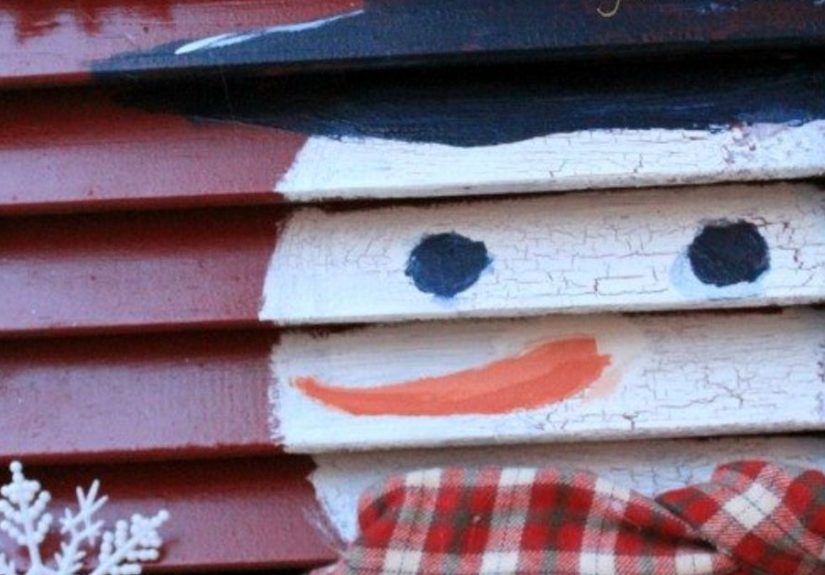
This is where the project comes alive. Paint or draw two black eyes, a dotted smile, and an orange carrot nose. Keep the face centered toward the upper section of the shutter. You can make the expression sweet, goofy, elegant, or slightly mischievous. A little pink on the cheeks adds warmth and makes the piece look more finished.
Do not overthink the face. Snowmen are not known for high-definition realism. If the smile is uneven, call it whimsical and continue with confidence.
6. Dress Your Snowman for the Season
A naked shutter snowman is still cute, but accessories take it from “nice project” to “why does this make me so happy?” Wrap a scarf around the neck area. Tie on a buffalo plaid ribbon. Glue on buttons. Add a small greenery swag with pine, berries, or eucalyptus. Top the snowman with a metal bucket, mini hat, or bow.
You can also hang a small wreath over the middle for a layered look. Some crafters attach twig arms, wooden signs, or a little “Let It Snow” plaque. The trick is balance. Give it enough detail to feel festive, but do not pile on every craft supply you have owned since third grade.
7. Display It Properly
Your old shutter snowman decor can lean against the wall, be mounted vertically, or stand in a planter filled with sand or rocks for support. If it will sit outside, choose a covered area when possible. That helps preserve both the wood and the paint through the season.
For a polished front porch look, pair the shutter snowman with lanterns, evergreen garlands, a doormat, and maybe one or two complementary pieces. One cheerful snowman feels intentional. Six unrelated holiday mascots fighting for attention feels like a seasonal argument.
Creative DIY Old Shutter Snowman Ideas
One of the best things about this project is how flexible it is. Here are a few style directions you can take:
Farmhouse Snowman
Use matte white paint, black buttons, twine, a plaid scarf, and a simple greenery bundle. This version works beautifully on a neutral porch.
Vintage Christmas Snowman
Keep some of the original shutter paint visible, add a distressed finish, and use muted colors like faded red, cream, and dusty green. A tin pail hat looks fantastic here.
Whimsical Family-Friendly Snowman
Use brighter colors, oversized buttons, striped ribbon, and a playful smile. This version is perfect if you decorate with kids or want a more cheerful front entry.
Elegant Winter Porch Snowman
Keep the face minimal, add a soft gray or ivory scarf, and use simple greenery with white berries. This version leans more “winter decor” than “North Pole comedy special.”
Common Mistakes to Avoid
Even easy Christmas crafts can go sideways if you rush them. Here are the mistakes that cause the most trouble:
- Skipping surface prep: Dirty, flaky wood does not hold paint well.
- Using indoor paint outdoors: It may look fine for a minute, then fade or peel when weather hits.
- Overdecorating: Accessories should support the design, not swallow it whole.
- Ignoring stability: A tall shutter needs secure placement so it does not topple over in wind.
- Forgetting your color palette: Random ribbon, random greenery, and random buttons can make the finished piece look accidental rather than charming.
A good rule is this: let the shutter be the star. Its shape and texture already do half the visual work.
Why This Upcycled Christmas Decor Project Is Worth It
A DIY shutter snowman is more than a cute holiday craft. It is affordable, sustainable, and surprisingly satisfying. Repurposing an old item into seasonal decor adds warmth to your home in a way store-bought pieces often cannot. It feels personal. It tells a little story. It makes guests smile before they even ring the bell.
It also gives you freedom. You can make one for your porch, one for your mantel, and one as a gift. Once you have made your first snowman, you will start looking at every old shutter like it is just waiting for a scarf and a better attitude.
Experiences and Lessons Learned From Making a DIY Old Shutter Snowman
The first time I made an old shutter snowman, I assumed this would be a quick afternoon project. You know, the sort of craft where you casually sip coffee, add a ribbon, and somehow emerge looking like a holiday lifestyle influencer. That is not what happened. What happened was I dragged home a dusty shutter, discovered a family of highly offended spiders, and spent the first twenty minutes negotiating who really owned it.
Once the cleaning started, I learned the first big lesson: old shutters are usually dirtier than they look. What seems like “pleasant rustic charm” is often a thin visual disguise for grime, loose paint, and a mystery stain that probably deserves its own documentary. Taking time to wash and dry the wood made the rest of the project much easier, and the finished paint looked dramatically better.
The second lesson was about restraint. I had gathered every possible embellishment: ribbon, bells, faux berries, greenery, buttons, twine, a tiny hat, and what can only be described as a deeply unnecessary amount of glitter. At one point, the snowman looked less like a tasteful porch decoration and more like it had lost a fight inside a craft store clearance bin. After stepping back, I removed half the extras. Instantly, it looked better. The texture of the shutter and the simple face were enough.
Another thing I discovered is that placement changes everything. Leaning the snowman beside the front door gave it a cozy, welcoming look. Putting it out in the yard by itself made it look like it had been politely asked to leave the house. Once I added a lantern, a doormat, and a small evergreen pot nearby, the whole scene came together. That experience taught me that decor is not just about the individual piece. It is about the company it keeps.
I also learned that imperfect really does work in your favor here. One shutter had uneven slats and slightly chipped corners, and I almost tossed it aside for a cleaner piece. But the more weathered one turned out to have the most character. The paint caught differently across the surface, the distressing looked natural, and the finished snowman felt more authentic. That is the beauty of upcycled holiday decor: the flaws are often what make it memorable.
Perhaps the best part of the experience was how many people commented on it. Not because it was flawless, but because it felt warm and handmade. Guests asked where I bought it, and there is a special kind of joy in saying, “Actually, it used to be an old shutter I nearly ignored.” That tiny transformation makes the project feel worth every brushstroke.
So if you are hesitating because your shutter looks too worn, your painting skills feel average, or your crafting confidence is hanging by a thread, take that as your sign to start anyway. This is one of those forgiving, happy little projects that rewards effort more than perfection. And if your snowman ends up slightly crooked, congratulations again: he will fit right in with the rest of us during the holidays.
Final Thoughts
A DIY old shutter snowman is simple, affordable, full of charm, and surprisingly stylish when done with care. It is a wonderful way to repurpose old materials, create eye-catching holiday porch decor, and add handmade warmth to your home. Whether your style is farmhouse, whimsical, vintage, or clean and classic, this easy winter craft can be adapted to fit it.
So rescue that forgotten shutter, grab a scarf, and make something cheerful. Best case, you create a front porch centerpiece everyone loves. Worst case, you end up with a funny story, a little paint on your sleeve, and a snowman who looks like he has opinions. Honestly, that still sounds like a win.