Table of Contents >> Show >> Hide
- Why Glucose Testing Is Really a Chemistry Story
- What Open Source Brings To The Table
- Where DIY Chemistry Could Change Blood Glucose Testing
- The Real Technical Challenge: Accuracy
- Why Non-Invasive Testing Still Feels Like the Holy Grail
- Open Hardware, Open Data, Open Questions
- What Responsible Open Source Looks Like In Healthcare
- How This Could Affect Everyday Patients
- Experiences From The Open Source Diabetes World
- Conclusion
Blood glucose testing sits at a strange and important crossroads: part chemistry, part electronics, part public health, and part daily life management. For decades, the basic job has been the same: detect glucose in a tiny sample, turn that chemistry into a number, and help a person make a decision before the day gets away from them. The FDA says home glucose meters are meant for over-the-counter use and that accuracy can be affected by things as ordinary as storage, humidity, and test-strip handling, which is a polite reminder that even a small medical tool has a lot going on under the hood.
That is exactly why “DIY chemistry” is more than a hobby phrase. In this context, it means applying the open, modular thinking of maker culture to a real medical problem: making measurement easier to understand, easier to inspect, and easier to improve. The promise is not that a kitchen table will replace a regulated lab or an FDA-cleared device. The promise is that open methods, transparent data, and shared hardware ideas can speed up better testing systems and make them more accessible to more people. That idea lines up with the broader open-source diabetes ecosystem already shaped by OpenAPS, Tidepool, and people like Dana Lewis, who helped prove that patient-led engineering can change the conversation.
Why Glucose Testing Is Really a Chemistry Story
Before blood glucose testing became a dashboard on a phone, it was a chemical reaction translated into a number. Traditional blood glucose meters still depend on a blood sample, usually from a fingertip, and the NCBI Bookshelf describes them as intermittent tools that require the user to puncture capillary blood vessels and measure glucose when needed. In other words, the chemistry is not abstract; it is a tiny event that must be captured reliably, repeatedly, and under real-world conditions.
That chemistry matters because glucose is not measured in a vacuum. The CDC notes that monitoring helps people see patterns and make decisions, while the NIDDK says home testing can guide changes in meals, activity, and medication timing. In clinical life, blood glucose is not just a number; it is feedback. It tells the story of breakfast, stress, sleep, exercise, and medicine, all compressed into a small readout that can influence the next hour of life.
What Open Source Brings To The Table
Transparency instead of mystery
Open-source health tech matters because opaque systems can hide both strengths and weaknesses. Tidepool describes its diabetes software as open source and available to clinicians and people affected by diabetes, which is a very different philosophy from the usual black-box medical gadget. Open-source design invites scrutiny, improvement, and shared learning. That is especially valuable in a field where a small misunderstanding can affect a person’s dose, food choices, or safety plan.
Patient-led innovation
OpenAPS became a landmark example of this approach. Opensource.com describes it as a simplified artificial pancreas system designed to adjust an insulin pump’s basal delivery to help keep blood glucose in a safer range overnight and between meals. Dana Lewis’s story is powerful precisely because it started with a real-world failure: a commercial CGM alarm that was not loud enough to wake her. The open-source response was not just a gadget; it was a new model of problem-solving led by the person who lived with the problem every day.
That model matters for blood glucose testing too. It suggests that the most useful future tools may come from communities that combine engineering, chemistry, and lived experience instead of waiting for a single manufacturer to decide what counts as “good enough.” Open-source projects do not remove the need for regulation, but they can push the field toward better documentation, clearer performance targets, and faster iteration.
Where DIY Chemistry Could Change Blood Glucose Testing
The biggest opportunity is not in “reinventing” glucose measurement from scratch. It is in making the measurement stack more modular. NIBIB explains that sensors are tools that detect and respond to physical inputs, and it notes that continuous glucose monitors use enzymes to detect glucose in fluid between cells while sending readings to a smartphone. That sensor mindset is very compatible with DIY chemistry: build small, inspectable parts; understand the signal path; and make the data easier to trust.
Another opportunity is broader access. The CDC says CGMs are wearable devices that can help people manage blood sugar more easily, but it also notes that fingersticks still matter because interstitial fluid and blood are not identical. In practical terms, the future may not be “CGM versus meter.” It may be a smarter mix of tools: a more transparent meter for spot checks, a more connected sensor for trends, and open software that helps the user understand the gap between them.
The Real Technical Challenge: Accuracy
For any open-source glucose system, accuracy is the boss. The FDA warns that extreme altitude, temperature, and humidity can change results, and it recommends routine quality control checks with control solution to make sure the meter and strips work together properly. That sounds ordinary, but it is the whole game in miniature: if your measurement chain is sloppy, your number becomes a guess wearing a lab coat.
Accuracy is also why the FDA’s guidance for over-the-counter blood glucose systems is so detailed. The agency describes performance studies and premarket submissions for home-use SMBG systems, which shows how much evidence sits behind a device that looks deceptively simple in a medicine cabinet. Open-source chemistry can inspire innovation, but it has to respect the same reality that regulators already know: blood glucose measurement is a life-impacting measurement, not a craft project with a charming label.
Why Non-Invasive Testing Still Feels Like the Holy Grail
Researchers keep chasing non-invasive methods because fingersticks, while effective, are still invasive, repeated, and inconvenient. Reviews indexed in PMC describe ongoing work in electrochemical, optical, and electromagnetic approaches, as well as broader challenges in non-invasive glucose monitoring. Science and NIH-related research also point to wearable patches, microneedle systems, and optical approaches that aim to make glucose monitoring less burdensome without sacrificing data quality.
That said, “non-invasive” is not a magic word. Blood glucose is chemically and physiologically tricky. The CDC explains that CGMs measure interstitial fluid, not blood directly, and fingersticks may still be needed to confirm accuracy. So the next generation of tools will have to solve a very tough puzzle: fewer invasions, less hassle, and better trust at the same time.
Open Hardware, Open Data, Open Questions
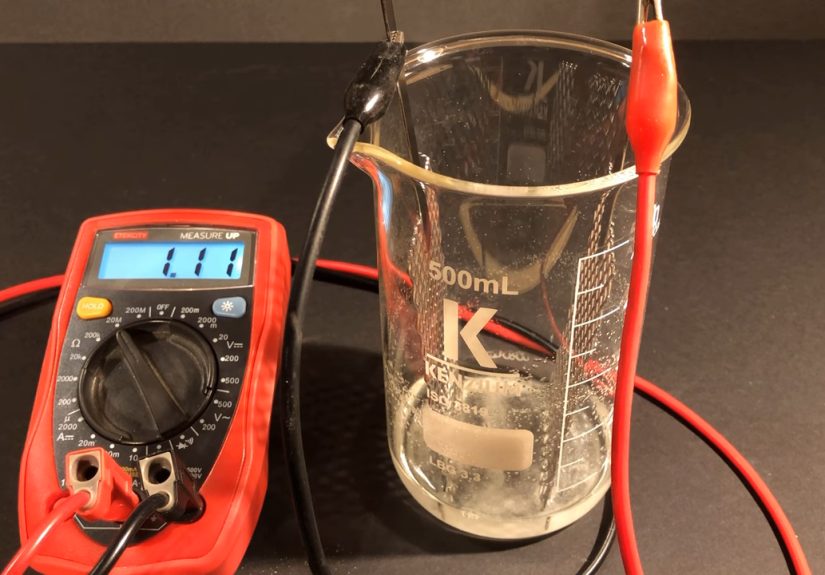
DIY chemistry also points toward open hardware. In the broader maker world, open instruments like low-cost potentiostats have shown that complex electrochemical measurements can be built around transparent designs. That does not automatically make a glucose test ready for clinical use, but it does show how the barriers to experimentation can drop when the tools themselves are shared. Open hardware does for chemistry what open-source software did for code: it invites more people into the room.
Once more people are in the room, better questions start getting asked. How stable is the signal over time? How does temperature affect the result? How do calibration choices change the output? How can a test be designed so a patient, clinician, and engineer all understand it? Those are not just design questions. They are trust questions. And in diabetes care, trust is a feature, not a bonus.
What Responsible Open Source Looks Like In Healthcare
Responsible open source does not mean “anything goes.” The CDC warns that blood glucose meters can become contaminated in shared settings, which is a reminder that infection control, clean handling, and single-user discipline matter a great deal. Meanwhile, the FDA’s home-use guidance makes clear that over-the-counter systems still need serious performance validation. A good open-source glucose project should therefore be transparent, but also conservative where safety is concerned.
In practice, that means designing for documentation, reproducibility, calibration checks, and honest error bars. It also means explaining limitations plainly. A responsible open-source glucose project should not overpromise “lab-grade” results when the evidence says otherwise. It should help people understand uncertainty, not hide it behind sleek packaging. That is how open source earns credibility in medicine: by being less magical and more measurable.
How This Could Affect Everyday Patients
For a patient, the upside could be practical and immediate. Lower-cost hardware may expand access. More transparent software may make data easier to interpret. Open documentation may help caregivers, researchers, and independent builders spot flaws faster. The NIDDK and CDC both emphasize that regular glucose monitoring helps guide food, activity, and treatment decisions, so any innovation that makes monitoring easier to understand has a real chance of improving daily life.
For clinicians, the upside is different but just as important. Open tools can make it easier to explain what a reading means, when it should be confirmed, and how it fits into a care plan. The CDC notes that CGM data can be shared with health care teams, while NIDDK explains that blood glucose records can help teams adjust diet, activity, and medicines. Better data is useful, but better explained data is even better.
Experiences From The Open Source Diabetes World
People who live in the open-source diabetes world often describe a familiar emotional arc: frustration first, curiosity second, and relief third. Frustration comes from the gap between what a commercial device promises and what a real life requires. A nighttime alarm that is too quiet, a display that is too opaque, or a device that does not fit someone’s routine can turn a “solution” into another job. Dana Lewis’s story captures that perfectly: the failure was not abstract, it was personal, and it was happening at night when a missed alert could become dangerous.
Curiosity usually arrives when people realize they do not have to accept the device as a sealed destiny. The open-source model says the system can be examined, modified, documented, and improved. That can be empowering, especially for technically inclined patients, parents of children with diabetes, or caregivers who need to understand how readings flow from sensor to app to decision. Tidepool’s approach shows why this matters: the point is not only to collect data, but to make the data more accessible, meaningful, and actionable.
Relief comes from seeing that the community is not just tinkering for sport. It is solving a real problem with discipline. OpenAPS shows what happens when patient-led innovation becomes a structured project instead of a one-off hack. The work becomes more like a shared public laboratory: a place where people compare notes, test assumptions, and keep improving the system because the stakes are measured in sleep, energy, and safety. That atmosphere is one reason the open-source approach resonates so strongly in diabetes care.
There is also a quieter kind of experience that matters: learning how measurement changes behavior. The CDC and NIDDK both emphasize tracking patterns over time, and that is where open systems can shine. Once a person sees their glucose trend in a way that is understandable, the data stops being a mysterious number and starts becoming a story about breakfast, movement, stress, medication, and recovery. Good open-source tools do not just produce readings; they improve literacy.
Another shared experience is realizing that convenience and confidence must travel together. A tool that is easy to use but hard to trust is not enough. A tool that is scientifically elegant but socially unusable is also not enough. The most successful open-source efforts tend to meet in the middle: they are transparent enough for experts to inspect and simple enough for a non-engineer to live with every day. That is exactly the standard a future open-source glucose platform will need to meet.
Finally, there is the experience of community. Open source works when people are willing to document the mistakes as carefully as the wins. In health tech, that attitude is priceless. It slows the hype machine down just enough to ask, “Does this actually help someone test more safely, understand results more clearly, or act more confidently?” That question is the difference between a flashy prototype and a tool that deserves a place in someone’s daily routine.
Conclusion
DIY chemistry points the way to open-source blood glucose testing because it brings three powerful ideas together: chemistry that can be understood, hardware that can be inspected, and software that can be shared. The future of glucose testing will likely not be one dramatic invention. It will be a steady convergence of better sensors, clearer data, stronger validation, and more patient-shaped design. The important part is not merely that the tools become smaller or smarter. The important part is that they become more trustworthy, more accessible, and more humane.
For that reason, the most exciting open-source progress in this space is not the fantasy of replacing medicine with maker culture. It is the more grounded idea that patients, researchers, and engineers can build better tools together, with safety and transparency at the center. That is how DIY chemistry earns a serious place in modern diabetes care.
Note: Educational content only; not medical advice.