Table of Contents >> Show >> Hide
- Speech vs. Language: What’s the Difference?
- What’s Typical From 12 to 36 Months? (Ranges, Not Rules)
- When to Worry: Signs That Deserve a Check-In
- Common Reasons Toddlers Have Speech or Language Delays
- 1) Hearing differences (more common than people think)
- 2) Late language emergence (late talker)
- 3) A language disorder (receptive, expressive, or both)
- 4) Speech sound or motor planning challenges
- 5) Neurodevelopmental differences (including autism)
- 6) Environment and opportunity (not blamejust reality)
- 7) Bilingual households (usually not the culprit)
- How Delays Are Evaluated (What to Expect)
- Does Therapy Help? What Support Can Look Like
- At-Home Strategies That Make a Real Difference
- Myths That Make Parents Feel Worse (So Let’s Retire Them)
- Quick “Should I Call Someone?” Checklist
- Experiences Families Often Share (and What They Teach Us)
If toddlers came with a user manual, it would probably say: “May suddenly learn 40 new words the day after you finally stop worrying.”
Jokes aside, it’s completely normal to wonder whether your child is “on track,” especially when your friend’s toddler is narrating their entire
snack experience like a tiny food critic.
The good news: many children who talk late catch up, and there are clear, supportive next steps if they don’t. This guide breaks down what
“delayed speech or language” can mean, what’s typical at different ages, when to get help, and what actually works at homewithout turning your
living room into a speech-therapy boot camp.
Speech vs. Language: What’s the Difference?
People often say “speech delay” when they really mean “communication delay.” But speech and language aren’t the same thing, and knowing the
difference helps you describe concerns more clearly.
Speech: the “how” of talking
Speech is how sounds are produced and put together: pronunciation, clarity, voice, and fluency. A toddler might have lots of words but be hard
to understand (speech sound delay), or they may stutter a bit during bursts of language growth (often normal).
Language: the “what” and “why” of communication
Language is the system of meaningunderstanding and using words, gestures, and sentences to communicate needs, ideas, and feelings.
Language includes:
- Receptive language (what your toddler understands): following directions, recognizing names of objects, responding to questions.
- Expressive language (what your toddler uses): words, signs, gestures, sounds, and later, sentences.
A child may have an expressive delay (they understand a lot but say little), a receptive delay (harder time understanding), or both.
Professionals sometimes use terms like “late talker” or “late language emergence” when language starts later than expected without other
diagnosed developmental differences.
What’s Typical From 12 to 36 Months? (Ranges, Not Rules)
Development isn’t a straight line. Toddlers often grow in spurts: a quiet month, then a sudden vocabulary explosion.
Still, public health and pediatric organizations publish milestone ranges to help families notice when extra support may help.
| Age | Communication you may see (examples) | Why it matters |
|---|---|---|
| 12–15 months | Uses gestures (pointing, waving), responds to name, understands common words, may say a few words. | Gestures and joint attention (sharing focus with you) are early building blocks for language. |
| 18 months | Tries to say several words besides “mama/dada,” follows simple one-step directions (no gestures needed). | Shows growing understanding and early word usekey predictors of later language. |
| 24 months (2 years) | Combines words (“more milk”), points to items in books on request, uses a growing vocabulary (often ~50+ words, but ranges vary). | Two-word combinations signal that language is becoming flexible, not just memorized single words. |
| 30–36 months | Uses short sentences (3–4 words), answers simple questions, follows two-step directions, strangers understand more of what they say. | Grammar, comprehension, and clarity improve rapidly; delays become easier to spot. |
A quick reality check: two toddlers can be the same age and communicate very differentlyboth can be healthy. What you’re looking for is
steady progress over time and a growing ability to connect, understand, and express needs.
When to Worry: Signs That Deserve a Check-In
If you’re unsure, it’s always reasonable to ask your pediatrician and/or request an evaluation. Early support is easier than waiting for
frustration to build (for your child and your household).
Common “let’s talk to someone” signals
- Not responding to sound or name, or frequent ear infections (hearing can affect speech and language).
- Few gestures (not pointing, waving, showing objects) by around 12 months.
- Very limited words and little growth in understanding or expression over several months.
- No word combinations (no “more juice,” “mommy up”) by about age 2.
- Difficulty understanding simple directions compared with peers (receptive language concerns).
- Big frustration (frequent meltdowns that seem tied to not being understood).
- Loss of skills (stops using words/gestures they previously used).
Trust your instincts. If your gut says “something’s off,” you’re allowed to pursue answerseven if someone tells you to “just wait.”
Common Reasons Toddlers Have Speech or Language Delays
“Delay” doesn’t automatically mean a lifelong problem. It means a child’s current communication skills are developing more slowly than expected.
The “why” can range from simple and fixable to more complex.
1) Hearing differences (more common than people think)
Even mild or intermittent hearing issues can make spoken language harder to learn. If a toddler can’t hear speech sounds clearly, their brain
gets fuzzier inputlike learning a new language from a speakerphone in a windy parking lot.
2) Late language emergence (late talker)
Some toddlers understand well, play typically, and use gesturesbut have fewer spoken words or word combinations. Professionals may describe this
as “late language emergence.” Many catch up, but it’s still worth monitoring and supporting (and evaluating if concerns persist).
3) A language disorder (receptive, expressive, or both)
When understanding and/or expression remains consistently behind and does not improve with time and support, clinicians may consider a language
disorder. This can affect vocabulary, grammar, and comprehension.
4) Speech sound or motor planning challenges
Some toddlers know what they want to say but struggle with producing sounds clearly, or coordinating the movements needed for speech.
Speech-language pathologists (SLPs) can tell the difference between typical “toddler pronunciation” and patterns that need extra help.
5) Neurodevelopmental differences (including autism)
Communication differences can be part of broader developmental profiles. Autism, for example, can involve differences in social communication,
joint attention, and language use. An evaluation looks at the whole childnot just the word count.
6) Environment and opportunity (not blamejust reality)
Language grows through interaction: back-and-forth play, reading, routines, and conversation. Busy households, stress, limited childcare support,
or heavy background media can reduce those moments. The solution is usually small changes, not guilt.
7) Bilingual households (usually not the culprit)
Learning two languages doesn’t “cause” a disorder. Bilingual toddlers may split vocabulary across languages (for example, “milk” in one language,
“dog” in another). What matters is total communication progress and understanding in everyday life.
How Delays Are Evaluated (What to Expect)
A solid evaluation is part detective work, part coaching session. It usually includes:
Pediatric visit and developmental screening
Your child’s clinician will ask about milestones, medical history, and daily communication. They may use a standardized screener and ask about
behavior, play, and social interaction.
Hearing screening or audiology referral
If speech or language is delayed, hearing should be checked. This is a common, important stepnot an accusation that you missed something.
Speech-language evaluation
An SLP looks at receptive and expressive language, play skills, gestures, sound development, and how your toddler communicates in real
situations. You’ll often receive practical strategies immediately.
Early Intervention (EI): a big help, often easier than you expect
In the United States, Early Intervention services (often called “Part C”) support infants and toddlers (birth through age 2) who have delays or
disabilities. Families can typically self-refer, and a child may qualify even without a formal diagnosis. The EI team evaluates and, if eligible,
builds an Individualized Family Service Plan (IFSP) focused on daily routinesmealtime, play, bath time, getting dressedwhere communication
actually happens.
Translation: help can come to you, and it’s often very parent-friendly.
Does Therapy Help? What Support Can Look Like
Support is not one-size-fits-all. The plan depends on whether the main need is language (words, understanding, combining ideas), speech sounds
(clarity), social communication, or a mix.
- Parent coaching: learning how to spark more back-and-forth interactions during routines.
- Play-based language therapy: building words and comprehension through activities your toddler already likes.
- Speech sound work: for children who have many words but are difficult to understand.
- Supportive communication tools: gestures, picture choices, or simple signs can reduce frustration while speech develops.
One important mindset shift: therapy isn’t “fixing” your child. It’s giving their brain more chances to practice the skills it’s trying to grow.
At-Home Strategies That Make a Real Difference
You do not need fancy flashcards or a PhD in puppetry. The goal is more responsive, face-to-face interactionshort, frequent,
and tied to what your toddler is already doing.
Follow your toddler’s lead
Join what they’re focused on (cars, blocks, snacks, the dog’s tail). Language sticks better when it matches their attention.
Use “one step up” language
- If your child says “ball,” you say “big ball” or “throw ball.”
- If they say “more,” you say “more crackers” or “more bubbles.”
Wait (yes, actually wait)
Give a 5–10 second pause after you offer a choice or ask a simple question. Many toddlers need extra processing time before they try a word.
Silence can be a giftawkward, but powerful.
Offer choices instead of quizzes
“Do you want apple or banana?” is easier than “What do you want?” Choices provide language models and reduce pressure.
Make routines talk-friendly
Repeat the same simple words during predictable moments:
“Shoes on.” “All done.” “More bubbles.” “Bath time.” Repetition inside real life beats repetition on a worksheet.
Read books like a human, not a narrator
You don’t have to read every word. Point, label, and react:
“Dog! Woof-woof!” “Uh-oh, he fell!” “Where’s the baby?” The conversation matters more than the page count.
Use gestures and signs (they don’t “prevent speech”)
Gestures support communication while speech develops and often reduce frustration. Many children use signs as a bridge to spoken words.
Be mindful with screens
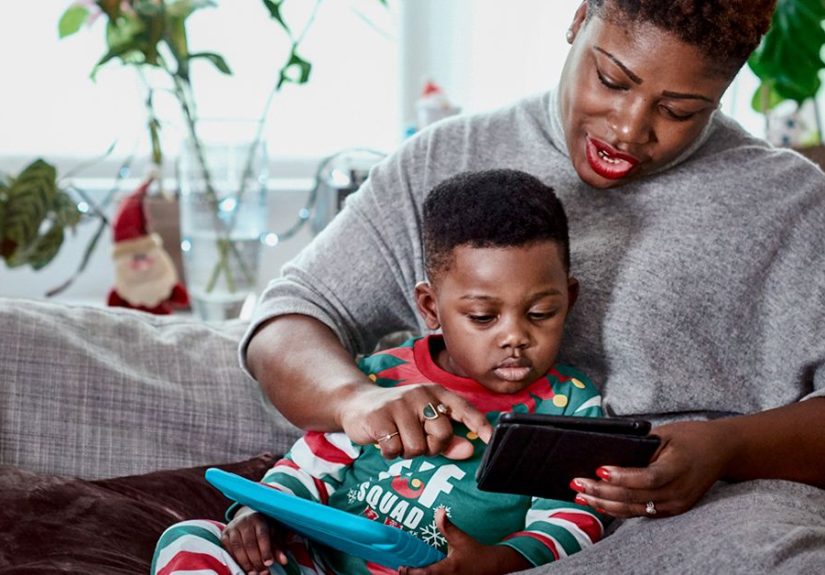
Language grows through interaction, not passive listening. Pediatric guidance generally encourages very limited media for children under 2
(except video chat), and emphasizes high-quality content with an adult when screens are used. If screens are a daily habit, consider swapping
some of that time for interactive play, songs, or shared reading.
Myths That Make Parents Feel Worse (So Let’s Retire Them)
Myth: “He’s a boyboys talk late.”
Some groups average slightly later language, but averages don’t help an individual child. If there’s a concern, it’s still worth checking.
Myth: “If she can understand, there’s nothing to do.”
Strong understanding is a great sign, but expressive delays can still cause frustration and social challenges. Support can help words catch up.
Myth: “Bilingual homes cause language delays.”
Bilingualism doesn’t cause a disorder. Many bilingual children develop language normally, sometimes distributing words across languages.
Myth: “We should wait until preschool.”
If a toddler needs support, earlier is usually better. You’re not overreactingyou’re being proactive.
Quick “Should I Call Someone?” Checklist
Consider reaching out to your pediatrician, an SLP, and/or Early Intervention if you notice two or more of the following:
- Little increase in words or gestures over 2–3 months
- Rarely points to show or share interest
- Doesn’t follow simple directions most of the time
- No two-word combinations around age 2
- Frequent communication-related frustration
- Any loss of previously used words/skills
- Concerns about hearing or responsiveness to sound
You’re not asking for a label. You’re asking for information and tools.
Experiences Families Often Share (and What They Teach Us)
Below are common experiences parents and caregivers describe when navigating delayed speech or language in toddlers. Think of these as
“pattern stories”not medical diagnoses, and not proof that any one outcome will happen. The value is in recognizing situations that feel familiar
and seeing what tends to help.
The Quiet Observer. Some toddlers are “watch first, talk later.” They seem to understand everything, follow routines perfectly,
and use a lot of facial expressionsbut words are scarce. Parents often say, “He can do puzzles meant for older kids, so why won’t he talk?”
In many cases, the child is using a strong nonverbal toolkit: pointing, pulling you toward what they want, handing you items, or making
meaningful sounds. What tends to help is turning those moments into gentle language opportunities: pause, label, and expand. If the child hands
you a cup, you might say, “Cup! Want water?” and wait. If the toddler grunts and points, you model: “More bubbles.” Over time, families often
notice that the first big “breakthrough” isn’t a perfect sentenceit’s a new willingness to try.
The Frustrated Communicator. Another common experience is a toddler who wants to communicate but can’t make their message land.
These are the kids who melt down at snack time, tug at you repeatedly, or throw toys when you don’t understand. Parents sometimes worry the
tantrums are a behavior problem, but often they’re a communication problem in disguise. What helps most is giving the child a reliable way to be
understood while speech catches up: simple signs (MORE, HELP, ALL DONE), picture choices (“banana” vs. “cracker”), or a consistent “choice
routine.” When toddlers realize they can communicate successfully, frustration often decreasesand once the emotional pressure is lower, language
practice gets easier.
The Bilingual Balancer. Families in bilingual homes often describe a very specific worry: “He understands both languages, but he
doesn’t say much in either.” What many discover is that vocabulary may be splitsome words live in one language, others in the second. This can
make it look like “fewer words” if you only count one language at a time. A practical approach is to track total communication: words in either
language, gestures, and understanding. Families often find relief when they stop “testing” the child (“Say it in English… now in Spanish”) and
instead focus on warm, natural conversation in the language they speak best. The strongest language model is the one delivered with comfort,
repetition, and real connection.
The ‘Wait-and-See’ Whiplash. Many parents describe being told, kindly, to waitonly to feel more anxious as months pass. It’s a
tough emotional loop: you don’t want to panic, but you also don’t want to miss a window where early support could help. A useful reframe is:
getting an evaluation is not a declaration that something is “wrong.” It’s simply gathering data. Families often say that even when therapy
wasn’t ultimately needed long-term, the evaluation gave them peace of mind and a set of home strategies that improved daily life quickly.
The “Small Wins” Season. Progress with language is often made of small wins: a new gesture, a new sound, an attempt at a word,
the first two-word combo, or following a new direction. Many families find it helpful to keep a simple note on their phoneone line a week:
“New word: ‘up.’” “Started pointing at pictures.” “Said ‘more’ without prompting.” Looking back after six to eight weeks can reveal progress
that’s hard to notice day-to-day, and that timeline is also helpful when talking with a pediatrician or SLP.
If any of these stories feel familiar, the takeaway isn’t “this will be us forever.” The takeaway is: you’re not alone, and there are clear,
supportive steps that can reduce stress and increase communicationstarting today.