Table of Contents >> Show >> Hide
- What People Really Mean When They Ask for the “Best Gay Meme”
- Why Queer Meme Culture Thrives Online
- The Secret Ingredients of a Great Gay Meme
- Some of the Most Memorable Queer Meme Modes
- When the Joke Works, and When It Really Doesn’t
- Why Brands Keep Missing the Point
- So, What Is the Best Gay Meme?
- A Longer Look at the Experience Behind the Meme
- Conclusion
- SEO Tags
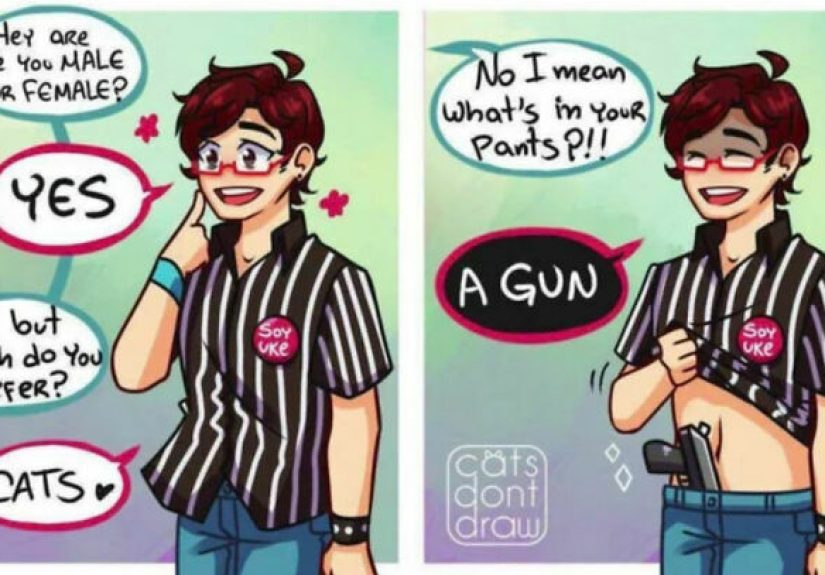
There are few faster ways to identify a truly online person than asking, “Can I have your best gay meme?” and watching their face light up like they’ve just been handed the aux cord at Pride brunch. The question sounds simple. The answer is not. Because a gay meme is rarely just a joke. It is often a reference, a coping mechanism, a social password, a tiny piece of pop-culture archaeology, and, on a really good day, a glitter bomb aimed directly at boring people.
That is what makes queer meme culture so fascinating. It is not one thing, one format, or one audience. It is part camp, part commentary, part chaos, and part community bulletin board. Some memes are about hyperspecific shared experiences. Some are about reclaiming the absurd. Some turn villains into icons, random screenshots into scripture, and ordinary inconveniences into high art. And some are just funny because the internet, in its infinite weirdness, occasionally creates a joke so niche it becomes universal.
So, can you have the best gay meme? Maybe. But first, it helps to understand why queer memes hit differently, where they come from, and why the funniest ones usually carry more emotional truth than a thousand perfectly polished think pieces. Let’s get into the drama, the affection, the internet anthropology, and yes, the occasional digital eye-roll.
What People Really Mean When They Ask for the “Best Gay Meme”
Usually, they do not mean a single image macro with a rainbow slapped on top. They mean the kind of joke that instantly communicates I know this world. The best queer memes are often built on recognition. They wink at pop music, reality TV, fandom, drag performance, internet slang, awkward family dynamics, dating app fatigue, over-analysis, and the emotional stamina required to survive both group chats and society.
In other words, asking for the “best gay meme” is often asking for the funniest expression of shared queer experience. Not every queer person has the same life, taste, politics, or sense of humor, of course. But memes thrive on tiny flashes of recognition: a phrase you’ve heard before, a posture you know too well, a celebrity reaction shot that somehow explains your entire week.
This is why so many of the most memorable queer memes are both hyper-specific and strangely welcoming. If you get it, you feel seen. If you don’t, you get the delightful sensation of realizing there is a whole universe of references operating just outside your current algorithm.
Why Queer Meme Culture Thrives Online
Queer humor did not begin with social media, but the internet gave it rocket fuel. Online spaces let people find one another across geography, age, subculture, and niche obsession. That matters. For many people, especially those who do not have affirming offline environments, digital culture becomes a first taste of community, language, and belonging.
Memes fit perfectly into that ecosystem because they are fast, remixable, and emotionally efficient. A good meme can say, “I am tired,” “I have taste,” “I survived that awkward conversation,” and “this celebrity is now my emotional support object,” all in the span of one screenshot and eight words. That is not laziness. That is art under pressure.
Queer internet humor also thrives because it understands performance. Camp has always loved exaggeration, theatricality, inversion, and a dramatic reveal. The meme format naturally rewards all of that. It allows people to heighten feeling without over-explaining it. One image, one caption, one reaction GIF, and suddenly a whole emotional weather system has been named.
And then there is speed. Queer communities are exceptionally good at turning cultural debris into comedy before the rest of the internet has even found the screenshot button. A flop movie poster, an overly earnest corporate campaign, a suspiciously intense celebrity interview, a bizarre line reading in prestige television, a deeply unserious scandal involving a very serious man: all of it is fair game.
The Secret Ingredients of a Great Gay Meme
1. Hyper-specificity
The best queer memes are often comically precise. Not “Halloween costume,” but “the telephone pole from Hereditary.” Not “bad representation,” but “a network introducing one vaguely coded side character and expecting applause.” Not “internet slang,” but a phrase with roots in ballroom culture getting wildly overused by people who discovered it yesterday.
2. Camp energy
Camp is the spiritual electricity running through a lot of queer humor. It knows that overreaction can be more truthful than understatement. It knows taste can be sincere and ridiculous at the same time. It knows the difference between being dramatic and being correct is often a matter of formatting.
3. Emotional honesty in a fake mustache
The funniest memes often smuggle real feeling inside absurdity. Loneliness becomes a joke about fourth-wheeling with style. Burnout becomes a drag queen reaction image. Social anxiety becomes a pop diva lyric repurposed into a survival strategy. The meme makes you laugh first, then realize five minutes later that it also told the truth.
4. Shared literacy
Queer meme culture rewards people who know the references. That includes pop culture, but also internet history, community slang, drag traditions, fandom codes, and the simple fact that queer people are often excellent archivists of things the mainstream barely noticed.
5. A little danger
A truly great meme usually feels like it got away with something. Not cruelty. Not cheap shock. Just a tiny spark of audacity. It says the quiet part out loud, but with timing. It points at the absurdity everyone noticed but no one had phrased correctly yet.
Some of the Most Memorable Queer Meme Modes
Rather than pretending there is one final boss of gay memes, it makes more sense to talk about the categories that keep producing winners.
The queer icon makeover
One classic move is taking a character, celebrity, monster, or random cultural object and queerly adopting it. The Gay Babadook remains one of the internet’s best examples of this alchemy: part joke, part fandom, part symbolic reinvention. A spooky outsider got folded into queer iconography, and suddenly the internet had one more oversized hat to salute.
The political meme with teeth
Not all queer memes are fluff. Some are political because queer life is political whether anyone ordered that entree or not. Meme culture has often been used to compress anger, satire, and critique into a format people actually share. The joke lands, but the point lands harder.
The hyperspecific event meme
These are the jokes built from one bizarre online moment: a red carpet oddity, a movie scene, a phrase from an interview, an award-show reaction, a niche party theme, a suspiciously dramatic tweet. The humor comes from the precision. The more incomprehensible it sounds to outsiders, the more likely queer internet has already made it iconic.
The “we all know this feeling” meme
This is the bread and butter of Gay Twitter, queer TikTok, and every group chat where people communicate primarily through reaction images. It is not about one event. It is about a mood: being too self-aware at brunch, overcommitting to a joke, pretending not to care, caring too much, having impeccable taste but poor timing, or treating an inconvenience like the third act of an opera.
The slang-and-language meme
Some of the most shared queer memes revolve around phrases that spread beyond their original communities. But that is also where things get messy. When language rooted in ballroom, Black queer culture, trans culture, or long-standing community usage gets flattened into generic internet chatter, the meme may still be funny, but the context starts to disappear. And without context, the joke gets thinner.
When the Joke Works, and When It Really Doesn’t
Not every “gay meme” deserves applause. Some are affectionate, observant, and community-built. Others are lazy stereotypes wearing a fake mustache and asking to be called satire. There is a difference.
A good queer meme punches up, sideways, or inward with consent and intelligence. It understands the texture of the culture it’s referencing. It does not reduce queer life to a single trait, flatten everyone into the same personality, or assume gayness itself is the punchline. The joke is not “ha ha, queer people exist.” The joke is usually, “ha ha, look at the ridiculous systems, expectations, obsessions, and tiny rituals swirling around this very human experience.”
There is also the matter of cruelty. The internet has a long history of taking a format that started as irony and driving it straight into someone’s real life. Memes can become harassment very quickly when people forget there is a human being on the other side of the screenshot. That is why some of the worst meme cycles are not legendary; they are cautionary tales with a Wi-Fi connection.
The best queer humor is smart enough to know the difference between campy exaggeration and casual meanness. It knows how to be sharp without becoming ugly. It can roast, but it does not always need to scorch.
Why Brands Keep Missing the Point
Because they want the sparkle without the subtext.
Corporate social media teams love to borrow queer internet energy, especially during Pride Month, when suddenly every sandwich chain develops a working knowledge of pop divas and the phrase “yas queen” returns from the dead like an unwanted sequel. But meme culture is not just a bag of colorful catchphrases. It is context. It is timing. It is community memory. It is knowing when a joke is affectionate, when it is political, and when it should be left in the group chat where it was born.
That is why the most cringeworthy attempts at “gay memes” usually feel assembled in a conference room by people who treat internet culture like a spice rack. A little camp here, one drag GIF there, maybe a wink at queer slang, and boom: a post so forced it could make a disco ball file an HR complaint.
The real thing cannot be mass-produced on schedule. It emerges from people who know the emotional math of the joke. That is what makes it funny in the first place.
So, What Is the Best Gay Meme?
Honestly? The best gay meme is probably the one that arrives in your phone at exactly the right moment and makes you laugh so hard you have to put the screen down. It is the meme that says what you were feeling before you had words for it. The meme that makes a queer friend reply, “This is so stupid,” which in the dialect of internet affection translates to, “I have never felt more understood.”
It might be a villain meme. It might be a reaction GIF. It might be a screenshot from a reality show, a quote tweet about niche Halloween costumes, a lovingly deranged joke about representation, or a post so absurd it sounds like it was invented by an exhausted theater kid with six tabs open and no interest in moderation.
The point is not to crown a single winner. The point is that queer meme culture has built one of the internet’s funniest, fastest, and most emotionally literate comedic ecosystems. It can be silly, stylish, biting, and unexpectedly tender. It can make nonsense feel precise and precision feel delirious. That is a rare trick.
So yes, you can ask for the best gay meme. Just be prepared for the answer to come with lore, at least three follow-up screenshots, and one friend insisting, correctly, that the funniest one is too niche to explain.
A Longer Look at the Experience Behind the Meme
What makes the phrase “Can I have your best gay meme?” so instantly recognizable is that it carries a whole social scene inside it. It sounds like a joke request, but it often feels more like a trust exercise. You are not just asking for content. You are asking someone to show you the version of humor that makes them feel most understood. That is why the exchange can feel surprisingly intimate, even when it is tossed into a casual chat at midnight.
For a lot of queer people, memes function like emotional shorthand. They can cut through awkwardness faster than a serious conversation. It is easier to send a dramatic reaction image than to admit you are overwhelmed. It is easier to send a niche joke about bad representation than to explain how exhausting it feels to be offered crumbs and told it is a feast. The meme does the talking, but it also leaves room for dignity. You laugh first. Then you realize you were also being honest.
There is also joy in the recognition factor. A friend sends you a meme that references an old reality show moment, a line from a cult movie, a pop star facial expression, or an impossibly specific social habit, and suddenly you know they get your brain. That matters more than it sounds. Online humor can be noisy and disposable, but queer memes often carry the opposite energy. They say, “I know your references. I know your rhythms. I know why this tiny ridiculous thing would make you lose your mind.” That is community, even when it arrives in the shape of a blurry screenshot.
At their best, these memes create low-pressure belonging. You do not have to perform expertise or deliver a perfect opinion. You can just laugh, reply with another image, and feel briefly less alone. In a world that still asks queer people to explain themselves too often, that kind of shorthand can feel like a luxury. It is communication without a hearing. It is identity without a speech. It is a joke that says, “You can exhale here.”
Of course, there is another side to the experience. Queer internet humor can be so layered, fast, and self-referential that it sometimes becomes its own maze. One minute you are enjoying a meme; the next minute you are watching three subcultures argue about whether the joke was stolen, stripped of context, or misused by people who discovered the phrase last Thursday. That tension is real. A meme can build community and flatten history at the same time. It can make someone feel visible while erasing the roots of the language it borrowed. The funniest corners of the internet are not magically exempt from the usual problems of credit, power, or appropriation.
And yet people keep returning to the memes because the rewards are real. Humor can be survival. It can be flirtation, rebellion, release, and archiving all at once. It can turn a bad week into a manageable one. It can transform frustration into style. It can help people hold contradiction without collapsing under it. That is why the “best gay meme” is rarely just the biggest laugh. It is the one that captures a whole mood, a tiny truth, or a shared absurdity so perfectly that you feel both roasted and comforted in the same breath.
That is a very specific kind of magic. Also, frankly, it is hilarious.
Conclusion
The enduring appeal of queer meme culture is not just that it is funny. It is that it is funny with purpose. It builds community, documents taste, preserves cultural references, critiques nonsense, and turns emotional clutter into something sharp enough to share. When someone asks for the best gay meme, what they are often really asking for is the joke that best captures the wit, weirdness, and warmth of queer life online.
And that joke, when it hits, is rarely disposable. It becomes language. It becomes memory. It becomes the screenshot you send five people because no single reaction is enough. That is the beauty of it. Not every meme lasts, but the best ones leave glitter on the timeline.