Table of Contents >> Show >> Hide
- Why This Story Blew Up So Fast
- The Difference Between a Dress Code and Dress Policing
- Why Tattoos Became the Battleground
- The Real Villain May Be “Perfect Wedding” Brain
- Why Posting the Conversation Felt Inevitable
- What This Story Gets Right About Guest Boundaries
- Five Takeaways for Anyone Planning a Wedding
- Extra Experiences and Real-Life Lessons From Similar Wedding Conflicts
- Conclusion
Every wedding comes with a dress code, a vibe, and at least one person whispering, “Please don’t let Uncle Mike freestyle during the toast.” But somewhere between “garden formal” and “please RSVP by Friday,” modern weddings have picked up a strange side hobby: treating guests like editable design elements. That is exactly why this viral story struck such a nerve.
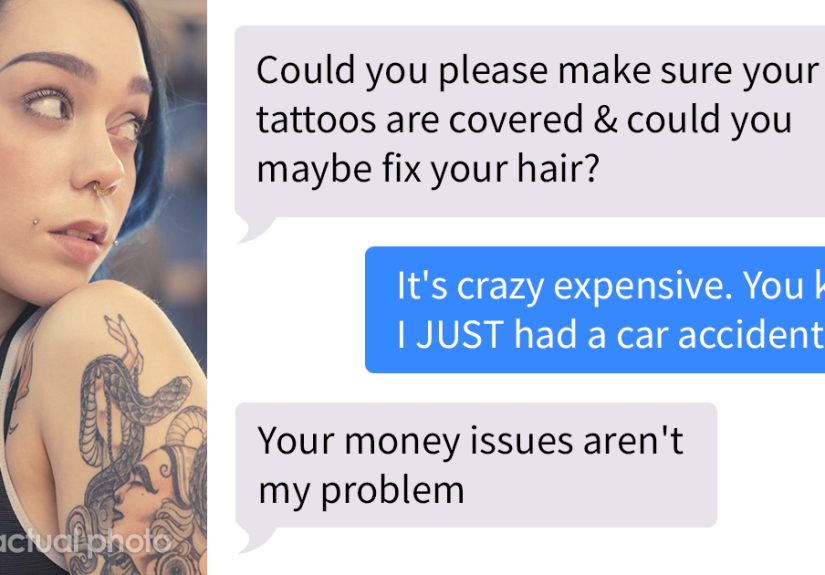
In the now-infamous exchange, a bride asked a guest to cover her tattoos and tone down her blue hair because the look supposedly clashed with the wedding theme. The guest, who wasn’t even in the wedding party, pushed back. She explained that long sleeves in the summer would be uncomfortable, that tattoo-covering makeup was expensive, and that changing her appearance for someone else’s photo aesthetic felt unreasonable. The conversation only got worse from there, eventually landing in a bride-shaming group for the whole internet to pick apart.
And honestly? Of course it did. This story has everything the internet loves: wedding drama, screenshots, control issues, and the timeless conflict between “my special day” and “you are still speaking to human beings, not furniture.” It also taps into a bigger question that shows up in wedding culture again and again: where does a reasonable dress code end, and where does personal control begin?
Why This Story Blew Up So Fast
The reason this conversation exploded online is simple. Most people understand that couples can ask guests to dress appropriately for the event. If the invitation says black tie, don’t show up looking like you just wandered out of a grocery store in flip-flops and emotional confusion. If it says cocktail attire, there is no need to arrive dressed like the fourth member of a glam-metal tribute band.
But asking someone to change their body presentation is a different category entirely. Tattoos are not a wrinkled shirt. Hair color is not a forgotten necktie. These are parts of a person’s identity, style, and everyday life. Once a request shifts from “please respect the event” to “please become visually different for my photos,” people stop hearing “wedding etiquette” and start hearing “control freak with a Pinterest board.”
That is the key distinction. Wedding etiquette has always involved boundaries, but the boundaries traditionally focus on behavior: RSVP on time, follow the dress code, don’t wear white unless explicitly told, don’t get sloppy drunk, don’t hijack the microphone, and for the love of all centerpieces, don’t create a scene during the vows. What it has not traditionally meant is demanding that a guest erase visible parts of themselves so the event looks more “curated.”
The Difference Between a Dress Code and Dress Policing
Here is where wedding culture sometimes gets itself tangled in tulle. A dress code is useful. It helps people know how to show up respectfully. It tells guests whether to wear a tux, a cocktail dress, a suit, a sundress, or something in that blessed middle ground called “nice enough that no one panics.” A good dress code reduces stress. It gives direction. It prevents confusion.
Dress policing, on the other hand, is what happens when the host starts treating guests like background props. It is one thing to say, “Please wear semi-formal attire in muted tones.” It is another to say, “Please cover your tattoos, conceal your piercings, dye your hair, change your body, and pretend you’ve never had a personality.” That is not hospitality. That is casting.
And here is the awkward truth at the center of so many wedding disputes: some couples do not actually want guests to attend as themselves. They want guests to attend as supporting visuals in a highly controlled production. That mindset may create a polished photo album, but it can also create resentment that lasts far longer than the florist bill.
What Couples Can Reasonably Ask
Couples can absolutely request a level of formality. They can ask guests not to wear white, not to wear anything wildly revealing or intentionally distracting, and not to show up looking like they misunderstood “barn wedding” to mean “actual rodeo.” They can set expectations around ceremony behavior, phone use, arrival times, and cultural or religious respect.
They can also set more creative themes when communicated clearly. Some weddings use color palettes, destination-inspired attire, or playful fashion guidance. That can be fun when it remains optional, flexible, and rooted in making guests feel comfortable rather than judged.
What Crosses the Line
The line gets crossed when the request becomes deeply personal, expensive, physically uncomfortable, or shaming. Telling someone to hide tattoos, change natural or chosen hair color, lose weight, buy specialty makeup, or cover their body in a way that makes them miserable is not a harmless preference. It sends a message: your real appearance is a problem.
That message lands badly because weddings are supposed to celebrate relationships. And relationships tend to go downhill when one person says, “I’d love your support, but only if you arrive as a softer, edited version of yourself.”
Why Tattoos Became the Battleground
Tattoos are especially loaded in these conversations because they sit at the crossroads of fashion, identity, generation, and respectability politics. To one person, visible tattoos are ordinary. To another, they still read as rebellious, distracting, or “not the look.” That tension shows up in all kinds of formal events, but weddings magnify it because they are emotional, expensive, and often tied to family expectations.
What makes this particular story so revealing is that the bride framed the issue as a visual mismatch. The guest’s tattoos did not violate a basic dress code. They violated the bride’s imagined aesthetic. That is a subtle but important difference. The complaint was not really about etiquette. It was about optics.
And yet modern wedding culture increasingly celebrates personalization and individuality. Some couples lean into unconventional dress codes. Some encourage guests to show up boldly. Some even build body art into the event itself, treating tattoos as joyful self-expression rather than something that needs to be airbrushed out of existence. That contrast is what makes overly controlling requests seem especially outdated now.
The Real Villain May Be “Perfect Wedding” Brain
If you strip away the screenshots and social media spectacle, this whole mess boils down to a familiar problem: perfectionism wearing a veil.
Wedding planning can make perfectly normal people act like stressed event dictators. Budgets balloon. Family opinions pile up. Everyone suddenly has strong feelings about napkin folds and whether eucalyptus is elegant or smells like a candle aisle. In that pressure cooker, some couples begin to believe that every visual detail must obey the master aesthetic.
That is how people end up making bizarre requests with complete sincerity. The bride in this story likely thought she was protecting the look of the day. What she actually did was reveal a common wedding-planning trap: when the performance of perfection becomes more important than the comfort of the people invited to celebrate with you.
The irony, of course, is brutal. The bride worried that visible tattoos would “ruin” the photos. Instead, the screenshots ruined the vibe, the story went viral, and now the whole internet remembers the wedding as the one where hospitality lost a fistfight with aesthetics.
Why Posting the Conversation Felt Inevitable
Once upon a time, wedding conflict stayed in family group chats, living rooms, and passive-aggressive calls with your cousin. Now it gets posted, dissected, memed, and judged by strangers who somehow become volunteer jurors in the Court of Bridal Chaos.
That shift matters. Modern wedding etiquette no longer covers only what people wear and how they RSVP. It also includes what they post, what they leak, and how they narrate conflict. Screenshots have become the digital equivalent of slamming your purse on the table and saying, “Read this and tell me I’m not insane.”
In this case, the guest likely posted the exchange because the bride’s request crossed from awkward into insulting. Sharing the conversation transformed a private conflict into public evidence. And once the internet saw language implying that the guest’s appearance would ruin photos and that discomfort should simply be endured for “one day,” sympathy swung hard toward the guest.
That said, posting private conversations is not exactly etiquette gold. It may feel satisfying, but it also guarantees that conflict grows teeth. Still, that is the world weddings now live in: one where bad behavior is no longer merely remembered, but archived, screenshotted, and served with comments.
What This Story Gets Right About Guest Boundaries
The guest’s response resonated because it was grounded in something basic but powerful: a boundary. She did not throw a cake. She did not announce a boycott. She simply said, in essence, this ask is unfair, uncomfortable, and too much.
That kind of boundary matters because weddings often create social pressure that makes people say yes when they really mean absolutely not, not even if there’s an open bar. Friends agree to ugly dresses, impossible travel costs, themed bachelor weekends that require a second mortgage, and beauty demands they would never accept in ordinary life, all in the name of keeping the peace.
But peace built on resentment is not peace. It is just expensive silence.
The healthiest wedding relationships come from clear expectations and mutual respect. A guest can say, “I care about you, but I’m not changing my appearance for this.” A couple can say, “We’d love for you to dress within this level of formality.” Both things can be true. The problem starts when one side treats attendance like obedience.
Five Takeaways for Anyone Planning a Wedding
First: set a dress code, not a makeover order. Guests need guidance, not a rebranding campaign.
Second: decide what really matters. Is the goal to celebrate with people you love, or to stage a photo shoot where every person matches the centerpiece tones?
Third: remember that comfort matters. Summer weddings, outdoor ceremonies, humidity, travel, shoes, sleeves, jackets, makeup, and body coverage are not abstract concepts. They are things actual human bodies experience.
Fourth: if your request would cost someone extra money just to make them look less like themselves, reconsider it. Immediately. Preferably before texting.
Fifth: assume that anything rude, manipulative, or wildly entitled could become public. Because in 2026, there is a decent chance it will.
Extra Experiences and Real-Life Lessons From Similar Wedding Conflicts
What makes stories like this linger is that almost everyone has seen some version of it in real life. Maybe not tattoos specifically, but the same energy. The bride who wants everyone in one exact shade of beige, only to discover that beige has roughly one million interpretations and half of them look like “sad oatmeal.” The guest who genuinely thinks a white dress is fine because the invitation mentioned a coastal palette. The bridesmaid who is told to buy more makeup, different shoes, a new hairstyle, and a specialty undergarment that sounds like it was invented by NASA.
Sometimes these conflicts start with good intentions. A couple wants photos to feel cohesive. They worry that one loud outfit or one unexpected look will throw everything off. That fear gets worse when social media is involved, because weddings are no longer just private milestones. They are now visual events with highlight reels, TikToks, Instagram dumps, and group chats full of opinions nobody requested. Suddenly, people aren’t planning a celebration. They’re planning how the celebration will look on a six-inch screen.
That pressure helps explain why some brides and grooms become weirdly rigid. But it still does not make the rigidity wise. In fact, the weddings people remember most fondly are rarely the most visually controlled. They are the ones where the couple looked happy, the guests felt welcomed, and the energy in the room was warm instead of tense. Nobody leaves saying, “What a magical evening; the concealment makeup really brought it all together.”
There is also a lesson here for guests. Even when a couple is being difficult, a calm response goes a long way. Clarify the request. Explain what you can and cannot do. If necessary, decline the invitation without turning it into a season finale. Not every disagreement needs a grand speech and a thunderclap. Sometimes “I don’t think I’m the right fit for this event, but I wish you a beautiful day” is more powerful than a 14-paragraph text written at midnight.
Still, there are moments when pushing back is healthy. If a request feels humiliating, expensive, or invasive, that discomfort is information. Listen to it. Weddings may be special, but they are not magic spells that suspend basic respect. A person who loves you enough to invite you should not require you to feel ashamed of your appearance to attend.
The most refreshing trend in modern weddings is that many couples are moving in the opposite direction. They are becoming more flexible, more expressive, and more willing to let guests bring their full personalities into the room. Some tell guests to wear what makes them feel fabulous. Some loosen traditions. Some swap rigid formality for joy. And surprise: the photos are still beautiful. Maybe even more beautiful, because people look relaxed enough to be real.
That is the lasting takeaway from this whole tattoo-covering fiasco. Weddings look better when the people in them feel like themselves. Hospitality photographs well. Kindness photographs well. Confidence photographs well. Control, meanwhile, tends to leave a very specific expression on everyone’s face, and it is not one the photographer can crop out.
Conclusion
The viral conversation between the bride and her tattooed guest landed so hard because it exposed a modern wedding truth: a dress code can be classy, but control disguised as “aesthetic” usually is not. Asking guests to follow the vibe is fair. Asking them to erase visible parts of themselves for the sake of polished photos is where many people draw the line.
At its best, a wedding is not about producing a perfectly coordinated cast. It is about gathering real people to witness a real commitment. Tattoos, dyed hair, personal style, and all. If a celebration only works when everyone becomes a softer version of themselves, the problem probably isn’t the guests. It is the definition of perfect.