Table of Contents >> Show >> Hide
- Why This Moroccan-Spiced Skillet Chicken Works
- Moroccan Spice Profile 101 (No Lecture, Promise)
- Ingredients You’ll Need
- Step-by-Step: How To Make Moroccan-Spiced Skillet Chicken
- Chef-Level Tips (That Don’t Require Chef School)
- Easy Swaps and Variations
- What To Serve With Moroccan-Spiced Skillet Chicken
- Make-Ahead, Storage, and Reheating
- FAQ: Moroccan-Spiced Skillet Chicken
- of “Real Life” Cooking Experience (So You Nail It on Try #1)
- Conclusion
- SEO Tags
If your weeknight dinners are starting to taste like “chicken, but make it… chicken,” this is your official escape route.
This Moroccan-spiced skillet chicken is what happens when crispy, juicy chicken meets warm North African-inspired spices,
a lemony-briny sauce, and just enough sweet-savory drama to make your taste buds file a standing ovation.
The best part? You don’t need a tagine, a passport, or a pantry that looks like a spice merchant’s retirement plan.
You need one skillet, a handful of common spices, and about 35–45 minutes. The result is a one-pan Moroccan chicken
dinner that tastes like you tried way harder than you actually did. (We love that for you.)
Why This Moroccan-Spiced Skillet Chicken Works
- Layered flavor without fuss: We bloom spices in oil, build a quick pan sauce, then simmer the chicken until tender.
- Crispy-meets-saucy magic: You get browned chicken plus a spoonable, glossy sauce loaded with aromatics.
- Sweet + savory balance: Dried apricots (or raisins) soften into the sauce and play nicely with olives and lemon.
- One skillet, minimal mess: Your sink stays calmer, your dinner tastes louder.
Moroccan Spice Profile 101 (No Lecture, Promise)
The “warm” spice crew
Moroccan-inspired chicken often leans on spices that smell like comfort: cumin (earthy), coriander (citrusy),
paprika (sweet-smoky), ginger (bright warmth), turmeric (golden earthiness),
and a whisper of cinnamon (not “dessert,” more like “intriguing”).
Ras el hanout: optional, but a shortcut to “wow”
Ras el hanout is a North African spice blend that varies by maker, but usually includes some combination of
warm spices like cinnamon, ginger, cumin, coriander, pepper, and turmeric. If you have it, use it. If you don’t, this recipe
basically builds a friendly version from spices you probably already own.
Harissa: the heat knob
Want a gentle glow or a spicy grin? Harissa (a North African chile paste) gives you both heat and depth.
Use a little for warmth, more for “hello, I have opinions.” If you’re cooking for spice-sensitive people, serve harissa at the table.
Ingredients You’ll Need
Serves 4 (and possibly 1 lucky person who gets “just one more bite” for the 12th time).
For the chicken
- 6 to 8 bone-in, skin-on chicken thighs (about 2 to 2½ pounds)
- 1½ teaspoons kosher salt (plus more to taste)
- 1 teaspoon ground cumin
- 1 teaspoon ground coriander
- 1 teaspoon sweet paprika (smoked paprika also works)
- ½ teaspoon ground ginger
- ½ teaspoon turmeric
- ¼ teaspoon cinnamon
- ½ teaspoon black pepper
- 1 to 2 tablespoons olive oil (you may need less if your chicken skin renders a lot of fat)
For the Moroccan-style skillet sauce
- 1 medium yellow onion, thinly sliced
- 4 cloves garlic, minced
- 1 tablespoon tomato paste
- 1 to 2 tablespoons harissa paste (optional, adjust to taste)
- ¾ cup chicken broth (plus a splash more if needed)
- ½ cup dried apricots, halved (or ⅓ cup golden raisins)
- ½ cup green olives, pitted and halved
- 1 preserved lemon peel, rinsed and finely sliced (optional but amazing) or zest of 1 lemon + 2 tablespoons lemon juice
- 2 tablespoons chopped fresh cilantro
- 2 tablespoons chopped fresh parsley
Optional toppings (highly encouraged)
- Toasted sliced almonds or pistachios
- Plain Greek yogurt (or a quick yogurt sauce with lemon + salt)
- Extra lemon wedges
Step-by-Step: How To Make Moroccan-Spiced Skillet Chicken
1) Mix your spice rub
In a small bowl, combine salt, cumin, coriander, paprika, ginger, turmeric, cinnamon, and black pepper.
Take a sniff. If your kitchen immediately feels more interesting, you’re on the right track.
2) Season the chicken like you mean it
Pat the chicken thighs very dry with paper towels (dry skin = better browning). Sprinkle the spice rub all over,
focusing on the meat side and under the skin if you can. Let it sit while you slice the onion5 to 10 minutes helps,
30 minutes is even better if you have the time.
3) Brown the chicken to build flavor (aka: create the good stuff)
Set a large skillet (cast iron or heavy stainless is ideal) over medium heat. Add olive oil if your pan is dry.
Place chicken thighs skin-side down and cook until the skin is deeply golden and releases easily,
about 8 to 12 minutes. Don’t rush thiscrispy skin is mostly patience with a side of confidence.
Flip and cook the second side for 2 to 3 minutes just to get some color. Transfer chicken to a plate.
You’re not done cooking it yet; you’re just giving it a quick spa break.
4) Sauté aromatics, then bloom spices for bigger flavor
Pour off excess fat if there’s a lot (leave about 1 to 2 tablespoons in the pan). Add sliced onion and cook for 3 to 5 minutes,
scraping up browned bits as it softens. Stir in garlic and cook 30 seconds.
Add tomato paste and (if using) harissa. Stir for 30 to 60 seconds to “toast” it in the fatthis deepens flavor and tames harsh edges.
If you want even more spice aroma, sprinkle in a pinch more cumin or paprika right here and stir briefly.
5) Deglaze, simmer, and let the sauce do its thing
Pour in chicken broth and scrape the skillet bottom wellthose browned bits are flavor concentrate, not “burnt stuff.”
Add apricots (or raisins), olives, and preserved lemon peel (or lemon zest + juice).
Return the chicken to the skillet skin-side up, along with any juices on the plate. Bring to a gentle simmer,
then reduce heat to low. Cover partially and cook 15 to 20 minutes, until the chicken is cooked through.
Food-safety note: Chicken is safely cooked when the thickest part reaches 165°F on a thermometer.
If you don’t have one yet, put it on your “tiny tools that change your life” list.
6) Finish with herbs and a final flavor check
Turn off the heat. Sprinkle cilantro and parsley over the skillet. Taste the sauce: want it brighter?
Add a squeeze of lemon. Want it rounder? Add a small pinch of salt. Want it hotter?
Stir in a dab more harissaor let people choose their own adventure at the table.
Chef-Level Tips (That Don’t Require Chef School)
Don’t burn the spices
Ground spices can turn bitter if cooked too long in dry heat. That’s why we stir them briefly in oil/tomato paste,
then quickly add broth. You get fragrance without regret.
Keep the skin crispy-ish
Simmering in sauce softens skin a bitinevitable. For better texture, keep chicken skin-side up and don’t drown it in liquid.
If you’re a true crispy-skin maximalist, pop the skillet under the broiler for 1 to 3 minutes at the end (watch closely).
Make the sauce your favorite thickness
Too thin? Simmer uncovered for a few minutes. Too thick? Add a splash of broth. The sauce is flexible; it’s not a contract.
Easy Swaps and Variations
Boneless thighs or breasts
Boneless thighs work great and cook fasterstart checking at 10 to 12 minutes of simmer time.
For chicken breasts, keep heat gentle and don’t overcook; pull them as soon as they hit 165°F.
Add chickpeas for a heartier skillet dinner
Stir in 1 can of drained chickpeas when you add the broth. They soak up the spiced sauce and make the meal feel extra complete.
Vegetable boost
Add carrots (thin slices), bell peppers (strips), or zucchini (half-moons). Toss them in with the onion so they soften before simmering.
No preserved lemon?
Totally fine. Use lemon zest + lemon juice. Preserved lemon has a salty, floral punch that’s hard to mimic,
but fresh lemon still gives brightness and balance.
What To Serve With Moroccan-Spiced Skillet Chicken
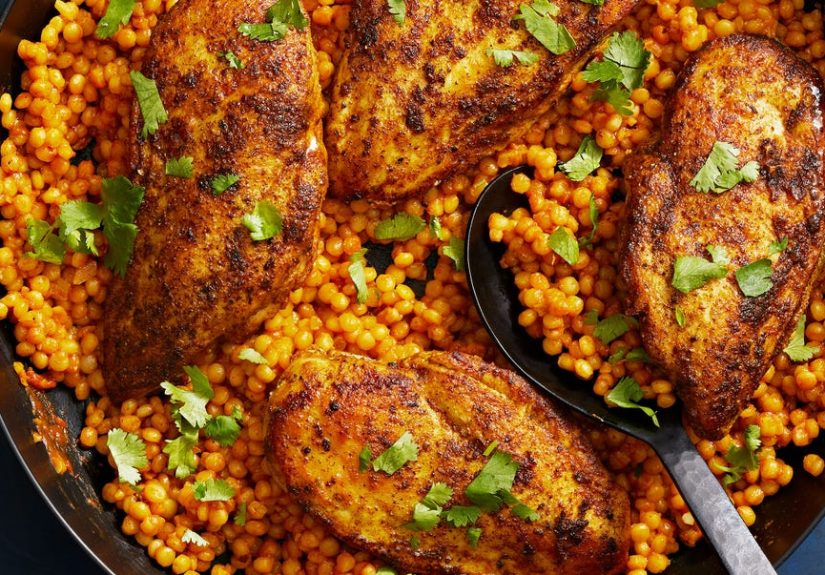
Quick couscous (fastest “fancy” side)
Bring 1 cup broth or water to a boil. Stir in 1 cup couscous, a pinch of salt, and 1 teaspoon olive oil or butter.
Cover, remove from heat, and let sit 5 minutes. Fluff with a fork. Done.
Spoon the chicken and sauce over top and pretend you’re in a restaurant that uses cloth napkins.
Other great sidekicks
- Rice: jasmine or basmati loves this sauce.
- Flatbread: for swiping the skillet clean (a noble cause).
- Simple salad: cucumbers + tomatoes + lemon to keep things bright.
- Roasted veggies: cauliflower or carrots with a little cumin and paprika.
Make-Ahead, Storage, and Reheating
- Make-ahead: Mix the spice rub up to a week in advance. Season chicken up to 24 hours ahead for deeper flavor.
- Fridge: Store leftovers in an airtight container for up to 3 to 4 days.
- Reheat: Warm gently on the stove with a splash of broth to loosen the sauce. Microwave works toocover to prevent splatters.
- Freeze: Freeze chicken in sauce up to 2 to 3 months. Thaw overnight in the fridge for best texture.
FAQ: Moroccan-Spiced Skillet Chicken
Is this an authentic Moroccan tagine?
It’s Moroccan-inspired, using classic flavor cues (warm spices, lemon, olives, herbs), but made skillet-friendly for weeknights.
Think “tagine vibes,” not “museum replica.”
Do I have to use harissa?
Nope. The dish is still delicious without it. If you want a little warmth without harissa, add a pinch of cayenne or red pepper flakes.
Can I make it less sweet?
Absolutely. Use fewer apricots/raisins, or skip them entirely and lean into olives + lemon for a more savory profile.
of “Real Life” Cooking Experience (So You Nail It on Try #1)
Here’s what usually happens when people make Moroccan-spiced skillet chicken for the first time: they underestimate
how much flavor the spices can deliver, then they take one bite and immediately start planning who they can brag to.
It’s not complicated, but it feels specialand that’s the sweet spot for a weeknight recipe.
The biggest “aha” moment is the browning step. When the chicken hits the skillet, it can be tempting to poke, scoot,
flip early, and generally hover like a concerned parent at a playground. Resist. The chicken needs time to brown,
and browned chicken is where the depth comes from. If the skin sticks at first, that’s normal; it usually releases
when it’s properly crisp. Translation: patience is an ingredient, even though it doesn’t come in a jar.
Another real-life win: keeping the heat reasonable once the sauce is in. A hard boil can toughen chicken and reduce
the sauce too quickly, leaving you with “intense” flavors that are more loud than balanced. A gentle simmer is the goal.
You should see small bubbles, not a rolling jacuzzi. This is also why a heavy skillet is your friendit holds heat steadily
and makes the cooking feel calmer.
Spices are powerful, but they’re also moody. If you cook ground spices too long in a dry pan, they can taste bitter or dusty.
That’s why stirring them into fat (and tomato paste) briefly, then adding broth, tends to create a smoother, rounder taste.
You’re basically giving the spices a warm handshake instead of throwing them into a spotlight.
Preserved lemon can be a small adventure if you’ve never used it. The peel is the star; it’s salty, citrusy, and almost floral.
If it tastes too salty straight from the jar, rinse it well and start with a little. You can always add more at the end.
If you’re using fresh lemon instead, zest first (while the lemon is still whole and easy to hold), then juice it.
That tiny order-of-operations trick saves a surprising amount of frustration.
And finally: don’t skip the finishing touches. Fresh herbs make the whole skillet taste brighter and less heavy.
A spoonful of yogurt cools the spices and turns the sauce into something that feels restaurant-level.
A handful of toasted nuts adds crunch that makes each bite more interesting. These are the last-minute details that
make people ask, “Wait… what did you put in this?”which is the universal signal that you crushed dinner.
Conclusion
Moroccan-spiced skillet chicken is proof that big flavor doesn’t require big effort. Brown the chicken well, bloom the spices,
and let olives + lemon + dried fruit do their sweet-savory thing. Serve it over couscous, add a little yogurt and herbs,
and enjoy a weeknight dinner that tastes like it has a vacation budget.