Table of Contents >> Show >> Hide
- Why the Original Westerly Ranch Mattered
- The Big Goal: More Space, Better Flow, Same Heart
- What Really Happens Behind the Scenes
- Design Choices That Make the Transformation Feel Real
- Lessons Homeowners Can Borrow From the Westerly Ranch
- Why This Transformation Works So Well
- Experience Section: What a Ranch Transformation Feels Like in Real Life
- Conclusion
Some houses whisper. This one probably cleared its throat and said, “I’ve still got good bones, kidjust please do something about the knotty pine overload.” That was the charm of the Westerly ranch: a modest 1940s home with real character, a family story baked into its walls, and just enough quirks to make a renovation team reach for coffee, tape measures, and a little bravery.
Behind every polished “after” photo is a messy, noisy, highly strategic process. In the case of a Westerly ranch transformation, that process is even more interesting because it is not just about making a house prettier. It is about changing how the home works for modern family life while respecting what made it worth saving in the first place.
This kind of ranch house remodel is where design dreams meet construction reality. One minute you are talking about sunlight, sightlines, and open-concept living. The next minute you are discussing structural loads, ventilation, insulation, and whether that beloved old flooring can survive removal without turning into splinters and heartbreak. Welcome to the real behind-the-scenes story.
Why the Original Westerly Ranch Mattered
Older ranch homes often get dismissed as plain, chopped-up, or too low-slung for today’s tastes. That is a mistake. A well-built ranch can be one of the best renovation canvases around. The footprint is usually practical, circulation is straightforward, and the structure often has enough logic to support serious updates. In other words, ranch houses are the blue jeans of American residential architecture: humble, reliable, and surprisingly versatile.
The Westerly ranch had exactly that kind of potential. It was a mid-century shingled home with handcrafted details and a lived-in personality. The original cabinetry and wood finishes told the story of a house built with care, not churned out like a cardboard box with windows. Even when a layout feels dated, that craftsmanship is worth noticing.
But potential alone does not solve modern life. Families want more daylight, better storage, larger kitchens, stronger indoor-outdoor connections, and bedrooms that do not feel like they were organized by a committee of narrow hallways. The homeowners’ challenge was clear: keep the soul, lose the squeeze.
The Big Goal: More Space, Better Flow, Same Heart
Turning a Ranch Into a Modern Classic
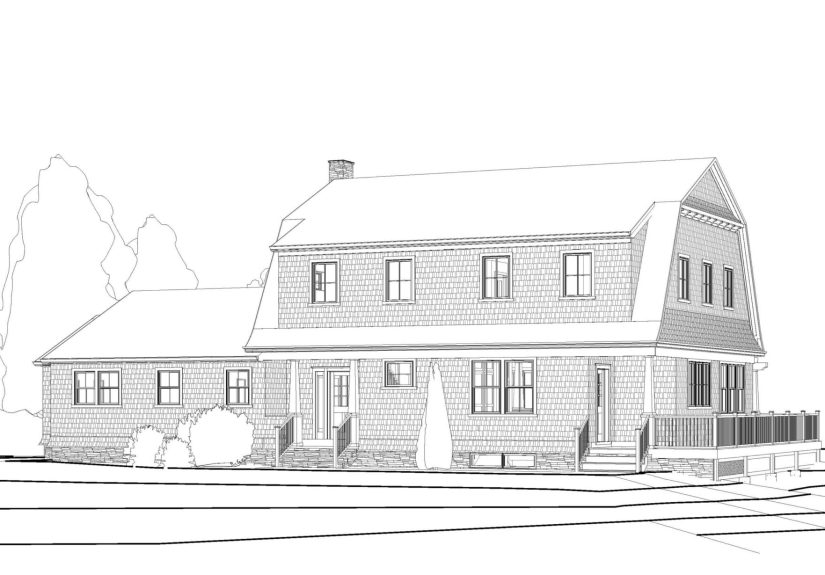
The smartest renovations begin with a clear idea of what the house should become. In Westerly, the answer was not to bulldoze the past and replace it with a giant white rectangle of expensive regret. The goal was to evolve the house. That meant transforming the original ranch into a larger, more gracious home with the presence of a Dutch Colonial-inspired design while still honoring the scale and texture of the original structure.
This is a powerful lesson for anyone planning a ranch house renovation: expansion works best when it feels intentional, not accidental. A second-story addition can easily look like a hat balanced on a shoebox. Good design avoids that by tying rooflines, siding, trim, windows, and proportions together into one visual story. The exterior has to look like it always wanted to be that way.
Opening the Floor Plan Without Losing Warmth
Inside, the biggest shift was philosophical as much as physical. Older ranches often divide daily life into small, separated rooms. That arrangement can offer coziness, but it can also make a family home feel dark, compartmentalized, and oddly formal for people who mostly want to cook dinner, supervise homework, and locate the dog.
So the renovation leaned into a more open main-floor plan, especially around the kitchen, dining, and living spaces. This did not simply mean knocking down walls and calling it a day. Open-plan remodeling works only when the spaces still have definition. Good designers create that definition with ceiling treatments, built-ins, trim, flooring continuity, and sightline control. Otherwise, the result is less “elegant gathering zone” and more “warehouse with a sofa.”
In a successful Westerly-style ranch makeover, openness is paired with texture. Light pours in, movement becomes easier, and the shared spaces feel connected, but the house still has enough architectural detail to avoid looking flat or generic. That balance is where the magic lives.
What Really Happens Behind the Scenes
Selective Demolition, Not Mindless Destruction
Television and social media have trained people to think demolition is the fun part. Swing hammer. Make dramatic face. Cue dust cloud. In real life, thoughtful demolition is less chaos and more surgery.
When a ranch transformation is handled well, the crew is not just tearing things out. They are deciding what deserves a second life. Original flooring, quality millwork, old-growth lumber, and distinctive wall paneling can sometimes be salvaged, refinished, and reused in new ways. That approach preserves character, reduces waste, and gives the finished house a richer story than anything bought off a shelf on a Saturday afternoon.
In the Westerly project, salvage was part of the intelligence of the renovation. Reusing original knotty pine and preserving oak flooring helped keep the old house present inside the new one. That is an underrated design move. A remodel should not erase memory; it should edit it.
Structural Work: The Unseen Hero
Here is the less glamorous truth: open rooms and second stories do not happen because someone had a Pinterest board. They happen because engineers, builders, and framers make the structure behave.
Once walls come down and upper levels go on, the house must carry loads in new ways. Beams may need to span longer distances. Headers may need to grow. Floor systems may require reinforcement. Roof framing has to align with both appearance and performance. None of this wins applause on reveal day, but all of it determines whether the house feels solid, safe, and quiet for the next several decades.
For a ranch conversion in a coastal New England setting, that structural discipline matters even more. Wind exposure, moisture, and seasonal temperature swings all raise the stakes. Behind the trim and paint, the shell has to be built like it means business.
The Building Envelope Does the Heavy Lifting
Ask any experienced remodeler what separates a pretty renovation from a truly good one, and you will hear some version of this: the envelope matters. That means insulation, air sealing, flashing, drainage, and ventilation. Sexy? Not exactly. Essential? Absolutely.
In a house like the Westerly ranch, the renovation is an opportunity to fix what older homes often struggle with: drafts, uneven comfort, moisture vulnerability, and inefficient heating and cooling. A tighter shell can improve comfort and energy performance, but it has to be paired with proper ventilation. Otherwise, you trade random air leakage for stale indoor air, lingering humidity, and a house that smells like wet sneakers and regret.
That is why the best remodels treat the home as a system. Air sealing comes before or alongside insulation. Mechanical systems are reconsidered, not just patched. Ducts and penetrations are sealed properly. Fresh air is managed intentionally. In a coastal environment, moisture control is not optional decoration; it is survival.
Indoor Air Quality Is Part of Good Design
Behind-the-scenes work also includes something homeowners do not always think about until their sinuses stage a protest: indoor air quality. Remodeling stirs up dust and can disturb older materials that need careful handling. On top of that, new finishes, adhesives, sealants, and paints can all affect the air people breathe.
That is why smart renovation teams think beyond aesthetics. They isolate dusty work zones, control debris, clean thoroughly, and pay attention to material choices. In older houses, they also respect the risks that can come with pre-1978 surfaces and other legacy materials. A beautiful remodel that leaves behind a cloud of avoidable contaminants is not a success story. It is a cautionary tale with a nice backsplash.
Design Choices That Make the Transformation Feel Real
Light Changes Everything
One of the biggest emotional shifts in a ranch remodel comes from light. Many older homes were designed for privacy, compartmentalization, and a different relationship to the outdoors. Today’s families tend to want brightness, visual connection, and flexible communal space.
Adding windows, rethinking door placement, and improving flow between interior rooms and outdoor spaces can completely change how a house feels. In a Westerly ranch transformation, that might mean a larger kitchen-dining zone, more glass at the back of the house, and stronger links to a deck or yard. Suddenly the home is not just larger; it is more alive.
Old Materials, New Purpose
One of the most satisfying parts of a thoughtful renovation is seeing old materials return in smarter ways. A paneling board that once darkened a cramped room can be whitewashed and reused as playful wainscoting. Flooring pulled from one area can be reinstalled where it feels special again. Salvaged wood can add texture, continuity, and authenticity that brand-new products often try very hard to imitate and rarely match.
This is where a Westerly ranch makeover becomes more than a size upgrade. It becomes a design conversation between generations. The old house contributes something meaningful to the new one. Not everything deserves saving, but the right pieces can make the finished home feel grounded instead of merely updated.
Trim, Built-Ins, and Ceiling Details Matter
When people talk about why some renovated homes feel richer than others, they are often reacting to millwork without realizing it. Built-ins, substantial trim, coffered ceilings, shelving details, and carefully scaled moldings make open spaces feel intentional. These details create rhythm. They help rooms feel designed rather than simply enlarged.
In a ranch home, especially one being transformed from simple to sophisticated, those details are crucial. They keep the house from losing personality as walls disappear. They also add the sort of visual craftsmanship that makes a home feel custom, finished, and quietly confident.
Lessons Homeowners Can Borrow From the Westerly Ranch
1. Start With the Way You Live
The best remodels are not built around trends. They are built around routines. Do you need a mudroom because real life involves backpacks, boots, and mystery crumbs? Do you work from home? Do you host often? Do you need bedrooms upstairs and a guest space downstairs? Design gets much easier when the house is responding to actual behavior instead of aspirational magazine fantasies involving one lemon in a wooden bowl.
2. Save Character Selectively
You do not need to preserve every inch of an old ranch to honor it. Save what is distinctive, useful, or emotionally resonant. Let go of what makes daily life worse. Preservation is not about freezing a house in amber. It is about carrying forward the parts that still deserve a voice.
3. Spend Where Performance Lives
People love to blow the budget on visible finishes and then act surprised when the house still feels drafty, damp, or noisy. Spend on structure, envelope, windows, insulation, air sealing, and ventilation first. The countertops can be fabulous later. Comfort and durability are not glamorous in the showroom, but they are glorious in February.
4. Make Additions Feel Native
Whether you are adding up, out, or both, aim for cohesion. Rooflines, dormers, siding, trim profiles, and proportions should feel related. The house should not look like it got promoted and immediately developed an identity crisis.
Why This Transformation Works So Well
The Westerly ranch transformation succeeds because it solves real problems while keeping the house emotionally legible. It gains space without becoming bloated. It opens up the main floor without flattening the architecture. It introduces better performance without losing warmth. And it uses selective salvage to remind everyone that history is not clutter when it is handled with skill.
That is the true behind-the-scenes story: not demolition drama, not paint colors, not one triumphant reveal shot taken at exactly the right golden-hour angle. The real story is disciplined decision-making. It is knowing what to keep, what to improve, and what to build from scratch so the whole house feels better than either the old version or a brand-new substitute could have delivered.
In the end, transforming a Westerly ranch is not about making an old house look younger. It is about helping it grow up gracefully.
Experience Section: What a Ranch Transformation Feels Like in Real Life
Anyone who has lived through a ranch renovation will tell you the experience is part construction project, part endurance sport, and part long-running relationship test with sawdust as the third wheel. On paper, the goals sound simple: open the layout, add a second floor, improve the kitchen, bring in more light, keep some charm. In practice, the experience is much more human, and much more memorable.
At first, there is excitement. You walk through the old house imagining where the walls will come down and where the new stairs will rise. You stand in a dim room and picture morning light pouring across future floors. Every awkward hallway becomes a possibility. Every outdated corner becomes a challenge you are suddenly weirdly attached to solving.
Then the work begins, and the house changes mood. It creaks differently. Rooms echo. Familiar walls disappear. What once felt permanent starts to look temporary, and that can be surprisingly emotional. A ranch house often carries family habits in its layout. Maybe the kitchen was cramped, but everyone always gathered there. Maybe the wood paneling was too dark, but it still felt like someone’s childhood. Renovation has a funny way of making you sentimental about things you spent months complaining about.
There is also a distinct point in the process when the place looks worse than you thought possible. This is normal. In fact, it is practically a rite of passage. Exposed framing, plastic barriers, stacks of materials, muddy boots, missing ceilings, temporary lightingit is not exactly the moment you post with the caption “dream home unlocked.” But it is also the phase when the invisible intelligence of the project becomes clear. You begin to see where beams will support the open rooms, where insulation will make winter more comfortable, and where windows will shift the entire atmosphere of the house.
One of the best experiences in a ranch transformation is watching old materials return with new purpose. A salvaged floorboard or paneled wall section stops being leftover debris and becomes part of the home’s next chapter. That moment feels bigger than décor. It feels like continuity. The house is not pretending it was born yesterday. It is carrying its past forward in a smarter outfit.
And then, one day, the space starts to make sense. The kitchen connects to the dining area. The living room feels open but still grounded. The upstairs rooms no longer seem theoretical. Light lands where you hoped it would. The house begins to feel calm. That is when the transformation stops being a plan and starts becoming a place.
What makes the experience so rewarding is not just the final look. It is the sense that the house now fits real life better than before. The flow is easier. The rooms work harder. The comfort is better. The character is still there, but it is no longer trapped under outdated choices. A Westerly ranch transformation, at its best, does not simply enlarge a home. It changes how the home supports the people living in it every single day.
Conclusion
Behind the scenes, transforming a Westerly ranch is a balancing act between preservation, performance, and practicality. The project works because it treats the original home as a starting point with value, not a burden to be erased. By opening the floor plan, adding usable square footage, improving the building envelope, and reusing select historic materials, the renovation creates a home that feels brighter, stronger, and more livable without losing its roots.
That is the sweet spot in any ranch house remodel. Keep the memory. Fix the function. Add the light. Respect the structure. And never underestimate what a thoughtful team can do with a low-slung old house, a clear vision, and enough patience to save the good wood before somebody throws it in a dumpster.