Table of Contents >> Show >> Hide
- Why Begonias Are Worth the Hype
- Begonia Care Basics (The “Don’t Panic” Framework)
- Common Begonia Problems (And How to Fix Them Without Crying)
- Overwintering: Keeping Begonias Alive When Winter Chooses Violence
- Begonia Varieties You Should Try (Pick Your Personality)
- 1) Wax Begonias (Fibrous-Rooted): The Easygoing Overachievers
- 2) Cane Begonias (Angel Wing Begonias): Tall, Spotty, and Slightly Glam
- 3) Rex Begonias (Rhizomatous): Foliage That Looks Like It Has Wi-Fi
- 4) Tuberous Begonias: Big Blooms, Big Payoff
- 5) Begonia boliviensis (Trailing Types): The Hanging Basket Show-Off
- 6) Hardy Begonia (Begonia grandis): Shade-Garden Charm With a Return Policy
- 7) Rieger/Elatior Begonias: Indoor Blooms When Everything Outside Looks Beige
- Propagation: How to Turn One Begonia Into (Respectfully) Too Many Begonias
- Conclusion: Your Begonia Game Plan
- Extra: Real-World Begonia Experiences (The Stuff People Learn the Hard Way)
Begonias are the plant world’s overachievers: some show off flowers for months, others flex velvet leaves that look
like they were designed by a tiny couture studio, and a few do bothbecause apparently being “good enough” isn’t
in their vocabulary. The catch? Begonias can be dramatic. Not “throw-the-pot” dramatic, but definitely “I will
sulk if you drown me” dramatic.
The good news is you don’t need a greenhouse, a botany degree, or a sworn oath to the Humidity Gods. Once you
understand what your begonia type wants (and yes, they come with personalities), care gets simpleand
choosing varieties becomes dangerously fun.
Why Begonias Are Worth the Hype
If you’ve ever stared at a shady corner of your yard or a dim-ish window and thought, “What can I put here that
won’t look like a sad stick?”begonias are your answer. Many varieties handle bright shade well, and lots of
indoor begonias thrive in bright, indirect light. That makes them ideal for porches, patios, window boxes, and
indoor shelves that don’t get blasted by direct sun all day.
Also: diversity. The begonia universe includes fibrous-rooted “wax” begonias for nonstop bedding color, cane
begonias (often called angel wing begonias) with wing-shaped leaves, rhizomatous begonias like
the famous rex begonia for show-stopping foliage, and tuberous begonias that
deliver big blooms and then take a well-earned nap (dormancy) for winter. There’s a begonia for nearly every
mood, space, and level of plant-parent patience.
Begonia Care Basics (The “Don’t Panic” Framework)
Most begonia care problems come from one of three things: too much water, too much sun, or not enough airflow.
Nail the basics below, and you’ll avoid 90% of the drama.
Light: Bright, Not Blazing
Think “sunlight through sunglasses.” Indoors, aim for bright, indirect light near a window,
filtered by a sheer curtain if needed. Outdoors, most begonias prefer partial shadeespecially
afternoon shade. Some wax begonias (particularly bronze-leaved types) tolerate more sun than others, but harsh,
direct midday sun can scorch leaves and fade flowers.
A simple test: if your begonia’s leaves look washed out or crispy at the edges, it’s probably getting too much
sun. If it’s stretching toward the light like it’s trying to escape your house, it needs more brightness.
Water: Moist, Not Marshy
Here’s the golden rule of begonia care: they like moisture, but they hate “wet feet.” Keep soil
evenly moist, then let it dry slightly between waterings. A practical approach is to water when the top portion
of soil feels dry to the touchthen water thoroughly and let excess drain away. Never let the pot sit in a saucer
of water like it’s enjoying a spa day. Begonias are not spa people. They are “well-drained and respected” people.
Seasonal tweak: many begonias slow down in winter, so reduce watering. For tuberous begonias, dormancy can mean
stopping watering as the season endsmore on that below.
Soil: Fluffy, Well-Draining, Slightly Acidic
Begonias thrive in porous, humus-rich, well-draining soil. Outdoors, enrich beds with organic matter and ensure
water doesn’t pool. Indoors, use a high-quality potting mix that drains welladding perlite can help. Many
cultivated begonias prefer a slightly acidic to neutral range; a commonly recommended target is around
pH 5.5–6.5.
Temperature & Humidity: Cozy, Not Drafty
Most begonias like warm, stable temperatures and get grumpy below the mid-50s °F. Indoors, keep them away from
heat vents, AC blasts, and drafty doorsbasically, anywhere a human would also say, “Why is it like this?”
Humidity matters, especially for foliage types like rex begonias. If your home air is dry, use a pebble tray or
a room humidifier. Just don’t “solve” humidity by constantly wetting leavesextra moisture on foliage plus poor
airflow can encourage disease.
Fertilizer: Light Feeding Beats Heavy Handed
Begonias generally respond well to regular, gentle feeding during active growth. A balanced liquid fertilizer at
reduced strength (think half-strength) works for many types. For indoor begonias, feeding every couple of weeks
to monthly during spring through early fall is commonthen ease off in winter when growth slows. Tuberous
begonias can be heavier feeders during bloom season, but “more” isn’t always “better”: too much fertilizer can
cause weak, leggy growth.
Airflow & Cleanliness: The Underappreciated Superpower
Begonias appreciate good air circulation. It helps prevent common fungal issues and keeps leaves healthier.
Remove dead leaves and spent flowers, use clean pruning tools, and avoid crowding plants. If you ever needed a
reason to buy that cute little pair of snips, this is it.
Common Begonia Problems (And How to Fix Them Without Crying)
Yellow Leaves
Most often: overwatering or soggy soil. Let the soil dry slightly between waterings, improve drainage, and make
sure your pot has a drainage hole. Also check lighttoo little light can weaken growth, while too much direct sun
can stress leaves.
Powdery Mildew, Leaf Spots, and Other Fungal Nonsense
Prevention is easier than treatment. Improve airflow, avoid wetting foliage, remove infected leaves, and keep
plant debris cleaned up. If disease shows up repeatedly, reassess spacing, ventilation, and watering habits.
Leggy Growth
Usually a sign of insufficient light or too much fertilizer. Move the plant to brighter indirect light, and prune
to encourage branching. Some cane begonias can also get “caney” if overfedthink tall and sparse instead of lush.
Overwintering: Keeping Begonias Alive When Winter Chooses Violence
In much of the U.S., many begonias are treated as annuals outdoors because they don’t tolerate frost. But you can
absolutely keep favorites going with a little strategy.
Tuberous Begonias
Tuberous begonias often go dormant. As the season ends and foliage dies back, reduce watering and allow the plant
to rest. You can dig and store tubers in a cool, dry place for replanting next year (timing and technique vary by
climatefollow local Extension guidance if you have tricky winters).
Indoor Begonias and Fibrous Types
Bring plants inside before frost. Give them bright, indirect light, reduce watering in winter, and keep them away
from drying vents. If your plant looks tired, it may simply be slowing down for the seasondon’t “fix” that by
drowning it.
Hardy Begonia (A Real Perennial Option)
If you want a begonia that can return in many regions, Begonia grandis (hardy begonia) is a
standout. It prefers moist, organically rich, well-drained soil in part to full shade. In colder areas, winter
mulch can improve survival. Bonus fun fact: it can produce tiny bulblets in leaf axils that can drop and start
new plantslike a polite, shade-loving confetti cannon.
Begonia Varieties You Should Try (Pick Your Personality)
“Begonia varieties” can mean species, hybrids, and cultivar seriesso instead of throwing a thousand names at
you, let’s group the best options by growth habit. That way you can choose the right begonia for your space and
lifestyle.
1) Wax Begonias (Fibrous-Rooted): The Easygoing Overachievers
Wax begonias are compact, mounded plants with fleshy stems and glossy green-to-bronze foliage.
They bloom for ages and are popular in beds, borders, and containers. Once established, they adapt to a range of
light conditions, though they prefer moderately rich, well-drained soil that stays evenly moist.
- Try: ‘Prelude’ series for compact growth and reliable color.
- Best for: bedding displays, mixed planters, and anyone who wants flowers without a weekly negotiation.
- Care note: Bronze-leaved types generally handle more sun than green-leaved types.
2) Cane Begonias (Angel Wing Begonias): Tall, Spotty, and Slightly Glam
Cane begonias have upright, bamboo-like stems and wing-shaped leavesoften dotted or shinyearning the nickname
angel wing begonia. They can get large and make dramatic indoor “plant furniture.”
- Try: Begonia maculata (polka dot begonia) for iconic spotted leaves.
- Best for: bright rooms, corners that need height, and people who love statement foliage.
- Care note: Let soil dry slightly before watering; fertilize lightly during growthsome expert guidance suggests monthly feeding for angel-wing types during the warmer months, then stopping in winter.
3) Rex Begonias (Rhizomatous): Foliage That Looks Like It Has Wi-Fi
Rex begonias are grown primarily for their wild foliagespirals, metallic sheens, and colors that
look photoshopped. They grow from rhizomes and often prefer stable warmth, bright indirect light, and higher
humidity than the average living room naturally provides.
- Try: Any rex cultivar that makes you say “Is that real?” at the garden center.
- Best for: plant shelves, terrariums, humidity-friendly rooms, and collectors.
- Care note: Rotate pots occasionally for even growth; avoid hot direct sun; watch watering closelytoo wet is a fast track to rot.
4) Tuberous Begonias: Big Blooms, Big Payoff
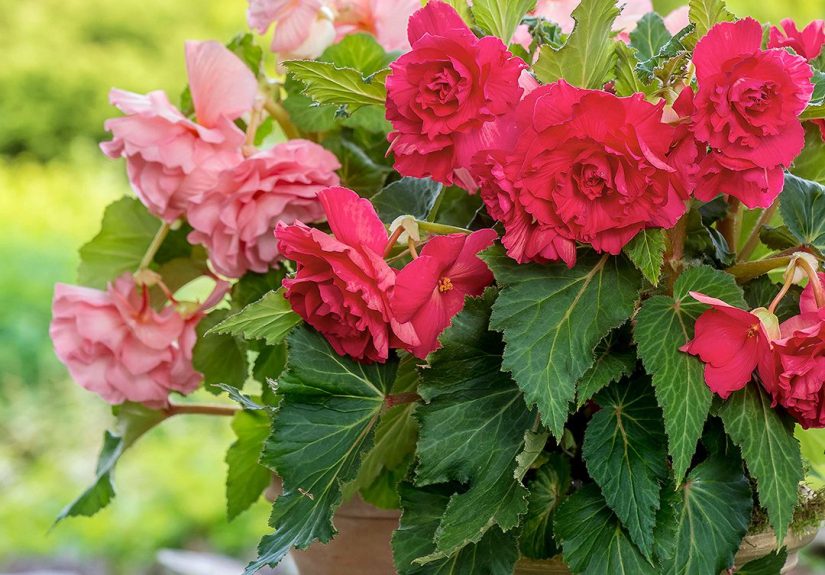
If your goal is flowers that look like ruffled gowns, tuberous begonias are your people. They’re
prized for showy blooms and are excellent in hanging baskets and containersespecially in bright shade. They need
well-drained soil and consistent moisture (not drought tolerant), but they do not like soggy conditions.
- Try: Begonia × tuberhybrida types in containers; look for trailing forms for baskets.
- Best for: porches, shaded patios, and anyone who wants “summer floral fireworks.”
- Care note: Feed regularly during bloom season, and plan for dormancy as temperatures drop.
5) Begonia boliviensis (Trailing Types): The Hanging Basket Show-Off
Trailing begonias like Begonia boliviensis bring a waterfall effect to baskets and elevated planters.
They bloom generously and can look spectacular on balconies and porches with bright shade and good drainage.
- Try: ‘Santa Cruz’ for vivid color and long-season bloom in containers.
- Best for: hanging baskets, rail planters, and “please compliment my porch” energy.
- Care note: Good drainage is non-negotiable; avoid soggy soil and intense heat exposure when possible.
6) Hardy Begonia (Begonia grandis): Shade-Garden Charm With a Return Policy
Begonia grandis is a shade-friendly perennial option in many areas (site and winter protection
matter). It likes moist, organic soil and gentle conditions. Flowers are typically airy and delicate, with
attractive foliageespecially when backlit in the shade.
- Try: Species forms or selections like ‘Wildwood Premier’ where available.
- Best for: woodland edges, north-facing beds, and gardeners who are tired of replanting everything.
- Care note: Don’t let it dry out; mulch in colder climates for improved winter survival.
7) Rieger/Elatior Begonias: Indoor Blooms When Everything Outside Looks Beige
Rieger (Elatior) begonias are popular gift plants because they can flower indoors and look festive for weeks.
Some people toss them after bloomingothers cut them back and coax a comeback. If you like a challenge that isn’t
too extreme, they’re worth trying.
- Try: any Elatior hybrid in a color that makes winter feel less like a spreadsheet.
- Best for: bright indoor spots, cool-season color, and people who enjoy plant rescues.
- Care note: Reduce watering after flowering and keep in bright, indirect light; new shoots can be used for cuttings when regrowth begins.
Propagation: How to Turn One Begonia Into (Respectfully) Too Many Begonias
Begonias are famously propagatablesometimes to the point where you’ll need to start giving them away to friends
who “don’t even like plants” (they will soon).
Stem Cuttings (Great for Cane and Many Indoor Types)
Snip a healthy stem with a few leaves, remove the lowest leaf, and root it in water or a moist, well-draining
medium. Keep it warm, bright (indirect), and lightly moist.
Leaf Cuttings (Rex and Rhizomatous Begonias Love This)
Many foliage begonias can grow new plants from leaf sections. It feels like science fair magic, except the prize
is more begonias, which is objectively better than a ribbon.
Division (Rhizomes, Tubers, and Crowded Plants)
Rhizomatous types can often be divided, and tuberous begonias can be managed through their tubers. Use clean
tools, and let cut surfaces dry slightly before replanting when appropriateespecially for rot-prone types.
Conclusion: Your Begonia Game Plan
If begonias had a dating profile, it would read: “Loves bright shade, hates soggy soil, appreciates consistency,
and will reward you with outrageous beauty.” Choose a type that matches your spacewax begonias for easy outdoor
color, cane begonias for dramatic indoor height, rex begonias for foliage flair, tuberous begonias for lavish
flowers, or hardy begonia for shade-garden longevity.
Keep the basics steadybright (not scorching) light, well-draining soil, careful watering, decent humidity, and
good airflowand you’ll spend less time troubleshooting and more time doing the important work of staring at
leaves like they’re art. Because honestly? With begonias, they kind of are.
Extra: Real-World Begonia Experiences (The Stuff People Learn the Hard Way)
Ask a room full of begonia growers for “the secret,” and you’ll get 12 different answers and one person who
whispers, “Airflow,” like they’re sharing classified information. The truth is less mysterious: begonias are
consistent plants that punish inconsistency. Not out of spitejust biology. And that’s why so many “begonia
experiences” sound like a sitcom with a plant in the starring role.
One of the most common real-life lessons is that begonias don’t want a strict watering schedulethey want a
relationship based on observation. People often start with the best intentions (“I water every Tuesday!”) and
accidentally create swamp conditions when the plant’s growth slows or the weather cools. Then come the yellow
leaves, the panic, and the dramatic lifting of the pot to check if it weighs the same as a bowling ball. The
better habit is to treat moisture like a thermostat, not an alarm clock: check the top of the soil, water
thoroughly when it’s ready, and let the excess drain. Begonias don’t want to be bone dry, but they also don’t
want to be marinated.
Another classic experience: “It was fine until I put it by the vent.” Begonias are often happiest in stable,
gentle conditions. A blast of hot air in winter can crisp leaf edges; cold drafts can slow growth and invite
stress. Many growers end up playing a small game of interior design Tetrismoving begonias a foot left, then a
foot rightuntil the plant stops complaining. The funny part is that once you find the sweet spot, the begonia
acts like it lived there all along and you were just lucky to witness its greatness.
Foliage begonias (especially rex types) teach a different lesson: humidity is nice, but wet leaves are not the
same thing. Plenty of people try to “fix” dry air by misting constantly, then wonder why they’re suddenly
auditioning for a role in Powdery Mildew: The Musical. Growers who succeed usually switch to a pebble
tray, a humidifier, or grouping plants so they share a slightly more humid microclimatewhile still keeping air
moving. In real homes, the winning combo tends to be “higher humidity + decent airflow,” not “leaf soup.”
Cane begonias come with their own rite of passage: the first time they get tall enough to flop. Many people
discoversurprise!that “angel wing begonia” can become “angel wing leaning tower” if the canes aren’t supported
or if the plant is stretching for light. The practical experience here is two-fold: give it brighter indirect
light, and don’t be afraid to prune. Pruning feels mean for about five seconds, then the plant branches out and
looks fuller, and you realize the begonia has been waiting for you to stop being polite.
Outdoor begonia fans often learn the “morning sun, afternoon shade” rhythm the hard way. Too much direct
afternoon sun can scorch leaves and shorten the show; too much deep shade can mean fewer flowers and a more
stretched habit. Real-life gardeners end up using begonias like paint: wax begonias for reliable blocks of color,
tuberous begonias for dramatic containers, and hardy begonia for that soft woodland glow where other plants look
tired. And yes, someone always tries to put the fussiest begonia in the most chaotic spotthen acts shocked when
it protests. Begonias are not chaos goblins. They are refined.
Finally, there’s the “collection effect.” Many people start with one begoniausually a wax begonia in a pot or a
spotted Begonia maculataand then discover that begonias propagate easily and look wildly different from
one another. The next thing you know, there are cuttings in jars, a tiny humidifier on the shelf, and you’re
explaining to a friend why you “need” a rex begonia with leaves that resemble a galaxy. The experience teaches a
gentle truth: begonias aren’t just plants; they’re a hobby with excellent aesthetics and a slightly mischievous
sense of momentum.