Table of Contents >> Show >> Hide
- The official record, in plain English
- What the ex-max security guard means by “astronomically improbable”
- The surveillance video problem: when “proof” creates more questions
- “Inconsistencies” that are documented vs. claims that remain unproven
- Why the story won’t go away
- What meaningful reform would actually look like
- Conclusion: Incompetence can look like conspiracyeven when it isn’t
- 500-word experiences section: What it feels like when the Epstein story re-enters your feed
The internet has a long memory, and the Jeffrey Epstein case is the kind of story that keeps strolling back onto your timeline
like it owns the place. Every few months (or whenever a new document drop, headline, or clip surfaces), the same questions pop up:
What really happened? Why did so many safeguards fail? And how can anything this high-profile go so sideways?
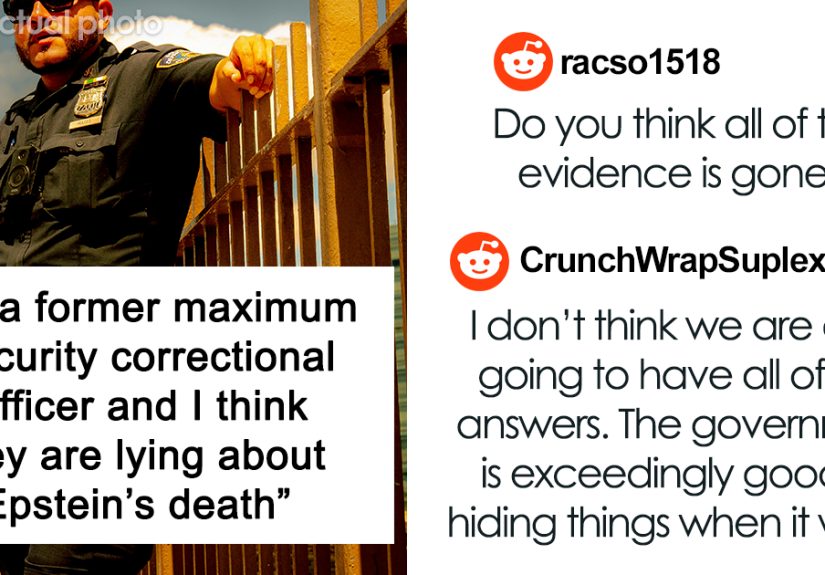
Recently, a former maximum-security corrections officer’s take made the rounds online, calling the official narrative
“astronomically improbable.” That phrase sticks because it captures what a lot of people feel: not necessarily that they have
proof of something else, but that the chain of errors looks so extreme it triggers the human instinct to suspect a hidden hand.
This article separates three things people often mash together: documented failures, expert disagreement about evidence
(especially video), and unproven claims that fill the gaps. If you want the short version: the official conclusion has not changed,
but official reports also describe serious institutional breakdownsexactly the kind of breakdowns that breed distrust.
The official record, in plain English
What authorities concluded about the death
Epstein died in federal custody in August 2019 while awaiting trial on federal sex trafficking charges. The city medical examiner
ruled the death a suicide. A later Justice Department Inspector General (OIG) reviewdone jointly with the FBIfocused on staff conduct
and prison operations, while the FBI assessed whether there was evidence of criminal wrongdoing connected to the death.
Here’s what matters for understanding the “inconsistencies” debate: official findings do not rely on a fantasy world where everything
worked perfectly. They explicitly document staffing shortages, policy failures, camera problems, and supervision lapses. In other words,
the system didn’t just drop the ballit misplaced the entire sporting goods section.
What the Inspector General report says went wrong
The OIG report describes a facility under strain, including chronic staffing shortages, widespread noncompliance with policies,
and weaknesses in camera coverage and maintenance. It also details alleged failures to perform required counts/rounds and later paperwork
that did not reflect what actually occurred, triggering criminal charges against two on-duty staff members (those charges were later resolved
through agreements that avoided prison time, and the case was ultimately ended).
That’s a big reason the case doesn’t “feel” settled even for people who accept the official conclusion. When an outcome is paired with a
documented mess, the mess becomes a conspiracy incubator. Nobody needs tinfoil hats when the paperwork itself reads like a cautionary tale.
Accountability after the fact: what happened to the on-duty staff
Two Bureau of Prisons employees on duty that night were accused of failing to perform required checks and of falsifying records to make it appear
those checks happened. They admitted falsifying records as part of deferred prosecution agreements that required community service and cooperation,
allowing them to avoid prison and potentially avoid a lasting criminal record if they complied with the terms.
If you’re wondering why that outcome enraged the public, imagine any other workplace disaster where the resolution is:
“Yes, the logs were falsifiedbut let’s call it even if you do a little community service.” People hear that and think,
Okay… so the system can fail spectacularly and then shrug? Even when the legal reasoning is complicated, the optics are not.
What the ex-max security guard means by “astronomically improbable”
The former maximum-security officer’s argument (in essence) is not a lab-tested alternative theory. It’s a probability complaint:
too many safeguards failed too neatly. In a maximum-security environment, you’re supposed to have layersstaffing, supervision,
logs, cameras, controlled movement, and redundant proceduresso one failure doesn’t become a total failure.
From that perspective, the “improbable” part is the pile-up:
- Operational breakdowns (missed checks, understaffing, fatigue, and supervision gaps) occurring in a high-profile case.
- Record-keeping failures that made it harder to reconstruct the night with confidence.
- Camera limitations and missing anglesplus continuing disputes about what released footage can and can’t prove.
- A public trust deficit, because the same institutions asking for confidence are also documenting their own dysfunction.
The most important nuance: “astronomically improbable” is still not the same thing as “impossible.” Prisons are not clean-room laboratories.
They are messy human systems, and messy systems occasionally produce outcomes that feel unbelievableespecially when a famous name is involved.
The surveillance video problem: when “proof” creates more questions
If you’ve followed this story at all, you’ve heard about surveillance footage. Recently released and re-examined video became a centerpiece again,
meant to answer doubtsand instead, it raised new ones.
Why experts say the video can’t prove everything people want it to prove
Investigators have described video coverage near the housing unit as supporting the conclusion that no one entered the area where Epstein was held.
But independent video forensics experts interviewed by major outlets have pointed out limitations: incomplete views, off-camera doors, and movement paths
that may not be fully visible. That doesn’t prove wrongdoingit simply means the footage may not be the slam dunk people think it is.
The “missing minute,” screen-capture clues, and editing ambiguity
A major recent controversy is not “what’s on the tape,” but what the tape actually is. Analysts have noted signs that the publicly released file
looks like a screen recording rather than a direct export, including an on-screen cursor/menu, plus apparent stitching between segments and a one-minute
jump near midnight. Separate reporting has highlighted metadata suggesting professional editing software may have been used in the processing pipeline for
public releasewithout clear evidence that the content was deceptively altered, but enough ambiguity to keep suspicion alive.
Here’s the problem in one sentence: when officials describe something as “raw,” and the file looks processed, people don’t calmly ask for a technical memo.
They go full detective modeand the internet is always hiring.
“Inconsistencies” that are documented vs. claims that remain unproven
Documented issues (real problems that official reporting acknowledges)
- Staffing strain and fatigue: chronic shortages and overwork can degrade performance and supervision.
- Policy noncompliance: required checks and counts were not consistently performed (and records later failed to reflect reality).
- Camera coverage and maintenance weaknesses: gaps in visibility and reliability were criticized in oversight reporting.
- Transparency friction: delayed releases and incomplete context around video have fueled public doubt.
Unproven claims (popular online, but not supported by public evidence)
- Definitive proof of homicide: many people believe it, but belief is not the same as verifiable evidence.
- A coordinated cover-up by named individuals: allegations circulate, but broad claims often outrun documented facts.
- “The video proves X” takes: depending on your source, the same clip is treated as a confession or an exoneration.
Real forensics is slowerand far less confident.
A useful rule of thumb: when evidence is strong, you see convergencemultiple independent sources pointing the same direction.
When evidence is weak or incomplete, you see fragmentationten theories, twenty threads, and a comment section that looks like a cage match.
Why the story won’t go away
It sits at the intersection of power, secrecy, and distrust
Epstein’s crimes and connections created a perfect storm: a high-profile defendant, a public hungry for accountability, and an outcome that cut off a trial
where more details might have become public. Add documented institutional failures, and you get a narrative that feels less like closure and more like a door
being slammed mid-sentence.
Conspiracy thinking thrives on gaps, not answers
People often assume conspiracies spread because people are gullible. Sometimes. But more often, they spread because institutions communicate badly.
When officials release partial evidence with unclear explanations, they accidentally teach the public to distrust the release. Then the vacuum gets filled by
memes, amateur “analysis,” and confident claims delivered at maximum volume.
The phrase “Epstein didn’t kill himself” became a cultural shorthand not because everyone had the same evidence, but because everyone shared the same vibe:
something about this feels off. Vibes aren’t proofbut they are incredibly sticky.
What meaningful reform would actually look like
If you care about the “how did this happen” question, the most constructive place to look is not the wildest theory. It’s the boring stuff:
staffing models, training, supervision, camera infrastructure, and audit trails that can’t be “oops”-ed away.
Three fixes that would reduce future “astronomically improbable” failures
- Redundant verification: counts/rounds should be validated by systems that don’t rely solely on handwritten logs or self-reporting.
- Camera transparency protocols: when footage is released publicly, agencies should publish a technical note explaining processing steps
(what changed, what didn’t, and why). - Staffing and supervision reality checks: high-risk units need staffing levels that match policy expectationsotherwise policies become
decorative wall art.
The public doesn’t expect perfection. But it does expect that when systems fail, the explanation is clear, the documentation is reliable, and accountability
feels proportional. Otherwise, every future failure will look like a cover-upwhether it is or not.
Conclusion: Incompetence can look like conspiracyeven when it isn’t
The ex-max security guard’s “astronomically improbable” critique captures a real tension: the official conclusion may stand, but the operational story is a
catalog of breakdowns. And when breakdowns stack up in a high-profile case, the public naturally suspects intent, not error.
The best way to think about “inconsistencies” is to treat them as two separate questions:
(1) What do official investigations conclude? and (2) What failures did oversight reports document?
You can accept the first and still be furious about the second. In fact, many people are.
If there’s a takeaway that deserves to be repeated (but not tattooed on your forehead), it’s this:
transparency is not a vibes problem. It’s a systems problem. And systems can be fixedif anyone actually wants them fixed.
500-word experiences section: What it feels like when the Epstein story re-enters your feed
If you were online anytime in the last few years, you probably know the rhythm. A headline drops. A clip resurfaces. Someone posts a thread that begins with
“Okay, I finally looked into this,” and ends 47 screenshots later with “Draw your own conclusions.” Your group chat lights up. Your cousin becomes a
part-time investigator. Someone you haven’t spoken to since middle school posts “WAKE UP” in all caps, like the internet is a sleeping dragon.
There’s a particular kind of whiplash to this topic because it’s both deadly serious and aggressively memed. You can scroll past a sober discussion about
prison oversight andthree swipes laterland on a joke that treats the whole thing like a punchline. That contrast makes people feel weirdly unsteady,
like the culture can’t decide whether this is a tragedy, a scandal, or a Netflix trailer that never ends.
And then come the “new” details, which are often not new so much as newly viral. The same facts reappearcamera gaps, staffing problems, questionable logs
but framed with fresh confidence. Watching that loop can be exhausting. You start to notice how quickly certainty spreads when nobody has to pass a test for it.
A confident voiceover, a red circle on a blurry frame, and suddenly half the comments are declaring the case solved.
The video debates are their own kind of experience. People talk about “the footage” the way sports fans talk about instant replay: freeze-frame it, zoom in,
argue about angles, call the ref corrupt. But prison surveillance isn’t designed for public storytelling; it’s designed for institutional monitoring. When you
hand that kind of footage to the public without a clear technical explanation, you basically invite the internet to do what it does best: speculate at scale.
What makes the “astronomically improbable” idea resonate is that it matches a common emotional reaction: Surely a system can’t fail this hard in a case
this important. But once you’ve lived through enough real-world institutionsairlines grounded by one software glitch, hospitals overloaded by staffing
shortages, agencies tripping over paperworkyou realize something uncomfortable: big systems can absolutely fail in ways that look scripted. Not because someone
wrote the script, but because incentives, fatigue, and bureaucracy can line up like dominoes.
Still, the case keeps tugging people back because it represents unfinished business. Many people wanted a public accounting of who enabled Epstein, who knew,
who looked away, and how power protected itself. When the central figure dies before trial, that hunger doesn’t disappear. It reroutes into whatever material
remains: court filings, oversight reports, leaked documents, and yes, internet arguments. For a lot of readers, the “experience” of this story is less about
one night in one facility and more about living in an era where trust is scarce, information is fragmented, and every gap gets filledfast.