Table of Contents >> Show >> Hide
- Pride on Your Wrist: What’s New This Year
- A Short, Colorful History of Apple Watch Pride Bands
- The Meaning Behind the Colors
- Apple’s Pride Bands and Real-World Support
- Comfort, Sizing, and Everyday Wear
- Is the Apple Watch Pride Band Worth the Price?
- Styling Ideas: From Parade to Office
- Real-World Experiences with Apple Watch Pride Bands
- The Bottom Line
Every spring, right on cue with the rainbow flags and parade planning, Apple drops something new for your wrist:
fresh Apple Watch Pride bands. What started as an internal thank-you gift for employees has turned
into a full-blown annual tradition, complete with limited-edition bands, matching watch faces, and dynamic
wallpapers that scream “yes, I absolutely did buy this on purpose.”
The latest collection takes that tradition even further. Apple’s new Pride Edition Braided Solo Loop
blends bold fluorescent colors, subtle design details, and some very intentional symbolism. It’s not just a cute
strap; it’s a wearable celebration of LGBTQ+ communities and a reminder that tech can be both stylish and
meaningful.
If you’re wondering what’s new, how it fits, whether it’s worth the price, and how Apple’s Pride accessories fit
into the bigger picture of LGBTQ+ support, you’re in the right place. Let’s unpack this very colorful story.
Pride on Your Wrist: What’s New This Year
A fluorescent Braided Solo Loop with a message
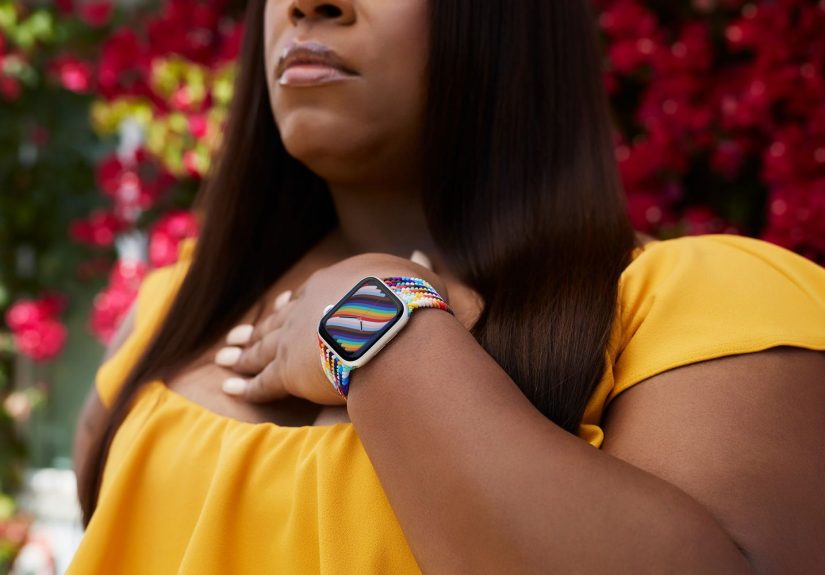
The star of the latest collection is the Pride Edition Braided Solo Loop. At first glance, it looks
like what would happen if a rainbow, a highlighter pack, and a friendship bracelet had a very stylish baby. Look
closer and you’ll see the design is more thoughtful than just “rainbow, but louder.”
The band uses a woven pattern of recycled yarn interlaced with silicone threads, designed to stretch over your hand
with no buckle, clasp, or extra hardware. Once it’s on, it hugs your wrist in a way that feels more like a soft
fabric bracelet than a typical watch band. That comfort-first design has been a hallmark of Apple’s Braided Solo
Loop line, and the Pride version keeps that same “forget you’re even wearing it” feel.
What really sets this edition apart is the fluorescent color palette. Inspired by multiple Pride
flags, it combines:
- Traditional rainbow tones to represent LGBTQ+ pride
- Black and brown bands to honor Black, Hispanic, and Latin communities and those affected by HIV/AIDS
- Pink, light blue, and white to represent transgender and nonbinary individuals
On the lug, Apple laser-etches “PRIDE 2024” (or the relevant year), turning the hardware into a tiny badge of
visibility. It’s subtle enough that you won’t notice it from across the room, but clear enough that anyone
examining the band up close knows exactly what it stands for.
Matching watch face and dynamic wallpapers
Apple never releases a Pride band alone. The new Pride Radiance watch face mirrors the braided
colors with glowing, neon-like numerals against a dark background. Tilt your wrist and the design subtly shifts,
reacting to motion and adding a bit of drama every time you check the time.
On iPhone and iPad, dynamic Pride wallpapers extend the look beyond your wrist. They animate when you unlock your
device and can be customized to highlight different color combinations, letting you emphasize specific parts of the
broader LGBTQ+ flag spectrum. It’s a small but meaningful touch: you choose which colors you want to spotlight.
A Short, Colorful History of Apple Watch Pride Bands
From employee exclusive to global symbol
The Apple Watch Pride story started quietly in 2016. Apple created a limited rainbow band and gave it to employees
who marched in Pride parades. It wasn’t sold to the public, which instantly turned it into a kind of unicorn item
among collectors and fans.
Demand didn’t exactly “creep” into Apple’s mentions. People very loudly wanted that band. Apple listened, and in
2017 it released the first publicly available Pride Edition Apple Watch band, kicking off what would become an
annual tradition.
How the designs have evolved over the years
Since then, Apple has experimented with materials and patterns:
- Sport Band (early years): Simple rainbow stripes in durable fluoroelastomer classic, bold, and easy to clean.
- Sport Loop and Nike Sport Loop: Lightweight, breathable woven bands with rainbow gradients and reflective yarn for nighttime visibility.
- Braided Solo Loop: A more premium, textile-like approach that feels like a bracelet and leans into symbolism with colors from multiple Pride flags.
Over time, Apple has also shifted the palette from just rainbow stripes to broader, more inclusive color sets. The
newer designs intentionally recognize different communities within the LGBTQ+ umbrella, reflecting the evolution of
Pride flags themselves.
The Meaning Behind the Colors
A Pride band that’s just “rainbow-colored” is fine. A Pride band that thoughtfully incorporates multiple Pride
flags? That’s better.
Apple’s newer Pride bands deliberately weave in colors with specific meanings:
- Rainbow colors: The original Pride flag represents life, healing, sunlight, nature, serenity, and spirit.
- Black and brown: Added to highlight Black, Hispanic, and Latin communities and to honor those living with or lost to HIV/AIDS.
- Pink, light blue, and white: Pulled from the transgender flag, representing trans and nonbinary individuals.
When you see those shades braided together, the whole thing becomes less “rainbow merch” and more of a visual
reminder that Pride is about intersectionality different identities woven into a shared fight for equality.
That symbolism extends to the matching watch faces and wallpapers. The Radiance face, with its beams and glowing
numerals, is described as a nod to the “everlasting impact” of LGBTQ+ activism and its influence on future
generations. It’s a design-y way of saying: the work people are doing today lights the way for those who come next.
Apple’s Pride Bands and Real-World Support
It’s fair to ask whether a tech company releasing rainbow accessories once a year is just marketing. Apple knows
that, which is why its Pride campaigns are tied to ongoing financial support for LGBTQ+ organizations.
Over recent years, Apple has highlighted its donations to and partnerships with groups such as:
- Human Rights Campaign
- ILGA World
- The Trevor Project
- The National Center for Transgender Equality
- PFLAG
- Equality Federation Institute and regional Equality organizations
- Encircle, SMYAL, GLSEN, Gender Spectrum, and others
The Pride Edition bands don’t function like a traditional “buy this and 5% goes to X” product with a per-unit
donation amount published on the box. Instead, Apple frames them as part of a broader, ongoing commitment to support
advocacy groups through financial contributions, employee programs, and public visibility.
That doesn’t mean the band alone changes the world but it does mean the product lives within a bigger ecosystem of
advocacy and corporate support, which matters if you’re trying to separate genuine engagement from rainbow-washing.
Comfort, Sizing, and Everyday Wear
How the Braided Solo Loop feels on your wrist
If you’ve ever worn a band that looked great but dug into your skin every time you bent your wrist, you know
comfort isn’t optional. One of the most consistent bits of feedback about Apple’s Braided Solo Loop line is that it
’s ridiculously comfortable once you get the sizing right.
The Pride Braided Solo Loop stretches just enough to slip over your hand, then settles into a snug-but-gentle fit.
There’s no buckle pressing into your wrist while you type, no extra strap tail flapping around, and nothing to catch
on sleeves or jacket cuffs. It’s low-profile enough that it works with both casual outfits and slightly more formal
looks think “I’m at Pride on Saturday and a meeting on Monday” energy.
The sizing catch you should know about
The only real catch is that you have to nail the size. Apple offers a range of sizes (typically 1
through 12), and the recommendation is to use a printable sizing guide or try a band in-store if you can. Order too
small and you’ll feel like your wrist is being politely strangled; too big and your watch will slide around during
workouts.
On the bright side, once you’ve figured out your ideal Braided Solo Loop size, you can reuse that information any
time Apple releases new colors or future Pride designs. Think of it as unlocking a permanent wardrobe cheat code.
Compatibility and durability
Pride Edition bands are designed to work with multiple Apple Watch generations. Recent Braided Solo Loop versions
support 41mm and 45mm cases and are compatible with Apple Watch SE and Apple Watch Series 4 or later. That means
you can upgrade your watch without retiring your favorite band.
As for durability, the mix of recycled yarn and silicone threads holds up well for most day-to-day scenarios like
work, walking, and gym sessions. If you’re constantly in rough environments (construction, heavy lifting, or the
kind of rock climbing where you sign a waiver), you might still want a tougher sport or rubber band as your “beater”
strap and keep Pride for everything else.
Is the Apple Watch Pride Band Worth the Price?
Let’s talk money. Pride Edition Braided Solo Loop bands sit at the top end of Apple’s band pricing, typically around
$99. That’s a decent chunk of change for something that doesn’t actually make your notifications
any faster.
Here’s how to think about the value:
-
Design and materials: The braided construction is more complex than a standard Sport Band, and
the Pride edition’s colorwork is especially intricate. You’re paying for a more premium feel and look. -
Limited availability: Pride Edition bands are typically sold for a limited time around Pride
season. Once they’re gone, they’re gone which is why older Pride bands sometimes show up in collector circles. -
Symbolic value: If you’re part of the LGBTQ+ community or an ally, wearing a Pride band can be a
small but meaningful way to be visibly supportive in everyday life.
If you just want an inexpensive strap to keep your Apple Watch attached to your body, there are countless cheaper
options. If you want something that merges comfort, design, identity, and a bit of collector appeal, the Pride band
starts to make more sense.
Styling Ideas: From Parade to Office
One of the best things about the Apple Watch Pride bands is how easily they adapt to different looks. A few fun
styling ideas:
-
Match with your watch face: Pair the Pride Radiance face with dark complications to make the neon
colors pop. It’s like having a tiny light show on your wrist. -
Contrast your outfit: Wear the band with neutral clothes (black, white, navy, beige) and let the
colors do all the talking. -
Go full rainbow: Pride parade? Festival? Brunch that mysteriously feels like a runway show? Pair
the band with bright sneakers, a graphic tee, and layered jewelry. -
Quiet ally mode: Even with a blazer or button-down, the band peeking out under your cuff is a
subtle signal of support.
Because the band is seasonless, you’re not limited to June. Pride doesn’t end when the calendar flips to July, and
your watch doesn’t have to either.
Real-World Experiences with Apple Watch Pride Bands
Beyond the specs and marketing, what’s it like to actually live with an Apple Watch Pride band? While experiences
vary, a few common themes show up again and again in user reviews and hands-on impressions.
“It starts conversations I didn’t expect”
Many owners mention that the band serves as a gentle conversation starter. A coworker notices the colors in a
meeting and asks which band it is. Someone at a coffee shop recognizes the design as the latest Pride edition and
comments on how bright it looks. A fellow Apple Watch fan at Pride asks, slightly jealously, “Is that this year’s
band or an older one?”
These aren’t earth-shattering moments, but they’re small dots of connection especially meaningful for people who
don’t always feel safe or seen in every environment. Having a Pride symbol that’s recognizable but not overwhelming
can be a way to say “this is who I am” or “this is what I support” without needing a speech prepared.
Daily comfort makes it a default band
Some users buy the Pride band planning to wear it “just for Pride month” and then never take it off. The braided
construction tends to sit in a sweet spot: more breathable than rubber, less fussy than leather, and more visually
interesting than a plain sport strap.
People who type a lot, work at a desk, or commute daily often say the band basically disappears on the wrist. No
buckle to leave marks, no metal to scratch laptops, and no extra strap tip to snag on backpack straps. It’s the kind
of comfort that turns a seasonal accessory into a daily driver.
The emotional side of a tech accessory
For some buyers, especially those in the LGBTQ+ community, the band holds a deeper personal meaning. It might be:
- A small gift someone buys for themselves after coming out.
- A present from a partner, friend, or family member to say, “I see you and I support you.”
- A subtle marker of identity in spaces where wearing a full Pride flag isn’t practical or safe.
Tech products don’t usually carry this kind of emotional weight. A regular watch band is just an accessory; a Pride
band can become a reminder of a specific moment, relationship, or turning point. That’s hard to quantify but easy to
feel when you glance at your wrist during a tough day and see those colors staring back.
Collector culture and nostalgia
There’s also a growing group of Apple Watch fans who collect Pride bands year after year. For them, each design
represents a specific moment in time: the year Apple first used the expanded flag, the first Braided Solo Loop, the
year they changed jobs or cities or relationships.
Lined up, the bands become a visual timeline not just of Apple’s design evolution, but of the wearer’s life. Maybe
one reminds you of the first Pride you went to with friends, another of a particularly loud parade, another of a
quiet pandemic year when your “Pride celebration” was a solo walk around the block with music in your headphones.
Small rituals, big impact
A lot of Pride band owners describe little rituals: swapping their regular band for the Pride one on June 1,
matching with friends for a Pride weekend, or switching to the Pride Radiance watch face on days when they need a
morale boost. These habits might sound small, but they turn the band into more than a product it becomes part of
how people mark time, celebrate themselves, and connect with their community.
That’s the real magic here. Yes, it’s a premium Apple Watch strap. But it’s also a tiny, wearable piece of identity,
history, and hope that travels with you to work, to the gym, on vacation, and everywhere in between.
The Bottom Line
Apple’s latest Apple Watch Pride bands continue a tradition that’s grown from an internal employee
perk into a global, highly anticipated annual release. The newest Pride Edition Braided Solo Loop
combines comfort, vibrant design, and inclusive symbolism, while matching watch faces and wallpapers extend the look
across your Apple ecosystem.
Is it the cheapest way to show support? Definitely not. But if you already love your Apple Watch and you want a band
that looks great, feels good, and carries a deeper meaning, the Pride Edition is one of the few tech accessories
that actually checks all those boxes at once.
Whether you’re part of the LGBTQ+ community, an ally, a collector, or just someone who appreciates beautiful,
thoughtful design, this is one band that earns its place in the rotation long after Pride month is over.